Why bands release compilation albums? Because a finished catalogue sitting on a shelf earns nothing on its own. A compilation repackages recordings the band already made into a single product a new listener can buy in one go, and the reasons behind it are usually a stack: catalogue income, access for casual fans, an anniversary to mark, a contract to satisfy, and often a track or two nobody has heard before.
The direct answer, in short: money from a back catalogue, reach into new markets, milestone marketing, contract and royalty mechanics, unreleased tracks as a purchase incentive, rare material for collectors, something to release during a quiet period, and a way to keep a band’s work in circulation after the band stops touring. The mix changes with the career moment.
Below is how each of those eight motives actually works, how a compilation differs from a live album or a greatest-hits package, and what to check on a tracklist before you hand over your money.
Table of Contents
- Why Bands Release Compilation Albums: The Main Reasons
- How Compilations Differ from Greatest-Hits and Live Albums
- The Main Motivations Behind Compilation Releases
- Why Bands Release Compilation Albums for New and Existing Fans
- Why Bands Release Compilation Albums to Celebrate Milestones
- Why bands release compilation albums on milestone years
- Why Bands Release Compilation Albums to Share Rare and Unusual Tracks
- Why Bands Release Compilation Albums for a Release Gap
- Why Labels and Bands Use Compilations for Catalog and Business Reasons
- Who decides what goes on a compilation?
- How to Tell Whether a Compilation Is Worth Buying
- Frequently Asked Questions
- Do compilation albums still exist?
- Do compilation albums count as albums?
- What does an anthology album mean?
- Are compilation albums just a money grab?
- Why do bands add new tracks to a compilation?
- Is a compilation a good way to start listening to a band?
- Conclusion: Start with the Track List and Context
Why Bands Release Compilation Albums: The Main Reasons
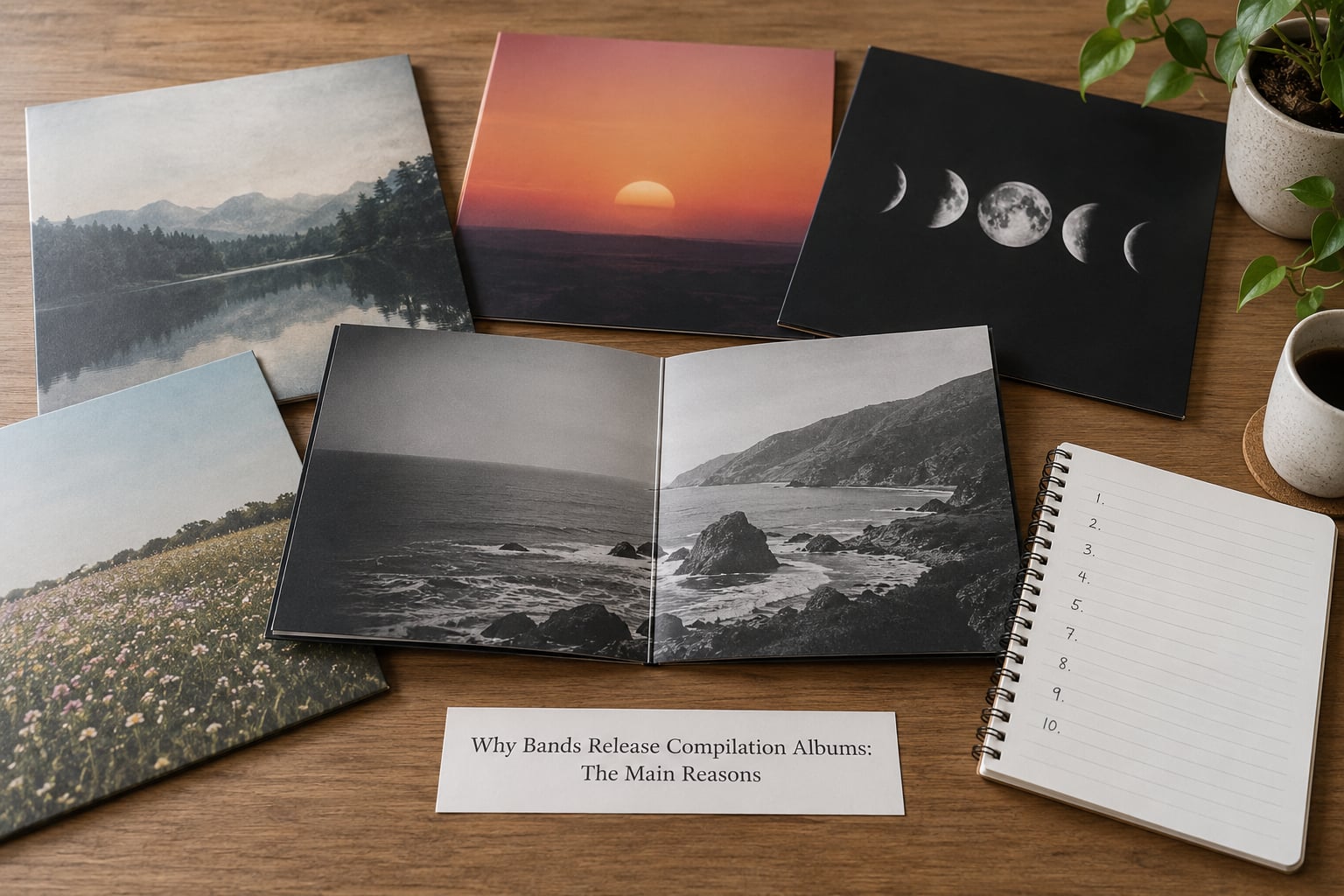
There is no single answer. A band rarely sits down and says “we will now issue a compilation.” The decision usually arrives from a specific moment: a contract ending, a hiatus starting, a reissue campaign in progress, a catalogue with an out-of-print album people keep asking about.
What the four categories have in common is the input. Nothing new is written for a basic hits package. The songs already exist, already sound the way they sound, and have already been paid for once. That makes a compilation a low-cost, fast-to-produce release built from assets the band and its label already own.
It also explains why labels love them and why bands are often ambivalent about them. More on that tension later.
How Compilations Differ from Greatest-Hits and Live Albums
A compilation is defined by where the tracks come from, not by how good they are. It gathers previously issued recordings by one artist or several onto one release. A greatest-hits album is a compilation with a ranking rule attached. A live album documents a performance and contains material that, by definition, was never released that way before.
That last distinction matters more than people expect. If a track was recorded live for the record, it is new to the catalogue even though the song is familiar. Collectors track that difference carefully.
| Format | Selection rule | Who it is for | Usual additions |
|---|---|---|---|
| Greatest hits | Chart and sales performance | Casual listener, radio audience | Often one new single |
| Best of | Artistic judgement, usually made with the band’s input | Fans who want a considered selection | Rarities, B-sides, remasters |
| Singles album | Every single in release order, including failures | Completists and chronological listeners | Nothing; completeness is the point |
| Rarities collection | Anything not on the main studio run | Collectors | Demos, alternates, live cuts |
| Box set | A whole era, remasters included | Collectors and dedicated fans | Liner notes, essays, photos |
| Various artists | A theme, a label, a scene or a genre | New listeners discovering names | Usually nothing; discovery is the point |
The Beatles Anthology and Queen Greatest Hits sit at opposite ends of that table. One documents everything including outtakes, the other hands you the songs everyone already knows.
The Main Motivations Behind Compilation Releases
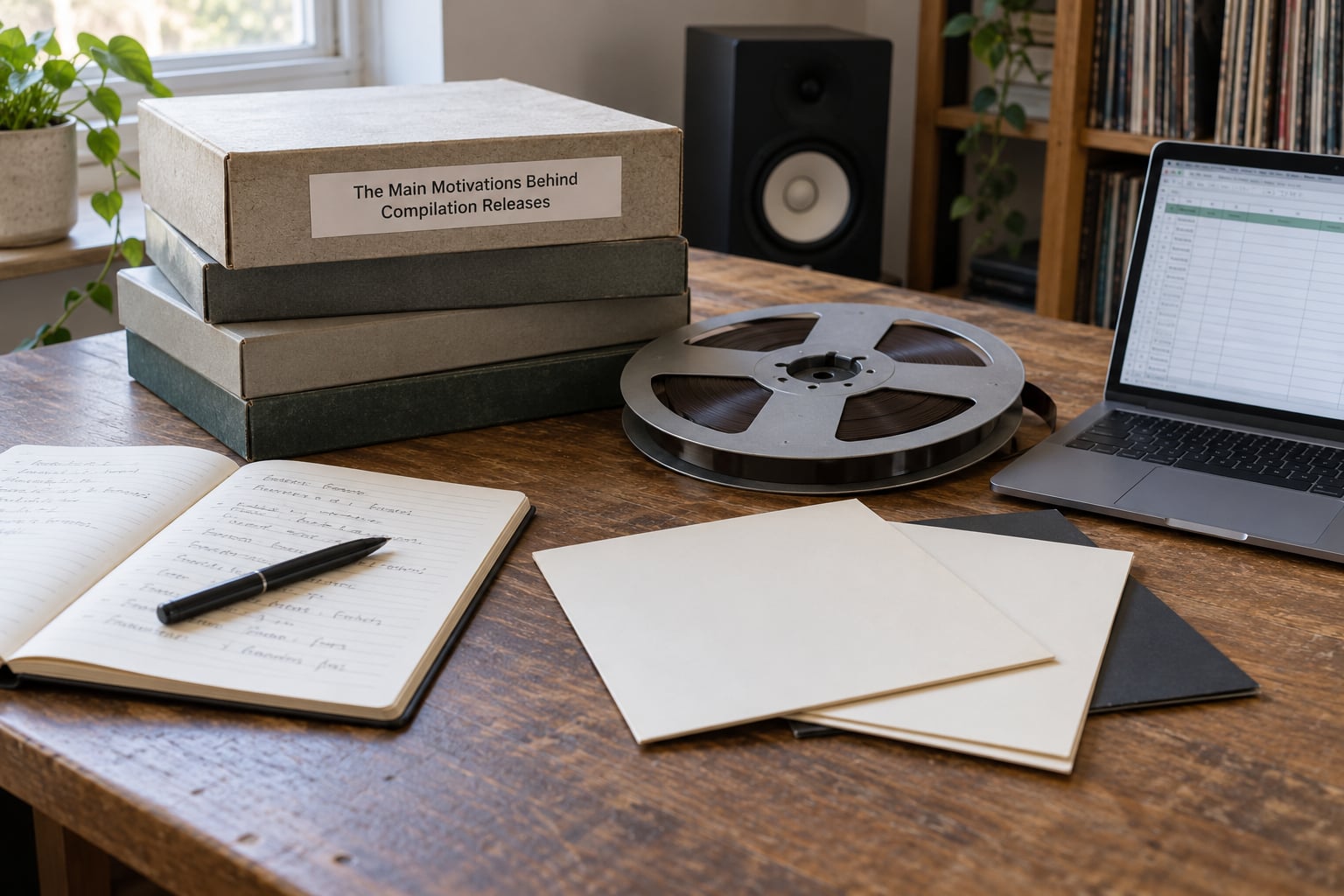
- Income from a back catalogue. Old recordings generate revenue without costing studio time.
- Reaching listeners who will not buy fifteen albums. One disc is a small commitment.
- Anniversaries and career milestones. A round number is a marketing hook.
- Contract and royalty mechanics. Labels often hold release rights the band never negotiated away.
- New and previously unreleased tracks. Fresh songs give casual buyers a reason to care.
- Rare and unusual material. Demos, B-sides and alternates reward collectors.
- Filling a release gap. Something to issue while the band writes, rehearses or tours.
- Legacy and archival value. Documenting a lineup, a scene or a chapter that has ended.
The order of importance shifts with the era. In the 1970s the hits package was a chart weapon. In the 1990s it became the deluxe reissue’s job. Since the 2010s the new-track incentive has faded, because one new song is easier to stream than to sell.
Why Bands Release Compilation Albums for New and Existing Fans
A catalogue spanning fifteen releases is a wall. A compilation is a door. For someone who heard one song on a playlist, a single disc gives them the shape of a band in forty minutes instead of a research project.
For existing fans the appeal is different: a compilation is a way back in. On a metal and rock forum, listeners describe picking up a compilation and then buying the albums it pointed at. The Cure is the example collectors bring up most, because a 2001 greatest-hits package led people straight into the surrounding catalogue. They also complain when a comp leaves out a single they consider essential, which is the same argument from the other side.
Nobody has ever regretted having both a compilation and the albums. The regret is paying twice for identical audio.
Why Bands Release Compilation Albums to Celebrate Milestones
Round anniversaries are the most common trigger because they are easy to sell: the tenth, twentieth or thirtieth year of a debut, or of a lineup that no longer exists. The packaging can be commemorative without the band lifting a finger, which is why anniversary editions tend to be reissues rather than brand new compilations.
Other milestone moments work just as well. The end of a recording contract. A break-up that freezes the catalogue. A member’s death, after which the surviving members often assemble a final retrospective. A reunion, where a hits package is the natural announcement.
Why bands release compilation albums on milestone years
Because a milestone converts a catalogue into a story with a beginning and an end, and a story sells better than a list of tracks.
Copyright timing plays a part too. In the United States, the 35 year rule, named for the lawyer who advanced it, affects who may sample and license older sound recordings. A catalogue that has crossed that line behaves differently commercially, and anniversaries are the moment labels decide to revisit it.
Why Bands Release Compilation Albums to Share Rare and Unusual Tracks
Plenty of good songs never got an album. A song written for a soundtrack, a B-side that sold nothing, a demo recorded before the band found its lineup, an alternate mix the band preferred once and then rejected. Those tracks are the reason collectors care, and the reason a rarities disc is often the only edition worth owning.
Metal and rock have the richest version of this. Pre-recordings, split releases, demo compilations and out-of-print label samplers documented scenes that had no other route into the public record. Forum consensus in heavy music circles is blunt: a compilation earns its place only when the material was hard to get otherwise.
That standard is a good one to hold any compilation to. If every track is already on a studio album you could buy, the disc is a convenience product. If half the tracks are one-offs, it is documentation.
Why Bands Release Compilation Albums for a Release Gap
Bands stop producing for ordinary reasons. Writing takes longer than anyone admits. A touring schedule swallows a year. A member has a family crisis. A label wants a release scheduled and nothing is ready.
A compilation fills that gap with zero studio cost. It keeps the act visible, gives fans something to argue about, and occasionally works as a genuine warm-up for whatever comes next. Post-hiatus bands especially have used compilations to reintroduce themselves to an audience that drifted.
Sometimes the gap is longer than expected. When a band never comes back, the release that arrives during the silence can end up being the last word, which is an odd legacy for a package of re-recordings.
Why Labels and Bands Use Compilations for Catalog and Business Reasons
Here is where the cynicism comes from, and it is not entirely misplaced. Royalty accounting rewards this kind of release. A band with a negotiated per-record royalty of roughly twelve to fourteen per cent of retail is usually paid per record sold, so a compilation pays the artist again for songs already sold once. When tracks come from different labels, royalties are prorated across the rights holders, which is how a single record can pay out in small slices to several parties.
Control is the second issue. Labels can often issue as many greatest-hits albums as they want without the band’s approval unless a contract specifically limits it. That is why bands with real bargaining power insist on choosing their own “Best Of” tracklist, and why bands without it sometimes watch compilations appear that they had no hand in.
Who decides what goes on a compilation?
Usually the label, except when the artist insists. Curated sets, deluxe reissues and rarities sets tend to reflect band input because the packaging and the running order are part of the story. Anonymous hits packages tend not to.
Radio formats drive volume here too. Classic rock stations need a steady supply of familiar songs with clean metadata, which is work a compilation does better than a catalogue re-upload can.
And as of 2026, streaming changed the arithmetic. A physical compilation earns once, at the counter. A catalogue in a streaming service earns every month it is played, and a compilation is a tidy way to get that older material into rotation and onto playlists where new listeners find it.
How to Tell Whether a Compilation Is Worth Buying
Five checks, in the order I would make them:
- Read the tracklist against what you own. Count how many tracks are already on albums in your collection. Zero overlap is rare. Heavy overlap is a warning.
- Find out where each track was mastered from. A compilation cut from an existing album often compresses it. A compilation cut from tape does not. This is the single most common complaint from listeners comparing a remastered comp against the original pressings, and it is usually fair.
- Look for material with nowhere else to live. Demos, live cuts, B-sides, soundtrack tracks and re-recordings. These are the tracks that justify the format.
- Check the other sets in the same catalogue. Bands with three compilations often overlap heavily with each other. Pick the one with the rarest material and the best source.
- Check the format and mastering credits. A double LP at 45 rpm will not sound like a single-disc CD issue of the same tracks.
One more question worth asking: is this band one you will follow further? A compilation is a poor purchase as a complete relationship with a band and a sensible one as a doorway.
Frequently Asked Questions
Do compilation albums still exist?
Yes, though far more often digitally and as reissue packaging than as standalone physical releases. The format survives because it solves a problem streaming did not: a single, ordered entry point into a large catalogue. What has faded is the incentive of one new single, since streaming makes buying one track a poor trade for listeners who can just play it.
Do compilation albums count as albums?
Formally, yes. A compilation is a full-length release with its own track listing, and chart bodies track compilations in their own categories with separate rules from studio albums. Artistically the answer is more contested, and collectors still argue over whether curated sets belong in canon lists of essential albums. The argument is usually about selection and sequence, not about whether the record exists.
What does an anthology album mean?
An anthology collects selections from across an artist’s work, usually spanning years and sometimes only a period or a theme. Where a greatest hits album ranks by chart performance and an anthology is chosen on artistic grounds, an anthology can include tracks that never charted and omit ones that did. Some anthologies are chronological and some are curated around an idea such as a lineup or a genre experiment.
Are compilation albums just a money grab?
Partly, but the charge is too simple. Money is usually the base motive, but anniversary marketing, radio format needs, contract terms and the absence of a single affordable alternative for casual fans each independently drive compilations. The genuine grievance is usually about control, not money: labels can often issue greatest-hits albums without a band’s approval, so the tracklist may not reflect the band’s own judgement.
Why do bands add new tracks to a compilation?
To give casual listeners a reason to buy something they already own. A familiar song repackaged is easy to skip; the same package with one unreleased track reads as an event and gives the release a reason to chart and to be played on radio. That habit was strongest in the 1980s and 1990s and has weakened considerably, since a single new song is easier to stream than to sell.
Is a compilation a good way to start listening to a band?
It is a good first purchase and a poor last one. A curated compilation tells you how the band sounds at their most representative, which is exactly what a new listener needs. The trap is stopping there. Listeners who buy a comp and never move past it miss the sequence, the failures and the long middle of a catalogue, which is where most bands are actually interesting.
Conclusion: Start with the Track List and Context
A compilation earns its place when the tracklist contains something you cannot get elsewhere. Everything else about the release is packaging around that decision: the mastering source, the bonus tracks, the edition and the frame the band puts around the story.
So read the tracklist first, check what overlaps with what you already own, and be honest about whether you would still buy the albums afterwards. Those three questions answer most of it.