To read a discography properly, you build the release history first and judge the music second: sort every release by type, confirm the original year and label, note the catalog number, and only then decide what to play and what to buy. Most metal catalogues look like chaos because reissues, demos, and regional variants get listed side by side with the albums a band actually put out on a schedule.
A discography is the complete list of an artist’s officially released recordings: studio albums, EPs, and whatever compilations, live albums, and box sets the band or its rights holder sanctioned. It does not mean every song ever recorded, and it does not mean every tape that surfaced later. Bootlegs, unreleased demos, and covers usually sit outside it.
The method below takes about an hour per band for a small catalogue, longer for a twenty-plus release back catalogue. It pays off the first time a seller lists a first pressing as a reissue.
Table of Contents
- What You Need
- A quick check that a source is usable
- How to Read a Discography Properly, Step by Step
- 1. Start with the artist’s official discography
- 2. Sort releases by type and original release year
- 3. Learn the major metal discography codes
- 4. Read each entry from top to bottom
- 5. Separate original issues from reissues and variants
- 6. Check numbering, packaging, and disc condition
- 7. Compare at least two authoritative sources
- 8. Build a complete but usable band record list
- Common Mistakes
- Frequently Asked Questions
- What do album and EP letters mean in a metal discography?
- How do I tell an official demo from a bootleg?
- Are live albums part of a band’s official discography?
- Why does the same metal album have different catalog numbers?
- Should a reissue get a separate discography entry?
- How can I verify the country of origin for a record?
- Conclusion
What You Need
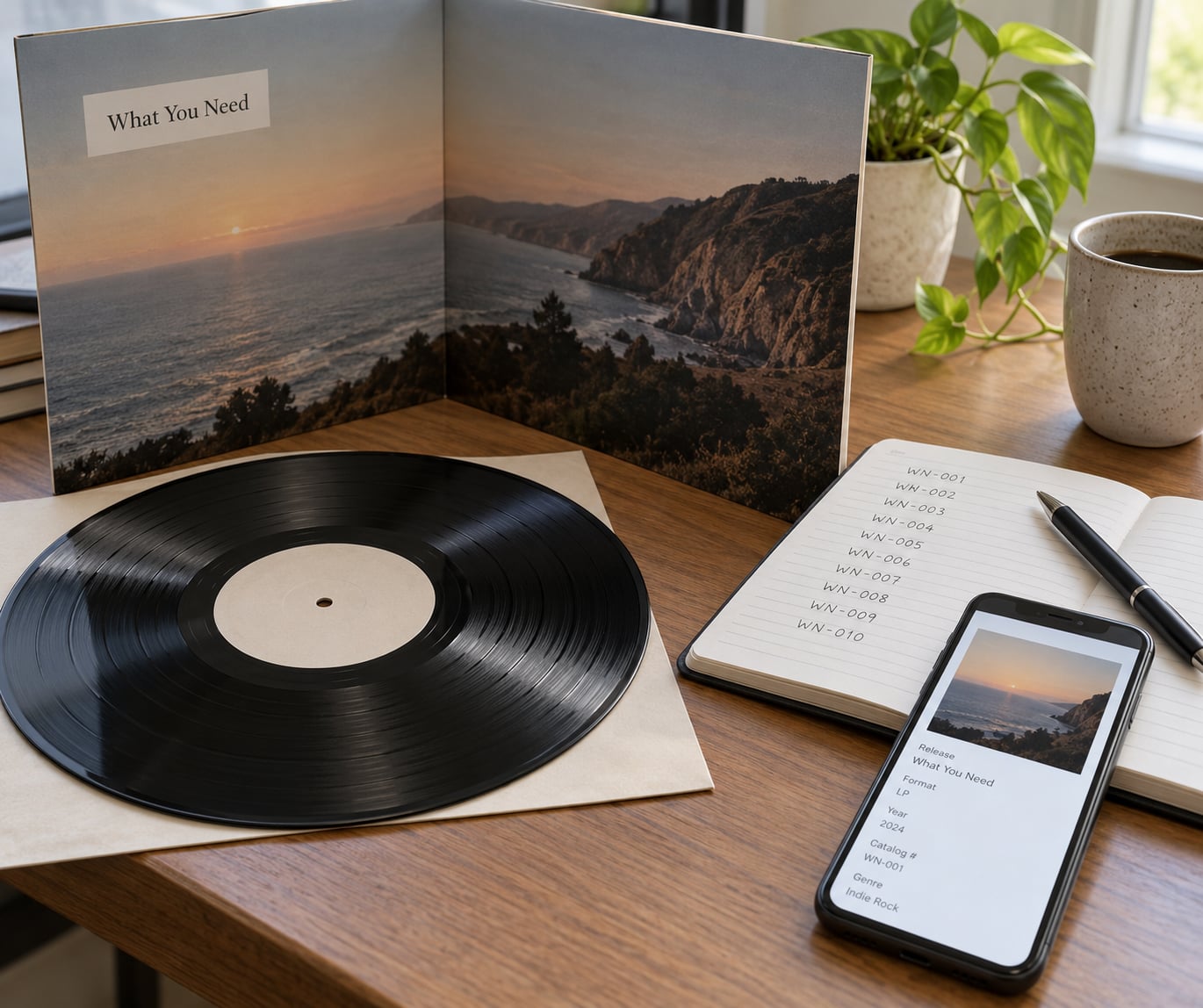
Start with the artist’s current rights holder or official site, not a fan wiki. Labels and rights holders keep catalogue pages that state which label issued which record in which year, and those pages are the spine of everything else you check.
Alongside that you want release notes, catalog numbers from each pressing, and a database that lets you compare editions. Discogs is the workhorse here because it holds per-release data with matrix numbers and images of both sleeves and labels. AllMusic is useful for credits and personnel across many releases.
You also need label images. A catalog number printed on a sleeve says very little if the record in your hands carries a different one on the label or in the run-out area.
Marketplace listings are the last piece, not the first. A seller description is a claim to be tested, and photographs of the matrix area settle most disagreements faster than any description does.
One caveat: a single fan wiki or a streaming page is not enough for collector-level verification. Those pages routinely merge a compilation into the studio list or drop a regional pressing without comment, and as of 2026 the same mistake still shows up on major streaming services.
A quick check that a source is usable
A source is usable when it names the label and catalog number for a release. Sources that give only a title and a year cannot be used to judge an edition, whatever else they do well.
How to Read a Discography Properly, Step by Step
1. Start with the artist’s official discography
Find the rights holder, the official artist site, or the label catalogue, and work from that list first. Check whether it covers only the core catalogue or also compiles reissues, archives, and regional releases.
That distinction matters more than it sounds. A label page built for streaming often lists one canonical version per album and quietly drops the entire Japanese bonus-track series, which is exactly the material a collector is looking for.
If a fan wiki is all you can find, treat it as a finding aid. Use it to locate releases, then verify each one against label credits before it enters your list.
2. Sort releases by type and original release year
Chronological order means nothing until the types are separated. Albums, EPs, demos, live records, compilations, video releases, and box sets each belong in their own column, because they follow different schedules and answer different questions.
Keep the original release year, not the year of the copy in your collection. A remaster from fifteen years back is still the same album with a different date attached to the audio, and mixing the two produces a timeline that drifts.
Sort within each column by year, then by month where you have it. Several metal bands release an album and an EP or a split in the same month, and grouping them wrongly suggests a sequence that never happened.
3. Learn the major metal discography codes
Fan lists and reissue booklets use letter codes to mark release type. The common set is S for studio album, L for live album, D for demo, EP for extended play, C for compilation, V for video, and B for box set.
Read them as a hint rather than a law. Independent labels invent their own schemes, and some band discographies append a year to the letter, so a code that looks meaningless usually just means you found an in-house system.
The useful habit is to infer type from format and packaging when the code is missing: a shorter runtime on a small disc, a sleeve with a photo rather than artwork, or a tracklist that repeats songs from earlier records all point to the same answer.
4. Read each entry from top to bottom
Work through the fields in a fixed order: title, release type, original date, label, catalog number, country, format, personnel, and production notes. Reading the title line on its own is what makes a catalogue feel unreadable, because the title tells you nothing about which pressing you are holding.
Personnel and production notes deserve more attention than most listeners give them. Lineup changes explain abrupt shifts in sound, and a change of producer or mastering engineer often marks the boundary between a band’s phases better than the music alone does.
Note country codes too. They are part of the release identity, not trivia, and they tie back to the pressing plant and mastering credits you will meet again when you go hunting for variants.
5. Separate original issues from reissues and variants
An original issue is the first commercial pressing of that recording. Everything after it is a reissue or variant, even when the audio is untouched, and a collector counts them as separate entries because they are separate objects with separate catalog numbers.
Recompiled discs, remastered editions, colored vinyl, picture discs, and regional variants all fall into this bucket. The reason to compare them is specific: track selection, running order, mastering, sleeve construction, and bonus material all vary, and only some of those changes are improvements.
A deluxe edition that adds two tracks and moves the album’s original closing track into a new position is not a neutral repackage. It changes the running order, which changes how the record reads as a whole.
6. Check numbering, packaging, and disc condition
Catalog and matrix numbers confirm which pressing you have, and the matrix area is where a pressing plant identifier, an engineer code, and sometimes hand-etched messages appear. Compare those against the same edition listed in a database before you commit to a description of it.
Packaging details are the second layer: gatefold sleeves, printed inserts, hype stickers, booklets, obis, bonus tracks, and download codes. Each one marks a different edition, and sellers routinely describe a reissue as an original because the title and year match.
| Field | What it tells you |
|---|---|
| Catalog number | Which release the object is, at the label level |
| Matrix number | Which pressing of that release, and sometimes the plant |
| Country code | Where the pressing was manufactured |
| Format and runtime | LP, EP, or CD; and whether tracks are missing or added |
| Packaging | Gatefold, insert, sticker, booklet, or nothing |
| Condition notes | Wear, seam splits, writing, and spindle damage |
| Credits block | Lineup, studio, producer, and mastering engineer |
Physical condition matters as much as the data. A first pressing with a seam split or a scribbled label is worth less than a later issue in clean shape, and no catalog number compensates for a damaged sleeve.
7. Compare at least two authoritative sources
Conflicting dates and credits are normal. Reconcile them across official label material, rights-holder pages, archival discographies, and collector databases, and treat an unsourced crowdsourced correction as a hypothesis until a label document or a physical object confirms it.
Know when to trust which source. Label material settles release facts. Collector databases settle pressing-level facts, because they are built from physical inspection. Editorial reviews settle interpretation, and they never settle fact.
When two sources disagree on a year, look at what else each one claims. A database entry that lists a 1994 release with a Japanese catalog number and a sleeve the label never issued is usually a duplicate pressing collapsed into the wrong record.
8. Build a complete but usable band record list
Give every entry the same columns: title, type, original year, label, catalog number, edition, country, media condition, and acquisition notes. Consistency is what makes a list useful six months later, when you can no longer remember why you wrote something down.
Decide per column which details you actually track. For casual listening, type and original year cover almost everything. For collecting, catalog number, edition, country, and condition are the columns that decide comparisons. For resale, condition notes and matrix data are what buyers ask for first.
Keep the list alive. New releases land constantly, and a list you never revisit quietly becomes a record of what you knew two years ago rather than what exists now.
Common Mistakes
The most common error is treating a remaster date as the original date. It is the single most damaging mistake because it reshapes the timeline, placing a record in an era when the band was doing something else entirely. Correction: record both dates, and label which is which.
Counting compilations as studio albums comes next. A compilation of early recordings, B-sides, and material recorded for other artists is not a chapter in the band’s creative arc, and treating it as one produces a catalogue with phantom entries. Correction: file it under its own type and leave it out of the studio count.
Assuming every live disc is official causes the opposite problem, mostly in metal, where tour recordings circulate in huge numbers. If a label never issued it and the band never acknowledged it, it is a bootleg or a grey-market transfer, not a release. Correction: look for a catalog number and label credit before you list it.
Ignoring regional catalog numbers leads to duplicates and wrong purchases. The same album carries different numbers in different territories, sometimes with different track selections and even different mastering. Correction: record country alongside every number.
Equating two releases with different artwork as the same record is a judgement call that should be made deliberately. Alternate art can signal a different pressing, a market-specific edition, or simply a reissue with new packaging. Correction: compare catalog numbers before you merge entries.
Trusting one unsourced database leaves errors in place without correction. Corrections exist and are usually submitted with a photograph, but they sit unapplied until someone with edit rights approves them. Correction: cross-check anything that matters before you spend money or publish a list.
Keeping the list honest takes less effort than most people assume. Re-check the entries you actually rely on once a year, record the source you verified against, and mark anything still unconfirmed rather than quietly leaving it as fact.
Frequently Asked Questions
What do album and EP letters mean in a metal discography?
They mark release type, not importance. S is a studio album, L a live album, D a demo, C a compilation, V a video release, and B a box set. EP simply marks an extended play. Codes come from fan lists and reissue booklets rather than one universal standard, so treat them as a reading aid and confirm the format from the release itself.
How do I tell an official demo from a bootleg?
Official demos carry a label or rights-holder release with a catalog number, and they usually appear in the artist’s own discography or a box set. Bootlegs have no catalog number, no label credit, and reach you as a tape rip or a hand-numbered copy. The absence of a catalog number is the fastest test, though official promos and white-label test pressings are the awkward exceptions.
Are live albums part of a band’s official discography?
Yes, when the band or its rights holder issued them, and they are usually listed under their own release type rather than with the studio albums. A live record issued by a label with a catalog number belongs in the discography. Unreleased tour recordings, soundboard bootlegs, and grey-market discs do not, no matter how good the recording is.
Why does the same metal album have different catalog numbers?
Because catalog numbers identify a specific release, not just a recording. Labels issue separate numbers per territory and per format, so the same album can carry a different number in Europe, Japan, and the United States, sometimes with different track selections. When comparing two copies, match the number against the same territory and year rather than assuming identical numbers mean identical editions.
Should a reissue get a separate discography entry?
For a collector, yes, because a reissue is a distinct object with its own catalog number, packaging, and often its own mastering. For a listening list, no, since you only need the album once. A workable compromise is one master entry per album with sub-entries for each issue you own or care about, which keeps the catalogue readable without losing the pressing-level detail.
How can I verify the country of origin for a record?
Check three places in order: the label image, the run-out or matrix area for a plant identifier, and the sleeve or back cover for a country code. Where these conflict, the label image usually settles it, since sleeve art was sometimes reused across territories. Record what you find in your country column so you do not repeat the check later.
Conclusion
Reading a discography properly is bookkeeping before it is music criticism: build the timeline, separate releases by type, verify the label and catalog number, and only then decide what belongs in your collection. Start tonight with one artist, pull their official list, and check the first three entries against a collector database. Everything else gets easier once the spine is straight.