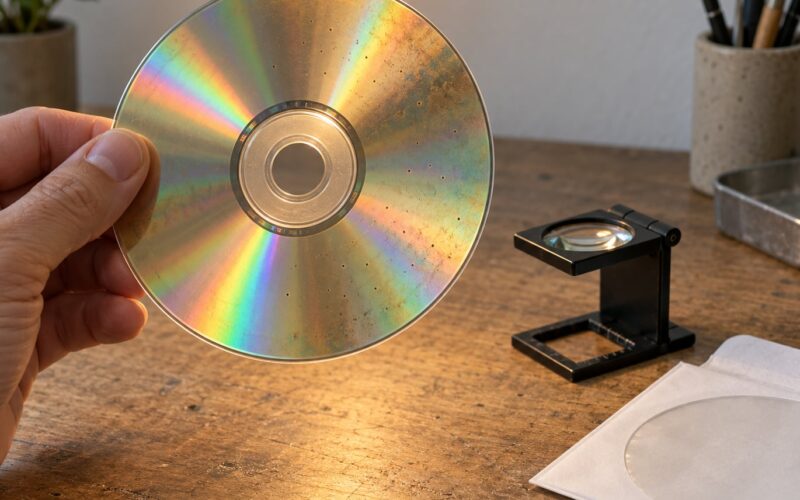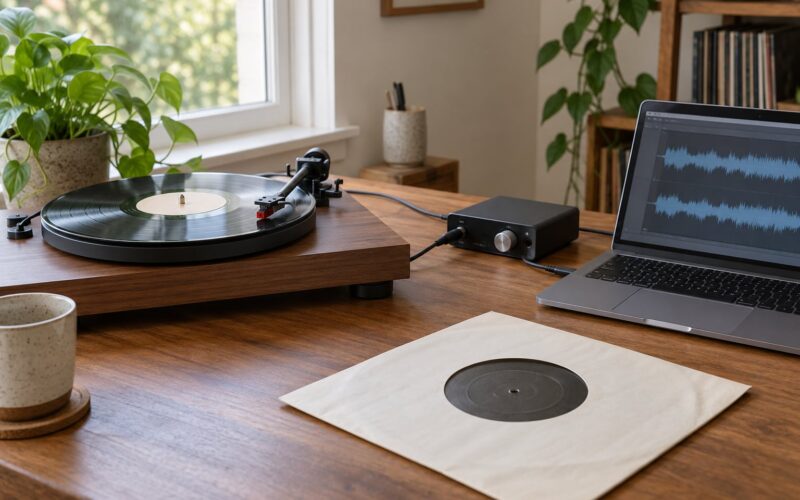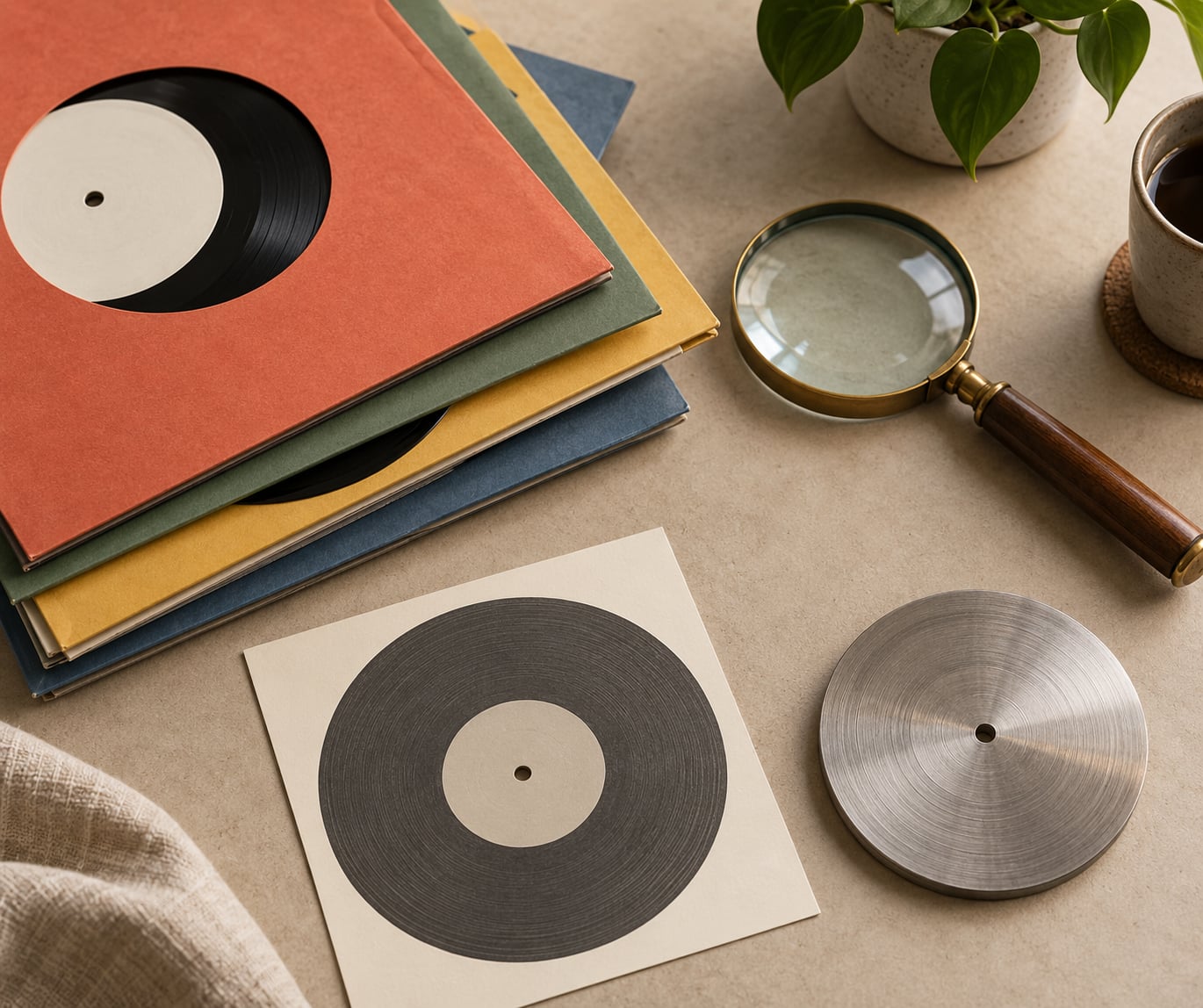
A limited edition vinyl pressing is a record run that a label deliberately caps at a small, stated number of copies and, usually, marks copy by copy so buyers can see how the run was divided. The cap comes from manufacturing and commercial decisions, not from scarcity of the music. Nothing about the audio changes between a numbered edition and a standard pressing of the same record, and that is exactly where most confusion starts.
Below is how the whole chain works, from the moment a label approves an edition to the moment a numbered copy lands in a sleeve. I have kept it practical, because the questions that come up on collector boards are almost never about how vinyl is pressed in the abstract. They are about whether the number on the jacket is real, and whether the copy in a listing is the edition it claims to be. As of 2026, the honest answer to most of them takes longer than a forum reply.
Table of Contents
- What Is a Limited Edition Vinyl Pressing?
- How Limited Edition Vinyl Pressings Work From Start to Finish
- Approval, masters and licensing
- Cutting the lacquer
- Plating the stampers
- Pressing, trimming and packaging
- Distribution and sale
- What Does the Edition Number Mean?
- Why Labels Set Different Quantities
- Which Parts of a Vinyl Record Can Be Limited?
- How Are Numbered and Collectible Pressings Manufactured?
- How Can You Tell a Real Limited Edition From a Reissue?
- How Limited Are Limited Edition Vinyl Pressings Really?
- How Do Sellers and Collectors Value These Pressings?
- Frequently Asked Questions
- Does a hand-numbered limited edition vinyl pressing sound different from the standard edition?
- Are all copies in a numbered edition identical?
- Is an overpressing of a supposedly limited vinyl edition fraudulent?
- Is the smallest limited edition always the most valuable?
- How can I verify the claimed pressing quantity before I buy?
- Conclusion: What to Check Before Buying
What Is a Limited Edition Vinyl Pressing?
A limited edition vinyl pressing is a batch of records produced in a deliberately restricted quantity, commonly between 100 and 5,000 copies, where the label and the plant agree the run in advance. Copies are usually numbered, the edition size is printed on the packaging, and the run exists because the label wanted a specific object rather than because demand stopped there.
That last distinction matters more than any other on this page. An album’s commercial edition is the pressing people actually buy in quantity. Its authorized variants are the coloured, numbered or boxed versions built alongside it. A genuinely restricted numbered edition is the third thing: a small run with its own identity, its own catalogue number, and a stated total that somebody at the label signed off on.
Plenty of records wear the words “limited edition” on the back cover and nothing else distinguishes them. The label is not lying by the standards of the industry. It is just that the phrase covers everything from a 500-copy hand-numbered box set to a colour variant pressed alongside a standard run, and those two objects are not remotely comparable.
How Limited Edition Vinyl Pressings Work From Start to Finish
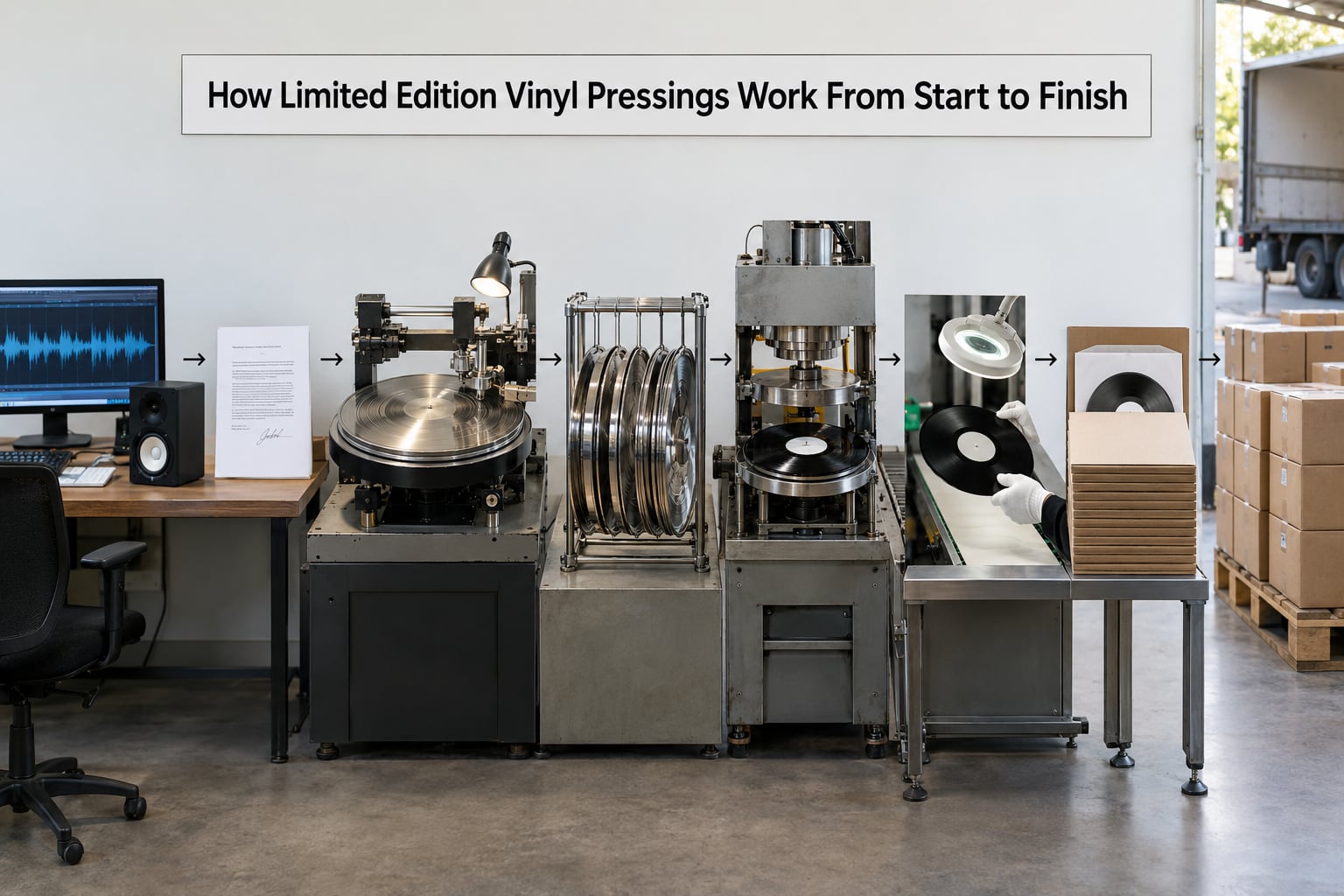
The pressing process runs in a fixed order, and every limited edition goes through all of it. The only thing that changes between a 300-copy edition and a 3,000-copy edition is how many copies come off the end of the line.
Approval, masters and licensing
The label or artist decides what the object should be: format, size, speed, colour, number of copies, packaging, and whether copies get numbered. Audio masters are delivered to an engineer with the order and a deadline.
Cutting the lacquer
A cutting engineer cuts the master onto a soft lacquer disc on a lathe, in real time. The groove is physically carved into the coating, which is why the cut cannot be perfectly undone and why the cutting room is a controlled environment.
Plating the stampers
The lacquer is silvered, then electroformed in nickel to become a negative metal disc. That negative grows from a positive father through a mother, and the mother becomes the working stamper that shapes records.
Pressing, trimming and packaging
PVC compound is heated into a hockey-puck shape and pressed between matched stampers. The record comes out, gets trimmed, gets a label, goes into a sleeve with the jacket, and is shrink wrapped and boxed.
Distribution and sale
Copies ship to the label, to distributors, to reviewers and to fans. Hand-numbering happens at assembly, either at the plant or back at the label, and it is the moment a physical object becomes a specific copy of the edition.
What Does the Edition Number Mean?
An edition number tells you where a copy sits within its run. What it cannot tell you is how the run was financed, whether the run was overshot, or whether the copy you are holding was number 12 or number 4,000 from a different pressing.
- Hand-numbered means a person wrote the number on the item, usually in marker on the jacket or on the label. This is the strongest and most labour-intensive form, and the numbering sequence is the thing collectors check.
- Individually numbered is the printed equivalent: the label prints a number on each copy and keeps a register. Harder to detect tampering than a handwritten mark, which is exactly the point.
- Company-numbered means the label stamps the whole run in advance, often in blocks. Very common on boxed sets.
- Serial-numbered is used where each component carries a matching number, so the record, booklet and box can be tied to one another. Boxed super deluxe editions usually work this way.
What a number proves: this copy came from the stated run. What it does not prove: that the run was fully sold, that no further copies were made later with the same catalogue number, or that the number was not applied out of sequence. Collectors on forums like QuadraphonicQuad and the Steve Hoffman Forum have argued for years about editions printed as “numbered” where the sequence clearly jumps or restarts.
Why Labels Set Different Quantities
The quantity is a business decision constrained by physics. A stamper is good for roughly 1,000 to 2,000 records before the fine detail in the groove softens, plants have minimum order quantities that often sit in the few hundred range, and small runs cannot spread setup cost across enough copies to make each one cheap.
Here is how the common tiers usually break down.
| Quantity tier | Typical use | What the number proves |
|---|---|---|
| Under 100 copies | Artist-run and label-run special projects, crowdfunding releases, one-off variant splits | Almost nothing beyond the label’s word; the number exists but verification is impractical |
| 100 to 500 copies | Small numbered editions, exclusive colour variants, regional specials | A real, deliberate cap, though variant splits make the true count unknowable |
| 500 to 2,000 copies | Boxed deluxe editions, anniversary editions, tour variants | A production constraint as much as a marketing one |
| 2,000 and up | Variants pressed alongside a standard commercial run | Little scarcity; the distinguishing feature is colour, package or numbering |
A smaller run is not automatically better. The reason is visible in the table: scarcity only means something when demand exists for that specific object. A 300-copy variant of a record nobody wants can be less interesting than a common pressing of a widely played album in good condition.
Which Parts of a Vinyl Record Can Be Limited?
Collectors compare editions by component, because labels limit different parts and the part being limited often tells you what the label is actually selling.
- The record itself may be a specific colour, a specific compound blend, or pressed at a particular speed or size.
- The jacket may be a numbered variant with a different print run or a different finish.
- Inserts and booklets are often the real limited component, printed in small quantities while the record runs larger.
- Posters, prints and cards are cheap to limit and common in deluxe boxes.
- Packaging can be the limited thing entirely: a slipcase, a foil-blocked sleeve, a numbered box.
- Accessories such as a tote, poster or pin are frequently included at no extra cost to the pressing economics.
- The complete edition is where every component shares one number, which is why serial-numbered box sets command the most attention.
When you compare two editions, check the components separately. A copy can have a limited booklet and a completely standard record inside it, and that is a different product from the reverse.
How Are Numbered and Collectible Pressings Manufactured?
One thing is worth clearing up early, because it comes up constantly: vinyl records are pressed, not individually recorded. Every copy in a run of 2,000 is a moulded copy of the same negative metal, so pressing cannot introduce meaningful differences in the audio between copies.
The plant floor runs like this.
- Cutting happens once per side, on a lathe, in real time.
- Plating turns the lacquer cut into metal through silvering and electroforming, producing a hierarchy of father, mother and stamper that most collectors only ever see described.
- Forming heats PVC compound into a puck.
- Pressing squeezes that puck between matched stampers for roughly half a minute.
- Inspection checks the groove, the surface and the dimensions.
- Assembly adds the label, inner sleeve, jacket and any inserts.
- Hand-numbering happens here, by hand, which is why numbered editions take longer to assemble than standard ones.
- Shrink wrapping and boxing close the run, sometimes with a sticker seal carrying the same number.
Quality control sits across all of it. Test pressings are made before a run and go out to a handful of people to catch surface noise, level shifts and cutting problems before a plant commits a full run. Those test copies usually lack final packaging and often carry blank or plain labels, which is the detail that trips up newcomers.
How Can You Tell a Real Limited Edition From a Reissue?
How to check vinyl pressing number is straightforward once you know where to look. Work through the following in order, and you will rule out most mismatched listings before you have spent anything.
- Catalogue number. Every edition, variant and reissue has its own. If the number matches a standard run, you are looking at a reissue regardless of what the sleeve says.
- Matrix and run-out etching. The marks in the run-out groove record the plant, the master, the plating workflow and often the cutting engineer. This is the hardest evidence on the object, because it is on the record itself.
- Label and jacket information. Look for a stated edition size and a plant credit. A sleeve claiming “limited edition” with no number and no plant is doing a lot of talking.
- Manufacturing credits. The back cover or the run-out groove names who pressed it. Plants are listed on collector databases, so an unknown plant name is worth pausing over.
- Edition statement and numbering. Check whether the numbering looks sequential, whether it matches the components, and whether the number is handwritten, printed or stamped.
- Seller documentation. Photographs of the run-out groove, the number and the catalogue number. For a first pressing versus reissue comparison, these three pictures settle almost everything.
Cross-reference the catalogue and matrix numbers against collector databases such as Discogs. That is the fastest single check available and it costs nothing.
How Limited Are Limited Edition Vinyl Pressings Really?
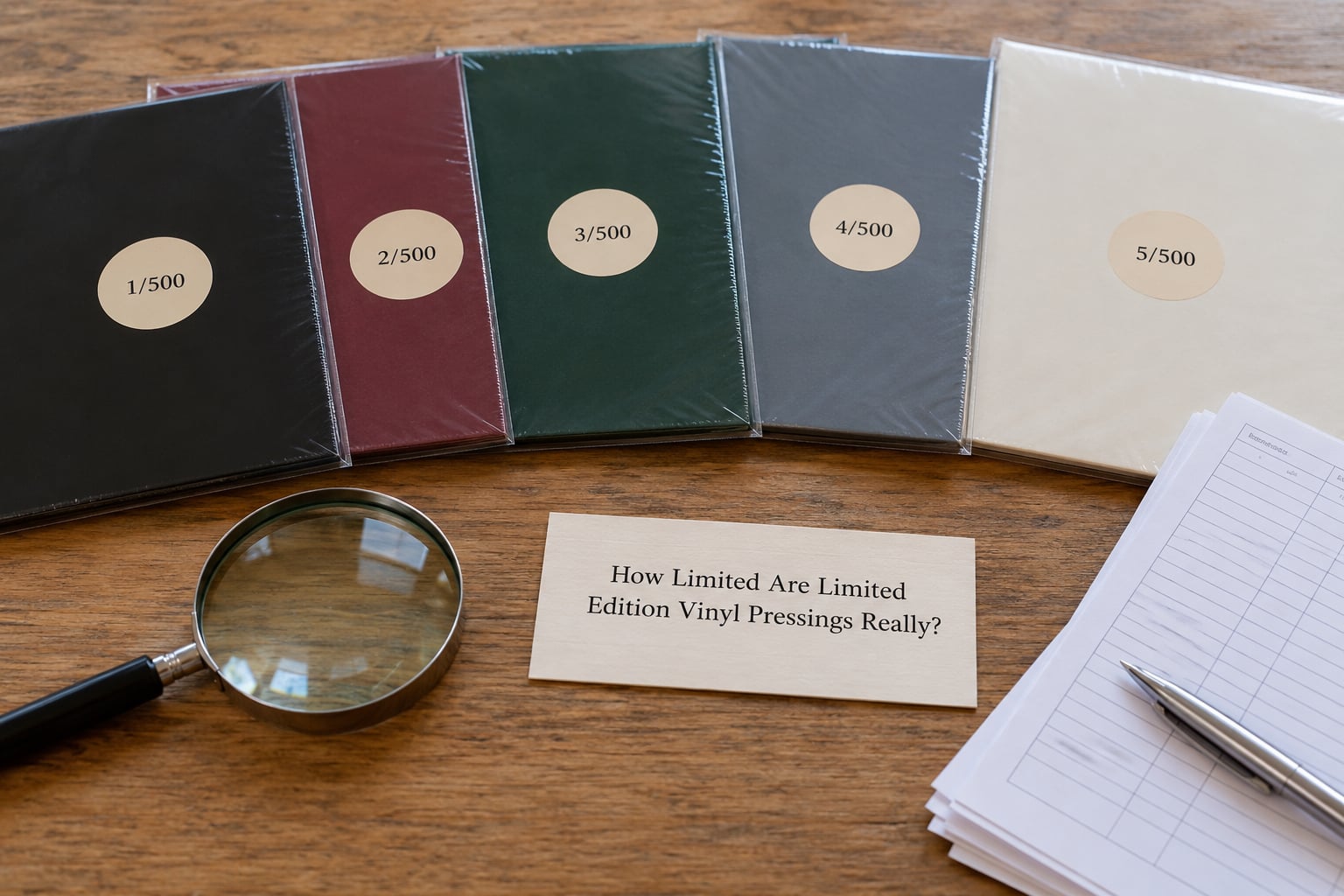
Sometimes not very, and the honest answer is more useful than the marketing one. Collectors have argued about this for decades, because over-pressing is common enough to be unremarkable and rare enough to sting.
- Over-pressing. A label runs past the stated total and sells the extra copies quietly. Nothing about the object reveals it, which is why collectors treat the stated figure as a claim rather than a fact.
- Distributor allocations. The number a shop sees is a slice of a larger run, which is how a 1,000-copy edition can leave copies available for years.
- Colour variant splits. When a run is divided across colours, the totals per colour are often not published. “How many blue ones exist” is genuinely unknowable from outside the plant.
- Misprints and returns. Incorrect jackets and damaged copies get replaced, and replacements sometimes leave the numbering sequence.
- Unofficial releases. Lathe-cut records and unlicensed editions exist outside the system entirely, and they are not part of any numbered run.
- Reused catalogue numbers. A catalogue number that reappears years later on a different package means the numbering means something different the second time.
None of this makes the object fake. It means the claimed number describes intent, not a verified sale total.
How Do Sellers and Collectors Value These Pressings?
Value here is a negotiation between what a record is, how it sounds, and how much of it exists in good condition. Buyers weigh a handful of factors, and no single one decides the outcome.
- Artist and title demand. This dominates everything else in practice.
- Condition. A sealed, unplayed 500-copy edition and a played copy of the same thing are different objects to a buyer.
- Mastering. The cut and the plating workflow matter more to most listeners than the colour of the vinyl.
- Completeness. Missing inserts and booklet halves of a box set’s value quickly.
- Provenance. Receipts, correspondence, a documented chain of ownership.
- Scarcity and market activity. How many comparable copies changed hands recently, and how fast.
Collectors tend to take a signed copy over a colour variant when both are available, and they tend to value matrix number evidence over a seller’s description. Both habits come up repeatedly in collector discussions. Neither guarantees a return, and nobody should promise you one.
Frequently Asked Questions
Does a hand-numbered limited edition vinyl pressing sound different from the standard edition?
No. Hand-numbering is an assembly step applied after the record is pressed, and every copy in a run comes off the same stamper. Sound differences come from the master, the cut, the plating workflow and the plant, not from the number written on the jacket. Where editions genuinely differ in sound, the cause is almost always a different master or a different stamper generation, not the numbering itself.
Are all copies in a numbered edition identical?
The audio is identical, but the physical copies are not. Records from the same run can vary in surface noise, pressing weight and seam appearance depending on where in the run they were made and how many stampers the plant used. Components differ too, since jackets and inserts come from separate print runs. Collectors grade condition per copy, which is why two copies of one edition can sit in different condition bands.
Is an overpressing of a supposedly limited vinyl edition fraudulent?
It is a breach of the label’s stated commitment, and collectors on forums like QuadraphonicQuad treat it as a reason to distrust the edition rather than as a crime. Nothing on the object shows it, so a buyer usually cannot prove it. The practical response is to treat every printed quantity as a claim, check the catalogue number and matrix etching for repeat issues, and price accordingly rather than assuming the stated total was honoured.
Is the smallest limited edition always the most valuable?
No. Scarcity only converts into value when there is demand for that specific record, artist and edition. A 300-copy variant of an album with a small following can be worth less than a standard pressing of a widely collected album. The variables that decide it are artist demand, mastering quality, condition, completeness and how often comparable copies actually sell. Edition size is one input, and often a weak one.
How can I verify the claimed pressing quantity before I buy?
Ask the seller for photographs of the run-out groove etching, the catalogue number and the numbering itself, then cross-reference both numbers against collector databases such as Discogs. Confirm the plant credit against known plants and check whether the catalogue number has been used before on a different package. For a colour variant, ask whether the split per colour was published, because those totals are often never disclosed.
Conclusion: What to Check Before Buying
Start with the object, not the hype. Identify the exact edition by catalogue number, compare the matrix etching against collector databases, and confirm which components are actually limited rather than assumed to be.
Then check the numbering itself: sequential, matching across components, and applied to this copy rather than described in a listing. Look at condition, because it decides the outcome more often than the edition size does. Last, ask the seller for documentation and provenance, and treat the stated quantity as a claim until something on the record itself corroborates it.
None of this is difficult, and it takes about ten minutes. It is the difference between collecting a pressing and collecting a story about one.