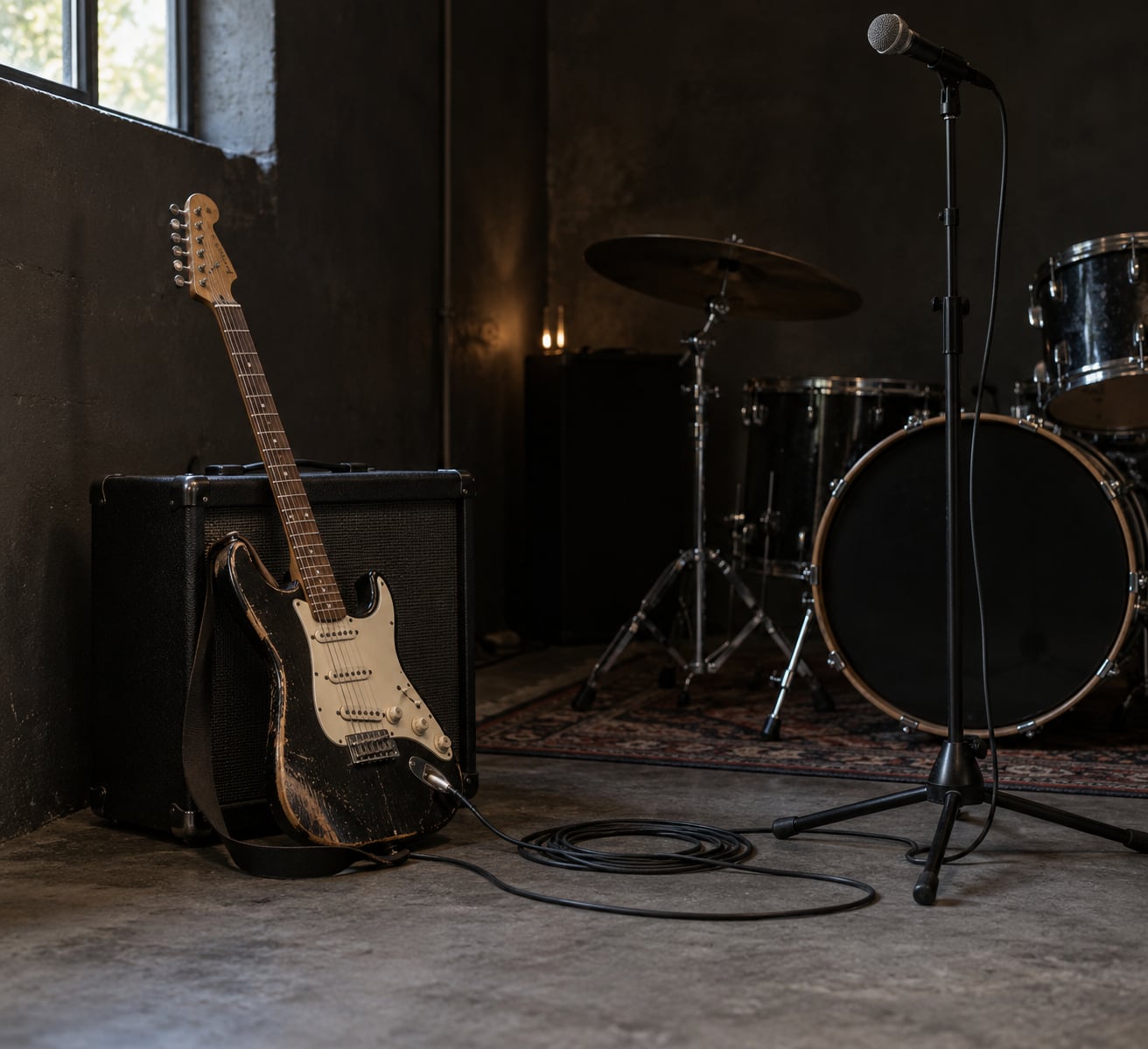
What makes black metal sound raw comes down to a handful of deliberate choices stacked on top of each other: saturated high-gain guitars, fast tremolo picking, relentless blast beats, harsh vocal delivery, a dark mix with long reverb tails, and a recording that leaves hiss, room noise and small mistakes in the file. Nobody sits down and dials in “raw.” It is what happens when a band records quickly, in a small room, with limited gear, and decides not to sand the edges off.
That is the short version. The longer version explains why those choices sound the way they do, and why a lot of people who say they dislike raw production are reacting to bad recording rather than to the aesthetic itself.
I have spent a lot of evenings with records that sit somewhere between “sounded broken” and “sounded ancient,” and the pattern holds: rawness is a set of omissions you choose to keep. It is closer to a decision than a technique.
Table of Contents
- What Makes Black Metal Sound Raw?
- The Core Ingredients of a Raw Black Metal Sound
- How Do Guitars Create That Raw Black Metal Edge?
- What Makes Black Metal Guitar Riffs Sound Aggressive?
- What Gives Black Metal Vocals Their Harsh Character?
- How Do Drums and Recording Methods Shape the Sound?
- Why Does Black Metal Sound Lo-Fi?
- Is Raw Always Better in Black Metal?
- Frequently Asked Questions
- Is distortion required for black metal to sound raw?
- Does raw black metal have to be recorded poorly?
- How can a musician make a demo sound more aggressive and raw?
- What makes a black metal vocal sound harsh?
- Is lo-fi production the same thing as raw black metal?
- How is raw black metal different from ordinary heavy metal?
- Conclusion: Start With the Feeling, Not the Gear
What Makes Black Metal Sound Raw?
Rawness in black metal comes from performance intensity plus deliberately limited production. Aggressive playing, high-gain distortion, tremolo riffs, blast beats and shrieking vocals carry the aggression, and the recording keeps the things a studio would normally remove: hiss, room tone, bleed between microphones and very little corrective editing.
Listeners tend to describe the result in adjectives first, then in production terms. They hear dirty, thin, cavernous, distant or muffled. Underneath those words sit concrete choices, and once you can name them the whole genre starts to make more sense.
There is also a tension inside the sound that holds it together: the guitars and drums are tight and violent, while the reverb, hiss and darkness stretch everything into a huge, cold space. Aggression and atmosphere are pulling against each other on purpose.
The Core Ingredients of a Raw Black Metal Sound
This is the list listeners usually want, so here it is in one place. Not every track uses all ten, and atmospheric and dungeon synth styles lean on later entries more than early ones.
- Saturated, high-gain guitar tone. Amplifiers pushed past clean into thick distortion, often with a mid-heavy voicing that turns every note into a buzzsaw edge.
- Tremolo picking and riff-based writing. Very fast single-note picking and short riff cycles instead of long sustained chords.
- Fast, simple drum patterns. Blast beats and driving one-foot patterns that keep the low end relentless without much variation.
- Harsh vocal delivery. Shrieks, rasps, screeches and shouts, usually close-miked, often with distortion on the vocal bus.
- Limited instrumentation. Guitar, bass, drums and voice, with a small number of melodies per song so each riff gets space.
- Dark, long reverb tails. Gated or hall reverb pushed into the foreground, which is what creates the cavernous, underground-space feeling.
- Lo-fi recording. Cassette, four-track, low preamp quality or limited bandwidth, used as a colour rather than as a limitation.
- Hiss and room noise left in the mix. Tape hiss, amp hum and microphone bleed kept audible instead of gated out.
- Minimal editing. Whole performances captured in single passes, with little quantising, comping or corrective compression.
- Mid-range-heavy, dark mastering. Mixes pushed to feel dense and unforgiving, often with less dynamic range and more saturation than a mainstream metal record.
Read that list and you can usually diagnose a record. Lots of tremolo picking and reverb, no drums? Atmospheric. Blasts, hiss, minimal edits? Underground raw. Slow, huge guitars buried under keyboards? Depressive suicidal territory.
How Do Guitars Create That Raw Black Metal Edge?
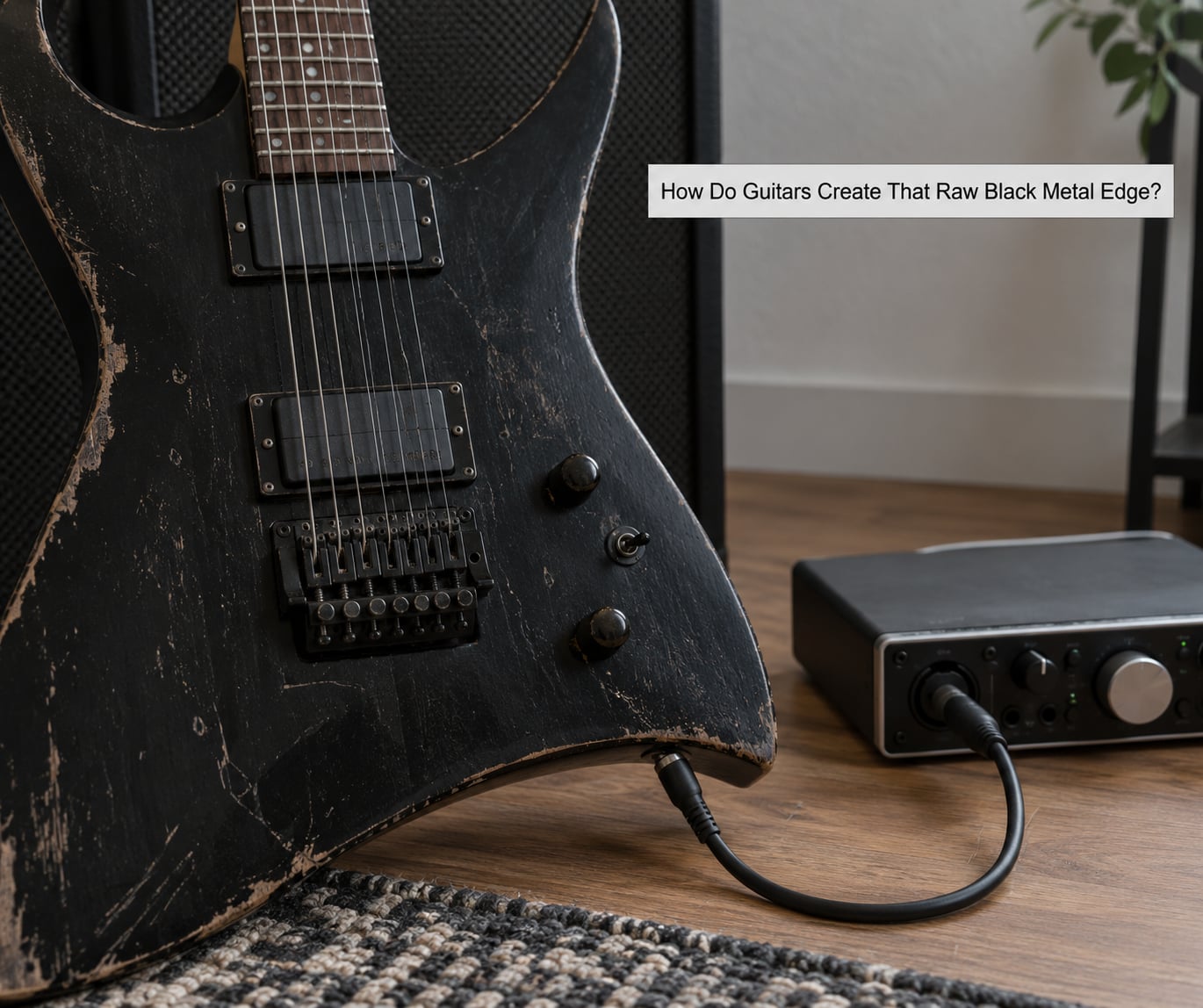
The guitar does more work in black metal than in most metal styles, because it carries both the aggression and the atmosphere. A distorted riff and a reverb-drenched lead are the same instrument doing two different jobs, and they usually appear on the same track.
Distortion is the foundation. Cranking high gain produces harmonic content on every note, which means a single string sounds thicker than it should and multiple strings blur into one mass. That blur is the point. It removes the clean definition that makes a riff read as individual notes and turns it into a texture.
Mid-heavy voicing matters more than gain level. When the amp is scooped or the guitar’s mids are pushed, the low end stays clear and the upper mids get aggressive, which is why these riffs cut so easily on small speakers and earbuds.
How the amp is miked changes the whole character. Off-axis placement and room mic’ing capture more air and grit than a dead-on close mic, which is one of the cheapest ways to make a guitar sound older and less clinical.
What Makes Black Metal Guitar Riffs Sound Aggressive?
Four things do most of the work: palm muting to control low-end and create short, punchy attacks; picking-hand placement so the string bites without choking the tone; low-mid weight so riffs sit firmly in the mix; and just enough chaos, since a fast riff with a slight stumble feels more alive than a perfectly quantized one.
Tremolo picking is the signature texture. Extremely fast single-note picking on a riff or chord shape creates a shimmering, insect-like layer that sits almost like a texture rather than a melody. It also fills a lot of time without adding new notes.
Mix placement is the last piece. Guitars are often kept wide and slightly quieter than you would expect, then reinforced at the centre. That creates a wall without losing the sense of a single player in a room.
What Gives Black Metal Vocals Their Harsh Character?
Voice in raw black metal is mostly texture, not melody. Shrieks, rasps, screeches and mid-shouts are short, shouted forms that carry more impact than they do tune, and the recording tends to place them close to the microphone so the mouth, breath and consonants stay audible.
Rasp-based vocals, where the voice is pulled into a narrow, growling shape, are the most common approach in the raw and underground styles. Screeches, which are higher and more strained, tend to sit on top of fast guitar work, often in double-tracked layers to make the wall thicker.
Effects do a lot of the perceived harshness. Light distortion on the vocal bus, heavy compression to make the delivery sound relentless, and a long reverb with a hard pre-delay on a separate layer are common. Musicians on production forums describe varying the vocal treatment across sections of one song, alternating a compressed, distorted, quieter version with a more open and louder one, rather than settling on a single vocal sound for the whole track.
Rawness here is a performance and production choice, not a requirement. Plenty of raw-sounding black metal records use clean, controlled vocals over rough guitars, and plenty of polished records bury enormous vocal stacks under compression and tuning.
How Do Drums and Recording Methods Shape the Sound?
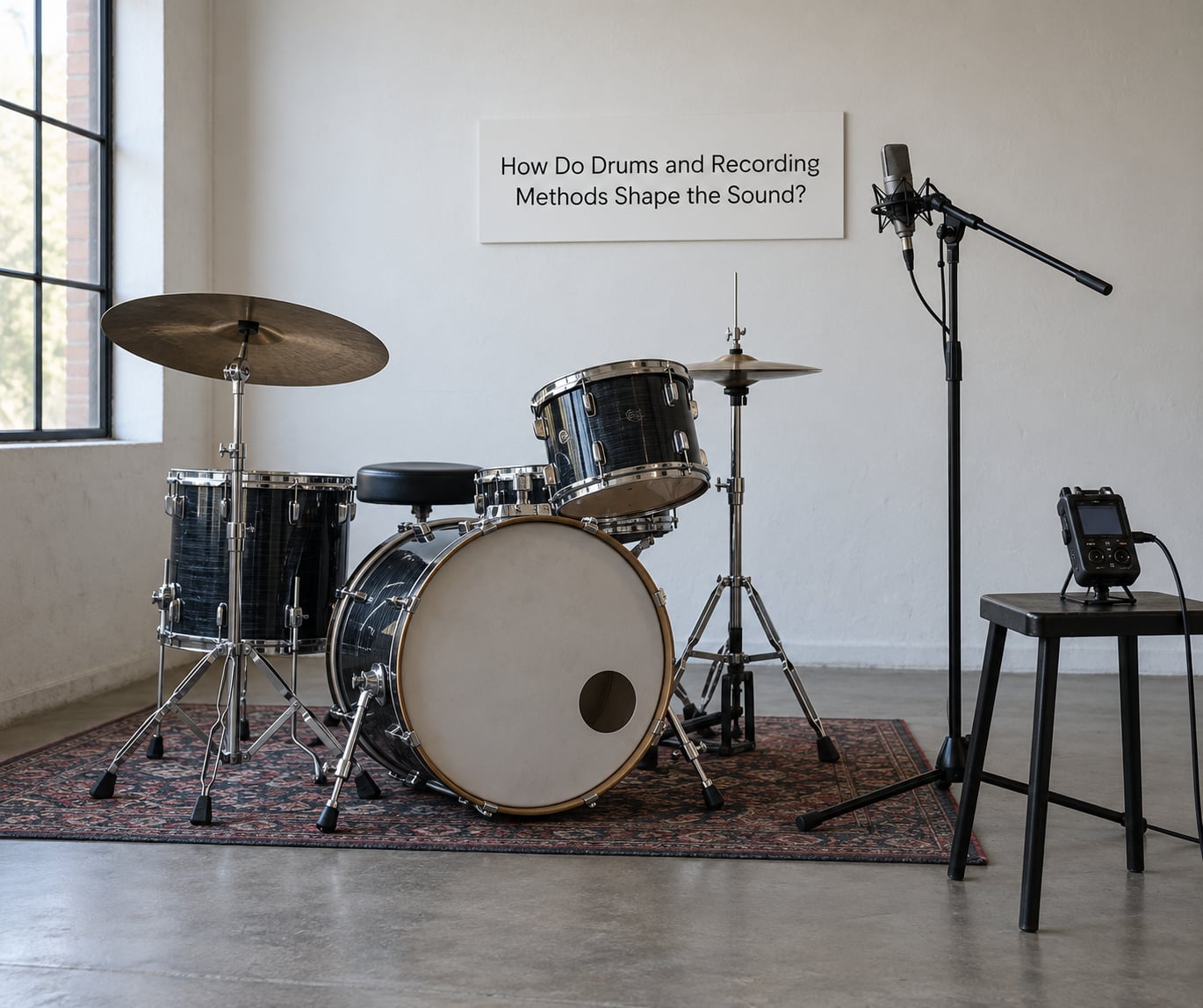
Drums supply the weight. A raw black metal kit is usually simple: kick, snare, one or two toms and cymbals, played fast with a lot of energy and not much variety. One-foot blast patterns, where the foot keeps a steady pulse under the hands, give songs a relentless forward motion without much arranging.
The snare is the centre of that. Where it sits in the mix, whether it has a gated reverb behind it, and how much of the room you let into the recording all shape the drum sound more than the cymbals do. Raw records often let cymbal bleed sit across the whole kit, which makes the drums sound like one noisy object instead of separate pieces.
Recording method is where the rawness usually lives. Bands track whole songs in single passes in rehearsal rooms, which means bleed everywhere, uneven levels, no fixable mistakes, and room ambience baked permanently into the track. Very few overdubs, very little editing, and the drummer playing for energy rather than precision.
That contrast is worth sitting with. The performances are often tight while the recordings are loose. Both matter, and swapping one for the other changes the genre: precise performances with a polished mix give you modern black metal, while loose recordings of precise performances give you the raw version.
Forum discussion on home recording keeps circling one point. Programmed drums often read as robotic and lifeless to listeners who expect the raw aesthetic, and the common request is more crashes, more toms, and a looser feel. Programmed drums are not automatically wrong, but they are difficult to make convincing.
Why Does Black Metal Sound Lo-Fi?
Lo-fi in black metal is usually a deliberate choice of medium, not a lack of resources. Bands record to cassette or four-track because the degradation sounds good: hiss becomes part of the noise floor, saturated overload rounds off transients, and the limited bandwidth takes the shine off the top end. The result sounds older, further away and less clinical than a digital recording.
Analog noise has a texture that noise reduction plugins destroy. Once you gate out every hiss and hum, the recording tightens up and starts to sound like it was made yesterday, which is often the opposite of the intended effect.
Clipping and hard compression play a similar role. When a mix is pushed until it distorts, the peaks soften and the whole track compresses into itself, creating a dense, in-your-face wall. Combined with a darker overall tone, that density is a lot of what listeners describe as “raw.”
None of this means a raw recording has to be a badly made one. Bands with money and good engineers make raw records on purpose, and modern releases can be completely hi-fi while still sounding brutal. Production choices, not the quality of the gear, are what make a record sound raw.
Is Raw Always Better in Black Metal?
No. Rawness is one set of tools, and it works best when the song needs it. It is a poor fit for long instrumental passages that need dynamic development, for dense orchestration, or for anything where you want the listener to follow a melody with many moving parts.
It works well when the song is short, repetitive and confrontational, when the point is atmosphere over detail, or when the band wants the listener to hear a room full of people rather than a stack of plugins. Clarity and dynamics can support rawness rather than fight it, since a raw recording with clear separation between instruments can be more aggressive than a muddy one.
Different substyles use rawness differently:
| Style | Rawness markers | Typical choices |
|---|---|---|
| Raw / underground | Highest rawness | Blast beats, tremolo riffs, hiss, minimal edits, shrill shrieks |
| Atmospheric | Medium, mostly in the guitars | Long reverb tails, slow clean passages, ambient pads, occasional blast sections |
| Depressive suicidal | Low-frequency rawness | Clean or lightly driven guitar, very slow pacing, sub-heavy mix, sparse drums |
| Modern / symphonic | Low rawness | Triggered and layered drums, tuned and layered vocals, clear low end, orchestral parts |
| Dungeon synth | Medium, all synth-based | Detuned synths, drums from a machine or very tight kit, thick distortion and reverb |
The honest answer is that the debate is mostly about scene identity rather than sound quality. Plenty of musicians on production forums argue that rawness suits punk, sleaze and underground styles while polished production suits symphonic, industrial and power metal. That is a taste position, and both sides can point to records that prove their case.
The useful question is not whether raw is better but whether the recording sounds intentional. A producer who limited everything on purpose is doing something very different from someone who ran out of rehearsal space.
Frequently Asked Questions
Is distortion required for black metal to sound raw?
No. Distortion on guitars is close to standard in the genre, but rawness itself is not a single effect. Raw recordings with clean guitars and heavy drums exist, and distorted records can sound polished. What matters more is the combination of limited bandwidth, room sound, minimal editing and an intentional tone. Judge the whole record rather than assuming gain alone produces rawness.
Does raw black metal have to be recorded poorly?
No, and this is the most common misunderstanding. Bands recording raw black metal often have studios, engineers and good microphones. They choose rehearsal-room captures, cassette saturation and limited editing because those choices serve the music, not because they could not afford anything better. A badly recorded track sounds unclear and lifeless. An intentionally raw one sounds rough but deliberate, with clear intent behind every limitation.
How can a musician make a demo sound more aggressive and raw?
Pick three changes and do them properly. Record guitars through a pushed amp with some room miking instead of a tight close mic. Capture the whole song in fewer passes with less editing, and leave some bleed and room tone in. Add a long reverb on one layer while keeping a dry, aggressive version underneath. Avoid gating out every bit of noise, since the hiss is part of the texture.
What makes a black metal vocal sound harsh?
Three things: delivery, microphone distance and bus processing. Shrieks and rasps are shouted forms with limited melody, recorded close enough that breath and consonants stay audible. Light distortion and heavy compression on the vocal bus make the delivery relentless, while a separate layer of reverberant vocals adds depth. Varying these treatments across sections keeps a long track from sounding uniform.
Is lo-fi production the same thing as raw black metal?
They overlap heavily but they are not identical. Lo-fi describes a technical quality: reduced bandwidth, added noise, limited fidelity. Raw is a broader artistic result that can come from lo-fi methods, or from loose playing and minimal editing. A band can record clean and still sound raw, and a lo-fi hip hop beat can stay smooth and polished. Lo-fi is a tool; raw is a result.
How is raw black metal different from ordinary heavy metal?
Mainly in performance and production priorities. Raw black metal leans on fast riffing rather than long sustained chords, blast beats rather than varied grooves, and harsh vocal textures rather than melodic singing. The recording keeps noise and imperfection where heavy metal production usually removes them. That is not a hard boundary, since subgenres like doom, stoner and war metal deliberately sit on the raw side too.
Conclusion: Start With the Feeling, Not the Gear
So what makes black metal sound raw: aggressive performance, saturated guitars, tremolo riffs, blast beats and harsh vocals, held together by a dark mix, long reverb tails and a recording that keeps the hiss and the room in it. Every one of those is a choice, and the reason the sound feels intense is that the tension between precise playing and imperfect recording was kept instead of fixed.
Start by deciding what the song needs to feel like. If it should sound small, cold and immediate, record it fast in a real room and leave the noise in. If it needs to sound enormous and cinematic, the reverb and low end do more work than extra distortion ever will.
Then choose your gear last. Almost every raw black metal record ever made was tracked on equipment that would be considered disposable today.