A concept album is a record built around one story, character, or theme that runs across every track, so the songs only fully work played front to back in the running order. To listen to a concept album properly: pick the intended edition, give it one uninterrupted sitting without skipping or reading ahead, then map the narrative and motifs on a second and third pass. Budget 40 to 90 minutes plus notes, and expect two or three listens before it clicks.
The reason people bounce off famous records is rarely the music. It is that they listen like a search engine, grabbing tracks out of order, checking lyrics mid-song, and wondering why nothing adds up. A concept album depends on repetition and callback, and both fall apart the moment you take control away from whoever sequenced it.
Here is the method, step by step, with the reasoning behind each part so it holds up for metal, prog, rock and anything else that tells a story across a tracklist.
Table of Contents
- What You Need
- How to Listen to a Concept Album Properly: Step-by-Step
- Step 1: Check the Album’s Context Without Spoiling the Story
- Step 2: Read the Lyrics and Liner Notes Selectively
- Step 3: Listen Once Without Interrupting the Flow
- Step 4: Map the Story, Themes, and Musical Changes
- Step 5: Compare the Album with Its Context
- Step 6: Revisit It and Write Your Impressions
- Common Mistakes
- Frequently Asked Questions
- Should I read the lyrics before listening to a concept album?
- Is a concept album the same as a narrative album?
- How many times should I listen before forming an opinion?
- Do I need to listen to a concept album in order?
- Should I research an album before its first listen?
- Conclusion
What You Need
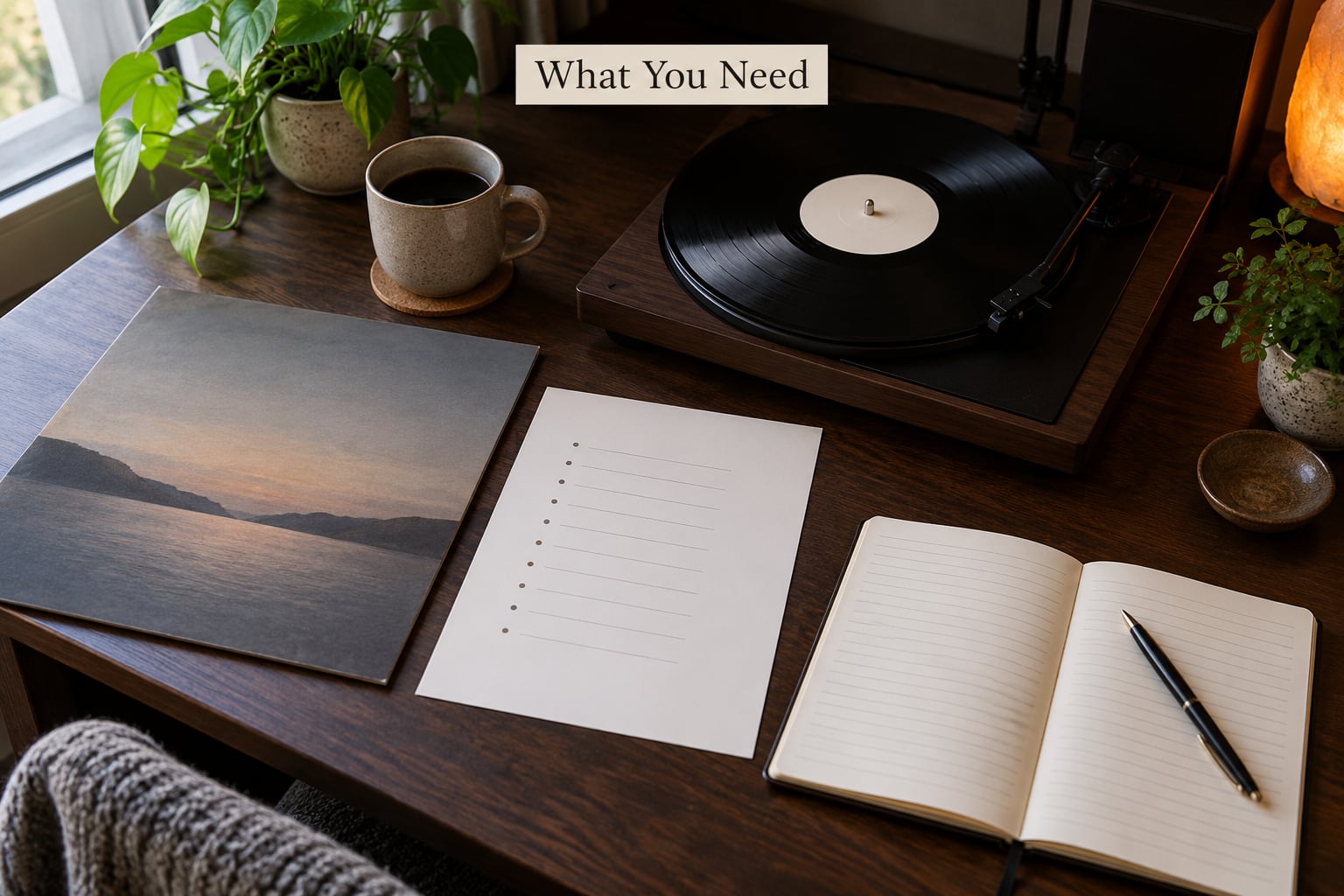
Four things, and only one of them is equipment.
The intended edition. Check whether the record has been reissued, expanded, or reordered. For a lot of concept albums the original album sequence is still the best one, and knowing that before you press play saves a wasted evening.
An uninterrupted sitting. Eighty-minute records exist. The Wall runs past 80 minutes, Tommy close behind, and metal and prog concept records can go further still. If you know the runtime before you start, an unfamiliar record stops being intimidating.
Background material, optional. Liner notes, a printed lyric sheet, and the artist’s own remarks about the record help. They are a companion, not a crutch.
Somewhere to put observations. A notebook works better than a phone note. Writing one line per track as the album plays keeps you listening instead of tapping.
Format matters far less than people claim. Streaming in album order is a perfectly good way to hear a concept record. Owners of vinyl describe the forced side flip as a useful ritual, but the habit is the point, not the medium.
How to Listen to a Concept Album Properly: Step-by-Step
Step 1: Check the Album’s Context Without Spoiling the Story
Before you listen, learn five facts: the artist, the release year, the genre, whether it is a studio record or a live document, and where it sits in the band’s catalogue.
Where the concept came from also matters. Some stories are drawn from history, some from a single character’s decline, some from one long night, and knowing the origin tells you what to expect without giving the plot away.
Use official sources: the band’s own site, the label’s page, interviews where the band talks about the idea rather than the plot, and the credits on the release itself. Avoid anything titled a plot summary, a synopsis, or a full explanation. If a page tells you what happens in track four, you have read the ending before the beginning, and no amount of concentration will get it back.
Step 2: Read the Lyrics and Liner Notes Selectively
Read, but do not study. Before the first listen, scan the track titles, the printed lyrics for the opening track, the personnel credits, any dedications, and production notes.
Track titles alone tell you a lot about shape. A record where one track is called “Interlude” or “The Motion Picture” is telling you it has scenes and connective tissue. Dedications tell you who the record is about.
Printed material varies by edition. A lyric booklet from the original release may not match a later reissue, and some anniversary editions add verses you will not hear on any track. Compare what is available rather than assuming one version is required.
Set the rest aside. Do not memorise a chorus. You want the record to arrive before you do.
Step 3: Listen Once Without Interrupting the Flow
This is the step that decides whether the album works for you. Play it once, start to finish, in the album’s own order, without skipping a single track.
That includes the interludes. Listeners routinely skip short transition pieces and segues, then act surprised that the story will not follow. Interludes are usually load-bearing: they carry the scene change, the time jump, the inner monologue.
Do not search lyrics while it plays. Do not open a second app. Do not stop for a favourite song and come back to it later, because on a concept album a track pulled out of position often means something different from the same track in sequence.
What to notice instead of lyrics: the opener setting the scene, the first time a short musical figure appears, where the energy drops, which songs sit next to each other and why. Let recurring characters and images register without forcing them into a plot.
Step 4: Map the Story, Themes, and Musical Changes
On the second pass, give the album structure. Write one line per track about what it does rather than what happens, then look at the lines together.
Track what changes: tempo, instrumentation, vocal delivery, dynamics, recording texture. Most concept records are built so the sound itself carries the arc, which is why a compressed file or earbuds on a train can flatten something that is doing a lot of work.
Track what repeats. A motif that shows up three times in different arrangements is usually telling you the record’s real subject. Circular or descending motifs mean one thing, a rising figure means another, and you will hear them better the second time through.
Not every concept album has a plot. Some are thematic, some are a mood held across nine songs, and treating a thematic record as a puzzle with a correct solution is the fastest way to convince yourself you did not get it.
Step 5: Compare the Album with Its Context
Only after a full pass should you look at influences, studio circumstances, or where the record sits between the ones before and after it.
Dark Side of the Moon is usually described as a pressuring journey through greed, conflict and time, and the album itself tells you that through tempo and sequence. The Wall is built as a wall: interludes, studio chatter and half-stories that repeatedly refuse to resolve. Sgt. Pepper’s Lonely Hearts Club Band turns side two into a fake record playing inside the record.
Metal and prog do the same thing with different tools. 2112 uses recurring figures to represent a system rather than a person. Fables of the Reconstruction lets timbres and instrumentation carry most of its narrative weight.
Keep one rule: read criticism after your own reaction, not before. Reviews describing an album as confusing or triumphant will quietly shape what you think you heard, and a real conclusion held for three listens is worth more than someone else’s.
Step 6: Revisit It and Write Your Impressions
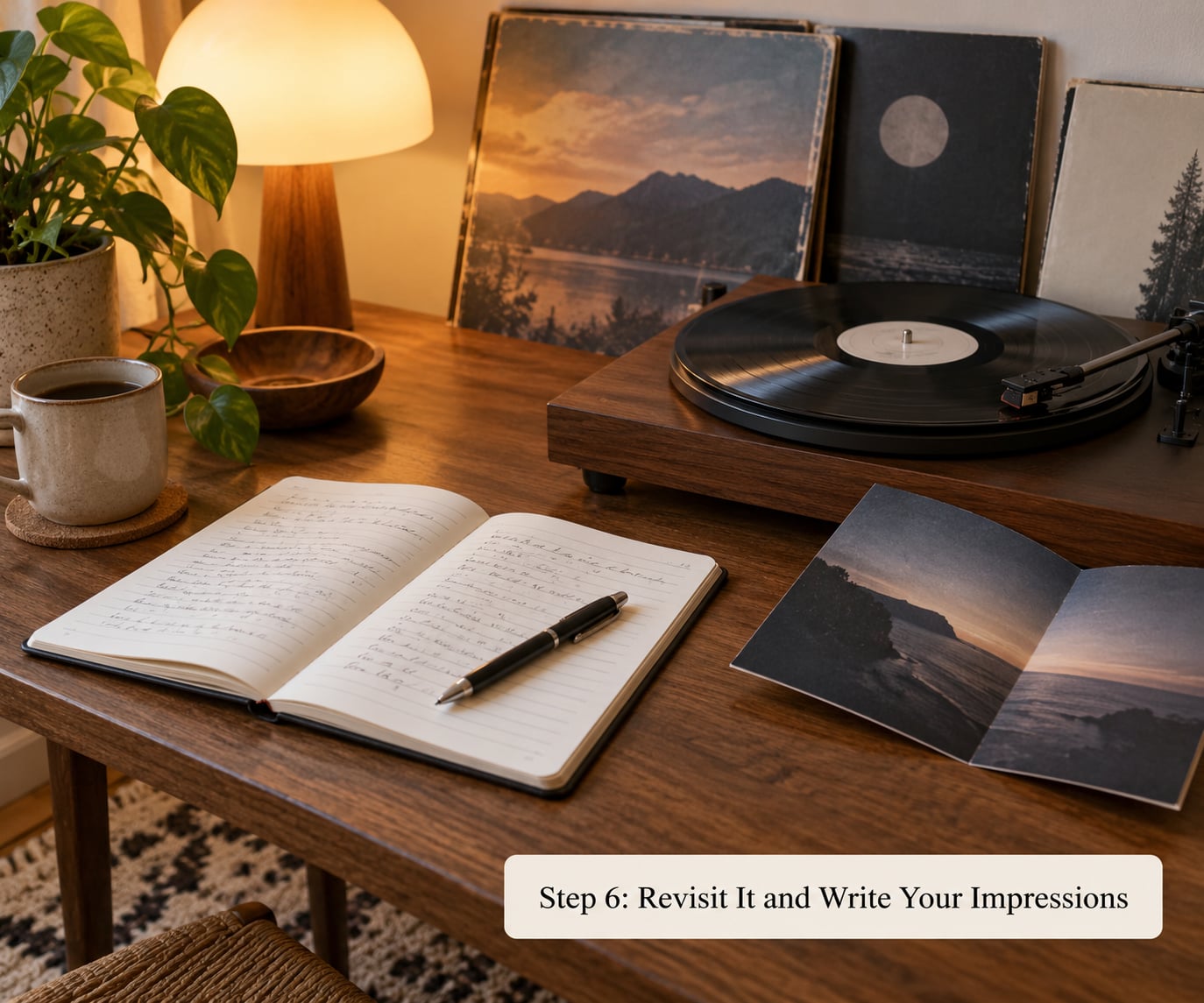
The third listen is where details surface. Use your notes as a timeline and check what you missed on pass one.
Write down the passages you liked, the character or idea that stayed with you, the transition that surprised you, and the questions you still have. Those notes make the album far easier to discuss later, because you can point at a track instead of arguing about a mood.
Most concept albums need two listens for structure and a third for detail. People who describe a first listen as confusing are usually describing an unfamiliar record, not a bad one, and the standard advice in listening forums is to give it one more full pass before deciding.
Common Mistakes
Reading a plot summary first. The single biggest spoiler available. Fix: artist interviews and credits only, nothing with a synopsis.
Skipping tracks or shuffle. The running order is the argument the band is making. Fix: album view, no skip, interludes left in.
Reading lyrics on pass one. You end up listening to words instead of music, and you miss the sequencing. Fix: listen first, read later. Listeners who are not native English speakers get more out of the album by reading on the second and third passes, which is exactly the point of having those passes.
Using an altered or random edition. Randomised or remix-heavy versions remove the arc. Fix: the standard studio album in its original sequence first.
Treating themes like puzzle answers. Themes are meant to stay open. Fix: notice patterns, leave conclusions open.
Forcing an instrumental passage into the plot. Long instrumentals often exist for pacing and mood. Fix: let them do that job.
Reading reviews too early. You will adopt someone else’s verdict. Fix: notes first, opinions second.
Turning note-taking into an exam. If tracking becomes homework, stop and just listen. Fix: one line per track, no more.
Afterwards, live versions can show you what a band treats as essential, and deluxe editions are worth a look once you already know the record. When you talk about the album with someone, warn them first; spoilers travel faster than recommendations.
Frequently Asked Questions
Should I read the lyrics before listening to a concept album?
Not before the first listen. Reading words while an album plays splits your attention and you miss the sequencing, interludes and recurring motifs that hold the record together. Listen straight through first, then read the printed lyrics and listen again. You will hear lines you missed the first time, which is the whole point of a second pass.
Is a concept album the same as a narrative album?
A narrative album tells a story with characters and plot. A concept album only needs one organising idea, which might be a story, a mood, a place, or a single character viewed from one angle. Both need to be heard in order. The difference is that a concept album without a plot can still reward a full listen through sound and theme alone.
How many times should I listen before forming an opinion?
Give a concept album at least two full listens in order before you decide, and a third if you want the small details. Most listeners who call a record confusing on one pass report that the structure landed on the second. Knowing how to listen to a concept album properly, that means front to back, no skipping, and no lyric reading until afterwards.
Do I need to listen to a concept album in order?
Yes, in order, from the first track to the last. The running order is part of the design, and moving a track changes what it does. Singles and radio edits are slices of a whole, which is why some people find a favourite song different once they hear where it actually sits. Shuffle flattens pacing and destroys interludes.
Should I research an album before its first listen?
Research the frame, not the story. Artist, year, genre, studio or live, and where the concept came from are all fair game and make the first pass easier to follow. Plot summaries, full lyrics walkthroughs and detailed reviews are not, because they use up the surprise the record depends on. Skip those until you have heard it end to end at least once.
Conclusion
A concept album rewards attention, not effort. Choose the edition you intend to hear, protect the first pass with one sitting and nothing else happening, and treat interludes as part of the record rather than padding between songs. Later passes exist to uncover details you missed, not to hunt for a single correct interpretation.
Start with this week: pick one album you only know by reputation, check its runtime, read nothing about the plot, and play it front to back once without touching the skip button. Then write one line per track.