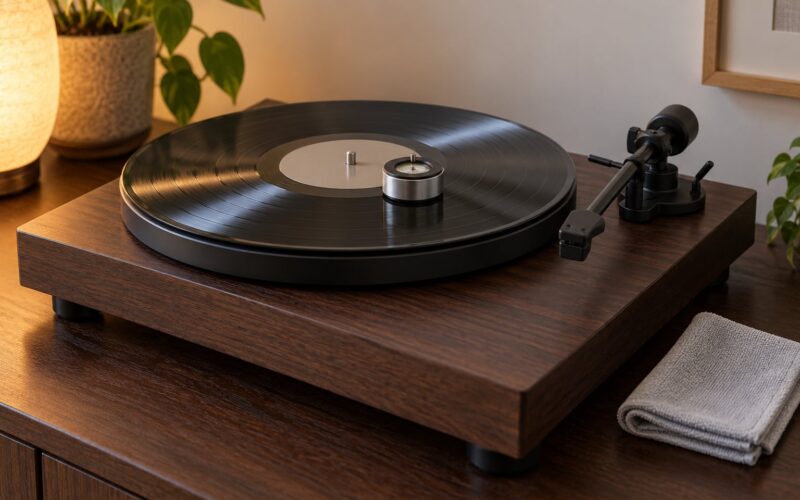
Most turntable styli last somewhere between 500 and 1,000 hours of play, which works out to roughly one to three years depending on how often you spin records. A conical tip on a budget deck can run out at 300 hours; a line-contact tip on a well-set-up system can reach 1,500. The number matters less than the symptoms, because a worn needle is quietly grinding your grooves.
Here is the honest version, and it comes with a warning: every extra hour spent playing records with a worn stylus is permanent damage to the vinyl that no amount of cleaning undoes. Replacement is cheap compared with the collection.
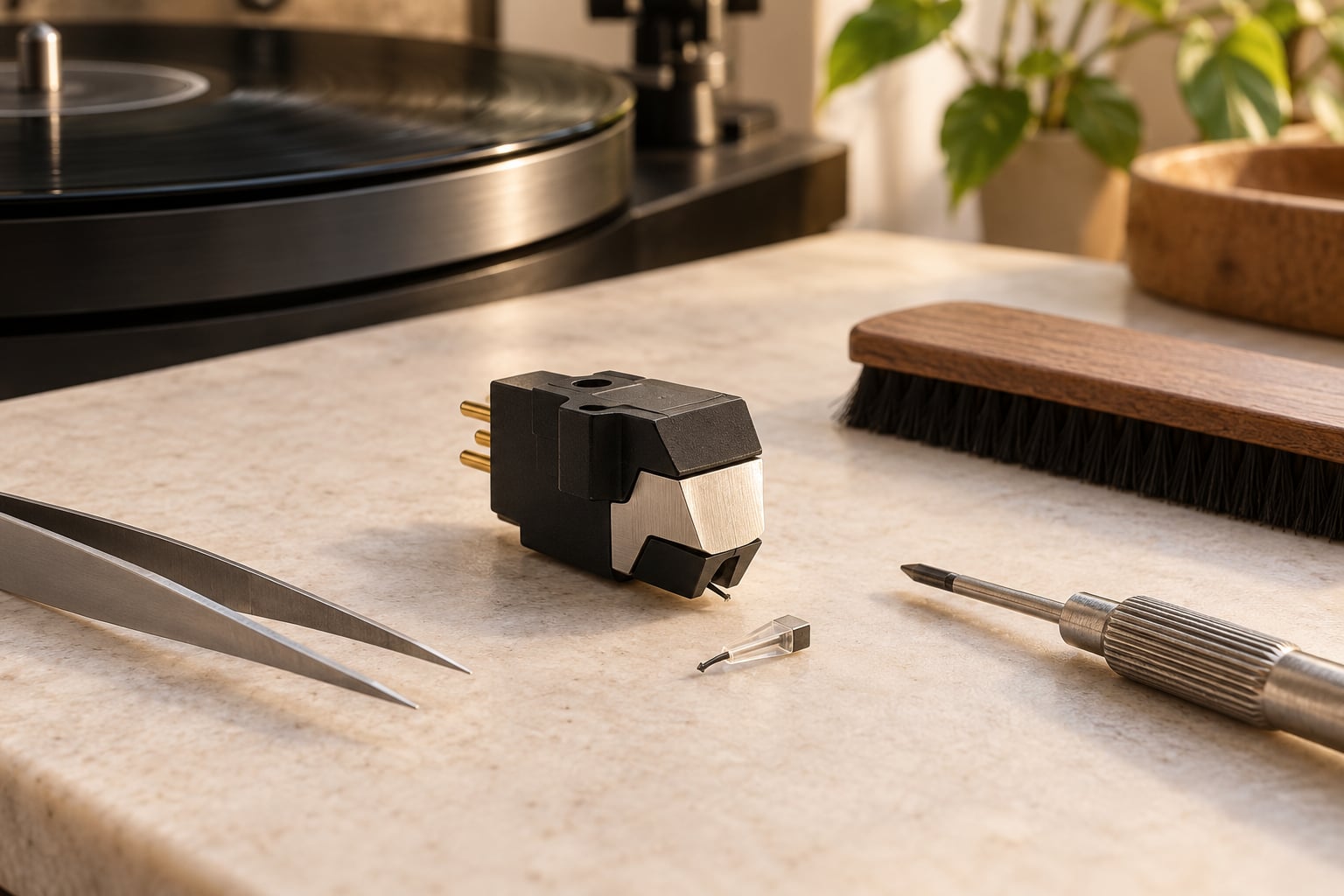
Quick vocabulary before we go further, because this trips up almost everyone. The stylus is also called the needle — it is the tiny tip at the end of the cantilever. The cartridge is the whole assembly that holds the needle and generates the signal. One word for the part, one for the box around it, and they wear out on completely different schedules.
If you just bought or inherited a turntable with no idea how many hours are on its stylus, put this guide to work before your first side. There is a decision path for that further down.
Table of Contents
- What You Need
- Step-by-Step
- How Often to Replace a Turntable Stylus by Use
- Signs the Stylus Needs Replacing
- The Six-Step Swap
- Common Mistakes
- Frequently Asked Questions
- Can I clean a turntable stylus instead of replacing it?
- How do I know which replacement stylus fits my turntable?
- Does replacing the stylus damage my records?
- Why does my turntable skip records only at the beginning or end?
- Can I sharpen a worn turntable stylus?
- Should I replace the entire cartridge or just the stylus?
- Conclusion
What You Need
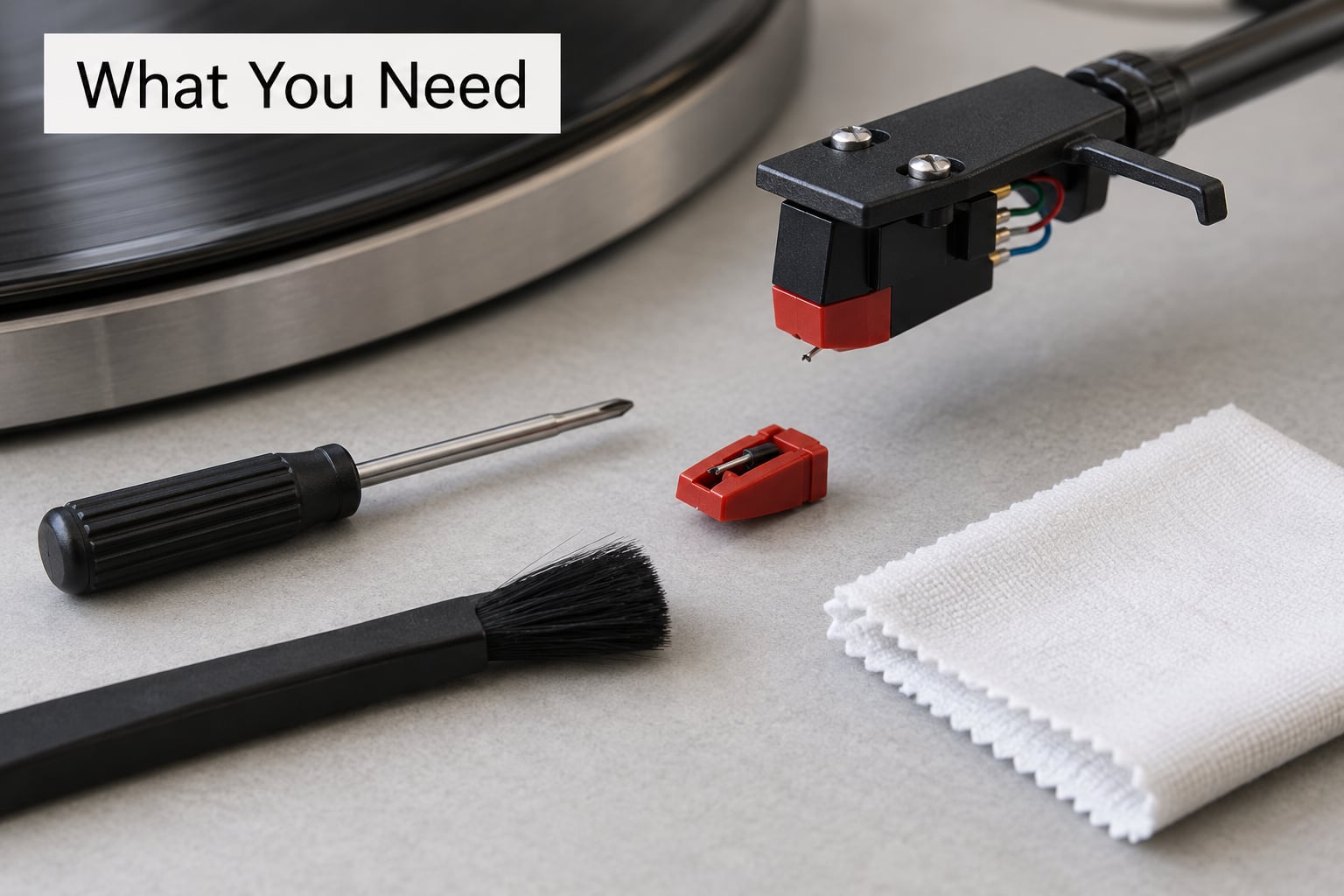
Most people need two things: the correct replacement part, and about fifteen minutes of clear space. Everything else is a nicety.
- The replacement stylus or cartridge. This is the part you have to get right, and you cannot decide until step one below.
- Manufacturer-approved tools. Usually a small Phillips or flat blade screwdriver, a pair of tweezers for the needle itself, and needle-nose pliers — for the mounting screws only, never for the stylus.
- Cleaning supplies. A soft record brush, a lint-free cloth, and whatever fluid your records actually need.
- The turntable manual. Genuinely useful here, because headshell fasteners differ wildly and some manufacturers specify an exact procedure.
The compatibility check comes before you open anything. Audio-Technica, Ortofon, Nagaoka and Rega all sell replacement styli for at least some of their cartridges, and the part has to match the cartridge model — not just the brand. Look for the model number printed on the cartridge body. It is usually on the top face or the underside near the mounting screws, and a clear photo of it plus your cartridge brand tells you exactly which part fits.
Step-by-Step
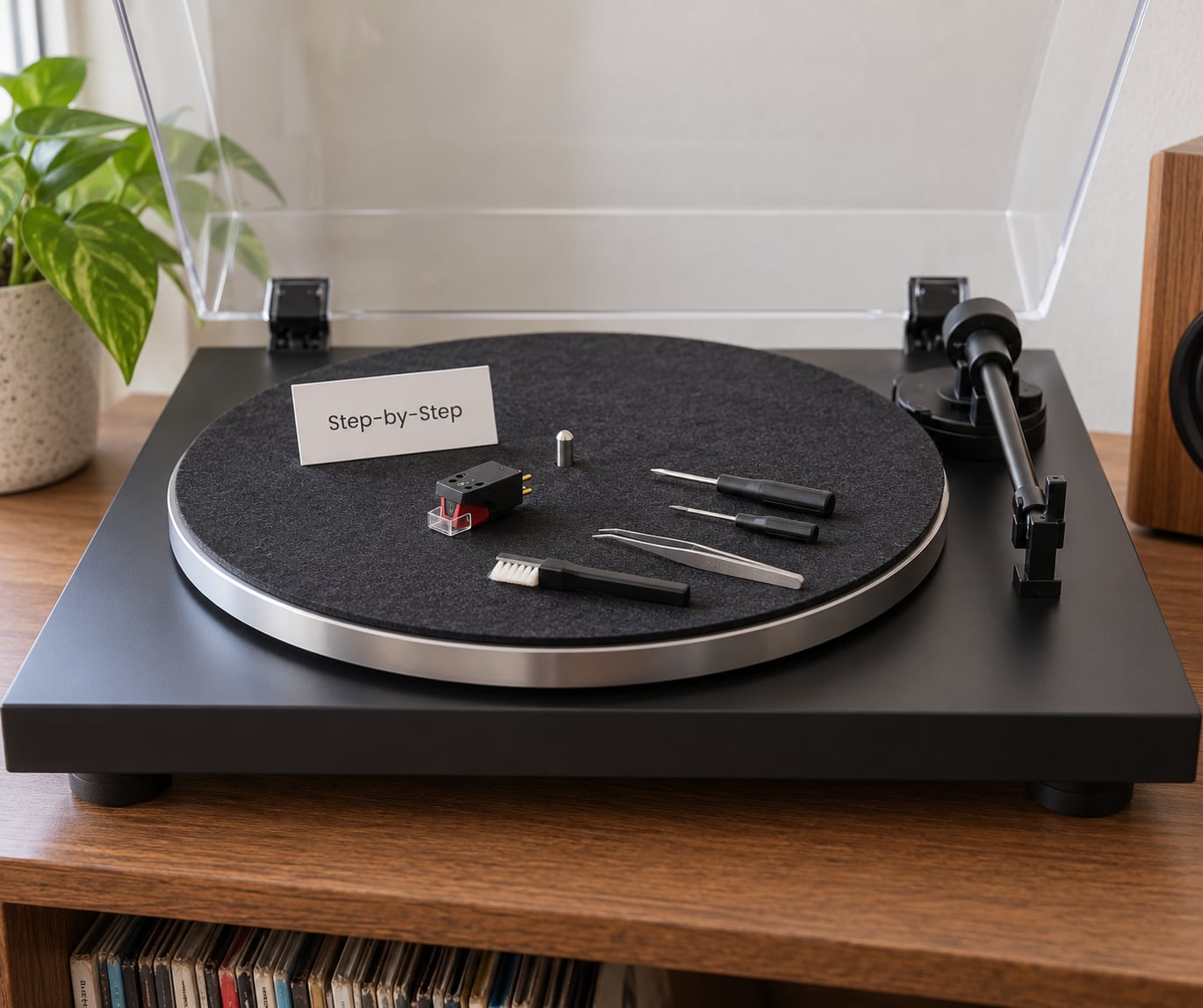
Six steps, and the whole thing is reversible if you keep every part on the table. Do not rush the last two; they decide whether the new stylus sounds right.
How Often to Replace a Turntable Stylus by Use
Start with the direct answer, then adjust it. Manufacturer ratings are the floor for planning, not a guarantee, and the honest range across sources runs from a couple hundred hours for a cheap conical setup to around 2,000 for a well-maintained fine-line cartridge. Forum consensus from r/turntables and audiogon.com clusters between 300 and 1,000 hours, with one enthusiast treating 3,000 as optimistic and 2,000 as the realistic ceiling on clean records with correct setup. Repair write-ups treat swapping a stylus every couple hundred hours as routine work on well-used decks.
Those numbers disagree because they measure different things: tip profile, tracking force, record cleanliness and hours all matter. Translate hours into your calendar like this:
- Light listening, an hour every few days: budget 1,500 to 2,000 hours, so three years or more.
- Regular use, about an hour a day: the common case. Roughly 300 to 400 hours, which lands near one year for an elliptical cartridge.
- Heavy listening, three or more hours a day, full sides: 150 to 200 hours of calendar time. Plan to replace twice a year.
- DJ use, scratching and cueing: 50 to 100 hours. Cued scratching grinds the tip sideways, which wears it far faster than straight playback. Budget for a fresh cartridge every few months.
By tip cut, the same hours translate differently:
- Conical or spherical: 300 to 500 hours, occasionally 800 on gentle setups. The largest contact area means the most wear per hour.
- Elliptical: 500 to 800 hours, up to 1,200 with clean records and correct tracking force.
- Fine-line, Shibata, MicroLine, line-contact: 1,000 to 2,000+ hours. A smaller contact patch is simply gentler on both the tip and the groove.
That is also why a pricier cartridge often outlasts a cheap one in hours rather than months. It is not magic; it is a smaller tip meeting the same groove. If your elliptical is dying at 250 hours, something upstream is wrong — usually tracking force set too heavy or dirty records.
Signs the Stylus Needs Replacing
Stop counting hours and listen. These symptoms show up in a specific order, and the first one is the earliest warning you will get:
- Excess sibilance and harsh treble. Vocals get spitty, cymbals get glassy and fatiguing. This is the first thing listeners describe, and it usually appears well before the obvious failures.
- Loss of treble detail. The record sounds dull or veiled, usually on one side of the frequency range rather than all of it.
- Distortion on quiet vocal highs. The phrase at the end of a chorus breaks up or crunches.
- Skipping on clean, undamaged records. Especially a record you have played a hundred times without trouble.
- Unstable tracking or the arm creeping inward. Groove noise climbs mid-side, or the stylus rides the record rather than sitting in the groove.
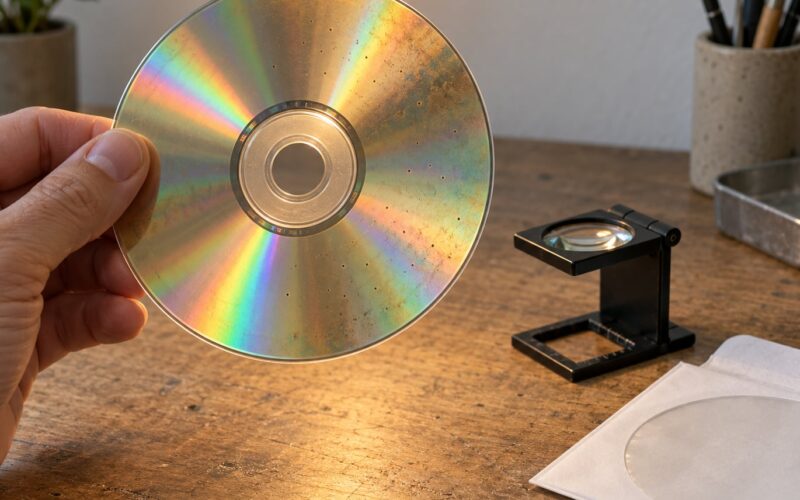
- Visible damage. Look at the tip under bright light with the tonearm locked. A bent or hooked cantilever, a tip sitting at an angle, or a visibly flattened point means replace it now rather than audition.
- Debris packed around the cantilever. Gummy buildup from repeated skipping gets ground into the groove and destroys records fast. Cleaning may rescue a lightly dirty needle, but if the tip is misshapen, cleaning is pointless.
A worn stylus does not just sound tired, it wears the other side of the equation. The tip sits at the wrong height and the wrong shape, and it plucks groove walls instead of riding them. Groove damage is irreversible, so a cartridge swap costs a fraction of what a warped or resurfaced record costs you to replace.
The one exception is a bent needle from an accident — a dropped arm, a record left spinning with the tonearm resting on it, a turntable running unattended. Repeat reports on r/turntables trace bent replacement styli to exactly those moments. If the tip is bent, stop playing records with it. The cartridge body is usually fine, but the needle is done.
The Six-Step Swap
Lock the tonearm, remove the dust cover, and put the dust cover out of reach. That last one is not a joke; a swinging cover over a raised arm has bent more needles than any screwdriver has.
- Identify the cartridge. Read the model number on the body and confirm the replacement part matches it exactly. Success signal: you can name the exact stylus model number in your hand before touching anything.
- Remove the cartridge from the headshell. Loosen the two mounting bolts with a screwdriver and lift the body out. Note which bolt is front and which is rear before it comes free. Success signal: the cartridge sits on the cloth in front of you, bolts still in their holes or laid out in order.
- Release the old stylus. Most cartridges use a small finger latch or a threaded collar. Lift or unscrew gently, straight back along the cantilever. Never grip the tip with pliers, and never touch it with a fingertip — skin oil and skin itself are both bad news. Success signal: the old needle releases without any force and without a sideways wobble.
- Fit the new stylus. Line up the cantilever with the mounting hole and seat it fully before pressing. This is the step where carelessness bends a cantilever. Success signal: the new needle sits square and does not rock when you touch the body very lightly.
- Reinstall and reset the setup. Refit the cartridge to the headshell with the front bolt a few turns ahead of the rear one so it stays aligned, then tighten both evenly. Set tracking force to the new cartridge’s specification, not the old one. Success signal: the new cartridge rests at the manufacturer-stated tracking force with the arm floating rather than clamping.
- Test on a known-good record. Start with something you know inside out. Listen for tracking at the lead-in and run the inner groove for a minute. Success signal: no skipping, no skating outward, no new sibilance. If it skips or sounds worse than the old stylus, anti-skating and overhang are almost always the culprits.
After the swap, recheck anti-skating so the arm does not creep inward, and confirm the arm does not sit past the record edge. Azimuth alignment only matters if the cartridge mounting screws were moved or the headshell is adjustable. If the new stylus has a different tip shape, expect a slightly different tracking force requirement than the old one.
Common Mistakes
Most ruined replacement needles are ruined in the first two minutes. Here is what goes wrong, and the correction for each.
- Forcing a mismatched cartridge part. If the stylus does not slide in without resistance, it is the wrong part. Fix: match the cartridge model number, not the brand.
- Touching the stylus. A fingertip leaves oil that turns to grit. Fix: hold the assembly by the body only, use tweezers at the base, and wash your hands before you start.
- Using pliers on the needle. This is the single most reported self-inflicted repair. Fix: pliers belong on the mounting screws and nowhere else.
- Leaving the dust cover near a raised tonearm. Fix: remove the cover and put it somewhere else entirely while you work.
- Tightening the headshell bolts one at a time to the end. The cartridge binds against the headshell and the cantilever twists. Fix: snug both bolts alternately, in small increments, until firm.
- Skipping the cleaning step. A dirty stylus is often mistaken for a worn one, and both destroy records. Fix: brush the groove, clean the records, then audition again before buying anything.
- Ignoring the turntable manual. Fix: read the replacement section. It is two pages and it removes all the guesswork.
Three habits extend stylus life more than any other factor. Clean your records and your stylus before every session, keep tracking force at the lighter end of the cartridge’s specified range, and never skate or drag the arm to position the needle — place it instead.
If you own a used turntable with an unknown stylus history, audition before you spend. A cartridge that skips on the second track of a record you have never played is almost certainly finished. One that sounds slightly sibilant but tracks cleanly might have a few hundred hours left, and a cheap swap gets you from guesswork to a known-good baseline.
Frequently Asked Questions
Can I clean a turntable stylus instead of replacing it?
Cleaning solves a dirty stylus, not a worn one. A soft brush and a proper record cleaner remove groove dust and gummy residue that make a good needle sound bad. But a worn tip has a flattened or misshapen contact area, and no amount of cleaning restores that geometry. Rule of thumb: clean it, play a record you know well, and only replace it if the sibilance and skipping persist.
How do I know which replacement stylus fits my turntable?
It fits your cartridge, not your turntable. Find the model number printed on the cartridge body, usually on the top face or near the mounting screws, and match it against the replacement parts listed for that exact model. Brands like Audio-Technica, Ortofon, Nagaoka and Rega publish compatibility lists. If the number is unreadable, a clear photo of the cartridge is enough for most dealers to identify it.
Does replacing the stylus damage my records?
A new, clean stylus in a correctly set-up system is safer for your records than a worn one, because it rides the groove instead of grinding the walls. The risk comes from mistakes during the swap: a bent cantilever, tracking force set too high, or skating the arm onto a record. Keep records off the platter while you work, replace the needle as the first step of the session, and check tracking force against the new cartridge’s specification before playing.
Why does my turntable skip records only at the beginning or end?
Skipping at the lead-in or the run-out groove is usually a height or geometry problem rather than a worn needle. Dirt packed at the groove edge, a warped record, an arm that does not clear the lead-in, or a tonearm that is not floating properly will all do it. If skipping appears only on the outer few inches of every record regardless of which one you play, check the arm height and anti-skating before blaming the stylus.
Can I sharpen a worn turntable stylus?
No. A stylus tip is a precision-ground piece of diamond or ruby, and there is no reliable way to restore its contact area. What you find for sale as stylus sharpeners are abrasive tools of dubious effect, and a mistake there costs you the cartridge body. When the tip is worn, replace it. Professional retipping by a specialist is a real service, but it applies to higher-end cartridges and costs more than most people expect.
Should I replace the entire cartridge or just the stylus?
Replace just the stylus when the cartridge body is a model designed for it and sounds healthy otherwise. The suspension and body typically outlast several needles. Replace the whole cartridge when the body is a fixed non-retippable design, when the suspension feels loose or scratchy, or when you want a genuine upgrade in tracking and detail. If your cartridge is already a fine-line design, a step up in cartridge matters far more than another identical needle.
Conclusion
Three things, in order. Check the manufacturer’s stated play-hour rating for your cartridge and note the date of the last swap somewhere you will actually see. Then audition a record you know well for sibilance, dull treble and skipping — those symptoms tell you more than any hour count.
When you do replace, buy the part that matches your cartridge model number and set tracking force to the new cartridge’s spec before you put a record on. A worn stylus costs you records you cannot get back, and the fix itself is a fifteen-minute job.