Original pressings cost more because fewer of them exist, because collectors actively look for them, and because the first run of a record usually came with details later runs dropped, a different label design, a poster, an insert, a note from the plant. On top of that, condition and whether the copy is really a first pressing can swing the value by several times.
None of that guarantees the first copy sounds better than a clean later one. Plenty of collectors own first pressings that are scratched and noisy next to a near-mint reissue they bought for pocket change. Knowing what actually drives the premium is what separates a sensible purchase from an expensive mistake.
Table of Contents
- Why Original Pressings Cost More Than Reissues
- What Is an Original Pressing?
- Why Does the First Pressing Matter to Collectors?
- The Main Factors Behind a Higher Price
- Sound source and mastering
- Stamper generation
- Pressing plant
- Packaging extras
- Condition
- Demand and trend
- How Rarity and Scarcity Affect Value
- Why Original Mastering and Analog Production Can Add Value
- Artwork, Packaging, and Collector-Only Differences
- How Condition Changes the Price
- How to Tell Whether a Record Is Truly a First Pressing
- Why Some Reissues Cost Almost as Much
- Frequently Asked Questions
- Are original vinyl pressings better?
- Are test pressings more valuable?
- How do I identify a first pressing at home?
- What’s the difference between a repress and a reissue?
- Do first pressings sound better than reissues?
- Should I pay a premium for an original pressing?
- Conclusion
Why Original Pressings Cost More Than Reissues
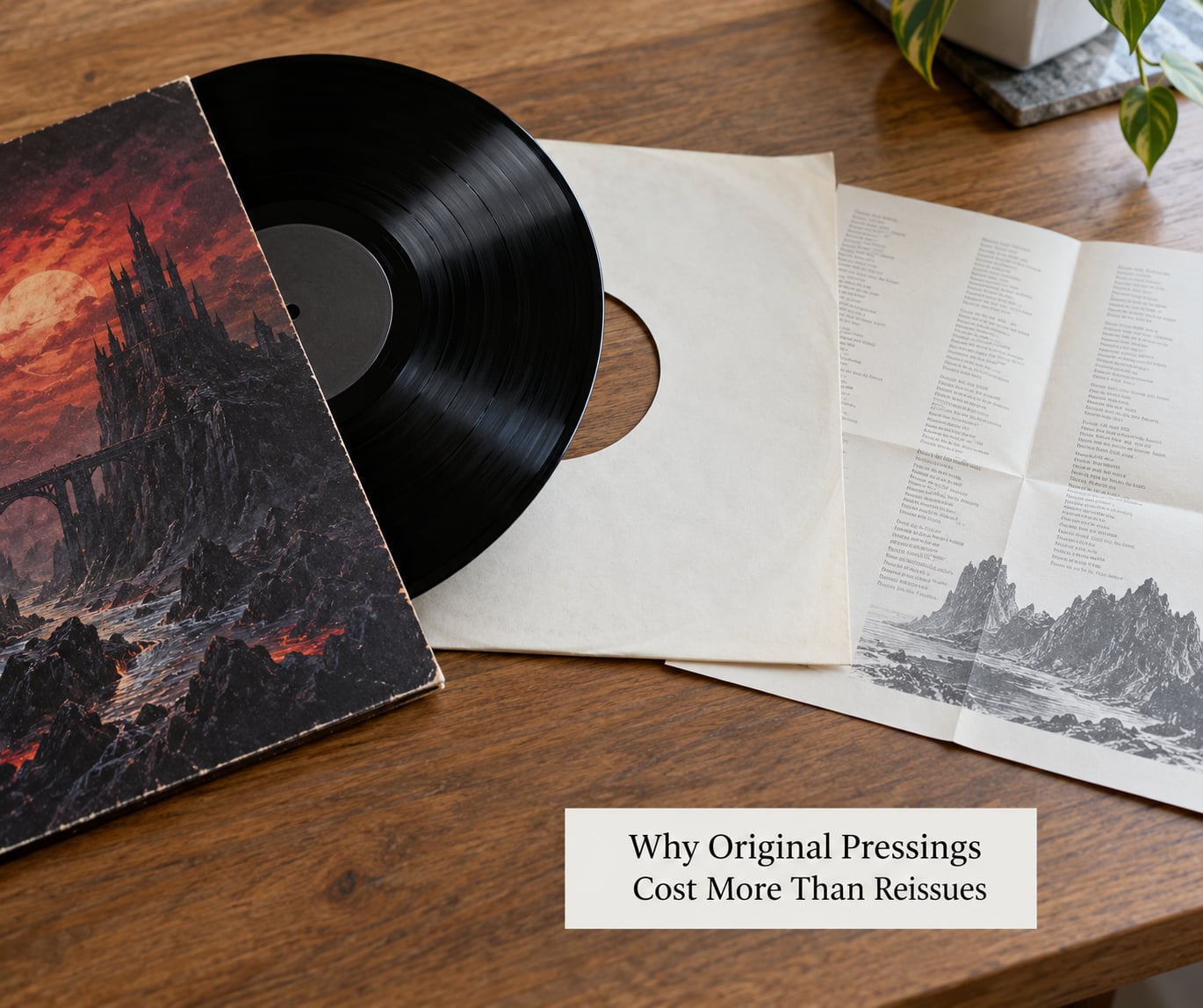
There are five drivers behind almost every original pressing premium: scarcity, authenticity, the mastering and pressing itself, the packaging that came with it, and how much collectors want that specific album right now. When any one of those pushes the other way, the premium shrinks.
- Scarcity. A first run might have been a few thousand copies in a single country. Sixty years later, most were cracked, warped, thrown out or buried in a basement.
- Authenticity. Early copies sit closest to the release itself, before a record label trimmed costs or changed the mix between territories.
- Mastering and pressing. First runs were cut from the source tapes while those tapes were in good shape, often on analog equipment before digital mastering became normal.
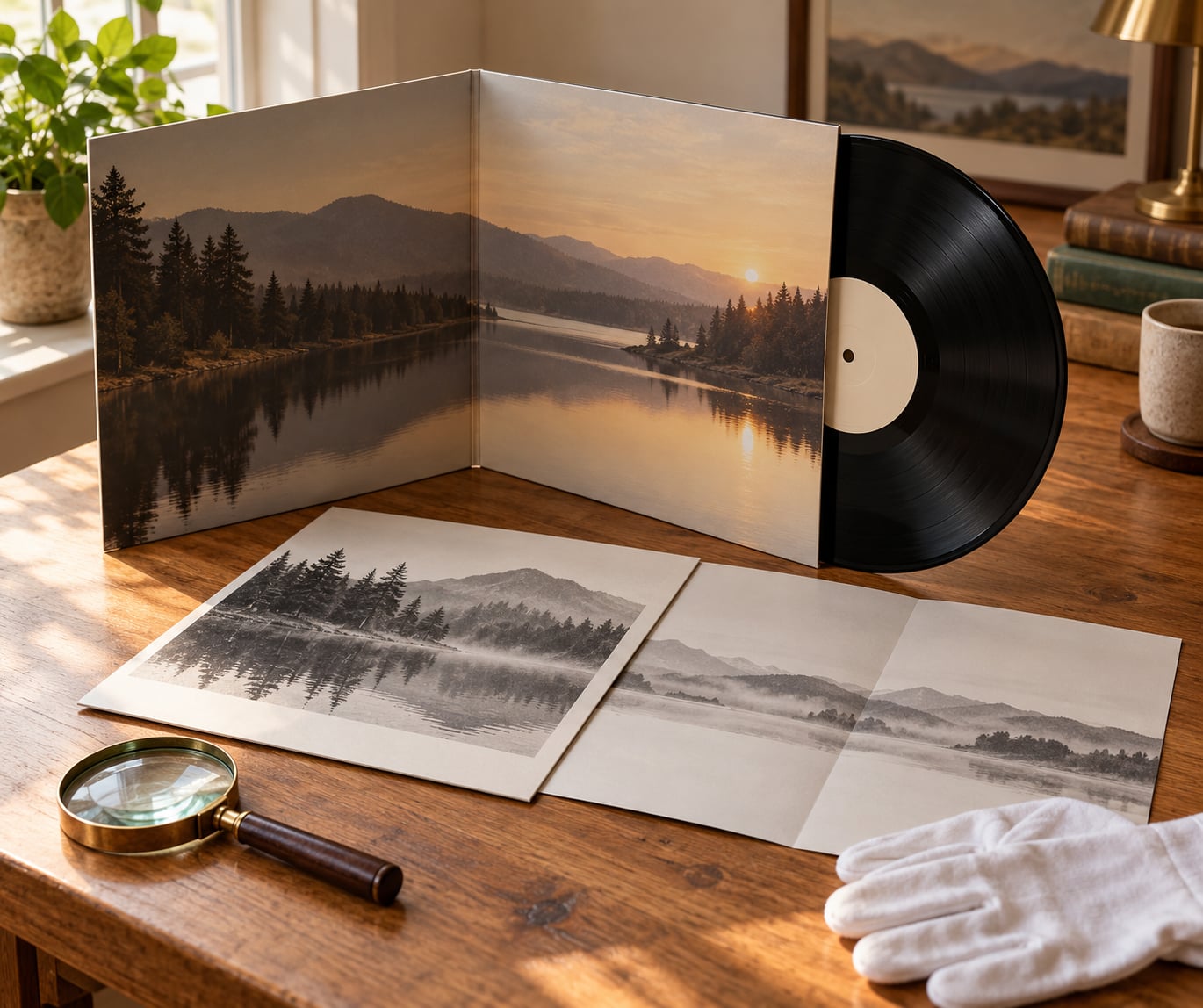
- Packaging. Gatefolds, printed inner sleeves, posters, lyric sheets and hype stickers were cut at launch and replaced with cheaper printed stock a few years later.
- Collector demand. Some albums have die-hard audiences. A first pressing of a record people never heard of at release will sit there for years at a price nobody wants to pay.
What Is an Original Pressing?
An original pressing is the first commercial run of a record, manufactured during or close to its release window and carrying the first catalog number and first label design. That is the only copy that is unambiguously the first pressing.
Everything after it splits into two categories, and collectors argue about the difference constantly. A repress uses the same audio source and packaging as the earlier edition, a later pressing of the same record. A reissue means the label has reworked something, which might be a remaster, a new sleeve, a new track list or a new mastering altogether.
Country matters too. Labels pressed the same album in the United States, the UK, Japan, Germany and elsewhere within months of each other, and each version counts as its own pressing. A Japanese or German edition is not an original pressing of the American one, whatever the catalog number says.
Another wrinkle: some catalog numbers stayed on the books for a decade, so a “first pressing” of a mid-seventies budget reissue can be nearly forty years old. Always check dates against the catalog number, not the other way around.
Why Does the First Pressing Matter to Collectors?
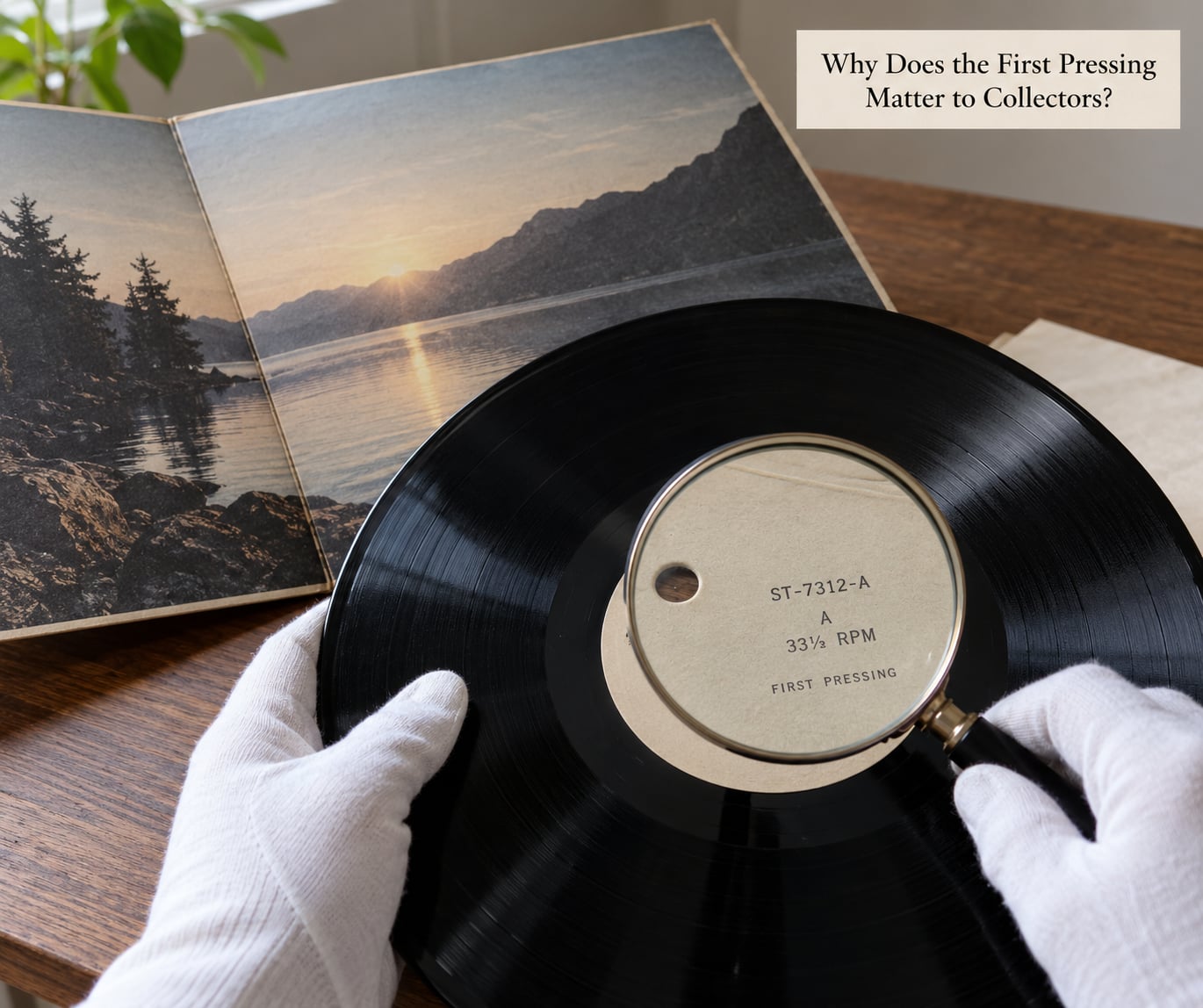
Collectors pay for the story, not just the sound. A first pressing is the physical object that existed when a record opened in shops, and in heavy metal and hard rock that window can be weeks long. Owning the copy that was in the room matters to people who were not old enough to buy it themselves at the time.
Provenance carries weight in that context too. A copy that traces back to one owner’s shelf has a different feel from one that has been through a dozen resale accounts, and sellers know it. Paperwork and a clean ownership history support a higher figure.
Here is the part that gets forgotten: being first does not make a record quiet, well-centered or well-mastered. A worn VG first pressing and a clean later copy of the same album will play very differently, and collectors on r/vinyl and the Discogs forums regularly say the later copy wins for actual listening.
The Main Factors Behind a Higher Price
Beyond scarcity and authenticity, six specific things decide where a copy sits in its price range. Checking them in order saves a lot of guessing.
Sound source and mastering
Records cut before digital mastering worked from analog tape, and those transfers were sometimes unmeasured and sometimes cut hard to compete with the CD. Quality varies by mastering engineer, and two versions of the same album can differ noticeably.
Stamper generation
A stamper is the metal mould used to press records, and it wears down as it makes copies. Early stampers tend to press cleaner, more centered records, while worn ones drift. Runs made from a fresher stamper usually have a quieter surface.
Pressing plant
The factory matters. Collectors on vinyl forums frequently single out Japanese runs for quiet vinyl and precise cutting, while US and UK plants of the same era vary a lot between one plant and the next. Plant codes in the runout let you tell them apart.
Packaging extras
Posters, printed inner sleeves, booklets, alternate covers and hype stickers are routinely removed from later editions because they cost money. Their absence is usually the clearest signal that a copy is a repress.
Condition
Grading under the Goldmine standards sits on top of everything else. A VG+ first pressing and a NM later copy can trade places depending on what a buyer is actually after.
Demand and trend
Prices follow attention. When a band gets press coverage or an anniversary reissue revives an album, first pressings of that record climb for a while, then settle back.
How Rarity and Scarcity Affect Value
Scarcity only sets the ceiling, and demand decides whether a record ever gets near it. A first pressing of a record that sold well and stayed in print is common, and common copies stay cheap even when they are technically originals.
The scarcity that moves prices looks like this: a short first run that was never reissued, a regional edition with a catalog number that exists in tiny numbers, an edition pulled from shelves early, or a band that broke up before anyone could buy a second copy.
What does not create value is only being slightly scarce. Thousands of surviving copies of an ordinary album pressing will never become rare, because collector interest in that album is low and always will be. Age alone does the same nothing.
Why Original Mastering and Analog Production Can Add Value
Before a record can be pressed, a lacquer gets cut from the master. That lacquer is plated into a metal mother, the mother grows stamper sets, and every stamper degrades after a few thousand records. That manufacturing chain is why “first pressing” and “best pressing” are related but not identical.
Early runs were cut while the source tapes were healthy. Later remasters were often cut from the same tapes but with different engineers, different transfer methods and, from the mid-eighties onward, digital sources. A remaster can be more faithful or less, and the label generally charged more either way.
Some mastering engineers have initials collectors scan the runout for. A few you will see often in the collector crowd:
- RVG, Rudy Van Gelder, who cut Blue Note and a long run of jazz titles that those labels are still prized for.
- RL, Robert Ludwig, associated with late-seventies rock and pop plus a handful of famous cuts.
- KG, Kevin Gray, whose work covers both acclaimed original cuts and later audiophile reissues.
- BG, Bernie Grundman, whose long career spans rock, pop and classical.
- LH, Lee Hulko, cutting in New York through the fifties and sixties.
An engineer’s initials raise interest in a specific copy, not a category. A 180g record with no famous signature does not automatically sound worse than a thin one that has it, and plenty of collectors on forums report preferring plain early pressings over heavy audiophile editions.
Artwork, Packaging, and Collector-Only Differences
Early metal and hard rock releases are where packaging differences bite hardest. Gatefolds in the seventies were expensive, and many of them came with a printed inner sleeve, a poster or a lyric sheet. A year or three later, the same title might arrive in a plain black sleeve with a paper insert instead.
Label design is another giveaway. Early labels often carried the mastering or plating credit, and companies changed their logo or added a pattern between runs. Alternate covers, hype stickers on shrink and different spine treatments all separate a first run from what came after.
Colored and heavy vinyl complicates the picture, because modern pressing plants routinely make colored 180g editions that reissue classic albums. Those are new records, not old ones. An album issued on colored vinyl in the last few years has no original pressing behind it.
How Condition Changes the Price
Condition is the biggest variable in the whole equation, and most beginner mistakes come from grading being interpreted differently by buyer and seller. Goldmine is the shared vocabulary most collectors use.
- Vinyl grade. Near Mint means essentially unplayed. VG Plus allows a few hairlines. VG shows wear but plays cleanly. Below that, expect noise.
- Ring wear. A ring where the record slid off the inner sleeve, worn into the cardboard, can cost a copy a full grade.
- Seam splits. A split corner on a gatefold is permanent damage and sellers are expected to declare it.
- Writing and repairs. Tape on a seam or a price written on the sleeve both cut value sharply.
- Completeness. Missing inserts, posters and inner sleeves are worth real money on early editions.
- Provenance. Receipts, photos and a documented ownership history support the ask, and a graded, slabbed copy trades differently from a raw one.
Before you buy, hold the record up to a light and look at the runout and labels, run a fingernail lightly across the sleeve corner, and check that the record sits flat on the turntable. Five minutes of that stops most expensive surprises.
How to Tell Whether a Record Is Truly a First Pressing
Six checks cover most cases. Do them in order, because the early ones are quick.
- Read the runout and dead wax. The etched area between the last track and the label edge carries matrix numbers, the stamper letter and code, and the mastering credit. A different set of matrix numbers on another copy of the same catalog number means multiple pressings.
- Check the catalog number. Confirm it against a discography for the album, including which territory it belongs to and roughly when that number was in use.
- Look at the label. Early labels often include a company name or logo that later runs dropped, and they rarely have a barcode.
- Examine the sleeve. Compare spine design, back cover printing and any poster or printed inner sleeve against photos of the earliest edition.
- Count the matrix letters. An A suffix marks the first stamper, B the second, and later letters mean the copy was pressed from a later generation. These are rough markers, not guarantees.
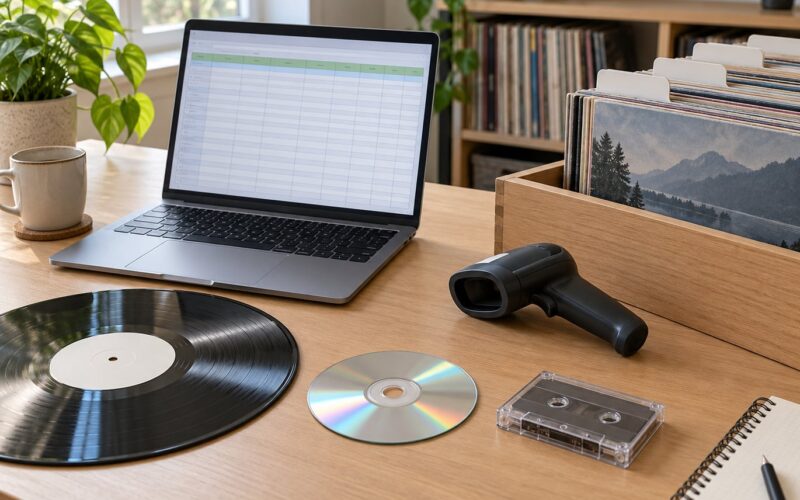
- Cross-check on Discogs. The Discogs app can read a barcode or scan the label, and the release page lists known variants with their matrix numbers. It also shows what collectors have paid recently, which matters more than asking prices.
When a high-value copy has no clear documentation, treat the claim as unproven. Bootlegs and counterfeit first pressings circulate constantly, and sellers who cannot show the runout, the sleeve and the catalog number together are asking you to take the word for it.
Why Some Reissues Cost Almost as Much
Reissues got better, and some of them are now the better buy. Audiophile labels cut from original tapes with careful engineering, pressed on heavier vinyl and packaged with real care. Collectors take that seriously, and those editions hold their value well.
Anniversary editions, colored vinyl releases and deluxe box sets also land close to first pressing prices, especially for bands with a devoted audience. A record reissued while the original is still genuinely hard to find is a reasonable thing to want, as long as you know which one you are buying.
One problem worth naming: sealed reissues get listed as vintage originals fairly often. A shrink-wrapped copy from the last few years is not a first pressing no matter what the insert says, and the barcode or matrix on the disc settles it in seconds.
Frequently Asked Questions
Are original vinyl pressings better?
Not automatically. Early pressings were cut from healthier analog tapes and often include packaging later runs dropped, but a worn first pressing can sound noisier than a clean reissue. Judge the copy in front of you: check the vinyl for scratches and pressing defects, listen for tracking noise, and weigh condition before the pressing year.
Are test pressings more valuable?
Sometimes, and the price gap can be huge. A test pressing is made before a release to check the master and the packaging, and only a handful exist, often numbered. For a major artist that scarcity pushes the value above a regular first pressing. For an ordinary album, the premium mostly reflects the plastic record being unreleased, so the money is on paperwork.
How do I identify a first pressing at home?
Look at four things: the matrix numbers etched in the runout, the catalog number on the label and sleeve, the label artwork, and whether a barcode is present. Bars came in around the early eighties, so a record with no barcode and a catalog number that fits the first run is a strong candidate. Confirm it against a discography for that title before paying.
What’s the difference between a repress and a reissue?
A repress is another run of the same edition, using the same audio and packaging, and it is the cheapest version of an album. A reissue means the label reworked something, such as a remaster, a new sleeve or a revised track list, which usually costs more. In practice the words get mixed up constantly, so read the release notes rather than trusting the label on the listing.
Do first pressings sound better than reissues?
It depends on the mastering and the copy. Analog sources from before digital mastering can hold up well, and a first stamper set tends to press cleaner and better centered vinyl. But some reissues are cut from the same tapes by respected engineers and pressed better than the original run. Play both if you can before deciding.
Should I pay a premium for an original pressing?
Only if you want one for collecting. For listening, a clean later copy at a lower figure is usually the smarter purchase, and many collectors say the same. If you are buying to collect, check the matrix numbers and runout yourself, look for missing inserts and posters, grade the sleeve honestly, and compare against recent sold prices rather than asking prices.
Conclusion
Start with verification, not with the price. Read the runout, match the catalog number to a discography for that title, look for the inserts and sleeve details the earliest edition had, and grade the copy honestly against Goldmine.
Then compare recent sold prices on Discogs rather than what a listing asks for. Once pressing and condition are both confirmed, a premium for the original makes sense. Before that, it is a guess. If 2026 is your first buying year, start with near-mint reissues of albums you love, learn how a good pressing feels in your system, and move up from there.