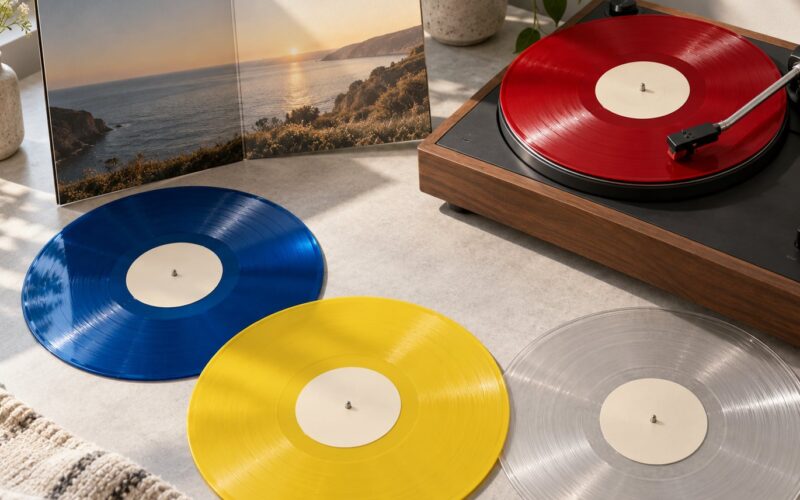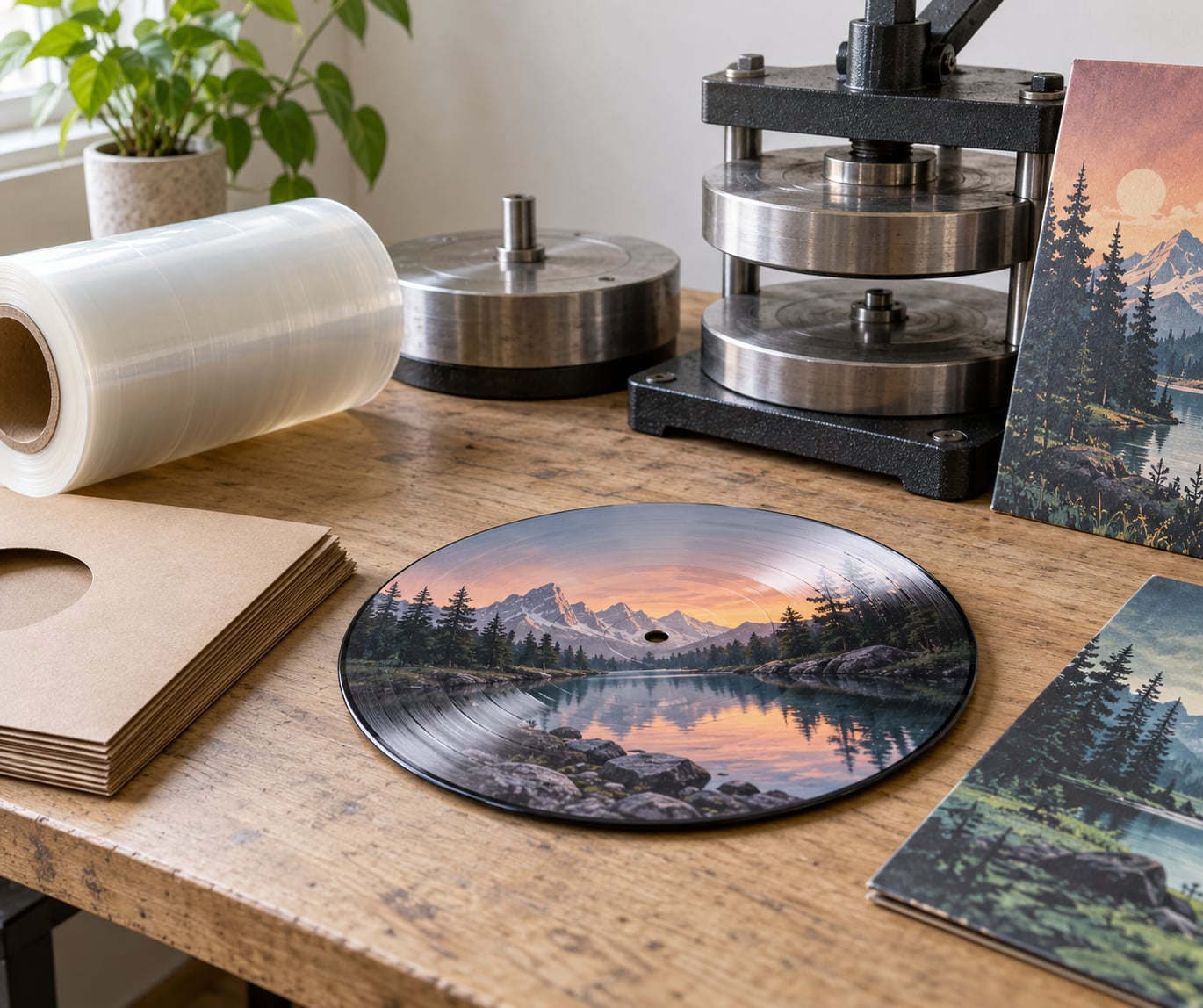
Some albums get picture disc releases because the artwork is part of the appeal and the label wants an object collectors will keep on a shelf, not just another black LP. A picture disc vinyl is a standard record with printed art laminated between two clear vinyl layers, so the record itself becomes the album cover. That visual leap costs the label money in materials, setup time and run size, which is why it only happens on selected releases.
The decision is never arbitrary. Labels commission picture discs when a record already has strong visual identity, a milestone moment to mark, or an audience willing to buy the same music twice. Understanding why picture disc releases happen makes it much easier to judge whether one is worth adding to a collection.
Table of Contents
- Why Some Albums Get Picture Disc Releases
- Why some albums get picture disc releases, in short
- How Picture Discs Differ from Standard Vinyl
- What Makes an Album a Good Candidate for a Picture Disc
- How Record Labels Decide
- Why Picture Discs Cost More
- How Collectors Can Tell a Valuable Release from a Marketing Edition
- Why Some Albums Do Not Get Picture Disc Releases
- Frequently Asked Questions
- Are picture disc releases better sounding than standard vinyl?
- Are all picture disc vinyl records limited editions?
- How can collectors tell if a picture disc is an original pressing?
- Why do record labels choose picture discs instead of colored vinyl?
- Are picture disc releases usually worth more than standard pressings?
- Can picture discs be played on any turntable?
- Conclusion
Why Some Albums Get Picture Disc Releases
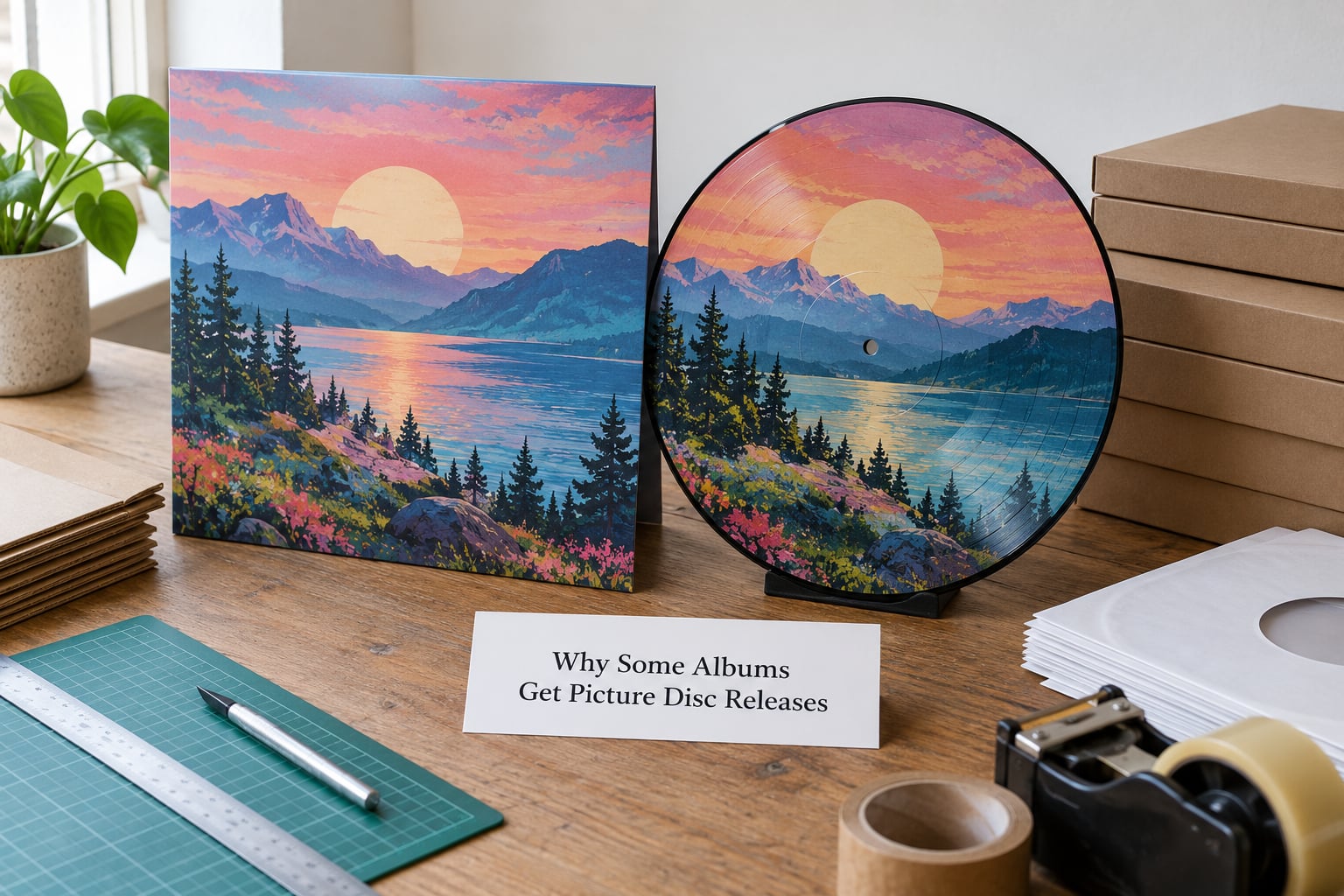
Why some albums get picture disc releases, in short
Labels commission a picture disc when the visual identity of a release matters as much as the audio. The record cannot be separated from its artwork, a capped press run supports a higher price, and a shelf-ready object photographs better in a way that a black pressing never will.
There are eight reasons that come up again and again.
- Artwork strong enough to carry the object. When the cover art is the reason people remember the album, printing it on the disc itself makes the physical copy the artwork. There is no risk of the sleeve being lost or binned.
- A limited run that justifies a higher price. A small press run spreads the extra material and setup cost across fewer copies, so the per-copy price can land higher without looking padded.
- An anniversary or catalogue milestone. Round-number anniversaries and catalogue anniversaries give a label a marketing hook, and a picture disc is the format that gets photographed and shared.
- Record Store Day exclusivity. Store-exclusive picture discs give independent record shops something that cannot be bought online the same day, which is the whole point of the event.
- A bundled edition. A double LP picture disc with an insert set can turn a catalogue reissue into a tier that competes with box sets and deluxe packages.
- Crowdfunding and pre-order rewards. Artist-funded campaigns routinely use picture disc variants as a higher pledge tier, which pays for the format rather than charging ordinary buyers extra.
- Non-music promotion. Advertising records, film and television tie-ins and corporate giveaways use picture discs because a printed disc is a poster that plays.
- Touring and event tie-ins. A tour-announcing single or a festival exclusive in picture form gets attention on social feeds in a way a plain 7-inch does not.
None of these reasons require the label to believe picture discs sound better than standard vinyl. They usually require the label to believe the object will be kept.
How Picture Discs Differ from Standard Vinyl
A picture disc is a record where the audio grooves are cut straight through a sandwich: a printed image layer, often on paper or plastic film, sandwiched between two thin sheets of clear PVC. Because the layers are clear, the image shows on both sides of the disc.
That construction explains almost everything about how the format behaves. The vinyl has to be thin enough to laminate around art without warping, so picture discs typically run between 80 and 100 grams against the 120 to 180 grams you see on a standard heavyweight LP. Thinner compound is noisier, so a picture surface is not a sign of better sound.
| Format | Construction | Typical weight | Sound character | Who buys it |
|---|---|---|---|---|
| Standard black vinyl | Single layer of pigmented PVC | 120-180 g | Quietest option, best surface detail | Listeners first |
| Coloured vinyl | PVC mixed with pigment, single layer | 140-180 g | Close to black, slight noise rise | Collectors and gift buyers |
| Translucent or marbled | Swirled or blended pigment, single layer | 140-180 g | Close to black, sometimes noisier | Display buyers who still play |
| Picture disc | Printed art between two clear layers | 80-100 g total | Noticeably more surface noise, thinner dynamics | Collectors, display-first buyers |
Other special edition formats sit alongside the picture disc rather than replacing it: die-cut shaped discs such as hearts and novelty outlines, zoetrope discs that animate when spun at the right speed, glow-in-the-dark variants, and translucent ring pressings. The picture disc is the most common of the group, and the least adventurous, which tells you where it sits in the collector hierarchy.
What Makes an Album a Good Candidate for a Picture Disc
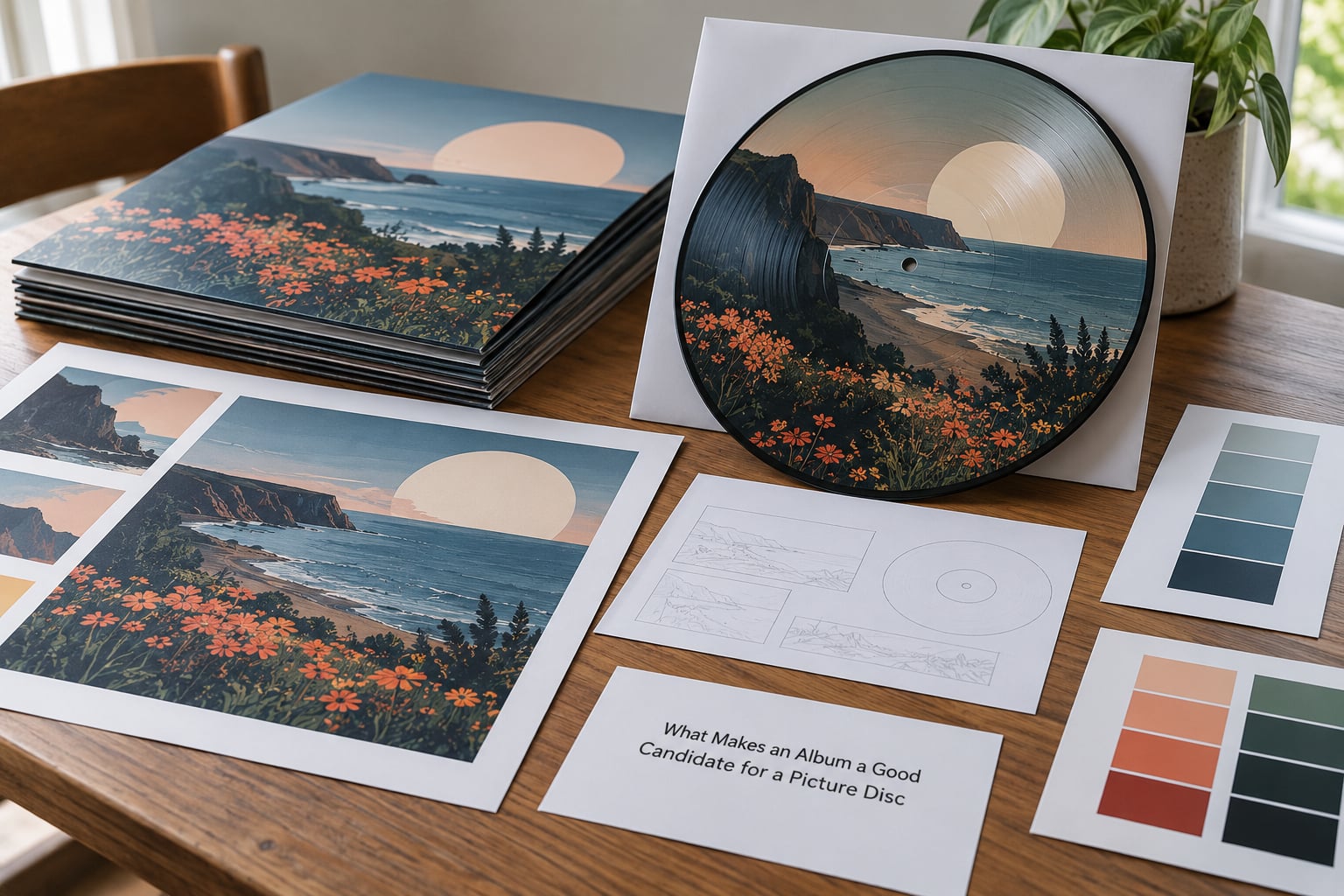
The strongest candidates share a few traits: cover art that people quote from memory, a milestone date, and a fanbase that buys physical records twice. Bands with theatrical artwork and recurring visual motifs tend to qualify, and so do records tied to film, television, games or touring.
Record Store Day releases show the pattern clearly, because the edition size is published rather than guessed. The Sex Pistols’ Anarchy in the UK picture disc ran to 3,500 copies in 2012. Ray Parker Jr’s Ghostbusters 7-inch followed with 4,000 in 2014. Toto’s Africa shape disc was capped at 2,500 in 2017, and Father John Misty’s heart-shaped I Loved You, Honeybee release was numbered to 5,700 in 2015.
Metal and hard rock have their own picture disc habits, from anniversary reissues of landmark records to numbered variants of new releases. Record Store Day itself has put out hundreds of special releases every year since it began, so the format is no longer rare, just carefully capped.
One nuance worth holding onto: most of the format’s history is singles, not albums. The picture disc peaked as a 7-inch and 12-inch novelty in the late 1970s and 1980s, and a 1987 KISS 12-inch picture disc turned out to be fairly easy to buy, which is a useful reminder that vintage picture discs are often commoner than their packaging implies.
How Record Labels Decide
The decision sits with the label’s commercial team after the audio is done, and it usually comes down to whether the format can be justified as a variant rather than a replacement. A label will not swap the standard black pressing for a picture disc, because the standard pressing carries the marketing budget. The picture disc is added alongside it.
Several practical checks come before the green light.
- Expected sales against the manufacturing minimum. Pressing plants set minimum quantities, so a projected run that sits below the plant’s floor usually gets reshaped or dropped.
- Artwork resolution and colour. Gradients and very dark art need proofing before the image is printed, and rework costs more than a plain sleeve.
- Licensing and approvals. Longer licence terms on older catalogue makes a picture disc more attractive; short licences do not justify the spend.
- Packaging. A 12-inch picture disc does not behave like a normal LP in a standard sleeve, so a custom inner or outer package is often part of the plan from the start.
- Distribution plan. Store exclusives ship in limited quantities to participating shops, while standard editions reach general retail and online channels.
Any plant that tells you a picture disc has no fidelity trade-off is not being straight with you. The honest version is that the format trades listening quality for visual impact on purpose.
Why Picture Discs Cost More
The extra cost comes from four places: extra material in the clear layers, a separate artwork printing run, lamination and assembly, and lower production flexibility because the run is small and fixed.
| Edition type | Extra material steps | Setup complexity | Typical run size |
|---|---|---|---|
| Standard black LP | None beyond normal PVC | Low | Large, often thousands |
| Coloured vinyl | Pigment mixing | Moderate, colour-dependent | Medium |
| Picture disc | Two clear layers plus printed art | High, art proofing required | Small, usually capped |
| Double LP picture disc | Two printed discs plus inserts | Very high | Small, often numbered |
A small run is what makes the premium defensible in the buyer’s eyes. Thousands of copies of the same picture disc would flatten its value, so labels hold the numbers down deliberately.
How Collectors Can Tell a Valuable Release from a Marketing Edition
Plenty of picture discs circulating online are unofficial copies, and collectors on forums like r/TaylorSwiftVinyl and the Discogs community keep asking the same question about them. A six-step check sorts most problems.
- Find the catalogue number. An official release has one printed on the label, the jacket or the inner sleeve. Unofficial copies usually have none or carry a number that matches nothing in the label’s catalogue.
- Check the matrix or runout etching. The runout groove carries the plant, the year and a side identifier, which is the single most reliable way to date a pressing.
- Look for label and artist approval credits. Real releases credit the label, the licensing entity and often the artist or management. Bootlegs usually credit only the factory.
- Confirm the country of manufacture. The country code sits near the catalogue number and tells you which plant ran the job.
- Verify the edition claim. If a release is described as individually numbered, check that your copy actually carries a number. Unnumbered copies circulating under a numbered label’s name are a well-known problem.
- Read the database entry. Discogs and similar catalogues record pressing plants, run sizes and variants, and a release missing from them deserves suspicion.
Three further checks help. First, judge whether the printed art covers the whole disc or only part of it, since partial coverage is treated as a cheaper compromise. Second, look at how the copy is protected, because paper sleeves and jewel cases barely defend a thin disc. Third, consider whether scarcity is real or asserted, and remember that collectors on r/heavyvinyl routinely keep picture disc copies sealed for completeness rather than playing them.
Storage matters too. A thin picture disc warps more easily than a heavyweight LP, so keep it out of upright stacks under pressure and away from heat. For sound, the r/vinyl consensus is plain: collectors who want high fidelity skip picture discs, and those who buy them treat the playback as a bonus.
Why Some Albums Do Not Get Picture Disc Releases
Most albums never get one, and that is the normal outcome rather than a snub. Records with plain or dated cover art do not gain much from a printed disc, and a label with no milestone to sell will not spend more to produce the same audio.
Other blockers are practical. Short licensing terms make the investment hard to justify, artwork that does not reproduce cleanly is rejected in proofing, and the run size may fall below a plant’s minimum. Sometimes the artist simply prefers coloured vinyl, an expanded box set or a deluxe reissue instead.
There is also a perception problem. Buyers who expect better sound from a printed surface end up disappointed, and labels know it. The format survives because plenty of people are happy to own the object.
Frequently Asked Questions
Are picture disc releases better sounding than standard vinyl?
No. The printed image sits between two clear vinyl layers, and the compound has to stay thin enough to laminate around artwork, usually 80 to 100 grams against 120 to 180 on a standard LP. That thinner layer carries more surface noise and a smaller dynamic range than a heavyweight black pressing.
Are all picture disc vinyl records limited editions?
No, and this is where collector expectations go wrong. Modern picture disc runs are often capped in the low thousands, which is why they feel exclusive. Vintage picture discs from the late 1970s and 1980s were mass-produced, and many are easy to find today.
How can collectors tell if a picture disc is an original pressing?
Check four things: the catalogue number on the jacket or label, the matrix or runout etching in the groove, the country of manufacture code, and whether a label or artist approval is credited anywhere on the release. If the edition was advertised as individually numbered, confirm your copy actually carries a number.
Why do record labels choose picture discs instead of colored vinyl?
Coloured vinyl is cheaper and plays more quietly, so it wins when the goal is a standard reissue. Picture discs win when the goal is a visible object: the artwork stays on the record, the run can be capped, and the release photographs better for anniversaries, store exclusives and crowdfunding tiers.
Are picture disc releases usually worth more than standard pressings?
It depends entirely on the run. A small, numbered picture disc from a limited edition holds its value, while mass-produced picture discs and unlicensed reissues often sell for less than a plain black pressing. Scarcity and condition decide it, not the printed surface.
Can picture discs be played on any turntable?
Yes. A picture disc is a normal record with a thinner core, so it plays on any turntable with a suitable stylus. Handle it by the edges, keep it flat during cleaning, and replace it if it has warped, because a warped thin disc can damage a cartridge.
Conclusion
Why some albums get picture disc releases comes down to four factors: artwork worth printing, a milestone worth marking, a run small enough to justify the extra material cost, and an audience that wants an object as much as a record. None of them is about sound quality, and pretending otherwise helps nobody.
So check the edition before you buy. Look for the catalogue number, read the runout etching, confirm the country of manufacture, and verify any numbering claim. Then decide honestly whether you want to play it or keep it, because the format was never built for both at once.