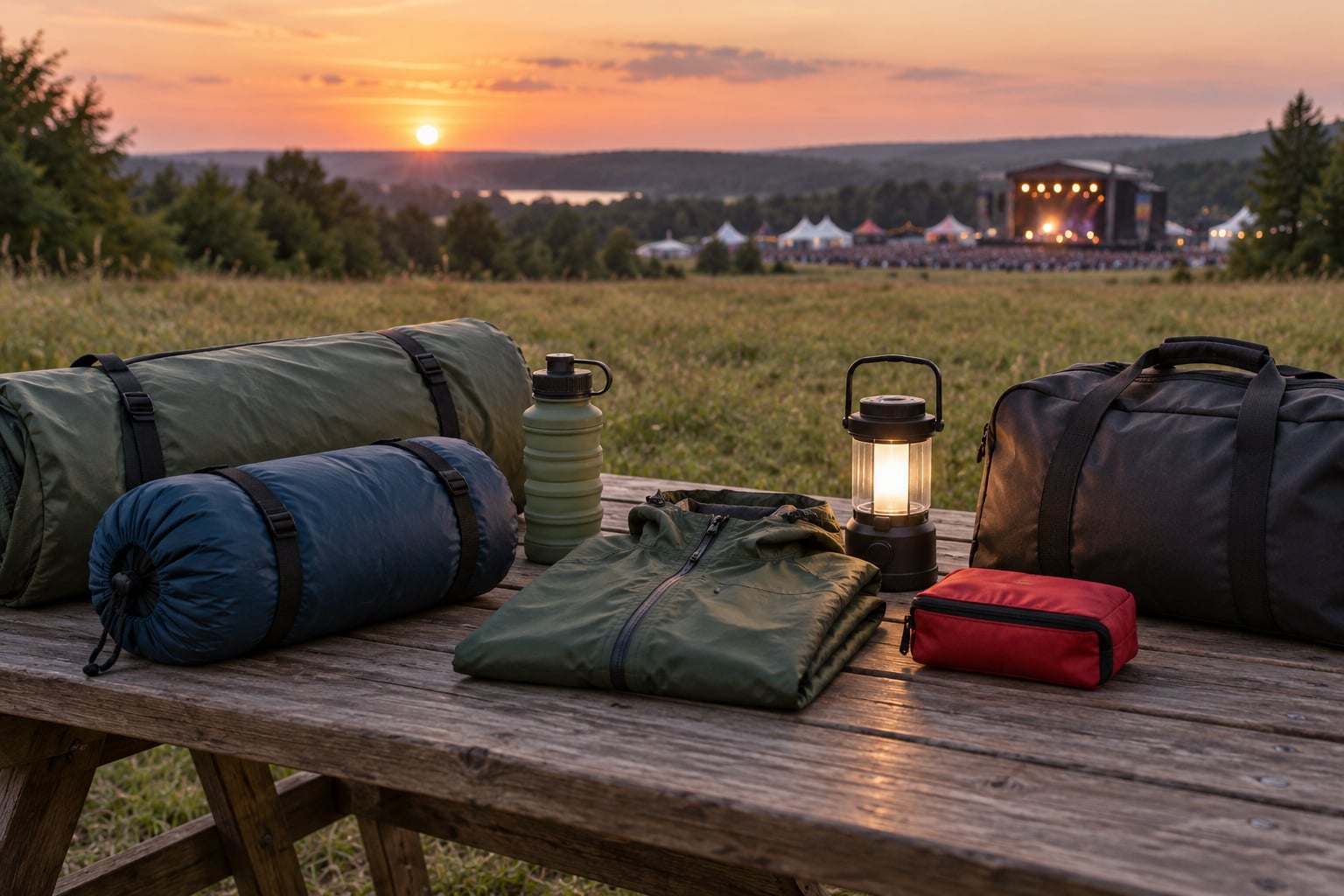
What to pack for a camping music festival comes down to two bags: a camp stash that stays at your tent and a small day bag you carry into the crowd. Shelter, sleep gear, food, water, power and hygiene kit go in the stash; your phone, power bank, sunscreen, earplugs and wallet ride on your body.
Most festival disasters are boring. The portable toilets run out of toilet paper, the ice melts by Saturday afternoon, and nobody brings a warm layer for a 4am set in July. Pack the boring stuff first and the weekend looks after itself. Here is the full breakdown.
Table of Contents
- What You Need
- Step-by-Step: How to Pack for a Camping Music Festival
- 1. Check the festival rules and site conditions
- 2. Choose a shelter and sleep system for the ground
- 3. Pack weather protection and clothing layers
- 4. Plan food, water, and easy meals
- 5. Pack festival and power essentials
- 6. Include hygiene, first-aid, and comfort items
- 7. Use a separate same-day festival bag
- 8. Pack, protect, and load for a comfortable arrival
- Common Mistakes
- Frequently Asked Questions
- What are the most important things to pack for a camping music festival?
- Do I need a cooler for a camping music festival?
- What should I wear and bring for a rainy metal festival?
- Can I bring a portable speaker to a camping music festival?
- How should I keep my phone and other electronics safe?
- What should I pack in a small bag for the festival grounds?
- What to Do First When You Start Packing
What You Need
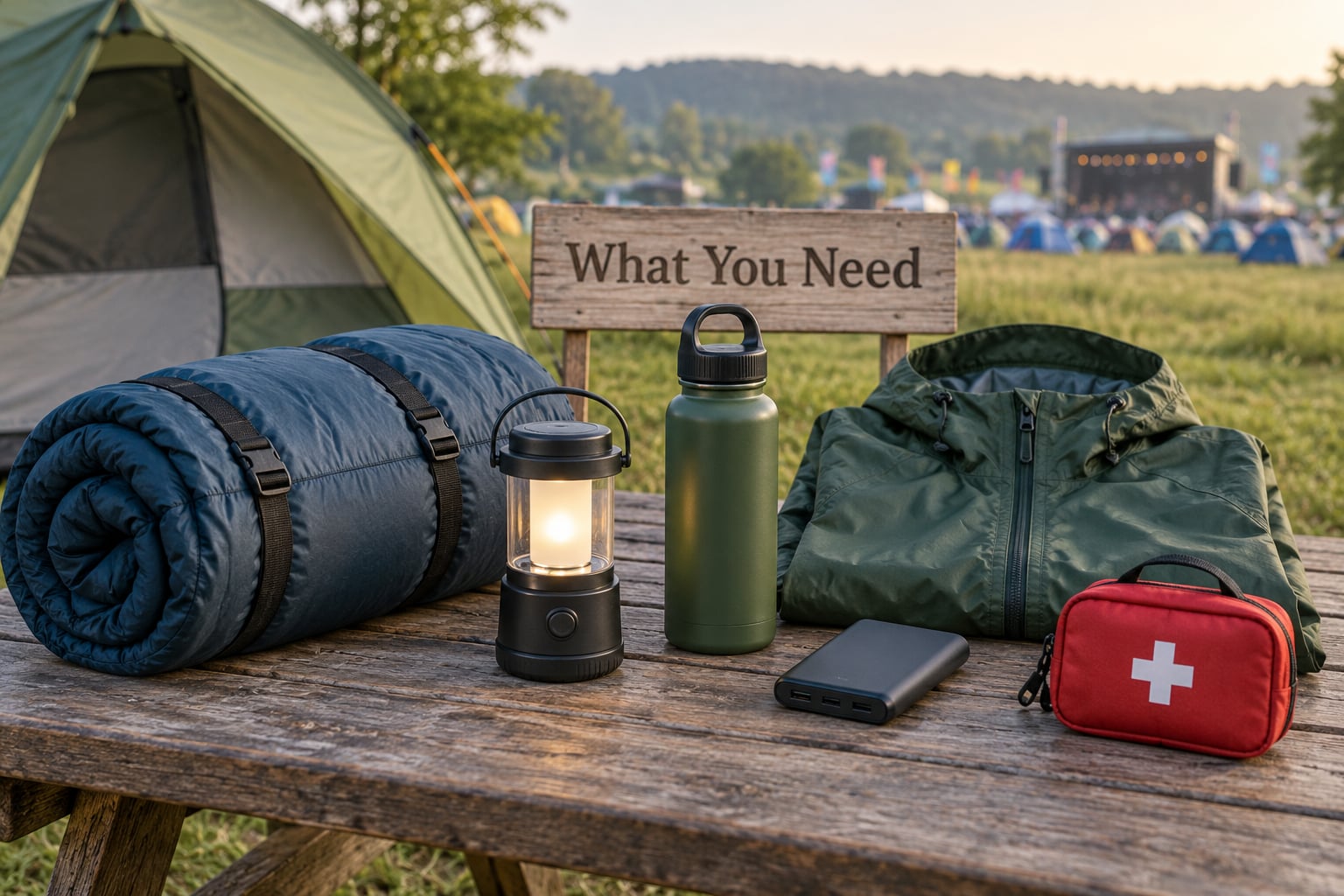
Work through these categories in order and you will not miss the item that ruins a set. Shelter and sleep come first because they are hard to replace on site. Weather protection and clothing come next, since festival weather swings harder than ordinary camping weather.
- Shelter. Straight-leg tent, spare stakes, a rubber mallet and a groundsheet. Pop-up domes sink in mud and leave you cramped in a four-person dome.
- Sleep. Sleeping bag, sleeping pad, camp pillow and eye mask. Sunrise hits your tent at 5am and neighbouring camps stay up until 4.
- Clothing. Waterproof jacket, warm layer, closed-toe shoes and spare socks, for afternoon sun, freezing nights and mud that eats canvas.
- Food and water. Hydration pack, electrolytes, a cooler where the rules allow it, and nonperishable meals that survive a hot car.
- Hygiene. Wet wipes, hand sanitizer, a backup roll of toilet paper and a small first-aid kit. Portable toilets have no running water and run out of paper constantly.
- Power. A high-capacity power bank, a short cable, and tickets and maps downloaded before you lose signal.
- Festival gear. Earplugs, ID, a small amount of cash, a headlamp and something bright to mark your tent in a sea of grey domes.
Then food, hydration and festival gear, followed by the unglamorous hygiene and first-aid kit. Documents, money and power are quick once you know the festival is mostly cashless. Finish with safety supplies and campsite identification, which takes five minutes and saves you a twenty-minute walk at midnight.
Two of those deserve a note now because they are the ones that cause the worst nights. The hygiene kit is not a luxury, since most festivals supply portable toilets with no running water and a toilet paper supply that regularly runs dry before 10am. And the eye mask is the single most-recommended item on festival forums, because campsites in the west light up at 5am and nobody wants that.
Whatever category an item falls into, it belongs in one of two places: the camp stash or the bag on your body. That single decision is what separates a smooth festival from an evening spent trudging back to camp for sunscreen.
Step-by-Step: How to Pack for a Camping Music Festival
1. Check the festival rules and site conditions
Read the festival’s official prohibited items page before you pack anything. Glass containers are almost always banned, and many festivals confiscate them at the gate without handing them back. Camping stoves, generators, chairs, canopies and outside food are restricted differently at every event.
Check whether the site is car camping or walk-in, and whether a vehicle pass is required. Look at the weather advisories for the weekend and at the hours when noise is banned, because most campsites go quiet before the music even starts and you will be pitching a tent in the dark.
If the list clears and you already know whether you are hauling a cooler across a field or loading it next to the spare tyre, the prep stage is done.
2. Choose a shelter and sleep system for the ground
Pick your tent by how many people share it and by the ground. Straight-leg or cabin-style tents give you standing room and a flat floor, which matters more than most first-timers expect. Pop-up dome tents are cheap and quick to pitch, but they pinch, trap condensation and turn into a sauna when the sun hits them.
Bring extra stakes and a rubber mallet. Ground at festival sites is often hard and wet in the top few inches, and a stake that will not go in means a tent that pitches badly and blows over. A cheap 10×10 canopy or a tarp strung above the tent handles both drizzle and a freak downpour, and gives you shade during the day.
A groundsheet is the cheapest comfort upgrade there is. It cuts condensation, keeps mud off your sleeping bag and makes the tent floor easier to wipe down. Underneath that, bring a sleeping pad rated for the ground temperature and a bag rated about 5 degrees colder than the forecast low.
Do not skip the camp pillow. Sleeping on your bag lid is how you wake up with a crick in your neck after two nights.
Size the tent one person larger than your group and you will not regret it. A tent rated for two fits two people and a wall of luggage, which is exactly how camps end up looking like a boot sale. If you are solo, take a two or three-person tent anyway, since the spare floor space is where the wet kit, the muddy boots and the day bag live during a downpour.
Test the whole setup at home, in daylight, before the weekend. Pitching a tent for the first time in the dark on unfamiliar ground is a miserable way to lose two hours, and it is entirely avoidable. Most forums agree the tent pitch is the single most useful thing you can practise at home.
3. Pack weather protection and clothing layers
Dress for a 30-degree swing in one day. Lightweight layers that you can add and remove beat one heavy outfit, because you will be sweating in the afternoon and shivering after the late set.
A waterproof jacket with a hood does more for you than an umbrella, which is awkward in a crowd and pointless in wind. Pack one anyway as a festival spare for the sun, dust and hay fever, along with a hat, sunglasses and SPF 50 sunscreen you can reapply without stopping.
For footwear, closed-toe shoes that handle mud and long walks between stages. Break them in before you go, and pack camp shoes or flip-flops for the tent so you are not wearing soaked trainers around camp all weekend.
Double your socks and underwear. That advice comes up constantly on festival forums for good reason, and a single dry pair in a sealed bag is cheap insurance against the wet-sock misery nobody enjoys.
4. Plan food, water, and easy meals
Bring a hydration pack with a reservoir rather than juggling bottles. Two to three litres depending on the heat, refilled at the free water points or the vendor stations, plus electrolyte packets because you will sweat out more than water on a long day.
Yes, you can bring a cooler, but check the size limits first and pick one that fits under your cot. Freeze it solid the night before and use blocks of ice rather than loose cubes, because blocks last longer and the meltwater is still drinkable if it does not slosh out.
For food, choose things that survive a hot car and a wobbly table: instant oatmeal, nut butter, tortillas, dried fruit, shelf-stable snacks, pasta and a sauce that does not need a fridge. Cut up produce before you leave, pack it in watertight containers, and plan the first and last meals from home so you are not cooking while hungry and muddy.
When the cooler opens and there is something that does not need a stove, and the hydration pack holds a full day without a refill queue, the food step is done.
5. Pack festival and power essentials
Earplugs are the item people regret not buying. High-fidelity concert earplugs cut the harshest frequencies without dulling music completely, and foam plugs are the fallback you take to bed at night. A metal show in front of a PA is loud enough that your ears will still be ringing on the drive home, and hearing damage does not reset.
For power, bring one high-capacity power bank per person rather than sharing one between four. Wrist-strapped phones work better than hand-held ones in a crowd, and a short charging cable on a keyring beats a metre-long one that tangles.
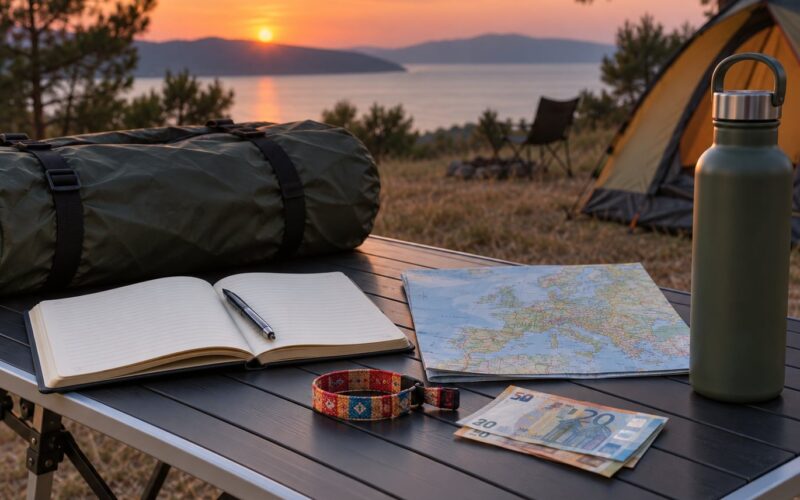
Download your ticket, the site map and your group’s details before you lose signal. Screenshot your wristband confirmation too, since some festivals use RFID bands instead of phones.
A portable speaker is worth checking against the rules before you pack it. Many festivals restrict personal speakers at stages and enforce it strictly near the front, so decide before you are standing in the queue holding one.
On money, most large festivals now run cashless campsites and bars, with top-ups on a wristband or your phone. Cash still gets you further at a food stall and helps if the network is struggling, so bring a small amount and keep it in an inside zipped pocket rather than a fanny pack. In a shoulder-to-shoulder crowd, a waist bag that opens on the front is the one item you cannot pickpocket without being noticed.
6. Include hygiene, first-aid, and comfort items
Build a small hygiene kit and treat it as non-optional. Wet wipes and hand sanitizer matter because most festivals provide portable toilets with no running water, and the toilet paper supply runs out faster than the crowd does. Carry a roll of toilet paper or paper towels in a sealed bag as your backup.
Your first-aid pouch should cover blister treatment, painkillers, plasters, antiseptic wipes, any prescription medication and sunscreen for the back of your neck where you cannot reach it. Add insect repellent, a large folding fan for dust and heat, and a mask if hay fever bothers you.
Comfort items earn their weight too. A sit pad for grassy banks, a small towel, earplugs for sleeping and duct tape for a split pole or a broken strap all fit in a pouch smaller than your fist.
Shower lines deserve their own warning. Most festivals run a small number of hot showers for thousands of people, and some hand out water tokens at check-in or require your wristband to prove you are camping. Assume the shower is a bonus, not a plan. A bag of travel wipes, a dry shampoo can and a hand towel will carry you through four days without queuing twice.
If you are camping with kids, add a change of clothes in the day bag, a full change in the car, and a quiet activity for the afternoon lull when the sun gets brutal. Most families find a folding chair and a top that blocks the sun are worth more than any extra toy.
7. Use a separate same-day festival bag
Pick a small chest rig, waist bag or light daypack for the festival grounds. It should hold water, a refillable bottle, sunscreen, a power bank, your phone and cable, earplugs, a poncho or rain jacket, snacks, wet wipes, your first-aid pouch, medication, a headlamp and a copy of ID.
A waist pack stays on your body in a shoulder-to-shoulder crowd and does not need to be unlocked with cold hands in the dark. That is why festival regulars defend it so fiercely.
Decide what this bag holds before you leave and never stash anything there you cannot replace on site.
8. Pack, protect, and load for a comfortable arrival
Two days out, put everything in dry bags or zip bags. Clothing, electronics and the first-aid kit should survive a toppled cooler. Label identical gear with bright tape or a different colour of flag, because a sea of grey dome tents is genuinely hard to find at night.
For campsite identification, run something tall and bright above the tent and pick a landmark corner near your stage so your group has a meeting point. A headlamp with fresh batteries goes in the day bag, not the car.
Load heavy items low in the vehicle and stop them moving around. Keep your first-night essentials accessible so you do not unpack the whole car in the dark in unfamiliar ground. Once you arrive, pitch the shelter before you unpack anything else, and get the tent staked properly rather than pegged shallow for speed.
You know the load is right when the tent is up and staked within an hour, the headlamp is in the bag on your body, and the cooler is shaded under the canopy.
Common Mistakes
Packing one giant bag. You will end up carrying the entire site around the crowd or walking home in the dark for one item. Split into a day bag and a camp stash and the problem disappears.
Ignoring the rules page. Glass, stoves, generators and oversized canopies get confiscated at the gate. Twenty minutes reading the list saves the whole weekend.
Having no mud or rain plan. Pack a poncho, a groundsheet, spare dry socks in a sealed bag and camp shoes. Most festival mud is a given, not a surprise.
Bringing five electronics and one charger. One phone, one power bank, one short cable. Extra gear is weight around your neck all weekend.
Leaving food in a warm car overnight. Everything that should stay cold goes in the cooler on arrival, not in the boot for the drive in.
Wearing new boots. Blisters on a four-day walking festival ruin the trip faster than rain. Break shoes in a week ahead and pack blister treatment.
Skipping ear protection. The concert is two hours, the ringing is three days. Bring proper concert plugs, not just sleep plugs.
Forgetting the small comfort items. Eye mask for the 5am sunrise, sit pad, tape and a small towel. These are what people mention in the after-festival threads as the things they would buy first.
Packing as if every camp shower will be hot. Most are cold, rationed, or closed for maintenance on day two. Wash with wipes and plan a real shower as the exception.
Leaving the tent to the last hour. You arrive tired, the light is going, and the ground is harder than you expected. Pitch on arrival, before you unpack anything.
Forgetting what happens on the drive home. Pack a separate bag of clean clothes for the journey. Climbing into a car in soaked clothes after four days is a low point nobody needs.
Frequently Asked Questions
What are the most important things to pack for a camping music festival?
Your core load is shelter and sleep: a straight-leg tent, extra stakes and a mallet, a groundsheet, a sleeping bag and pad rated for the ground temperature. Then add a warm layer, a rain jacket and closed-toe shoes. Finally, bring a hydration pack, electrolytes, a cooler of easy food, wet wipes, hand sanitizer and a high-capacity power bank. Everything else is a bonus.
Do I need a cooler for a camping music festival?
A cooler is helpful but not mandatory. Many festivals run food vendors, and a good kitchen setup takes more space than you want to haul across a field. If you bring one, check the size rules, freeze it solid the night before, use blocks of ice instead of cubes and keep it shaded under a canopy. A stash of no-cook food like tortillas, nut butter and oatmeal covers you either way.
What should I wear and bring for a rainy metal festival?
Rain and mud are the defining conditions at metal and hard rock festivals, often in July when the days are still hot. Wear closed-toe shoes that have been broken in, pack two pairs of socks plus one dry spare sealed in a bag, and add a waterproof jacket with a hood rather than an umbrella. A tarp over the tent and a groundsheet do more for your gear than any outfit choice.
Can I bring a portable speaker to a camping music festival?
It depends entirely on the festival, and many restrict personal speakers near the stages. Rules on unattended speakers at camp are usually looser, but quiet hours still apply before the first set. Read the prohibited items page before you pack one, because getting stopped at the gate with a speaker in your hand is miserable. A small battery-powered camp speaker is the safer bet.
How should I keep my phone and other electronics safe?
Wrist-strap your phone so it cannot be lifted out of a pocket in a crowd, and use a waist bag or chest rig that stays closed. Keep your power bank in the same bag, never in the car. Download tickets, maps and your group chat before arrival, because once the signal drops you will not be able to find your way around. A waterproof pouch protects everything if you wear a poncho in a downpour.
What should I pack in a small bag for the festival grounds?
Keep it to what you need within arm’s reach: water and a refillable bottle, sunscreen, a power bank with a short cable, phone, wallet and ID, earplugs, a poncho, snacks, wet wipes, a mini first-aid pouch and any prescription medication. Add a headlamp for the walk back to camp. If it does not fit in a waist bag, it belongs in the camp stash.
What to Do First When You Start Packing
Pack in this order and you will never be the person watching the sun go down over an unpacked car. Shelter and sleep gear first, then the clothing layers for hot days and cold nights. Then food, water, hygiene and power. Only then decide what stays in your body bag, and keep it under a couple of kilos.
If you only remember one thing from this guide, remember the two-zone system. It stops you overpacking, saves you the walk back to camp mid-set, and makes the whole weekend feel easier. Everything else on the list is a detail you can work around.