To wash a band t shirt without ruining it, turn it inside out, wash it in cold water at or below 30C (86F) on a gentle cycle with a mild liquid detergent, and let it air dry out of direct sunlight. Skip the dryer, skip bleach, skip fabric softener. Ten minutes of care is the difference between a print that lasts a decade and one that cracks after a single wash.
I have buried enough tour shirts in a laundry basket to know exactly which cycle ruins them. Hot water and a high tumble setting are the two culprits people blame later, when the graphic is already webbed with tiny cracks you can only feel with a fingertip.
Table of Contents
- What You Need
- Step-by-Step
- 1. Check the Care Label and Graphic Type
- 2. Turn the Shirt Inside Out
- 3. Use Cold Water and a Mild Detergent
- 4. Wash Gently and Avoid Overloading
- 5. Choose Air Drying or a Low Heat
- 6. Remove Wrinkles Without High Heat
- Common Mistakes
- Frequently Asked Questions
- Does hot water ruin a graphic tee?
- Can you put a cotton band tee in the dryer?
- Is fabric softener safe for shirts with prints?
- Can you machine wash a vintage band tee?
- Why does my shirt print peel after washing?
- Can acetone fix a cracked print on a shirt?
- Conclusion
What You Need
None of this needs special equipment. The setup matters more than the products.
- The care label. Read it before anything else. A tub with one bar means gentle cycle, two bars means normal. A crossed-out tumble icon means no machine drying, and a crossed-out iron means keep the iron off the artwork entirely.
- A mild liquid detergent. Ones without enzymes, bleach or optical brighteners are the safe pick. Liquid dissolves and rinses out fully, which powder detergent does not always do.
- A laundry mesh bag. Optional, but it stops the shirt tangling and stops zippers and buttons grinding against the print.
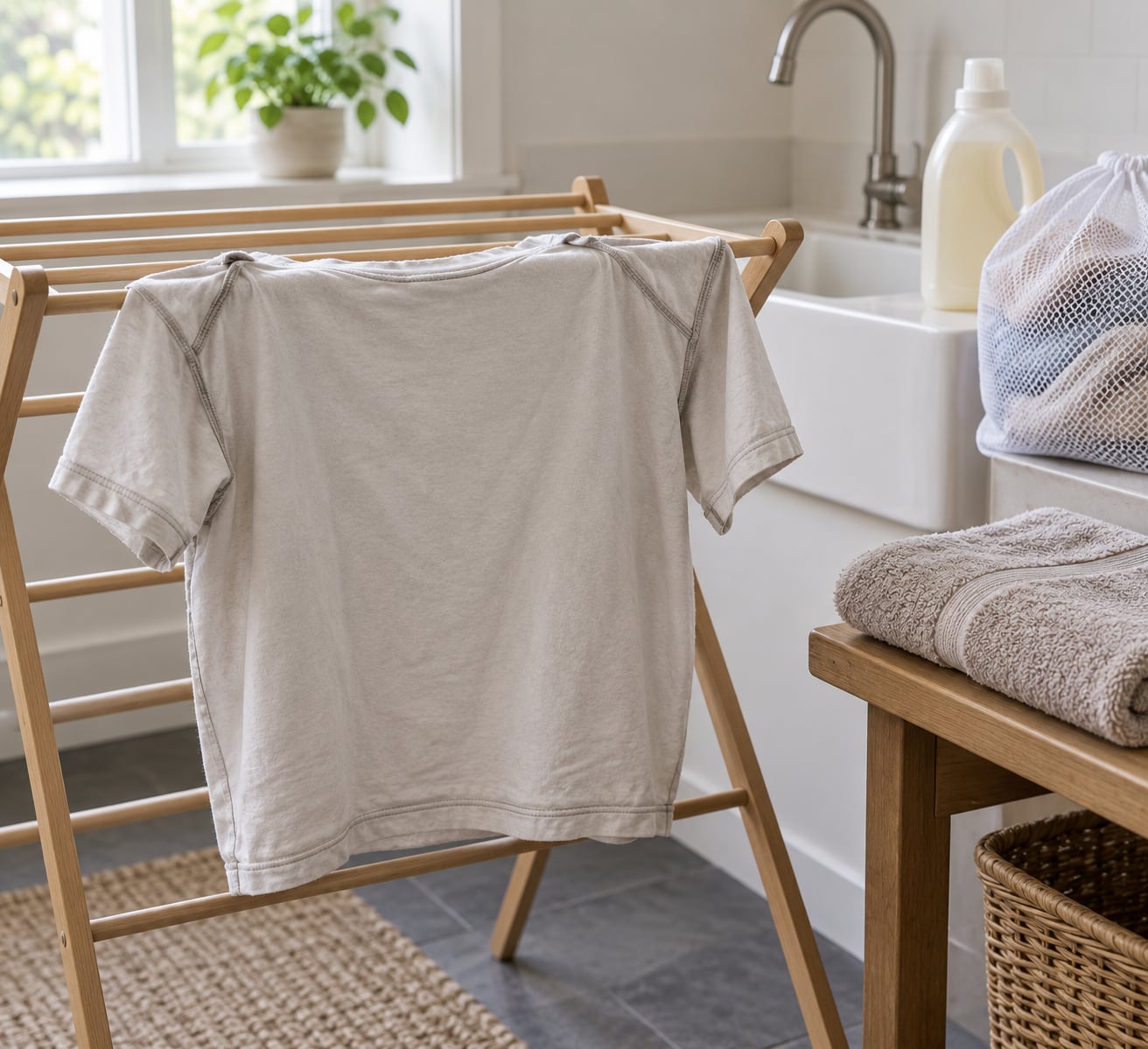
- A drying setup. A rack, a hanger, a shower rod, or a flat towel on a surface. If you have a fan, even better.
One more thing worth knowing: the graphic type decides how forgiving you get to be. A plastisol screen print, the thick rubbery ink on most official band tees, is tough. A heat transfer vinyl layer, the shiny flexible film you can sometimes peel with a fingernail, will not survive any real heat at all. A direct-to-garment print sits in the fabric rather than on it, so it fades before it cracks.
Step-by-Step
Here is the full method for how to wash a band t shirt without ruining it, in the order that protects the ink longest.
1. Check the Care Label and Graphic Type
Photograph the label before you wash, because the print is usually printed over the neck and can be lost to the wash too. What matters is the temperature, the cycle, and whether drying is permitted.
Vintage and single-stitch tees get treated differently. They have already survived decades, and the fabric is thinner than a modern ring-spun knit. Hand wash or spot clean those, never machine dry them.
2. Turn the Shirt Inside Out
This is the cheapest protection there is. Inside out, the graphic presses against itself instead of rubbing against zippers, hoodies and other prints in the load.
It also hides new bleed-through. A plastisol print that is only slightly under-cured will sometimes mark the inside of another shirt, and doing it inside out keeps that mark off the front of your favourite hoodie.
3. Use Cold Water and a Mild Detergent
Set the machine to cold, or 30C if your machine has a 30C setting and the label allows it. Hot water is what cracks an ink binder, and that cracking is not gradual. One hot cycle can craze a print that was fine for years.
Use about half the detergent the bottle suggests. Detergent does not work harder because you doubled it, it just leaves more residue for the print to sit in. On white graphic tees, an oxygen bleach is safe if the label allows it; chlorine bleach is not, because it oxidizes pigment and leaves the graphic looking bleached even when the shirt looks fine.
In hard water areas, a cup of white vinegar in the rinse cycle stops mineral deposits dulling the black.
4. Wash Gently and Avoid Overloading
A gentle or delicate cycle is the default. If the label specifies normal, use normal but nothing faster.
Do not pack the drum full. Clothes need room to move, and a cramped load means your shirt spends the whole cycle pressed against something abrasive. That constant friction is what abrades a plastisol print and raises pills across the graphic.
Front-loaders tumble gently, which is why they are kinder to prints than a centre-fill agitator with the same settings.
5. Choose Air Drying or a Low Heat
Air drying is the safe answer and it costs nothing but patience. Hang the shirt by the shoulders on a hanger or a rack, in shade, with a fan pointed at it if you have one. Shake it out first and pull the hem straight so it dries in shape instead of curling.
Fold it in a towel and roll it to squeeze out water, then hang it damp. That takes about half the drying time and avoids the hard creases that come from a heavy wet hem.
If the label explicitly allows tumble drying, low heat only, and take the shirt out while it is still damp. Finishing on air dries the last of it without a second hot cycle. A user on r/BABYMETAL put it plainly: the dryer makes colours fade faster and makes the design crack a ton.
6. Remove Wrinkles Without High Heat
Most graphic tees wrinkle far less than people expect once they are dried flat or on a hanger, because cotton knit has almost no memory.
For what does crease, steam it from the reverse side at a distance, or hang the shirt in a steamy bathroom for ten minutes. If you must iron, turn it inside out, set the iron to the cotton setting, and never press it over the graphic. A thin cloth between the iron and the fabric adds protection. On vinyl and plastisol, skip ironing entirely.
Common Mistakes
Every one of these has a straightforward fix, and most damage is fully avoidable once you know the mechanism.
- Hot water. Heat expands the ink binder faster than the cotton around it, and the ink cracks to release the tension. Fix: cold or 30C, every time, even for a shirt that has survived ten hot washes.
- Harsh or heavy detergent. Enzyme and bleach-based detergents attack the ink and leave film that dulls the graphic. Fix: half a dose of mild liquid detergent.
- Fabric softener. This is the quiet one. Softener deposits a film that gets under the print and softens the adhesive holding it to the fabric, which is a leading cause of peeling. Fix: leave it out entirely for graphic tees.
- Chlorine bleach. It oxidizes pigment, so colours go chalky and flat. Fix: spot clean with a mild detergent, or use an oxygen product on whites only.
- High tumble drying. Sustained heat is the single most reported cause of self-inflicted print failure. Fix: air dry, or low heat and out while damp.
- Washing prints face out. Fix: turn the shirt inside out, every load.
- Ironing directly on artwork. Fix: reverse side, cotton setting, protective cloth, and never on vinyl.
- Overloading the machine. Fix: leave the drum about a quarter empty for graphic tees.
Two failures people blame on washing are actually storage and construction. Folding a tee into a box puts a hard crease straight through plastisol, and collectors on r/Golfwang have noticed their prints cracking far more once the shirts went into storage boxes. Fold along a seam, or hang it.
Holes appearing after a single wash are usually not the machine’s fault either. Thick plastisol soaks into the knit and stiffens it, so the fabric under the print flexes differently from the fabric beside it, wears out faster, and gives way. That is why a heavy vintage tour shirt can fail before a thin fast-fashion one. Wash on gentle, dry flat, and slow the damage down. A reader on r/laundry washed one shirt too hot, watched it crack up, and has had no trouble since switching to cold and inside out.
Hand washing helps too. Someone on r/SwiftieMerch described washing by hand and steaming out the wrinkles as the method that helped most, while admitting it still did not do as much as they wanted. That is the honest position here: fading is not fully preventable. What you can control is how fast it happens.
Frequently Asked Questions
Does hot water ruin a graphic tee?
Yes, and it is the most common cause of print failure. Heat makes the ink binder expand faster than the surrounding cotton, so the print cracks internally before you see it from the front. A single hot cycle can craze a plastisol graphic that looked perfect, and it can melt or warp a heat transfer vinyl layer outright. Keep the wash at cold or 30C (86F) and skip the dryer entirely.
Can you put a cotton band tee in the dryer?
Only if the care label allows it, and then on low heat, removing the shirt while it is still damp. High heat is what turns a fine print into a cracked one. Air drying takes a few hours longer and does far less damage. If the label has a crossed-out tumble icon, that is not a suggestion, it is an instruction from the people who made the shirt.
Is fabric softener safe for shirts with prints?
No. Softener leaves a waxy film that works its way under a print and softens the adhesive binding it to the fabric, which is a leading cause of peeling and lifting. It also builds up on the cotton and dulls the colour. Skip softener on graphic tees and use a small amount of mild liquid detergent instead. Your towels will survive without it.
Can you machine wash a vintage band tee?
For most vintage tees, no. Single-stitch shirts and anything already showing print cracking should be spot cleaned by hand with cool water and mild detergent, then air dried flat. Machine washing adds agitation the aged knit cannot take, and machine drying adds heat that turns a fragile print into flakes. Many collectors never wash a valuable shirt at all, which solves the graphic but not the odour.
Why does my shirt print peel after washing?
Three usual causes. Fabric softener or heavy detergent got under the print and attacked the adhesive. Heat transfer vinyl layers simply were not meant to survive a normal washing routine. Or the print was already under-cured when it left the screen, and the first wash was the first real test it faced. If a print peels in one wash regardless of method, the shirt was poorly made, not badly washed.
Can acetone fix a cracked print on a shirt?
No, and it is worth being blunt about it. Acetone dissolves print ink permanently, so it removes a graphic rather than repairing one. For an already cracked print, collectors on the Vintage T-Shirt Forum suggest a Sharpie to fill small light spots on black shirts, or a fabric paint fixative to seal a cracked area, with realistic expectations. Touch-ups slow further damage, they do not undo it.
Conclusion
Start with the three things that cost you nothing: read the care label, turn the shirt inside out, and set the machine to cold with a gentle cycle. Add a mild detergent at half dose, then air dry in shade or tumble low while the shirt is still damp. That sequence removes most of what damages a band t shirt, and the graphic stays worth wearing long after the shirt has had a dozen washes. The label always wins when it disagrees with any advice, including this.