Finding metal shows near you comes down to two separate systems. Ticketing apps like Bandsintown and Songkick track touring bands reliably, but most local metal shows get announced by venues and promoters on social media first. Run both tracks and you will find nearly everything happening in your area.
The whole method takes about 20 minutes to set up and about two minutes a week to maintain. That is genuinely the difficulty level, and it is worth doing once properly because the return comes every time a band you like books a Tuesday night show.
Table of Contents
- What You Need
- Step-by-Step: How to Find Local Metal Shows Near You
- 1. Define your home search area
- 2. Search major concert and ticketing platforms
- 3. Check metal-specific calendars and communities
- 4. Follow local venues and promoters
- 5. Verify the date, venue, and lineup
- 6. Compare travel and ticket options
- 7. Keep a watchlist and check often
- Common Mistakes
- Searching with one keyword
- Checking only the artist’s name
- Ignoring supporting and local acts
- Failing to confirm the venue
- Waiting too long on small shows
- Trusting stale shared lists
- Frequently Asked Questions
- How early are local metal shows announced?
- How do I find metal shows in a small town with no metal venue?
- What do I do when a metal show sells out?
- How do I find out whether a show is all ages or 21 plus?
- How can I discover local metal bands before they start touring?
- Is Bandsintown or Songkick better for finding metal shows?
- Start Your Search with Venue and Community Calendars
What You Need
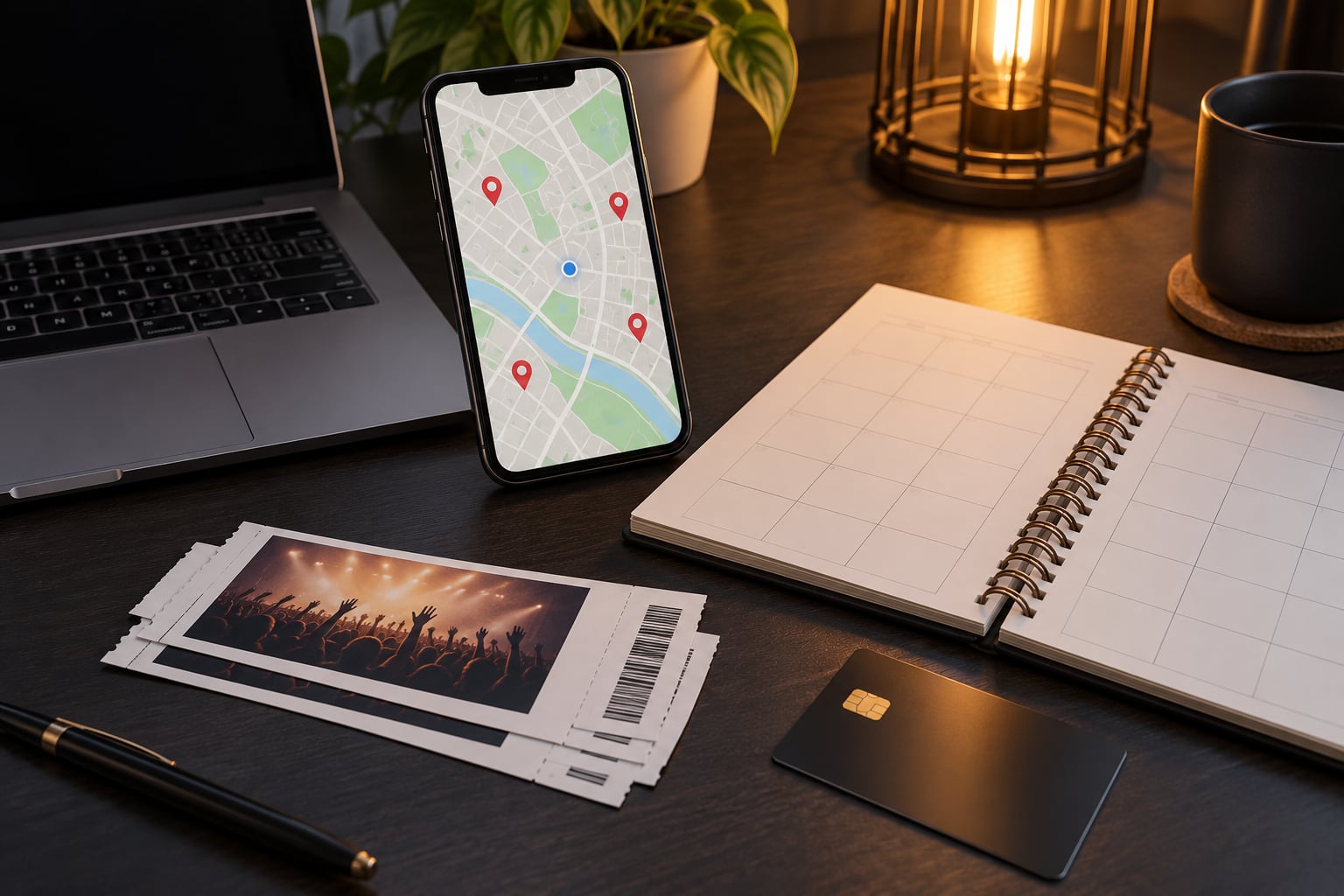
You do not need much. Most of it you already own, and the one thing that actually matters is a rough sense of how far you are willing to travel.
- Your general location — a ZIP code or neighbourhood is enough. Most listing sites want a city and a radius, not an address.
- A map app — whatever you already use for driving. It becomes the tool for sanity-checking whether a 45-minute show is actually 45 minutes.
- Accounts on the major ticketing sites — at minimum one, realistically two. Bandsintown and Songkick cover touring dates; AXS and Ticketmaster handle most arena and amphitheatre shows.
- An Instagram account — this is not optional in metal. Venue and promoter feeds are where small bills surface first.
- A calendar — any of them. You want somewhere to drop confirmed dates so a work shift does not collide with a show you cared about.
- A payment method on file — most club shows sell out or hit a door capacity fast, so having your card ready saves a scramble.
Step-by-Step: How to Find Local Metal Shows Near You
Seven steps, in order. The first three build your discovery channels, the next three filter and verify what comes back, and the last one keeps the whole thing running.
1. Define your home search area
Decide on a travel time before you open a single app. A radius in miles means nothing if the map is full of slow roads, but 45 minutes of driving time is a real number you can plan around.
Most metal fans who go regularly split their search into three zones: a core zone of roughly 20 minutes for club bills, a middle zone up to about an hour for the better rooms and the occasional touring package, and a wider zone you check when a band you love announces a nearby stop. People with good public transit can push the outer two zones much further out than people who drive.
You will know the radius is set correctly when you can name a real show for each zone. If the outer zone is empty most months, shrink it. If your middle zone is already crowded, widen it.
2. Search major concert and ticketing platforms
Open Bandsintown and search your city, then set the genre filter to metal and pick a date range. Bandsintown’s genre pages are genuinely the fastest route to touring metal dates in a given city, and the filter is on the page rather than buried in a settings menu.
Songkick is the other half of this. It is more useful when you follow specific artists rather than browse by city, and the alerts are worth setting on anything in your rotation. Where Bandsintown is a city browser, Songkick is a per-artist tracker.
Add AXS and Ticketmaster for anything in a room larger than a club, and give Eventbrite a look since local promoters post all-ages bills there. Spotify’s in-app live events tab is a decent free supplement if you already live in that app.
You will know this step worked if a single search returns a handful of dates with named venues attached rather than an empty page.
3. Check metal-specific calendars and communities
The apps above are built around touring artists, and that is exactly where they get weak. A four-band Tuesday bill at a 200-capacity room may never register. For those, go to the places fans actually post.
Start with your city’s subreddit. Search for shows threads, or just check whether a local scene sub exists. Metal-specific subs and larger genre communities carry the same listings, and Discord scene servers often have a channel nobody outside the city knows exists.
Fan-curated lists are the sleeper route here. In Austin, Reddit users point to an Instagram account that maintains a constantly updated punk show list, and that kind of fan-run calendar has quietly become the best listing source in several cities. Search your city name plus show calendar, Instagram or Instagram stories and you will usually find one.
Facebook groups still matter more in towns than in cities, particularly for house shows and DIY basement gigs that will never be ticketed at all.
4. Follow local venues and promoters
This is the single method that people in the forums recommend most often, and it beats every app. The distinction that matters is between a venue and a promoter.
A venue owns the room. A promoter books the shows. The venue’s Instagram usually posts its own schedule, and the promoter’s account announces the dates it is adding across multiple rooms, often earlier than the venue’s own feed. Follow both, and when the same city comes up repeatedly in your feed, follow every venue and promoter account attached to it.
People in Seattle described the old method as picking up the alt-weekly and reading the calendar. That is largely gone, and the replacement is exactly this: Instagram replaces print. Reddit users in Salt Lake City named venue and promoter accounts along with SLUG Magazine as their working sources, and in Eugene, fans pointed to specific local rooms as the signposts for finding out what is on.
Turn on story notifications for the accounts you follow. Many of these are late-evening posts that vanish in 24 hours.
5. Verify the date, venue, and lineup
Never buy off a single source. Confirm each listing against the organizer or venue page, then check the artist’s own channel for the tour dates.
Look specifically for rescheduled dates, which metal shows get hit often because of travel and van problems. Sold-out notices and cancellations matter too, and a show that moved rooms may now be in a space with a completely different sound system and floor plan.
Check the supporting acts while you are there. The opening band is often a local act you will want to see again, and it is the cheapest way to start following a scene. Age restrictions are the other thing worth confirming before you commit, since all-ages rooms and 21-plus bar bills are different scenes entirely.
6. Compare travel and ticket options
Work out the real total before you commit: ticket cost, the service fees the platform adds, parking or transit fares, and whether the door time means you are standing around for two hours first.
Most small club metal bills are general admission and priced by tier, and many are sold on a door deal rather than in advance. That means showing up early with cash or a card is sometimes a better move than buying online, particularly for local bills in the middle of the week.
Check whether an earlier show exists in another city within your range on the same night. A 90-minute drive to a better bill often beats a 20-minute drive to an empty room, and regional festival lineups sometimes solve both at once.
7. Keep a watchlist and check often
Save anything that looks interesting, even before you are sure. Most listings get cancelled or rescheduled, and the ones that change are exactly the ones worth watching.
Set alerts rather than checking manually. Follow the artists on Bandsintown or Songkick, enable notifications on your city subreddit, and subscribe to the calendar feeds the venues and promoters publish. Then check twice a week, on a Monday and a Thursday, because that is when promoters announce new bills and when weekend shows get their supporting acts confirmed.
Newly announced local metal shows rarely trend. They appear one day on a venue’s story and quietly sell out a few weeks later.
Common Mistakes
Almost every search failure comes down to one of these.
Searching with one keyword
Typing metal into a single app and giving up when the results look thin is the most common mistake. The listings are spread across seven or eight channels, and a quiet month in one of them means nothing.
Checking only the artist’s name
Searching for your favourite band and assuming the absence of a local date means nothing is happening misses the entire local half of the scene. Apps answer the question of when a touring act reaches your city, not what your city is putting on.
Ignoring supporting and local acts
The opening slot is where the local metal scene lives. If you only look at headliners, you will conclude a town has no scene when it has a busy one.
Failing to confirm the venue
A show can change rooms, move to a different city on a tour, or be rescheduled to a new date. People have driven an hour to a venue that never hosted the band.
Waiting too long on small shows
Club bills have hard capacity limits and rarely add shows. Once the date is announced, decide quickly rather than waiting for a favorable moment.
Trusting stale shared lists
Subreddit wikis and old forum posts are full of dead links to calendars and blogs that stopped publishing years ago. Check the last post date before you plan a trip around someone’s list.
Frequently Asked Questions
How early are local metal shows announced?
Touring dates for arena and festival shows often land months ahead, but small local metal bills are often announced only three to six weeks out, sometimes less. Venues and promoters post to their own feeds first, so alerts on those accounts matter more than early ticket sales. Set alerts across both your city subreddit and the venue accounts you follow, and check at least twice a week.
How do I find metal shows in a small town with no metal venue?
Widen your search by travel time rather than miles, since a 60-mile radius in one direction can take an hour and 30 miles in another can take twenty minutes. Check nearby mid-size cities on Bandsintown genre pages, because those rooms book regional bills. Local Facebook groups and scene Discords are usually more active than the apps in towns this size, and regional metal festivals can cover a whole season in one trip.
What do I do when a metal show sells out?
Check whether the promoter has added a second night, since a busy bill often gets extended. Otherwise look for the same tour in the next closest city inside your travel range, and set up alerts for the tour name on Bandsintown or Songkick because added dates appear quickly. On smaller bills, uncommitted tickets are sometimes sold at the door on the night, so showing up early is a real option rather than a myth.
How do I find out whether a show is all ages or 21 plus?
The venue page is the authority here, not the ticket listing, which often omits it. Bars that host metal bills are usually 21-plus, while purpose-built rooms and community halls are commonly all ages. If you plan to drink before the show, an all-ages room usually has a wristband process. Check before you buy so you do not arrive with friends and get turned away at the door.
How can I discover local metal bands before they start touring?
Go to bills with unfamiliar opening acts and stay for the second band. Bandcamp and streaming services surface local scenes, and city scene Discords post demo and rehearsal footage. Most importantly, follow the room: bands that draw well locally tend to be booked again within weeks, and a venue’s past and upcoming listings tell you which local acts are getting repeat dates.
Is Bandsintown or Songkick better for finding metal shows?
Bandsintown is better for browsing by city and genre, with a metal filter built into its city pages, so it is the faster tool for discovering who is playing locally. Songkick is better for tracking individual artists and getting alerts when they announce dates. Many fans use both, using Bandsintown to scan a city and Songkick to watch the bands they already care about.
Start Your Search with Venue and Community Calendars
If you do one thing today, name five local venues and follow their Instagram accounts. Then find your city’s subreddit or a scene Discord and turn on notifications for both.
Run a Bandsintown search for your city with the metal genre filter and a 30-to-60-minute travel range, and save anything that looks reasonable. From there, check those sources twice a week.
Apps will tell you when a touring band reaches your town. The venue and community feeds are what tell you what is happening ten miles from your house, which is really how to find local metal shows near you without paying app prices on a bill you will regret.