How metal singers protect their voices on tour comes down to a repeatable system, not toughness: a progressive warm-up, steady room-temperature fluids, deliberate breath support from the diaphragm, a monitoring mix that lets you sing without pushing, and a real cool-down after the last song. Most singers who lose their range on a run weren’t unlucky. They arrived at day four without a system and tried to power through it.
Here’s the uncomfortable part that rarely gets written down. A metalcore vocalist who sings fine for 30 minutes alone in a car can fall apart in band rehearsal, because the room is loud, everyone is pushing, and nobody can hear themselves. That gap between studio effort and stage volume is where most damage happens.
This is general information from touring practice, not medical advice. Severe pain, sudden voice changes or hoarseness that isn’t clearing need a qualified clinician, not a self-treatment plan.
Table of Contents
- What You Need
- Step-by-Step
- How Do You Warm Up Without Straining Your Voice?
- How Should Metal Singers Hydrate During Performances?
- How Do Tour Conditions Affect a Metal Voice?
- How Do Singers Recover After a Show?
- Common Mistakes
- Frequently Asked Questions
- Should singers whisper after a show?
- Is alcohol safe before a show?
- How long should a vocalist rest after performing?
- What should I do if my voice gets hoarse mid-tour?
- How do in-ear monitors protect a singer’s voice?
- When should a touring singer see a doctor?
- Conclusion
What You Need
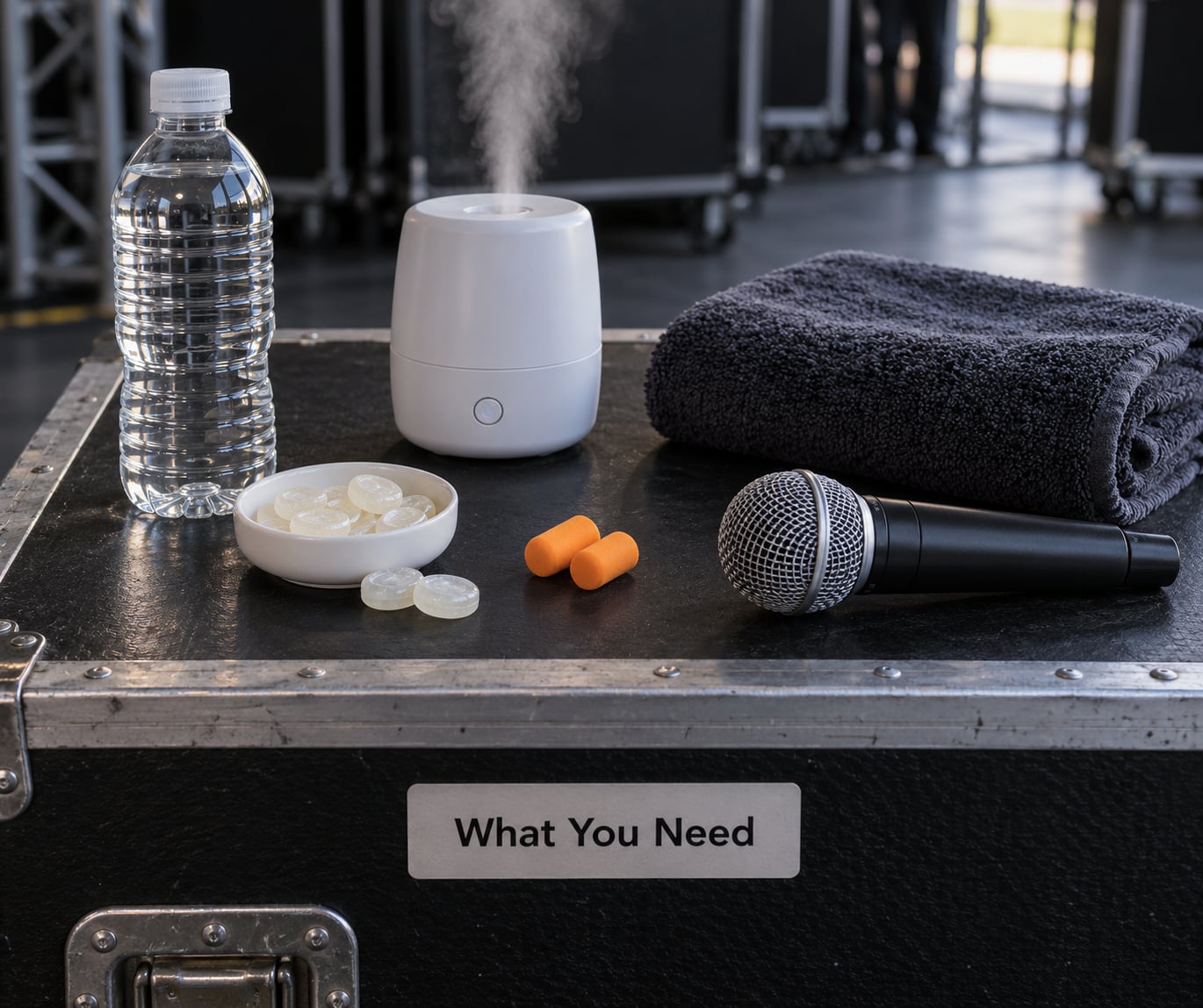
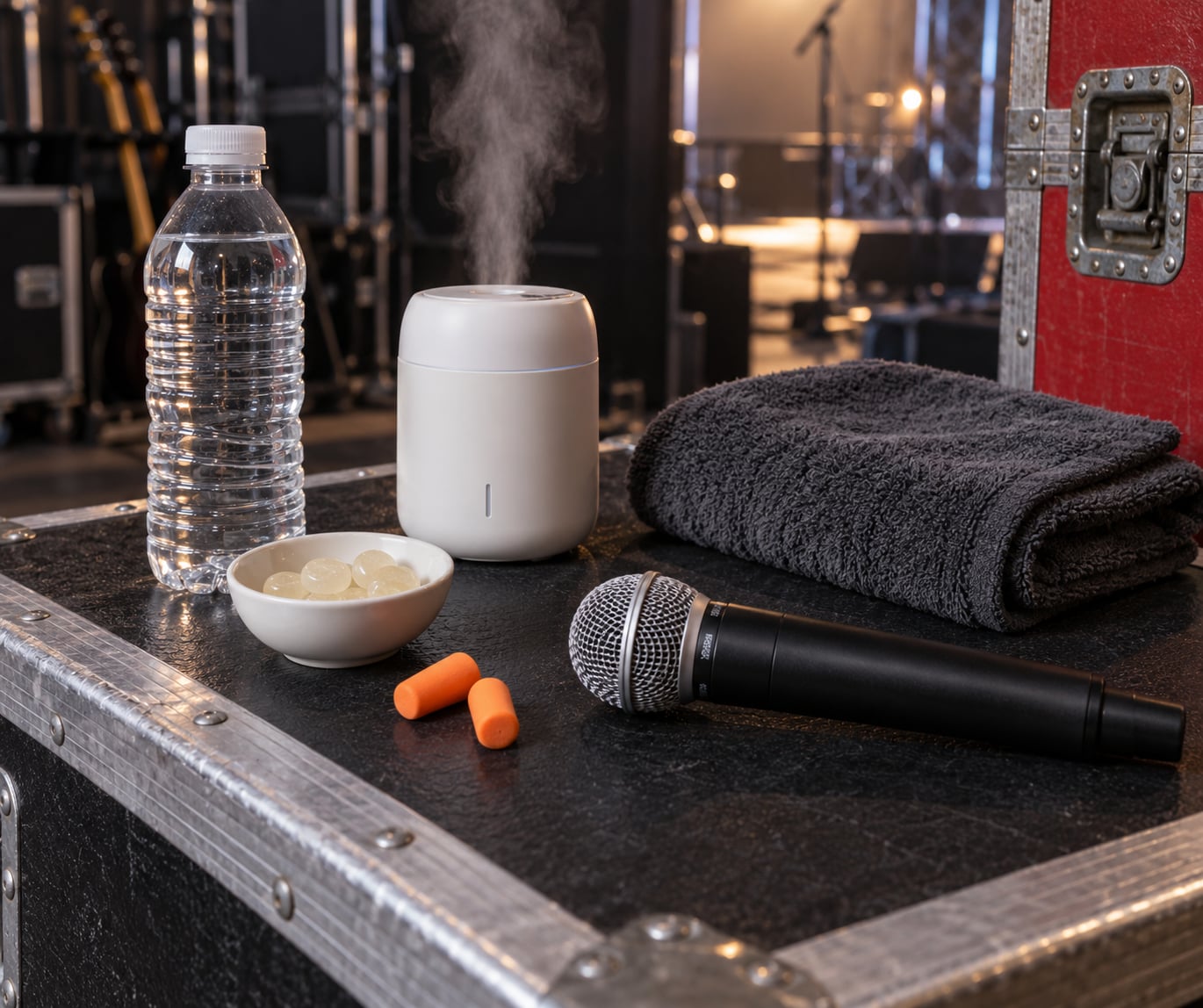
A tour vocal kit is small enough to live in a backpack, and every item earns its place by solving a specific problem you will hit on a run.
- Water, room temperature. The single most important item. Ice-cold drinks tighten tissues for some people; keep yours at room temperature and take small, frequent sips rather than large gulps.
- A second, non-caffeinated drink. Plain water gets boring, and boredom kills hydration on night nine. Herbal tea or diluted juice works if it agrees with your stomach.
- Soothing throat products. Plain lozenges and sprays coat and moisten. Use them exactly as their labels say, and test anything unfamiliar on a rehearsal day, not a show day.
- A humidifier or steam inhaler. Dry venue air and bus HVAC are the quietest cause of morning roughness. A small cool-mist unit in the bunk is cheaper than a cancelled run.
- Comfortable ear protection. Filtering earplugs lower the volume you push against. If you can’t hear your own monitor comfortably at half volume, you’re pushing.
- A towel and spare clothing. You will sweat through warm-ups before doors even open, and cold damp skin before a set is a real risk.
- Backup vocal gear. A spare mic, batteries for the handheld, and the adapters that actually fit the venue. Gear failure mid-set forces shouting.
- A voice log. A few words in your phone each morning about range, roughness and sensation. Over a run it is the only honest record you will have.
Step-by-Step
A workable routine has six blocks: the day before, the pre-show hours, the warm-up, the set, the breaks, and the hours after. Consistency across all six is what carries a three-week run.
How Do You Warm Up Without Straining Your Voice?
Warm up by raising load gradually over 15 to 20 minutes, and stop any exercise that causes pain or changes your voice for the worse. Rushing this is the single most common self-inflicted problem on tour.
- Minutes 1 to 3: gentle humming. Mid-range, easy, lips slightly apart. You should feel vibration in your face and almost no effort in your neck.
- Minutes 3 to 5: lip trills. Slide gently up and down through your comfortable middle range. Keep the sound small.
- Minutes 5 to 7: tongue mobility. Slow tongue stretches, wide jaw releases, and gentle neck tilts. Tension anywhere along the chain tightens the larynx.
- Minutes 7 to 10: easy sirens. Slide from low to high and back without pressing at the top. Stop well before your ceiling.
- Minutes 10 to 15: first low-volume harsh work. Light fry or a controlled growl at conversation volume. Not a full scream.
- Minutes 15 to 20: build toward the set. Now and only now, work the actual songs at about 70 percent of show intensity, with real mic distance.
If anything hurts, drop back a step. Pain is not a signal to push harder, and hoarseness during warm-up means the day is already compromised.
How Should Metal Singers Hydrate During Performances?
Sip steadily rather than chugging. Start at soundcheck, keep the bottle within reach onstage, sip during every break, and drink again on the way off. Small and often beats a litre at once, which mostly lands in your bladder.
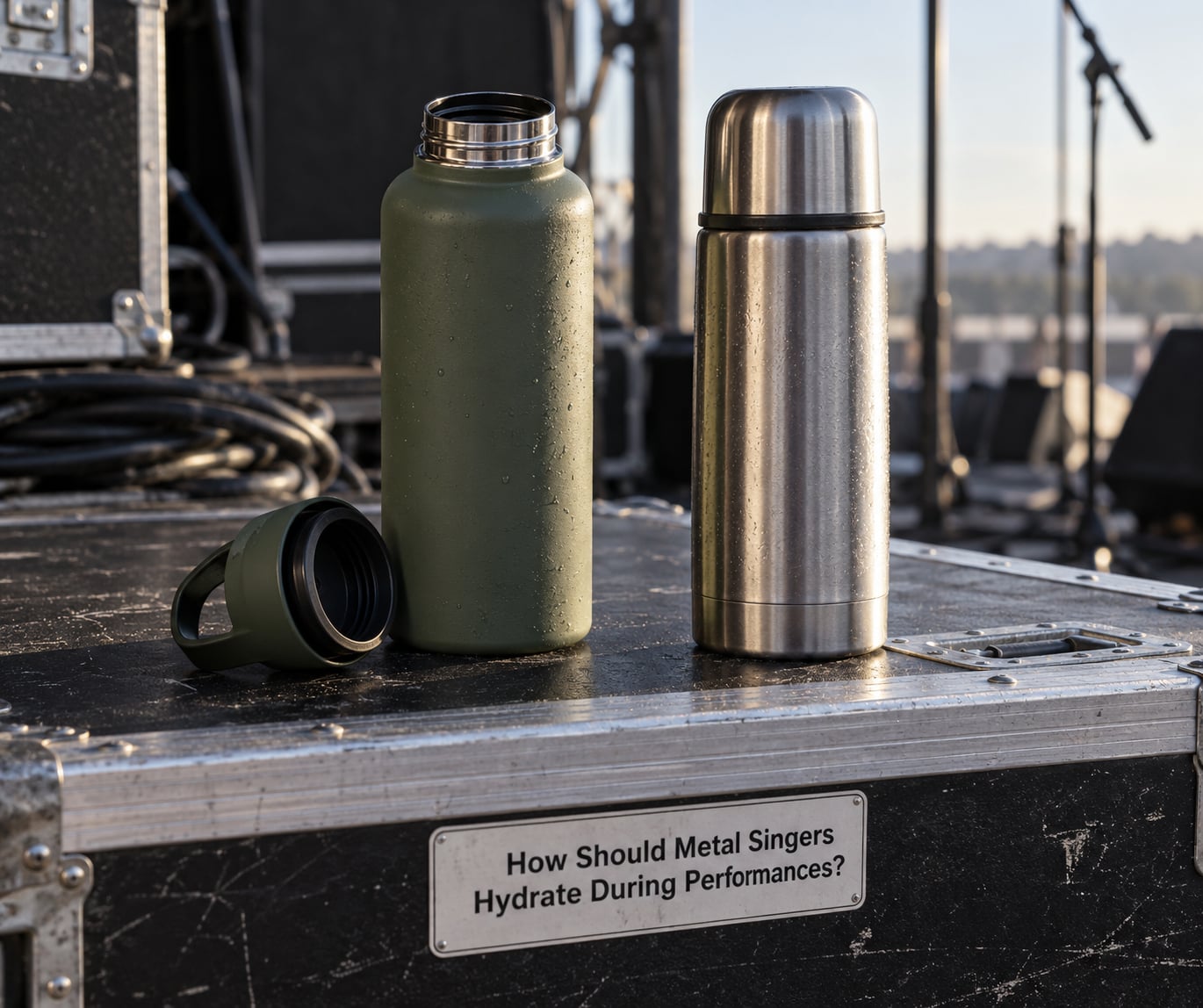
Some limits are worth stating plainly. Caffeine dries tissues and can tighten the throat, so keep it to the morning if you drink it at all. Energy drinks combine caffeine with acidity. Alcohol dries and swells tissue, which is the opposite of what you want. Very cold drinks make some singers clench, so leave them alone if they do.
Reflux is the sneakier one. Acid reaching the throat overnight leaves you hoarse in the morning even though nothing hurt the day before, so avoid heavy, greasy or spicy food in the hours after the show, and get off your back within a few hours of eating. Singers who treat the morning after the show as part of the show hold their voice much better.
How Do Tour Conditions Affect a Metal Voice?
Tour conditions add load that has nothing to do with singing. Smoke, dry air, dust, shouting over a noisy room and bad sleep all raise the cost of every note you sing.
- Smoke and haze. Standard in many venues and hard to avoid. Position yourself where the haze is thinner, rinse your mouth with water between songs, and accept that smoke nights cost you more.
- Dry and cold air. Bus HVAC and winter festival stages. Run a humidifier in the bunk and keep the bottle warm.
- Loud monitoring. This one is fully under your control. Ask for a mix that lets you hear yourself without hitting the wedge, and wear filtering earplugs so the stage is comfortable rather than punishing.
- Shouting between songs. Most touring voices get wrecked by crowd work, not the set. Talk through the mic instead, gesture, and save your voice for the songs.
- Poor sleep. Red-eyes and 3 a.m. arrivals mean a tired larynx that inflates more easily. Protect sleep on the bus, not just in the room.
Changing rooms helps. If the green room is thick with smoke and the dressing room next door is not, move. It costs nothing.
How Do Singers Recover After a Show?
Recover with easy breathing rather than more vocal work. The set inflames the vocal folds, and everything you do in the following hours either reduces that swelling or extends it.
Do a short cool-down: five minutes of slow humming at very low volume, gentle lip trills, and a few relaxed breaths between phrases. Skip the straining stretches you saw someone do at the mic. Then drink, eat lightly, and keep talking to a minimum on the bus.
Rest the voice as far as the schedule allows. In practice that means text instead of calls, quiet rooms instead of the green room, and no karaoke when the promoter takes the band out.
Pay attention to how the voice feels the next morning. Fatigue that clears with rest is expected. Fatigue that has not moved after a few days, hoarseness that lingers past a week, pain when you swallow, or blood in your saliva means stop and get assessed. A laryngologist, or an otolaryngologist (ENT) with a phoniatrician, uses a scope to look at the vocal folds directly.
The question touring singers ask most often on r/screaming and r/singing is why loss arrives without pain. Swollen folds can narrow the range noticeably while sensation stays nearly normal, which is why the absence of pain tells you very little. A daily log catches what memory will smooth over.
Common Mistakes
The errors below are consistent, and each has a simple correction.
- Warming up at full volume. The first harsh sound of the day should be quiet. Full-volume fry on a cold voice is where swelling starts.
- Forcing a style that does not fit the voice. Pushing a clean high scream out of range transfers load to the folds. Let a teacher who works in harsh vocals check the mechanism, not just the effort.
- Treating lozenges as recovery. They mask sensation. They do nothing about inflamed tissue or a bad monitor mix.
- Drinking coffee, energy drinks or alcohol through a run. Replace them with water and see whether day four stops being the cliff.
- Shouting over a noisy room. Every conversation across a loud venue is a small concert. Use the mic, or wait.
- Practising and singing through pain. Pain and sudden voice change are stop signals, not milestones. Neither is something to work through.
Programs built specifically for metal and extreme vocals are the ones touring singers in those threads actually recommend, including The Zen of Screaming by Melissa Cross and the Extreme Vocal Institute. Classical and opera teachers are widely reported to be a poor match for harsh styles.
One habit worth more than any gadget: learn your own baseline. Record what your voice sounds like on a rested day, in a rehearsal room, at the start of the week. When day four arrives, you will know whether that is a normal tired voice or a warning.
Frequently Asked Questions
Should singers whisper after a show?
No. Whispering loads the vocal folds more than normal speaking because the folds narrow and the throat has to work harder to keep the sound quiet. Use normal speaking volume, or as near-silence as the day allows. On a tour bus, text people instead of talking across the seat. Any singer who has tried whispering through a rough set has usually noticed the voice lasting longer afterward when they skip it.
Is alcohol safe before a show?
Alcohol dries and swells the tissue around the vocal folds, and it dries out the mouth that you rely on for clean articulation. A few drinks the night before a show tends to mean a hoarser morning and a warmer voice at soundcheck. If drinking is part of the tour, keep it to well before the show rather than in the hours before, and replace every alcohol drink with water.
How long should a vocalist rest after performing?
At minimum, keep talking to a minimum for a few hours and treat the next morning as part of the show. On a run, protect sleep, avoid the loudest rooms and skip unnecessary crowd shouting. There is no fixed number of hours that works for everyone, which is exactly why a daily voice log helps: you are looking for a pattern where morning range is close to your rested baseline.
What should I do if my voice gets hoarse mid-tour?
Drop the load first: reduce volume, cut harsh sections, shorten sets and skip crowd work, then rest the voice and hydrate. Track whether it improves over 48 hours. If hoarseness is not clearly improving, if you have pain when swallowing, if you hear blood, or if range keeps falling, stop touring the voice and get it looked at with a scope by an ENT or a phoniatrician. Do not push through it.
How do in-ear monitors protect a singer’s voice?
They protect you by letting you hear yourself at a comfortable level, so you stop pushing to compete with the mix. Ask for a vocal-forward balance and wear filtering earplugs so the stage stays manageable without turning everything down. The measure of a good monitor mix is simple: you sing your hardest parts without straining, and your partner’s voice does not disappear every time your mic is open.
When should a touring singer see a doctor?
See a clinician when hoarseness lasts more than about two weeks, when range loss does not return after a few days of rest, when there is pain on swallowing or a neck lump, when you cough up blood, or when you lose your voice suddenly. An otolaryngologist, ideally one who works with singers or refers to a phoniatrician, can scope the vocal folds. Getting checked early is normal for touring vocalists, not a sign that something is wrong with your technique.
Conclusion
Protect your voice on tour by preparing the room, warming up gradually, sipping fluids on a schedule, avoiding yelling between songs, getting your monitor mix right, and cooling down properly after the set. That is the whole system, and it works.
Start with the pre-show routine this week rather than the day before a run. Give your voice a rested baseline in writing so you can tell ordinary fatigue from a warning sign, and get persistent or painful problems in front of a doctor instead of another night on the bus.