Growing out your hair for metal takes patience, a low-damage routine and styles that work at every length. Hair grows roughly half an inch a month, so shoulder length lands somewhere around 14 to 18 months and mid-back length closer to three years. The real job is stopping breakage, because the length that grows is only the length you keep.
This guide covers the haircut, the repair work, the wash schedule, the metal-friendly styles, and what happens to your hair when you sweat in it, wear a hat in it, or sleep in a van. If you have been the guy with the shaved sides who keeps almost getting there, the plan below is the version that finishes.
Table of Contents
- What You Need
- Step-by-Step
- Step 1: Get a Cut That Supports Growth
- Step 2: Repair and Protect the Length
- Step 3: Establish a Simple Washing Routine
- Step 4: Style It for a Metal Look
- Step 5: Maintain the Look Between Shows
- Common Mistakes
- Frequently Asked Questions
- How long does it take to grow out your hair as a man?
- Why do metalheads grow long hair?
- Can men grow out their hair for metal without it looking bad?
- What do I do if my hair is bleached or dyed black already?
- Which styles suit long metal hair best?
- What do I do when my long hair gets too hard to manage mid grow-out?
- Conclusion
What You Need
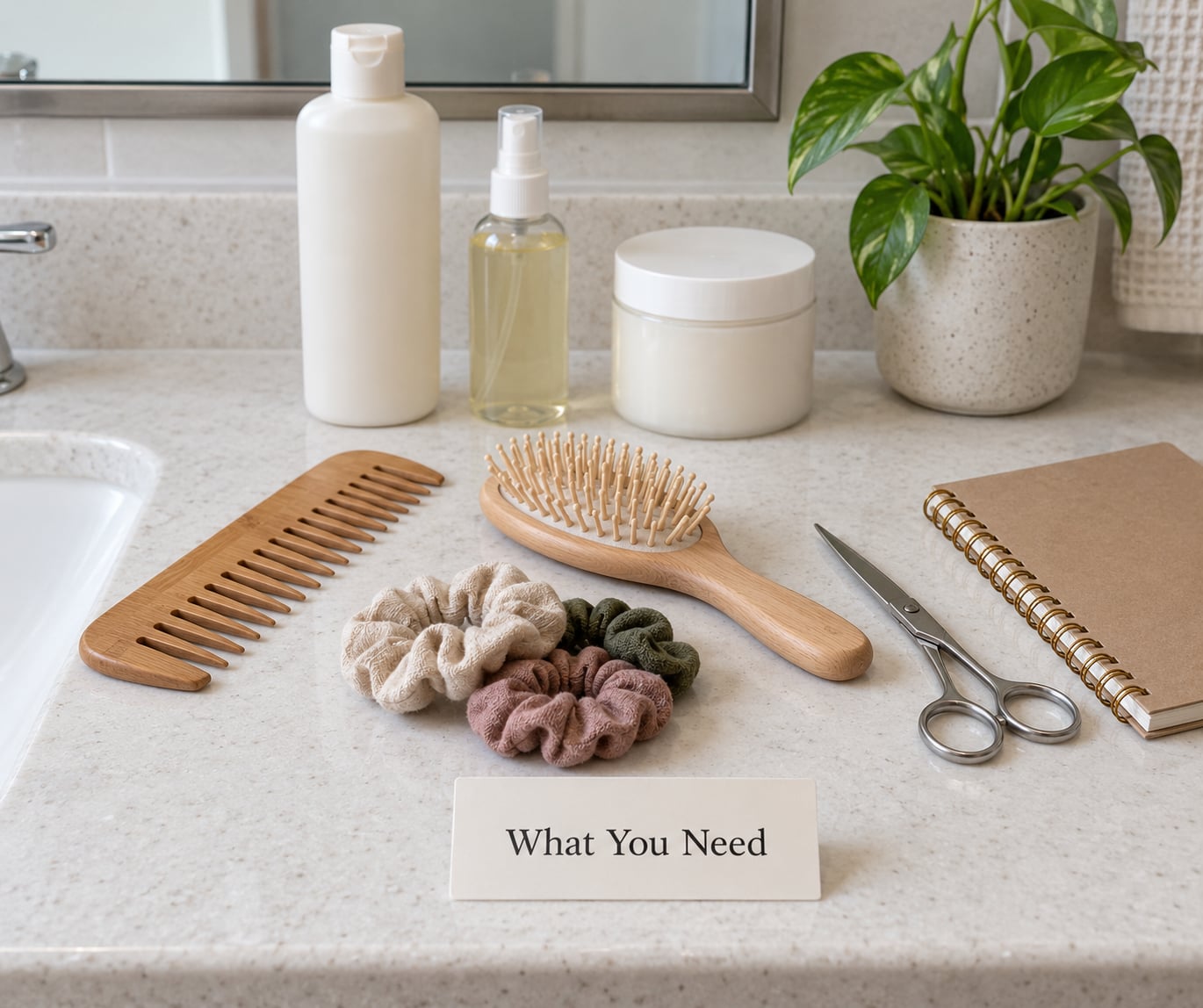
You can absolutely start with sea salt spray and a comb, but a small kit will save you a lot of split ends. Here is what actually earns its place on the shelf during a multi-year grow-out.
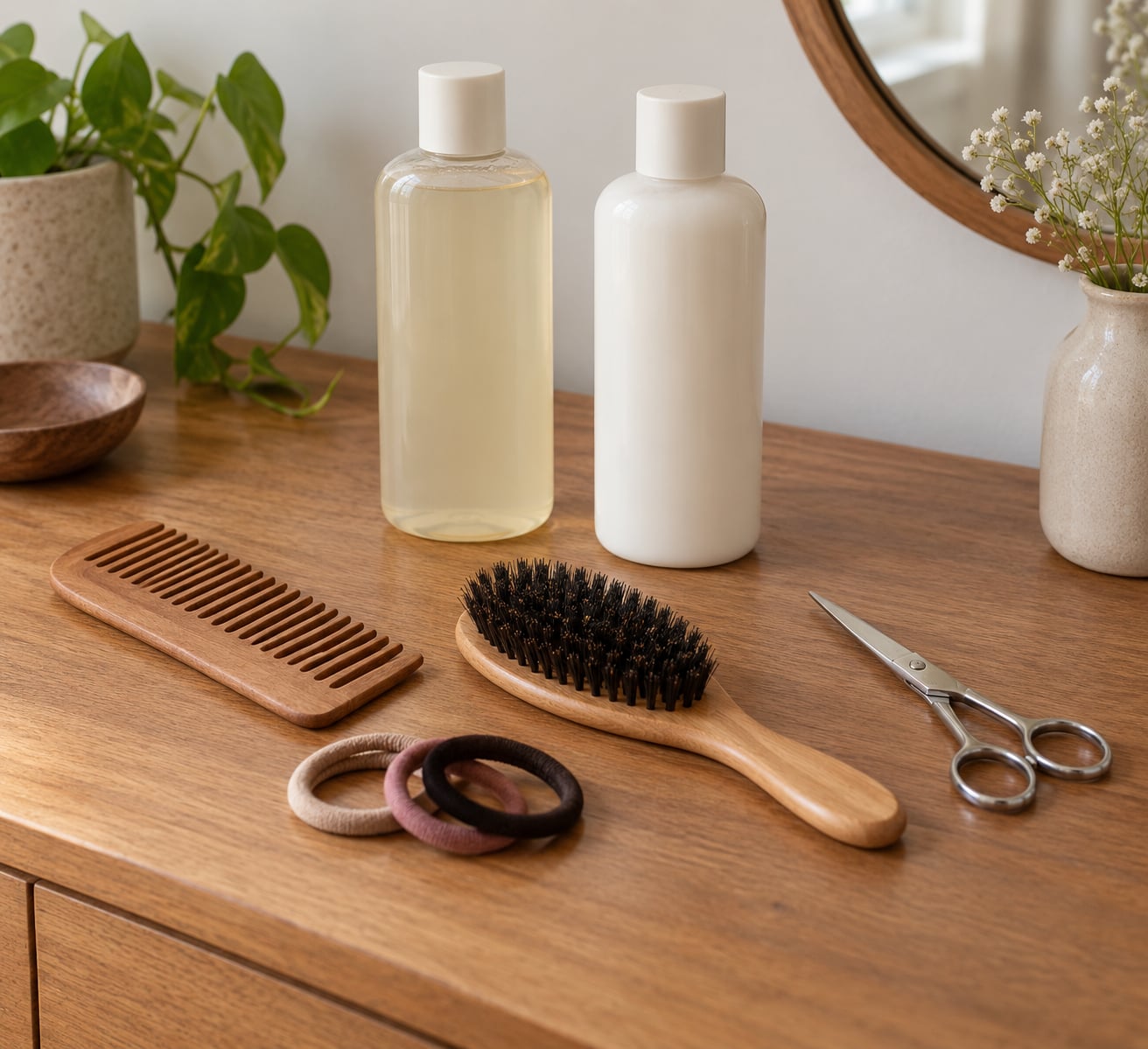
- Sulfate-free shampoo. Sulfates strip the scalp of the sebum it needs to keep the hair shaft conditioned. Use it on the scalp only, not the lengths.
- Conditioner plus a deep conditioning mask. Conditioner on every wash, mask once a week on the mid-lengths and ends. This is the single most-repeated piece of advice in the metal hair forums.
- Leave-in conditioner. The top answer in the r/longhair thread on heavy metal hair was to start using one. It stays in the hair between washes and cuts down on static and snapping.
- Wide-tooth comb and a soft boar-bristle brush. Wide teeth for wet detangling, soft bristles for the scalp and fallout.
- Heat protectant. Only useful if you actually use heat. Misting it on dry hair does nothing.
- Matte styling product. Sea salt spray, a lightweight gel or a cream. Heavy gel and heavy oils flatten long hair and build up.
- Soft ties or scrunchies. Elastic bands made of fabric, not thin rubber. This matters more than any product in the list.
- A satin or silk pillowcase. Cotton creates friction that frays the ends while you sleep.
- Good scissors, and a stylist who understands dusting. The single best community tip for this whole topic is to ask a salon for a dusting.
Step-by-Step
Step 1: Get a Cut That Supports Growth
Walk into the salon and describe the plan, not the haircut. Tell the stylist you are growing out your hair for metal and you want a shape that looks intentional at every stage, for at least two years.
The cut most people end up with is a layered shape that keeps the sides from flaring out while the top grows. That flare is the single most common complaint on metal forums: the sides grow out at a different speed and stick straight out. A stylist can weight the sides and keep the back long so the shape stays balanced.
Ask for a dusting every visit. A dusting trims the damaged ends off and keeps nearly all the length, which is different from a full cut. Long-time listeners describe the grow-cut-grow-cut cycle as normal rather than a failure, and knowing that upfront saves a lot of frustration.
One more thing to say out loud: no bleach, no high-lift colour, no heavy chemical processing during the transition. If you want the black to stay black, say maintenance colour only.
Step 2: Repair and Protect the Length
Everything below the ear is dead hair. You cannot repair a split end, you can only remove it, which is why trims matter more than products.
Trim every six to eight weeks once the length reaches your shoulders. Before that, every two or three months is plenty. Trimming regularly sounds like it fights against growth, but it removes exactly the damaged hair that would otherwise tangle, snap and travel up the shaft.
Detangle wet hair with a wide-tooth comb, working from the ends upward in small sections. Never brush soaking-wet hair straight down with a round brush, and never yank. Water plus friction plus tension is the fastest route to breakage.
Cut heat way back. If you use a blow dryer or iron, spray the heat protectant on damp hair, keep the tool below 200°C, and move it. Air drying is better. Scrunch out of it with a microfibre towel or an old t-shirt rather than rubbing your head on a towel like a dog.
Step 3: Establish a Simple Washing Routine
Long hair does not need to be washed more often, it needs to be washed more carefully. Wash when your scalp is oily rather than on a schedule, which for most people means every three to four days. People who sweat heavily on stage can rinse the scalp with water between sets and do a full wash after.
Work the shampoo into the scalp with your fingertips, not your nails. Let the suds run down the lengths rather than scrubbing them. Rinse with lukewarm water, not hot, and spend the last two minutes of the rinse on cool water to flatten the cuticle.
Apply conditioner from ear level down, leave it for two minutes, and rinse. Follow with the mask on the ends once a week. On the day of a show, skip heavy products on the roots so your hair does not go flat by the second song.
For longer lengths, detangle before you wash, not after. Washing a knot only tightens it.
Step 4: Style It for a Metal Look
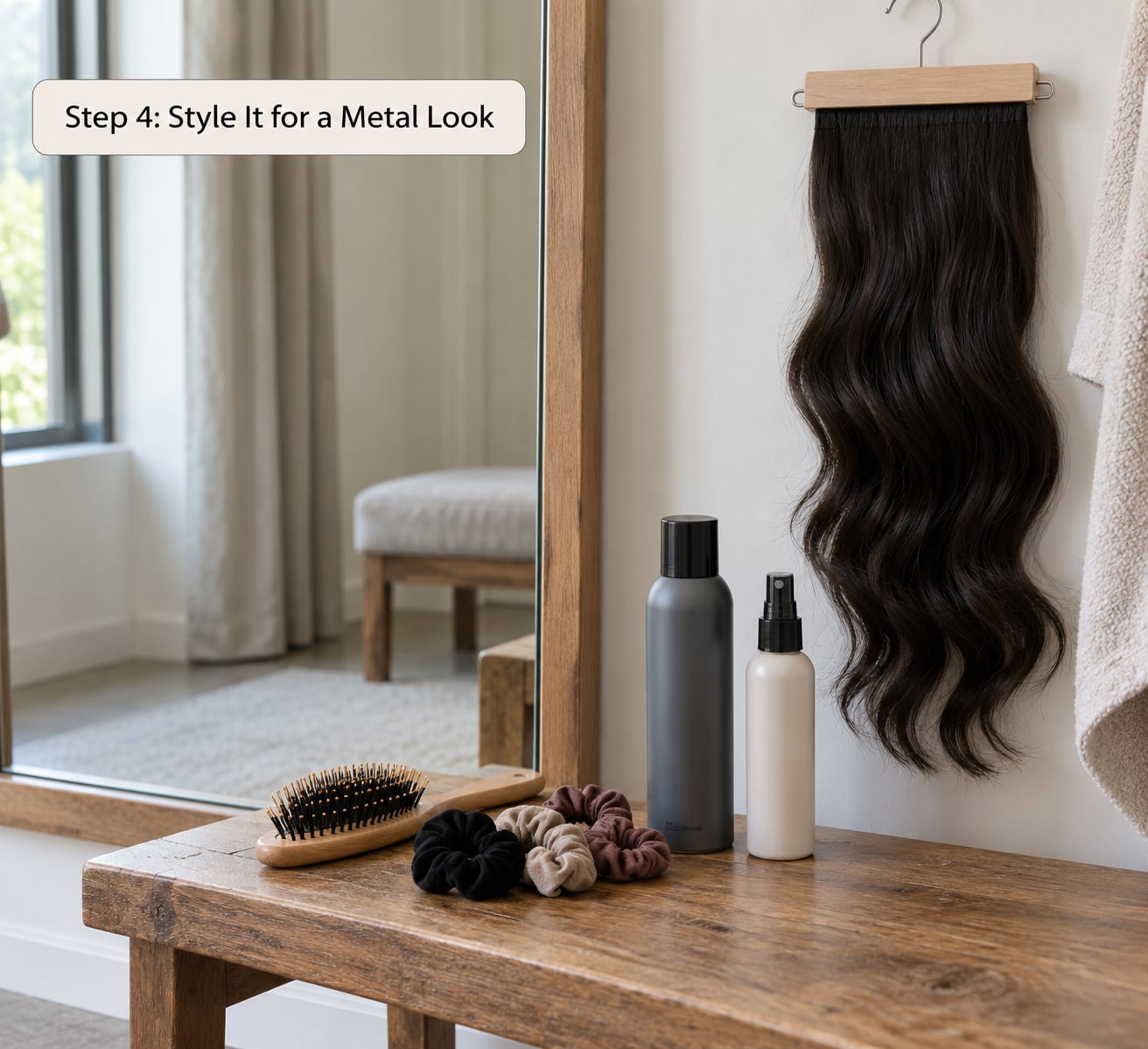
The metal look is looser than the photos suggest. Almost every metalhead in the r/Haircare thread on starting metal hair went the same route: brush in the shower with conditioner, then a gel or a cream. Volume and movement matter more than perfect straightness.
- Loose waves. Scrunch damp hair with mousse or a cream, twist the ends, let it air dry, then shake it out. Zero heat, and it looks wrecked-good under stage lights.
- Air-dried volume. Blow-dry the roots only, lifting with your fingers, and let the rest dry loose. Adds body to fine hair that cannot hold a style.
- Half-up or high ponytail. The most practical option in a hot venue and the safest for a set full of people. Take a small section from the front and pull the rest back, leaving two strands loose at the face.
- Braids. Braid the hair before a show or a festival weekend. It keeps it from tangling, protects it from hats and stops it catching on straps.
- Straight style. The most work and the most damage. Worth it for photos, not for a three-week tour.
Curtain bangs, a mullet or a wolf cut all grow out well, because they are shapes that read intentional while the length catches up. If you have coarse or tightly curled hair, the same three cuts look even better, since texture hides the transitional length that straight hair exposes.
This is where most people deciding how to grow out your hair for metal get stuck: they wait for one perfect look instead of picking the style that survives the next six months. Loose waves and a half-up ponytail are the two that keep working while the awkward phase passes underneath.
Step 5: Maintain the Look Between Shows
Long hair takes more punishment in a metal setting than anywhere else. Here is what actually goes wrong and what to do about it.
- Headbanging. A loose crown of hair whipping back and forth creates friction at the scalp and splits ends. A soft tie at the base, or a braid, takes most of the stress.
- Sweat. Salt from sweat dries the hair out. Rinse the scalp after a show and condition on wash days. If your scalp gets itchy or flaky, it is sweat and product buildup, not dry skin.
- Hats and helmets. Baseball caps leave a crease that takes a wash to fall out, and tight bands leave a dent across the back of the head for a photo shoot. Alternate hats rather than stacking one over the other.
- Instrument and mic straps. Guitar and bass straps rub the same section on every song. A silk scarf under the strap stops the friction.
- Merch and earplugs. Hoodies, lanyards and monitor earplugs snag more hair than anything on stage. Check before you put them on.
- Van life. Long hair tangles faster in a hot van with no shower. Keep a wide-tooth comb and a spray bottle in the bag, and detangle on a stop rather than fighting it in the seat.
Give your scalp a proper look at least once a week. Massage it with your fingertips for a minute before washing. It feels pointless and is one of the few things you can control directly.
Common Mistakes
- Skipping trims because it feels like going backwards. The trim is a percentage cut of damage, not of length. Six to eight weeks once you are past the shoulder.
- Hot water. It lifts the cuticle, so every wash roughs the shaft up. Lukewarm for the wash, cool for the last rinse.
- Brushing wet hair hard from the roots. Hair is at its weakest when wet. Comb it with a wide-tooth comb, from the ends up.
- Leaving bleach or old black dye in place while it grows. Bleached and heavily dyed hair breaks off before it reaches shoulder length. Either commit to cutting the length and starting clean, or get a gloss treatment and stop touching the box.
- Thin rubber elastics. That snapping feeling in your hand is your hair breaking. Fabric scrunchies or a braid base layer instead.
- Heavy gel, heavy oils and product on the roots. Build-up at the scalp is the fastest route to a flat, greasy look under stage lighting.
- Changing the whole look in month two. The sides will always be shorter than the top for a while. Pick one style, commit for six months, and let the shape catch up.
- Waiting for a photo shoot or a show to be the deadline. Nobody in the forums described a successful grow-out that started three weeks before a shoot. Start now if it matters to you.
And if you reach month fourteen, hate it, and cut it all off? That happens constantly on Ultimate Metal, where people describe growing it out, spiking it, cutting it and starting again. It is a normal part of figuring out a look, not a failed project.
Frequently Asked Questions
How long does it take to grow out your hair as a man?
Hair grows about half an inch a month on average, roughly six inches a year. That puts short styles at a few months, shoulder length at about 14 to 18 months, and mid-back length at three to four years. Genetics set the ceiling, and breakage decides what length you actually end up with.
Why do metalheads grow long hair?
Long hair reads as commitment and stage presence, and it is one of the fastest ways to look like you belong before you have played a single note. It also has a practical side: a long fringe and layers survive headbanging, hats and stage sweat far better than a short cut does.
Can men grow out their hair for metal without it looking bad?
Yes, and the cut does most of the work. Ask for a layered shape with a dusting every six to eight weeks, keep the sides weighted so they do not flare out, and choose styles that read intentional at short lengths. A mullet, curtain bangs or a wolf cut all work with the awkward phase instead of against it.
What do I do if my hair is bleached or dyed black already?
Stop processing it first, because bleach and heavy black dye make hair snap before it reaches shoulder length. Get a gloss or deep conditioning treatment, trim the worst ends every six to eight weeks, and switch to sulfate-free shampoo with a mask once a week. If it keeps breaking, cutting back and growing clean is faster than repairing.
Which styles suit long metal hair best?
Loose waves, air-dried volume, a high or half-up ponytail, and braids are the lowest-maintenance options and all survive a hot venue. A straight style needs the most work and the most heat, so most bands keep it for photos. Whichever you pick, a matte product like sea salt spray or a light gel gives you hold without the weight.
What do I do when my long hair gets too hard to manage mid grow-out?
Split the problem in two: length and scalp. Loose waves, a half-up style or braids buy you time, because they hold without constant heat. If the scalp is sore, itchy or flaking, see a doctor rather than switching products, and expect the awkward phase to end on its own schedule rather than the one you want.
Conclusion
Start with the cut. Book a stylist, describe a grow-out, ask for a dusting schedule and get the sides weighted so the shape holds together. Then keep the damage down with a wash-and-condition routine, a leave-in, soft ties and trims every six to eight weeks.
Pick one style for the next six months and let the length catch up to it. If your scalp gets sore, your hair keeps snapping or you notice unusual shedding, talk to a doctor or a dermatologist rather than guessing. Scalp health comes first, and everything else on this list is downstream of it.
Slow, unglamorous and boring works. Nobody in the metal forums got there by a three-week plan, and most of them needed two trims and one restart along the way.