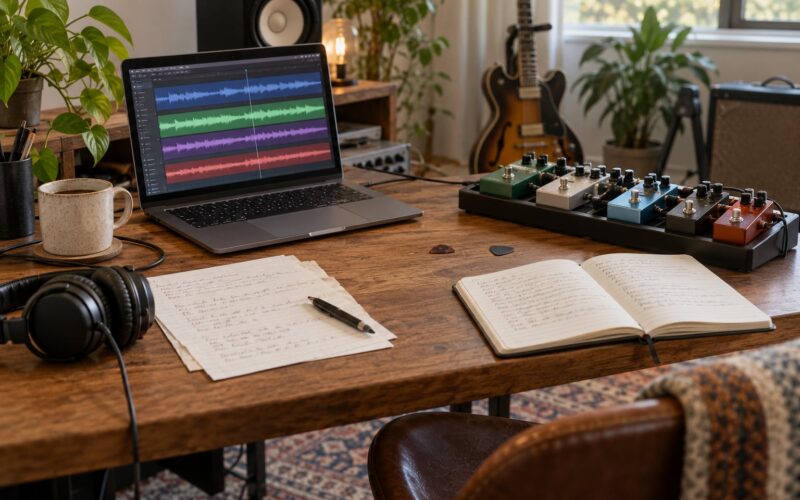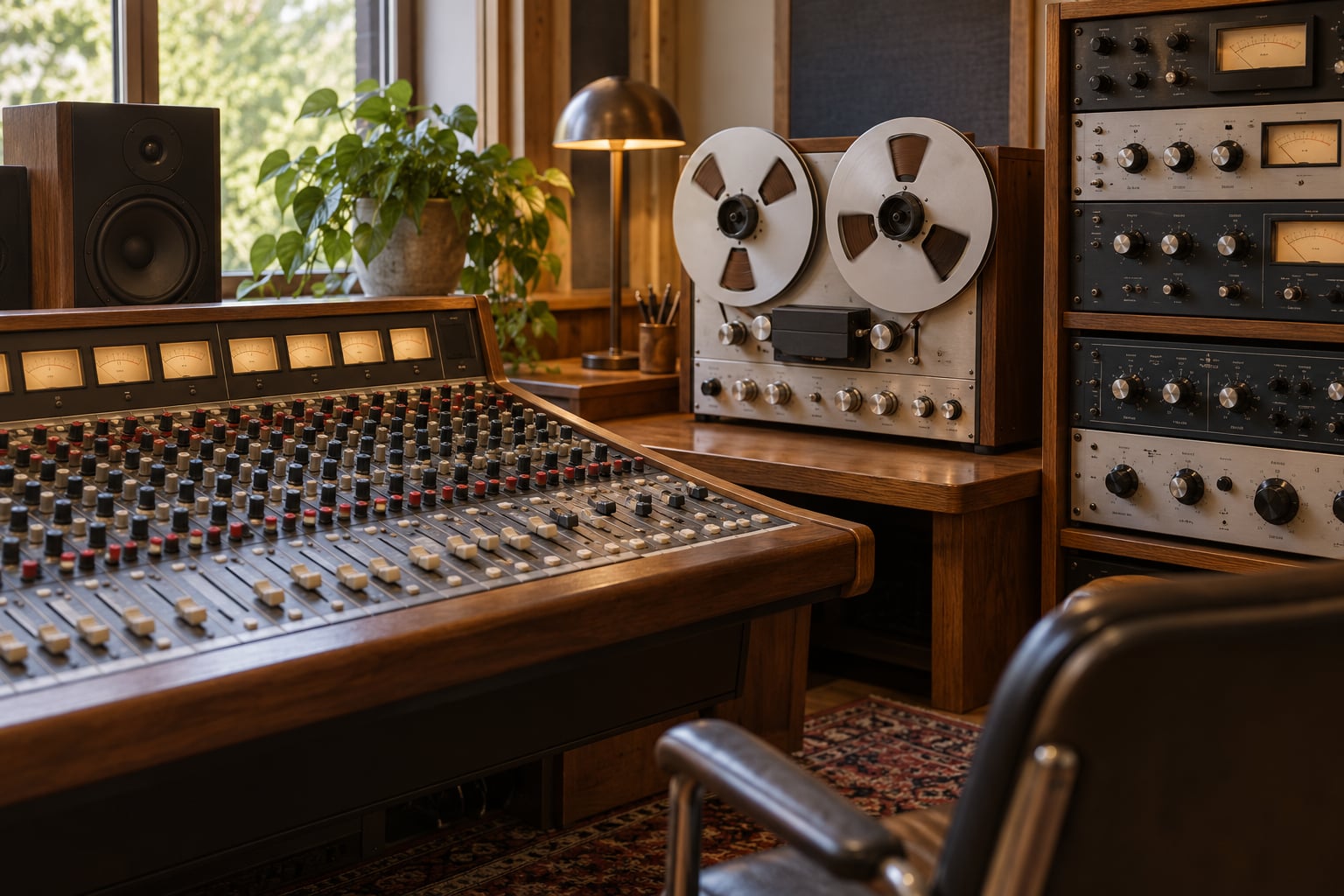
Old metal albums sound different today because the tools, rooms and rules they were made under have changed. They were tracked on 16- and 24-track analog tape with finite bandwidth and crosstalk, captured live through specific amps, cabinets, microphones and rooms, and mastered before loudness targets turned into a single number everyone chases. Modern production removes almost every one of those constraints, so the character has to be chosen deliberately instead of inherited from the environment.
That is the honest version of the argument, and it holds up far better than the usual one about vinyl magic. As of 2026, the gap is less about the format you buy and more about how many accidents the recording process used to hand you for free.
Table of Contents
- What Makes Old Metal Albums Sound Different Today?
- How Did Recording Technology Change Metal?
- Why Do Old Metal Mixes Feel Bigger or More Aggressive?
- Distortion and saturation
- Compression and loudness
- Room sound and analog imperfections
- How Does Mastering Change the Sound of Metal?
- What Role Do Vinyl, CD, and Streaming Play?
- How Much Does Your Listening Environment Matter?
- Why Do Old Metal Records Feel Different Beyond the Sound?
- How Can You Hear the Difference Yourself?
- Frequently Asked Questions
- Why do old metal albums sound different today?
- Are old metal albums louder and more distorted because they were mixed better?
- Is vinyl or CD more faithful to the original metal sound?
- Does remastering change the sound of old metal albums?
- Why do old metal recordings have a warmer or rougher sound?
- How can I compare an original album with its remaster?
- Conclusion
What Makes Old Metal Albums Sound Different Today?
Six things account for most of it: fewer tracks, tape compression, room and cabinet capture, restricted dynamic range, shared production templates, and loudness-war mastering. Each one imposed a decision that had to be made in the moment rather than undone later.
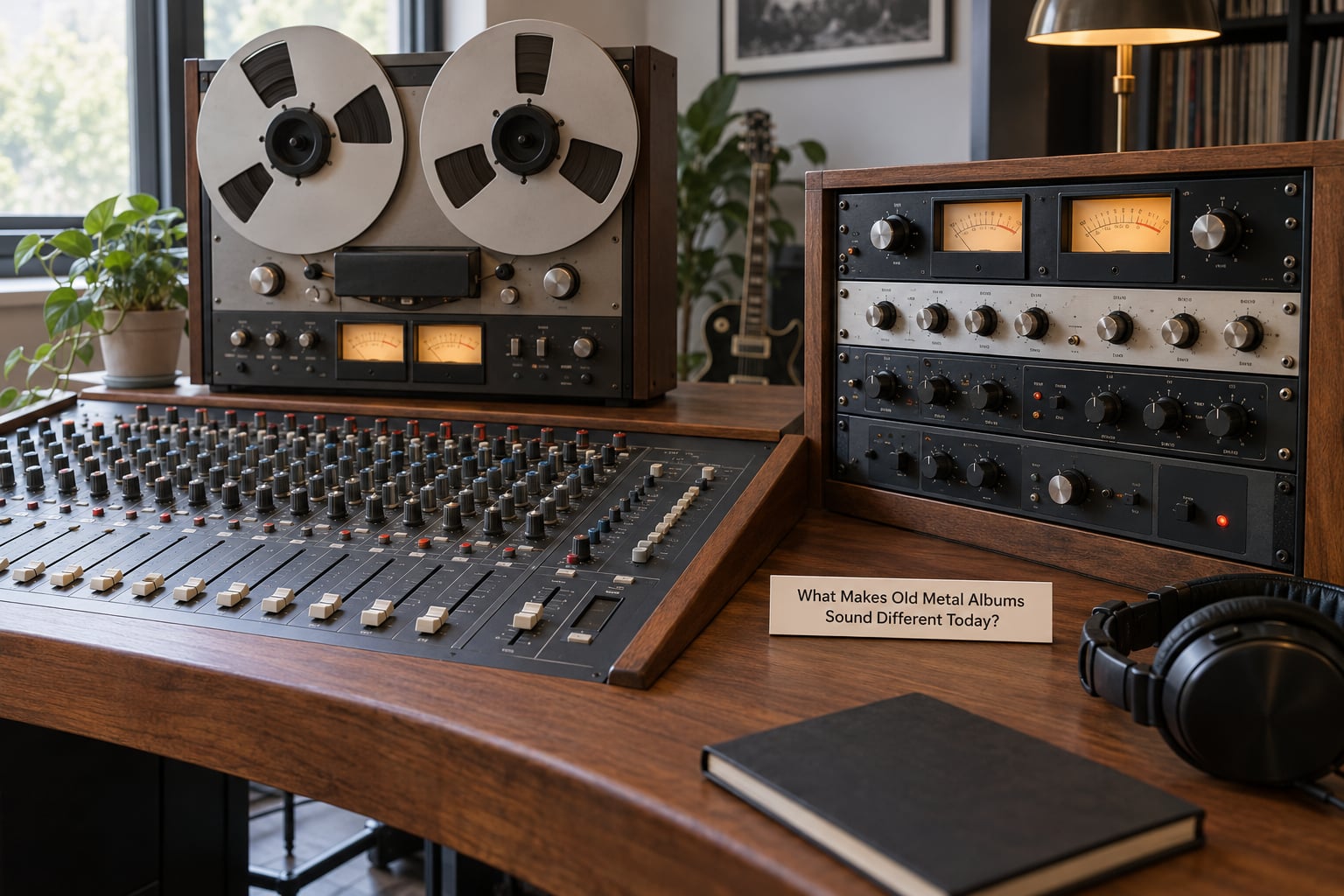
- Fewer tracks. A 16-track or 24-track machine meant you could not go back and lay a second guitar over the first, or clip a single vocal note later. The take you played was the take you kept.
- Tape compression. Analog tape compresses on its own as the signal gets hot, and its low end swells slightly with high-frequency level. Drums get bigger and closer for free.
- Room and cabinet capture. Guitar tone came from a specific amp into a specific cabinet into a specific microphone in a specific room. The character was a fact about the building, not an opinion.
- Restricted dynamic range. Peaks had somewhere to go. A master could be pushed hard and still keep its shape.
- Shared templates and rooms. The 70s blueprint set a template, and once enough records used it, records without that sound felt like a statement.
- Loudness-war mastering. Modern masters get limited and pushed until quiet detail disappears, which narrows the gap between records and flattens the sense of weight.
The useful word for all of this is production fingerprint. Each record was made by a specific chain in a specific building by a specific person, and that chain left a mark you can learn to hear.
One caution before going further. Not every old album sounds good, and not every old mix was better than what a modern engineer would do. Some of that era’s character comes from genuine craft, some from budget limits, and some from bands experimenting on purpose. Collapsing those three into one argument is what makes the old-versus-new debate useless.
How Did Recording Technology Change Metal?
For most of the 1970s and 1980s, a metal record was tracked on analog tape in a single pass per take. Everything downstream, including the editing, happened in the physical world with a razor blade and a grease pencil.
Track count was the binding constraint. On a 16-track machine you could lay the drums, then the bass, then rhythm guitar, then overdubs until you ran out. On a 24-track machine you had twice that, which is generous by the standards of the period but still finite. There was no re-amping from a scratch take at three in the morning, no triggering, no comping a snare from six separate hits.
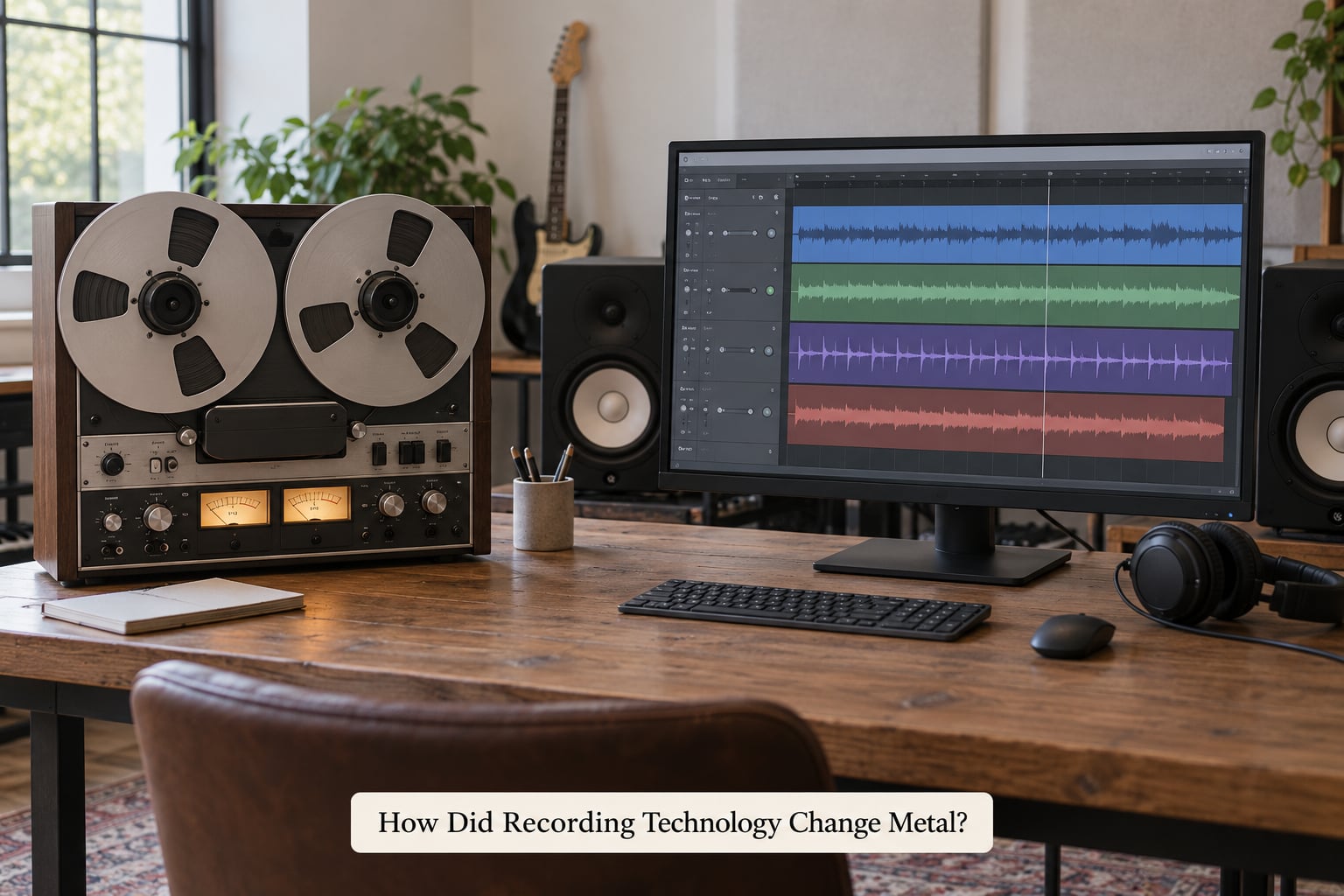
That limit changed what bands played. A drummer recorded one complete performance and had it. A guitarist played the riff once, printed, and if it was wrong the track was wrong. The band developed the part in the rehearsal room rather than in the edit.
Tape itself added several effects nobody had to dial in. Level-dependent compression means loud passages get squeezed harder than quiet ones, so the track tightens as it rises. Head bump means low frequencies print slightly stronger when high frequencies are present, which is exactly the balance a kick drum and a cymbal produce. That is part of why an old drum sound feels so much like it is happening in the room with you.
Then there are the compromises. Tape cannot print a wide range of frequencies, so the top end rolls off somewhere around 15 to 20 kHz depending on the machine, and recordists compensated with pre-emphasis on the way in and de-emphasis on the way out. Some gave up on the very top and lived with a duller record. Headroom was limited, so levels had to be chosen rather than fixed later. And bleed was unavoidable: every track picked up a little of every other track, so a loud lead vocal was slightly present underneath the guitars and vice versa.
None of that is mystical. It is mechanical, and it is measurable.
Digital arrived and reversed most of it. Inexpensive DAWs give effectively unlimited tracks, editing down to the sample, unlimited takes and non-destructive recall. Signal chains that once required a rack of outboard gear can be reproduced with plugins. Noise floor drops to inaudibility. Headroom becomes a setting rather than a worry.
The common objection is that digital is worse. It usually is not. Modern tools can do anything an analogue chain did and more. What changed is where the decisions come from. When the recording environment supplied saturation, glue, room character and bleed automatically, those things were inherited. Now every one of them is a choice, and choices get made by whoever set the template that everyone else downloaded.
Why Do Old Metal Mixes Feel Bigger or More Aggressive?
The same arrangement will read as heavier on an older mix for mechanical reasons, not because the band played harder.
Distortion and saturation
The chunky 70s and 80s guitar tone the internet keeps arguing about has little to do with recording technology. It comes from amplifier voicing, cabinet design and where the microphone sat. Bands pushed low-slung guitars through amplifiers set up for rhythm guitar, into four-by-twelve cabinets, and mic’d them close and slightly off-axis. The result was thick, harmonically rich and compressed at the source before a console ever saw it.
That sound became the template for the whole genre. Once enough defining records used it, anything without it read as thin. It is a classic case of the template setting the standard and then being mistaken for nature.
Compression and loudness
Perceived heaviness comes substantially from crest factor, which is the gap between the loudest peaks and the average level of the track. A mix with tall, sparse peaks reads as heavy and punchy. A mix with everything pressed up against the ceiling reads as loud and dense, which the ear often reads as thin, plastic and fatiguing.
Modern records frequently ship with far less crest factor than records from three decades ago. That is what limiting does, and it is why the same album can feel exhausting at volume even when nobody is playing it too loud.
Room sound and analog imperfections
Classic records were tracked live. Drums were played in the room and often mic’d with a couple of overheads, so you heard the room along with the kit. Modern producers frequently close-mic everything and then replace or reinforce samples, which tightens the sound and removes the space.
Guitars sat where they sat because the amp was in the live room. The bleed between tracks meant the mix was never perfectly clean. Saturated console transformers and tape added even-order harmonics. None of this was cleanliness. It is also part of why the records are cohesive.
How Does Mastering Change the Sound of Metal?
Recording captures, mixing decides, mastering prepares. Most arguments about old records blend all three layers together, so it helps to keep them apart.
Recording is what happened in the room with the band. Mixing is where levels, balance, EQ, effects and automation get decided. Mastering is usually a separate engineer’s job: taking the finished mix, correcting balance between tracks, applying final EQ, deciding sequence and dynamics, and delivering a set of files or a lacquer.
For metal, mastering has swung hard in about thirty years. A record mastered in the early 1980s would often be pushed hard, but the format left somewhere for the transients to go. As compression and brickwall limiting got cheaper, the incentive changed: on a competitive platform, the record that measured quieter played quieter, so engineers pushed harder. A steady build through the 1990s left classic rock and metal masters with noticeably more dynamic range than most records released afterwards.
The perception problem is real. A heavily limited master sounds louder on almost any system at matched volume, and louder is often mistaken for heavier even when the transients have been flattened.
Vinyl adds its own layer. A lacquer cut for playback has high-frequency roll-off, a limited low end, and noise floor that rises with quiet passages. None of that is fault, it is physics, and mastering engineers compensate so the record sounds right on the format rather than better than it.
One correction worth making plainly. Streaming services that normalise loudness are not pretending to be mastering. A stream of an original master is that master, delivered at an adjusted level. A stream of a modern remaster is the remaster. The delivery layer changes level, not character.
What Role Do Vinyl, CD, and Streaming Play?
Each format hands you a different version of the master, and none of them is automatically more authentic.
A CD rip of an original 1980s pressing is close to the master, minus the level changes a physical copy imposes. A vinyl rip depends on the cut, the pressing quality and the turntable, so two copies of the same record can differ. Streaming depends entirely on which master the label uploaded, and labels often upload the remaster rather than the original.
That last point is the one that surprises people. The version in your streaming library and the version on the original pressing may be different masters years apart, with different EQ, different level and different dynamics.
Vinyl collectors report this constantly, and the complaints run in both directions. Some prefer the original pressing for its open top end and the way low frequencies breathe. Some prefer a modern reissue because it was cut from the original master and the mastering was handled with more care. There is no rule here, only edition-specific results.
What you can say is that remastering changes the sound of old metal albums, usually in one direction. A remaster is an interpretation of a master, and interpretations involve decisions about level, EQ and how much of the original dynamics to keep.
How Much Does Your Listening Environment Matter?
A surprising share of the difference people describe is not in the file. It is in the room, the speakers and the volume.
Speakers in a treated room do not reproduce deep bass below their tuning frequency, so a record can lose the weight under the guitars entirely. Cheap earbuds roll off the bottom end hard and add their own colour. Volume matters more than most people expect, because your ear’s response flattens at high levels, which makes dense, compressed mixes sound more forgiving than they are and clean mixes sound harsher.
What matters most is that the same conditions are kept for both versions. Comparing an original pressing at a low level against a remaster at a high level is the single most common way people convince themselves of something the audio never supported.
Practical habit: match the levels, switch between versions without looking at the screen, and notice whether your hand is reaching for the volume button. If it is, you are comparing loudness, not sound.
Why Do Old Metal Records Feel Different Beyond the Sound?
Some of the feeling is not audio, and pretending otherwise makes the whole discussion less credible.
Nostalgia is a genuine perceptual effect. A record you first heard at sixteen carries associations that the waveform does not contain. Artwork, lyrics, stage presence and the scene around the music all attach to the sound and get reactivated when you play it.
Context matters too. Albums were originally followed by other albums with different sounds. An LP has two sides, so a band had to sequence songs rather than build an endless playlist. That kind of deliberate shaping rarely happens in streaming, where albums arrive as forty-minute blocks and get shuffled between.
None of that makes an old record objectively better. It explains why the record can feel more powerful now without pretending the mastering was cleaner or the mix was easier to listen to.
There is a fair counterpoint worth stating: some records from the same era are genuinely unpleasant by modern standards, and the honest response is that listeners were listening to them on worse systems at lower fidelity than most people use now. A record designed to punch through a car stereo in 1984 was never balanced for a nearfield monitor.
How Can You Hear the Difference Yourself?
Here is a routine that takes about twenty minutes and settles most of the arguments.
- Pick a record with a known original and a known remaster. Many metal reissues list which source was used. If yours does not, assume the streaming version is the remaster.
- Set both at the same perceived level. Match a vocal on each, not the master volume. Then play both without touching the volume.
- Listen for specific things rather than a vibe. Bass weight under the guitars, how much air sits above the cymbals, whether the kick drum has a leading edge or arrives all at once, and whether the vocal sits forward or behind the band.
- Check the dynamics. Play something quiet, an intro or a bridge. On a squashed master, nothing much happens. On an untouched one, the record breathes.
- Note your impressions on paper. Memory edits audio within about ten seconds, and a written note stops you from rewriting the verdict halfway through.
One more thing worth doing: listen to a record in a genre that is current, then switch immediately to something from four decades ago with the same system. The contrast is far more obvious than either comparison in isolation.
Frequently Asked Questions
Why do old metal albums sound different today?
Because the conditions they were recorded under changed. Older records were tracked on 16- and 24-track analog tape with finite bandwidth, level-dependent compression and crosstalk, captured live through specific amplifiers, cabinets, microphones and rooms, and mastered with more headroom left in the mix. Modern production removes almost all of those constraints, so texture that used to be inherited from the recording environment now has to be created deliberately. The difference is mechanical, not magical.
Are old metal albums louder and more distorted because they were mixed better?
No. Old records are often measured quieter and carry taller peaks, which reads as punchier rather than louder. Their distortion usually came from amplifiers pushed into overdrive and tracked close, not from processing added at the console. Modern masters get compressed and limited until peaks flatten, which measures louder while listening thinner. Higher loudness is not the same as more weight, and the two get confused constantly.
Is vinyl or CD more faithful to the original metal sound?
A CD rip of an original pressing sits closest to the master, since the disc carries the mastering chain with almost no further processing. Vinyl imposes its own high-frequency roll-off and noise floor, and results vary by pressing, cut and turntable. What matters more than the format is which master reached your ears, since labels often stream a later remaster instead of the original.
Does remastering change the sound of old metal albums?
Yes, and often noticeably. A remaster is an interpretation of an existing master, which means fresh decisions about level, equalization and how much original dynamic range to preserve. Some reissues restore punch and openness that later issues flattened. Others raise the level and trim the extremes. Check which source was used, because an original release and a twenty-year-later reissue of the same album can differ more than vinyl versus CD does.
Why do old metal recordings have a warmer or rougher sound?
Several mechanisms stack up. Tape compresses more as the level rises, which evens out peaks and adds density. Its high end rolls off, and recordists compensated with pre-emphasis on the way in. Saturated transformers and console channels add even-order harmonics. Bleed between tracks keeps a little of every instrument under the others. None of it is warmth as an aesthetic choice, it is just what the signal path did.
How can I compare an original album with its remaster?
Match the perceived level on both versions first, using a vocal rather than the master volume. Then switch between them without adjusting anything and listen for bass weight under the guitars, air above the cymbals, whether the kick has a leading edge, and whether anything moves during a quiet passage. Write your impressions down as you go, since memory edits audio within about ten seconds.
Conclusion
Old metal albums sound different today because production methods, mastering conventions, delivery formats and listening context all moved. The sound used to be inherited from tape, limited tracks, live rooms and racks of gear; now it has to be chosen. None of that makes classic records technically superior, and plenty of them are rough by any honest standard.
Start with one album you know well. Find the earliest release you can get and the newest remaster, match the level, and listen for bass weight, air above the cymbals and whether the record still breathes during a quiet passage. Once you know what to look for, you will start hearing the production fingerprints everywhere, in records far older and far newer than the one you started with.