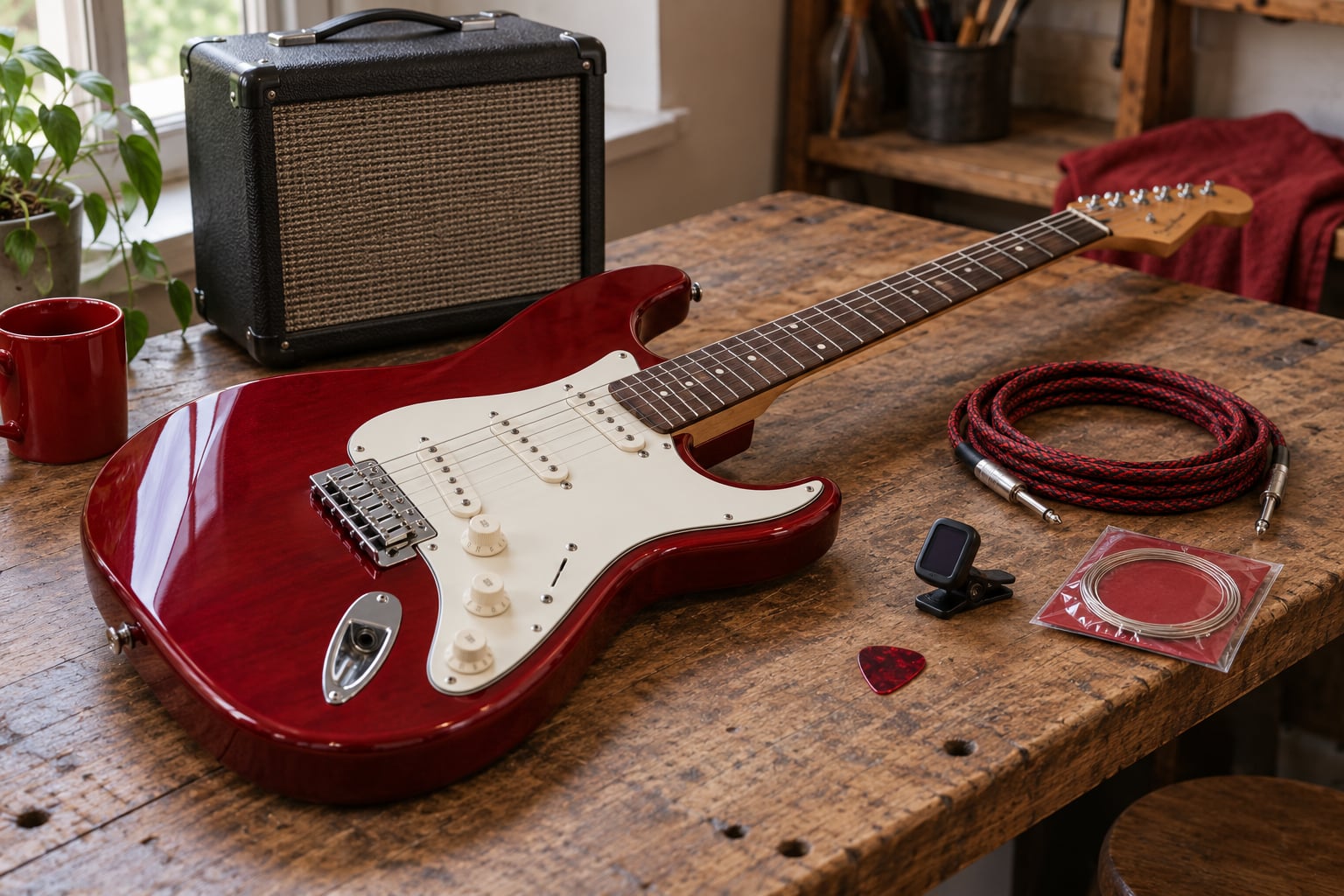
Pick a double-cutaway solid-body electric with humbucker pickups, a thin fast neck, 24 jumbo frets, and a fixed or locking bridge, then set aside amplifier money in the same budget instead of after it. Comfort and a proper setup decide whether you keep playing. Brand names barely register.
That is the whole short answer, and it takes about ten minutes to act on. The longer version is a decision process, and it runs in a fixed order: figure out which kind of metal you actually want to play, decide how low you will eventually tune, find a body and neck you can hold for an hour, then narrow by pickup type and bridge. Buy last.
Metal is harder on a guitar than almost any other style. A distorted note has to sustain and stay in tune while you hold it, riffs sit under a wall of gain, leads need a neck your fingers can move across quickly, and a lot of the genre lives below the standard low E. A guitar built for blues or jazz can do metal, but it will fight you the whole way.
What follows is the process I would walk a beginner through. No affiliate picks, no brand rankings. Just the order of decisions and how to tell when one has gone wrong.
Table of Contents
- What You Need Before You Start Shopping
- Step-by-Step: Choosing Your First Metal Guitar
- Common Mistakes
- Frequently Asked Questions
- What type of electric guitar is best for metal?
- Should a beginner metal guitarist choose single-coil or humbucker pickups?
- Do I need a guitar that supports drop tunings?
- What amplifier should a first electric guitar player buy?
- Is an expensive metal guitar necessary to begin playing?
- Should I buy a guitar with a tremolo bridge for metal?
- Start With the Guitar You Can Grow With
What You Need Before You Start Shopping
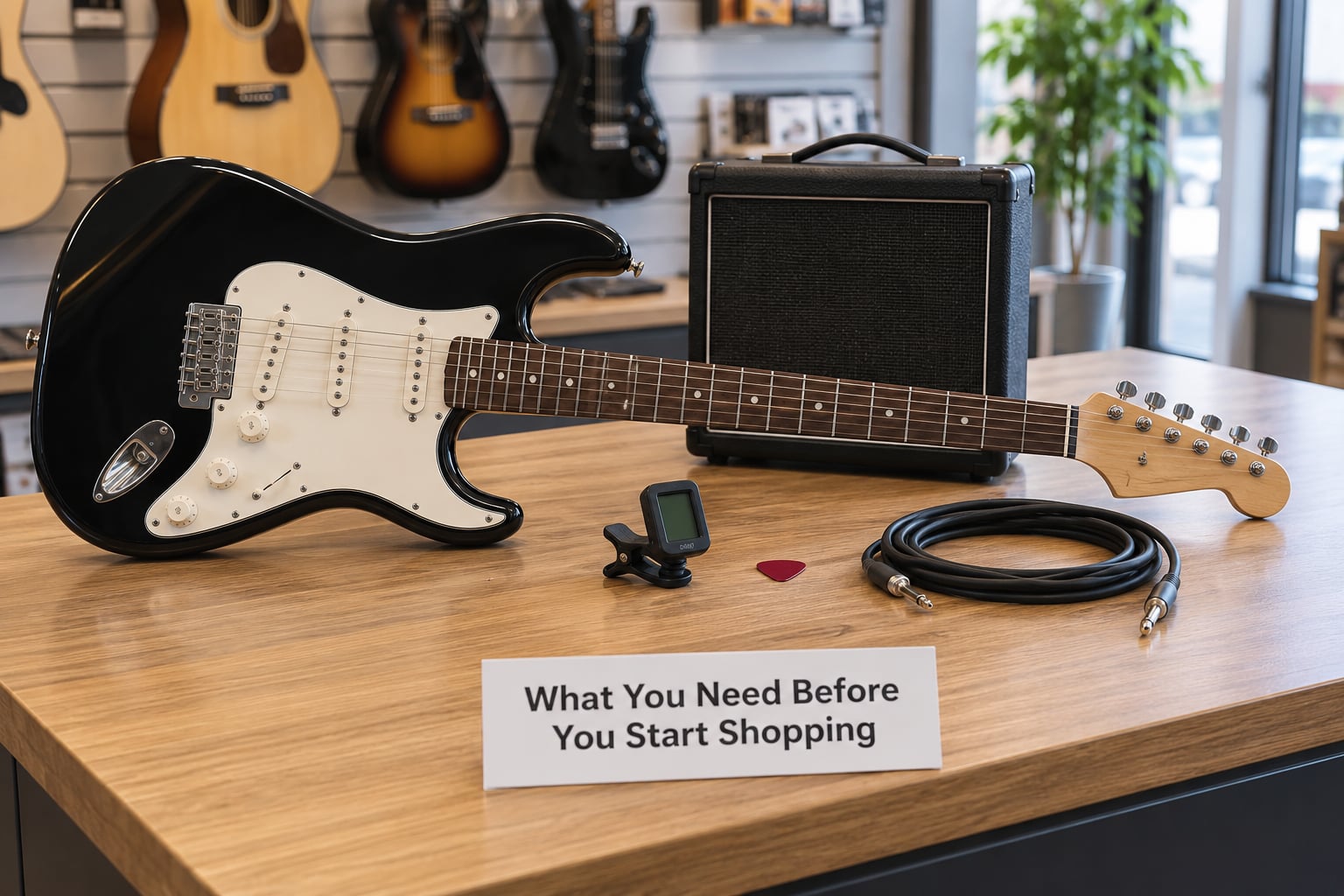
Four things need to be settled before you walk into a shop or open a dozen browser tabs. Skipping them is how beginners end up with a beautiful instrument they cannot play or a guitar with no amplifier.
1. A subgenre, not just the word metal. Thrash, deathcore, djent, 80s metal and technical metal all put different demands on the same instrument. Write down two or three bands you want to sound like and look at what they play on stage.
2. A total budget, not a guitar budget. Decide the number you can spend on everything, then split it so the amplifier is protected. A guitar with no amp is a wall decoration.
3. A tuning range. Standard E for now, but check that the guitar can take thicker strings and reach at least drop D later without buzzing at the 12th fret.
4. A way to test before you commit. A local shop, a friend who owns one, or a retailer with a good return window. Buying blind is the biggest risk in this whole process.
Also decide how much time you actually play. If it is twenty minutes on a weekday with thin walls, that changes which amplifier you need far more than the guitar.
Step-by-Step: Choosing Your First Metal Guitar
1. Set Your Metal Playing Goals
Start by matching the style you want to the traits you need. Riff-driven music wants a flat fretboard, a tight bridge and a bridge pickup you can palm mute. Solo-heavy and technical styles want fast access to the high frets and a neck that stays stable when you bend.
| Style | What you will play | Traits to prioritise |
|---|---|---|
| 80s metal and thrash | Fast alternate-picked riffs, harmony leads, sustained bends | Passive humbuckers, hardtail or locking bridge, 24 frets, medium-thin neck |
| Nu metal and alt metal | Drop tunings, palm-muted riffs, sustained chord tones | High-output humbuckers, 26.5 inch scale, longer string scale, low action |
| Melodic death and deathcore | Tight chugging, fast runs, extreme gain | Active or hot passive humbuckers, set or neck-thru feel, very stable tuning |
| Djent and progressive metal | Low-tuned riffing, percussive muted playing, wide intervals | Extended range or longer scale, medium-thin neck, flat radius fretboard |
| Technical metal and tapping | Tapping, fast position shifts, legato | 24 jumbo frets, thin neck, smooth fretboard, stable tuning under bends |
Notice that a 6-string covers four of those five rows. Extended range is a choice you can add later, not a requirement now.
2. Choose a Body and Neck You Can Actually Hold
Fit beats every other consideration. A guitar that feels awkward in the sitting position stops getting played within a month, no matter what is under the pickups.
Body. A double cutaway gives you access to the upper frets without lifting your picking hand. Contoured tops feel better against your forearm during long riffing sessions than flat tops. Weight matters too: somewhere around three and a half to four pounds is the usual range for a metal guitar, and a lighter instrument is easier on a beginner’s back and shoulder.
Neck profile. Thickness at the first few frets is the number you will feel. Thin and thin-thin suits fast playing and small hands. Medium-thin is the safe middle that most metal necks use. Chunky shapes feel substantial but tire fingers sooner.
Fretboard. Maple is bright and smooth, and takes a polish well. Rosewood or similar darker woods feel grippier with sweaty hands, which matters in summer. A flat radius spread bends across the whole width; a compound radius lets you bend low and play chords high.
Scale length. This is the string length, measured at the bridge, and it controls how tight the low strings feel. Around 25.5 inches gives a familiar feel and works for most styles. Around 26.5 inches loosens the low end, which suits drop tunings and chugging. Longer than that and you are looking at extended-range territory.
Frets. 24 jumbo frets extend the range by four semitones and give clean access to the top. Bigger fret wire feels smoother under fast fingers and easier to bend.
3. Match Pickups to the Sound You Want
Humbuckers win for metal almost every time, and the reason is noise cancellation. Two coils wired in reverse cancel the hum a single coil picks up, which matters a lot when the gain is high and the room has fluorescent lights or a fridge.
| Type | Output and noise | Metal use |
|---|---|---|
| Single-coil | Low output, very noisy | Not recommended as a first metal choice, though a coil split gives some of the clarity later |
| Passive humbucker | Medium to high output, quiet, no battery | The standard first choice. Works with most amps and needs no electronics |
| Active humbucker | Very high output, very quiet, needs a 9V battery | Best for tight chugging and extreme gain, but needs a modern amp or interface with enough gain |
That last row causes real confusion. Active pickups have a compressed, extremely hot signal that can sound like pure noise through a small clean amp or an older practice amp. If you buy an active-equipped guitar, buy the amplifier at the same time and make sure it has a solid gain channel or distortion circuit.
Passive high-output humbuckers sit in between and are the safer buy for a first instrument. One more spec worth knowing: a coil-split switch lets a humbucker run as a single coil, so a guitar with a humbucker and a split is far more versatile than it looks.
Pickup placement matters as well. You want a bridge humbucker in the mix, because that is the pickup your palm rests against when you mute a riff.
4. Check the Bridge and Tremolo Setup
Three bridge types cover nearly everything you will see in a shop, and they trade tuning stability for versatility.
A hardtail bridge has no moving parts. It stays in tune, keeps its intonation, survives string changes without drama, and handles heavy riffing without complaint. For a first metal guitar it is the low-risk choice.
A standard tremolo, sometimes called a floating or whammy bridge, gives you vibrato and dive bombs. The trade is that it moves, so it needs regular tuning checks and a clamp or locking nut to stay put.
A locking tremolo clamps the strings at the nut, so it holds tuning while still allowing big pitch movements. It is more hardware to learn and a full string change takes longer, but it is what most metal players want for stage use.
My advice for a beginner: start on a hardtail, or pick a locking trem if your shortlist is full of superstrats and you know that is what you want long term. Avoid a standard floating trem as a first purchase unless someone local will set it up properly.
5. Test the Guitar Before You Buy It
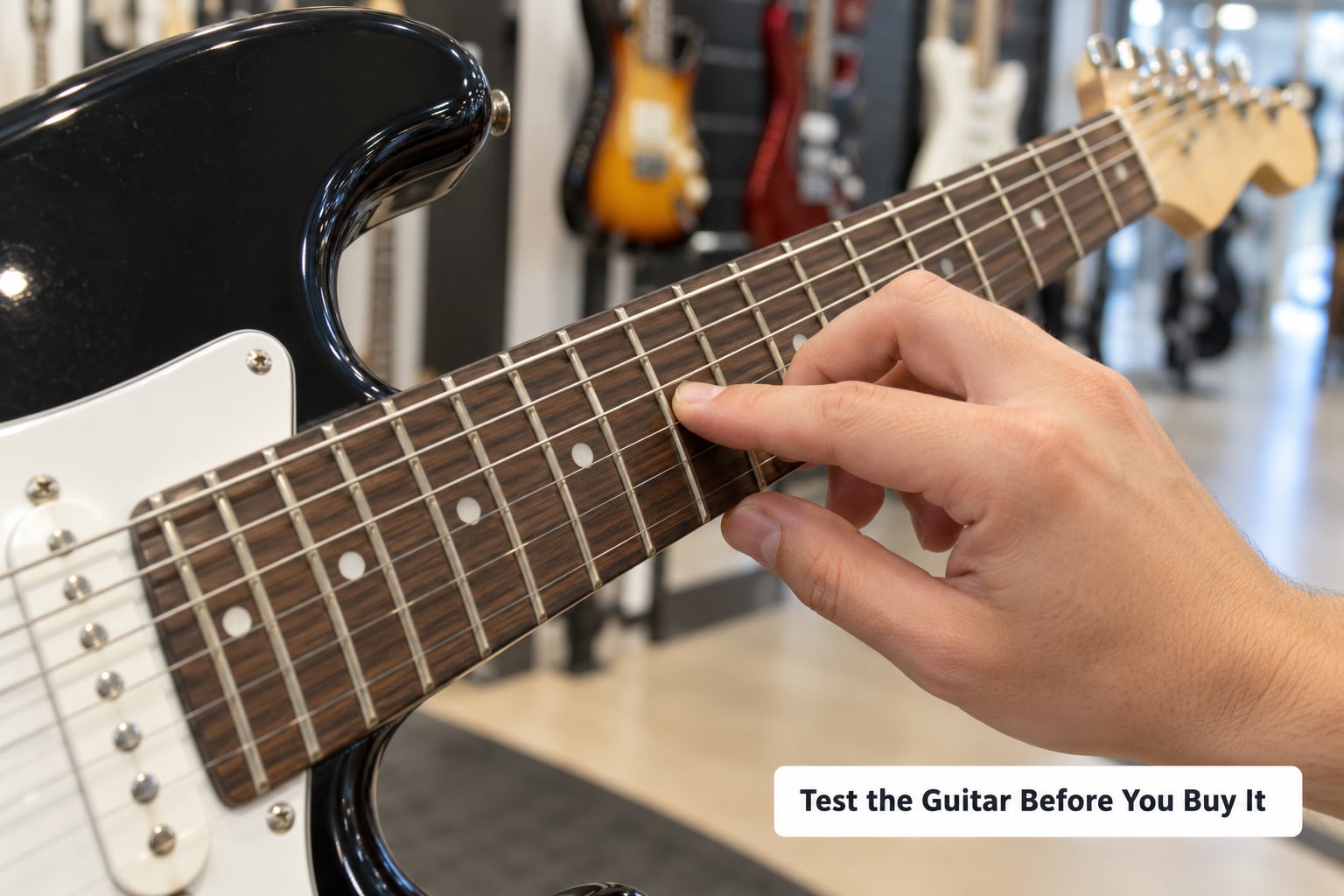
Fifteen minutes of testing tells you more than an hour of reading specs. Here is a routine that works.
Look at the frets first. Run a fingernail lightly across them. Any fret that catches, sits proud, or has visible rust means a setup is overdue or the guitar has been played hard. Buzzing frets that feel level are usually just an action problem the shop can fix.
Play sitting down first. That is how you will practise. Check that the body does not cut your thigh, that the neck sits at a comfortable angle, and that your fretting thumb reaches the back of the neck without gripping.
Check the action. Play a barre chord at the first fret and a power chord at the twelfth. If either buzzes badly or the strings feel like they are glued to the fretboard, the setup is wrong. A good shop will set the action before you pay.
Test intonation. Tune the open strings, then check the 12th fret on the low E, A and D. If it is noticeably sharp or flat, the bridge saddle needs an adjustment. Not a dealbreaker, but know it is on the list.
Test tuning stability. Play a power chord, bend up a whole step, and check whether you land back in tune. Then flick the tremolo bar a few times if it has one. A guitar that will not hold pitch under a bend will be frustrating for months.
Check output balance. Work through every pickup selector position and listen. Any position that drops noticeably in volume, crackles or hums loudly is a noisy or poorly wired pickup, and that matters a lot at high gain.
Then put the strap on, stand up, and play for a few minutes. Comfort under a strap is different from comfort sitting down, and back and shoulder problems end beginner playing faster than anything else.
6. Budget for the Whole Beginner Setup
Split your total budget across the whole first rig, not the guitar alone. A common working split puts roughly half into the guitar and amplifier combined, with the amplifier getting a real share, and the remainder covering the small items and lessons.
The guitar. Spend the middle of the range on it rather than the bottom or the top. The very cheapest instruments arrive with high action and cheap hardware that can make a beginner think they have no talent. Flagship models put money into features that only matter once you are playing in a band.
The amplifier. This is the second-biggest expense and the one beginners skip. Decide between a small practice amp, a used amp from a bigger name, and a modelling unit with several amp types in one box. Multieffects units come up constantly in metal forums as the sensible answer for someone who wants several distorted tones on a small budget without buying separate pedals.
The small stuff. Budget separately for a cable (buy a decent one, a cheap cable eats high frequencies), a clip-on tuner, picks, a strap, spare strings, a small screwdriver set for truss rod and saddle adjustments, and a gig bag if you plan to move it between rooms.
Lessons or a friend. Even four sessions with someone who plays fixes hand position faster than a month of guessing. Set aside a little for that, or find a bandmate willing to show up and play.
If your total is genuinely tight, split the cost differently: a mid-tier guitar, a used amp, and no extras beyond the cable, tuner and picks. Do not buy a guitar and discover afterwards that you cannot afford an amplifier.
Common Mistakes
Choosing by brand loyalty. Arguments about Ibanez versus Jackson versus ESP versus Harley Benton are fun and mostly irrelevant. Every one of those brands sells playable beginner metal guitars across several price bands. Judge the instrument in your hands, not the badge.
Starting on a seven or eight string. This is the most common over-purchase. Extra low strings add tuning difficulty, more restringing, a thicker neck profile and higher string tension, and they do nothing for the riffs you are trying to learn in the first six months. Learn six strings first, then add a low B or low A when the riff you want demands it.
Ignoring the setup. A perfectly good budget guitar becomes unplayable with high action and worn frets. Ask the shop to set the action and check intonation before you leave, or budget for a setup. This is the cheapest possible improvement to your playing.
Buying the amplifier last. Decide the amplifier in the same week you decide the guitar, because it constrains pickup choice. Active pickups and a clean-only practice amp do not mix well.
Overlooking comfort. A heavy guitar with a thick neck feels miserable after twenty minutes, and you will blame yourself for quitting. Play it sitting and standing before you commit.
Skipping the play test. Specs on a listing tell you almost nothing about how a specific instrument feels. Two guitars with identical specs can behave completely differently due to fret dressing and neck carve.
Blaming the cheapest guitar for everything. Budget Ibanez GIO and value-series instruments are widely regarded in metal forums as genuinely playable first guitars. If yours buzzes or hums, that is usually a pickup or setup problem with a cheap fix, not a reason to replace the instrument. Swapping in a set of better humbuckers costs less than starting over and teaches you how the guitar works.
Frequently Asked Questions
What type of electric guitar is best for metal?
A double-cutaway solid body with humbucker pickups, 24 jumbo frets, a thin or medium-thin neck and a fixed or locking bridge covers almost all metal playing. Add a longer scale length around 26.5 inches if you plan to use drop tunings. Single-coils and acoustic-style thin-line guitars are the two setups to avoid for a first metal instrument.
Should a beginner metal guitarist choose single-coil or humbucker pickups?
Humbuckers, without much debate. Two coils in reverse cancel hum, which keeps the noise floor low when the gain is high and the room has lights or appliances. Start with passive high-output humbuckers if you want the widest range of amplifiers to work with. Active humbuckers give tighter chugging but need a modern amp with plenty of gain.
Do I need a guitar that supports drop tunings?
Not on day one, but make sure your first guitar can get there later. A 25.5 inch scale handles drop D comfortably, and a 26.5 inch scale makes low tunings tighter and easier to palm mute. Check that the neck has no relief issues and that thicker strings will clear the frets. Stay in standard tuning until the riffs demand otherwise.
What amplifier should a first electric guitar player buy?
Start with a small practice amp with a real gain channel, or a modelling unit that contains several distorted voices, because that covers the sounds you want without separate pedals. A used amp from a bigger brand is the value move. Whatever you choose, buy it in the same week as the guitar so the two suit each other.
Is an expensive metal guitar necessary to begin playing?
No. Metal forums consistently rate mid-range instruments as the right first tier, with the very cheapest limited by high action and basic hardware and the very expensive loaded with features you will not use for years. Put the difference into a better amplifier and a few lessons, which improve your playing far more than the guitar does.
Should I buy a guitar with a tremolo bridge for metal?
A locking tremolo is a good match for metal because it clamps the strings at the nut and holds tuning through dive bombs and string bends. A standard floating tremolo also works but needs constant tuning checks and a clamp to stay stable. A fixed hardtail bridge is the safest first choice, and you lose little if your early riffs do not use a whammy bar.
Start With the Guitar You Can Grow With
Buy one guitar: comfortable in your hands, with humbuckers, 24 frets, a neck you can move quickly on, and a bridge that stays in tune. Then buy an amplifier you can grow with and spend the difference on lessons. That is how to pick your first electric guitar for metal without regretting it, and it is enough gear to play anything in the genre.
Upgrades come later and in a clear order: better amplifier first, then a pickup or bridge change if the guitar itself is solid, then a second instrument for drop tunings or extended range once you know which style you actually play.