Learning how to start a metal podcast comes down to six decisions: which corner of metal you cover, what shape each episode takes, how you capture sound, how you edit it, where it lives online, and how often you publish. You can do all six with a phone, a free editor, and a hosting account. Nobody needs a studio or a commercial microphone to publish a first episode that metal fans actually finish listening to.
The part that trips up new hosts is not the gear. It is picking a topic broad enough to feed fifteen episodes and narrow enough that a specific listener knows in ten seconds whether to subscribe. Get that right and the rest is process.
This guide walks through the whole process for beginners, from concept to a published feed, with the details that matter in metal specifically: handling heavily distorted guitar bleed on vocals, the licensing reality underground labels leave you in, and the community sources where album and discography information actually lives.
Table of Contents
- What You Need
- A one page concept brief
- Ten episode ideas you can actually make
- A recording setup that works in your room
- Closed-back headphones
- Editing software
- A hosting account that generates an RSS feed
- Square artwork and a trailer, later
- A remote recording tool for band interviews
- How to Start a Metal Podcast Step by Step
- 1. Define Your Metal Podcast Concept and Audience
- 2. Plan Your Format and Episode Ideas
- 3. Choose the Right Recording Setup
- 4. Prepare and Record Your First Episode
- 5. Edit the Episode for Clear Listening
- 6. Create Show Art, Metadata, and Episode Notes
- 7. Publish and Distribute the Podcast
- 8. Promote the Show and Build a Consistent Schedule
- Common Metal Podcast Mistakes
- Recording in a noisy room
- Using copyrighted music without permission
- Speaking without an outline
- Over-editing until the show sounds processed
- Inconsistent loudness between episodes
- Promoting only at release
- Tips for Building a Metal Podcast Audience
- Frequently Asked Questions
- What equipment do I need to start a metal podcast?
- How do I license metal music for my podcast?
- How long should a metal podcast episode be?
- How do I get metal bands on my podcast?
- How do I make money with a metal podcast?
- Is it too late to start a metal podcast?
- Conclusion
What You Need
Before you record anything, gather five things. None of them require money, and you can replace the cheap versions later without losing your episodes.
A one page concept brief
Write down the subgenre or era you cover, who you are talking to, and what a listener gets after twenty minutes that they cannot get from an album review site. Keep it to one page. If it runs longer, the concept is still vague.
Ten episode ideas you can actually make
Write ten titles now. Forum threads about starting music podcasts keep turning up the same pattern: hosts who begin with an album-of-the-week format run dry around episode ten. A list of ten proves your concept has at least a season of runway before you publish anything.
A recording setup that works in your room
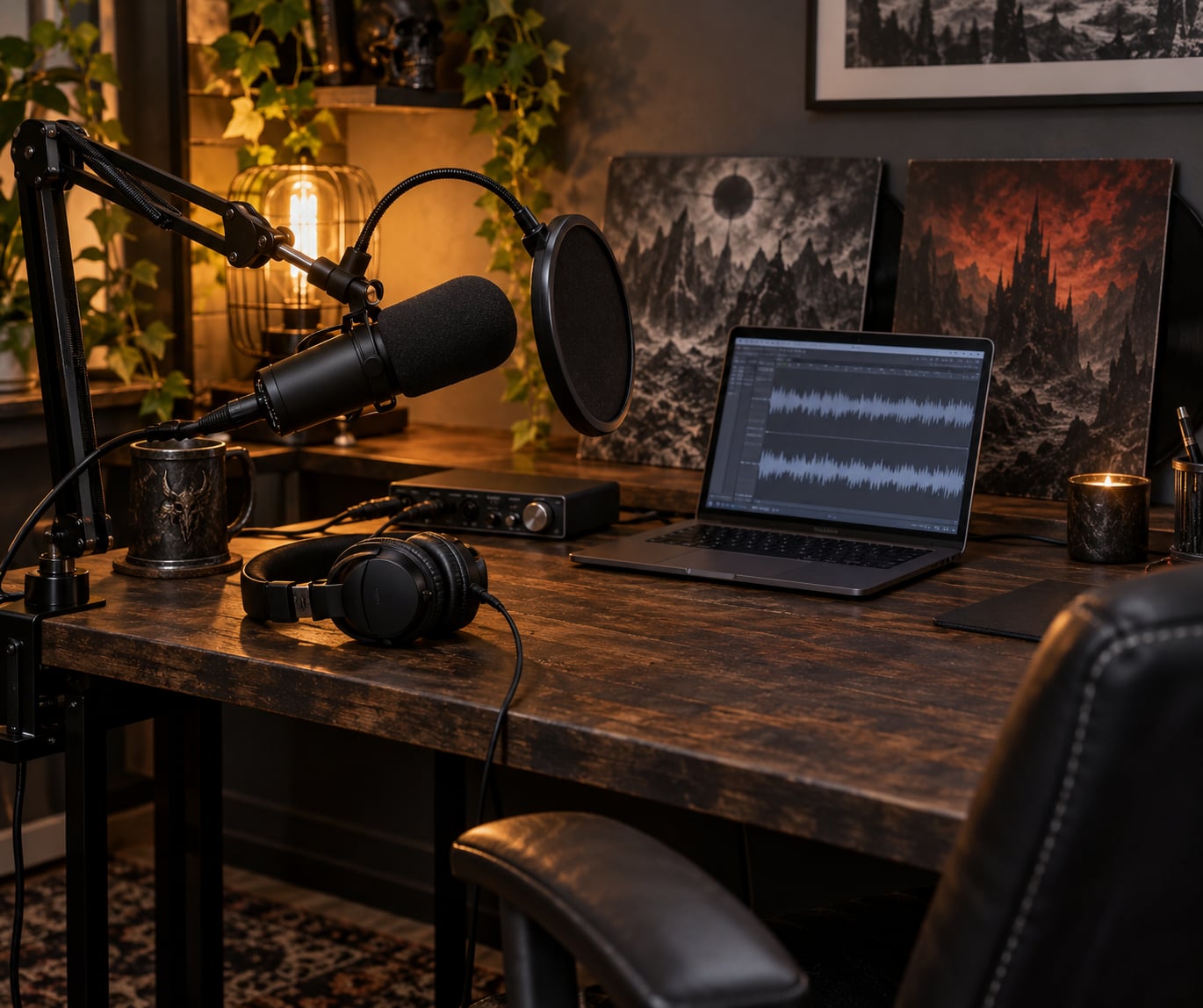
A smartphone with wired earbuds or a headset is enough for a pilot. For anything longer, a USB condenser microphone plugs straight into a computer and needs no interface. If you want a proper signal chain, an XLR dynamic microphone plus a small audio interface is the standard step up, and it handles loud rooms better because dynamic capsules tolerate high gain without picking up as much noise.
Closed-back headphones
You need headphones for two reasons. First, editing blind means you cannot hear hiss or a clipped vocal. Second, if you ever play music while someone talks, headphones stop the microphone from picking the track up through the speakers.
Editing software
Audacity and GarageBand are free and handle noise reduction, level matching, and MP3 export. Reaper is a one-time purchase with a steep learning curve and professional features. Adobe Audition and Pro Tools cost more and are mostly useful once you are editing multi-guest tracks regularly.
A hosting account that generates an RSS feed
This is the piece most beginners overlook. Every podcast directory reads an RSS feed, and your host creates that feed for you the moment you create an account. Buzzsprout, Libsyn, Podbean, and RSS.com are the usual names people look at. Pick one, create the show, and the feed URL is yours to submit everywhere.
Square artwork and a trailer, later
Podcast directories require square cover art, usually 1400 by 1400 pixels or larger. Design it before you submit. A trailer episode is optional at launch and useful three episodes in, once you have a clip worth advertising.
A remote recording tool for band interviews
Once you start booking guests, you will need something that records a remote call locally on both ends. Riverside, SquadCast, and Zencastr cover this. Recording each side locally means a bad connection ruins one track instead of the whole conversation.
How to Start a Metal Podcast Step by Step
1. Define Your Metal Podcast Concept and Audience
Narrow beats broad, every time. A general metal podcast competes with thousands of shows. An OSDM-only podcast, a Finnish black metal podcast, or a vintage vinyl collecting podcast competes with almost none, and its listeners share your exact taste.
Five formats work well in metal. Album reviews give you endless material and a fixed structure. Band histories and narrative episodes build authority and take the most research. Subgenre deep dives attract a loyal core. Live show and festival reporting gives you access no streaming playlist does. Culture commentary covers the scene, the business, and the arguments.
Pick one as your primary and one as your secondary. Your listener should be able to finish your description sentence and nod.
Name who you are talking to, not just who you are talking about. “Death metal fans who preorder vinyl and read liner notes” is a real listener. “Metal fans” is not. Write the sentence, then test it against your ten episode titles.
2. Plan Your Format and Episode Ideas
Format is the number of voices and the shape of the episode. Solo commentary is the easiest to produce and the hardest to sustain, because you carry the whole thing alone. Co-hosted shows split the work and add a second perspective. Interview shows grow fastest and depend entirely on access to guests. Narrative and documentary formats take the longest to make and hold attention best.
The five main categories you will see described in podcast directories map onto these: news, interview, narrative, educational, and music. Metal shows usually sit in interview, educational, and music territory.
Set your schedule before you publish episode one. Weekly is hard. Every two weeks is realistic for a beginner with a day job. Monthly is safer than a schedule you break in week three. Pick one and hold it, because metal listeners notice a feed that stops.
Write show notes as you plan. A two hour interview needs a spine: five segments, one question per segment, and a closing thought. Ad-libbing works for solo commentary and falls apart with a guest on a live mic.
Batch your recordings. Three episodes in one Sunday is easier to keep consistent than one episode across three Sundays.
3. Choose the Right Recording Setup
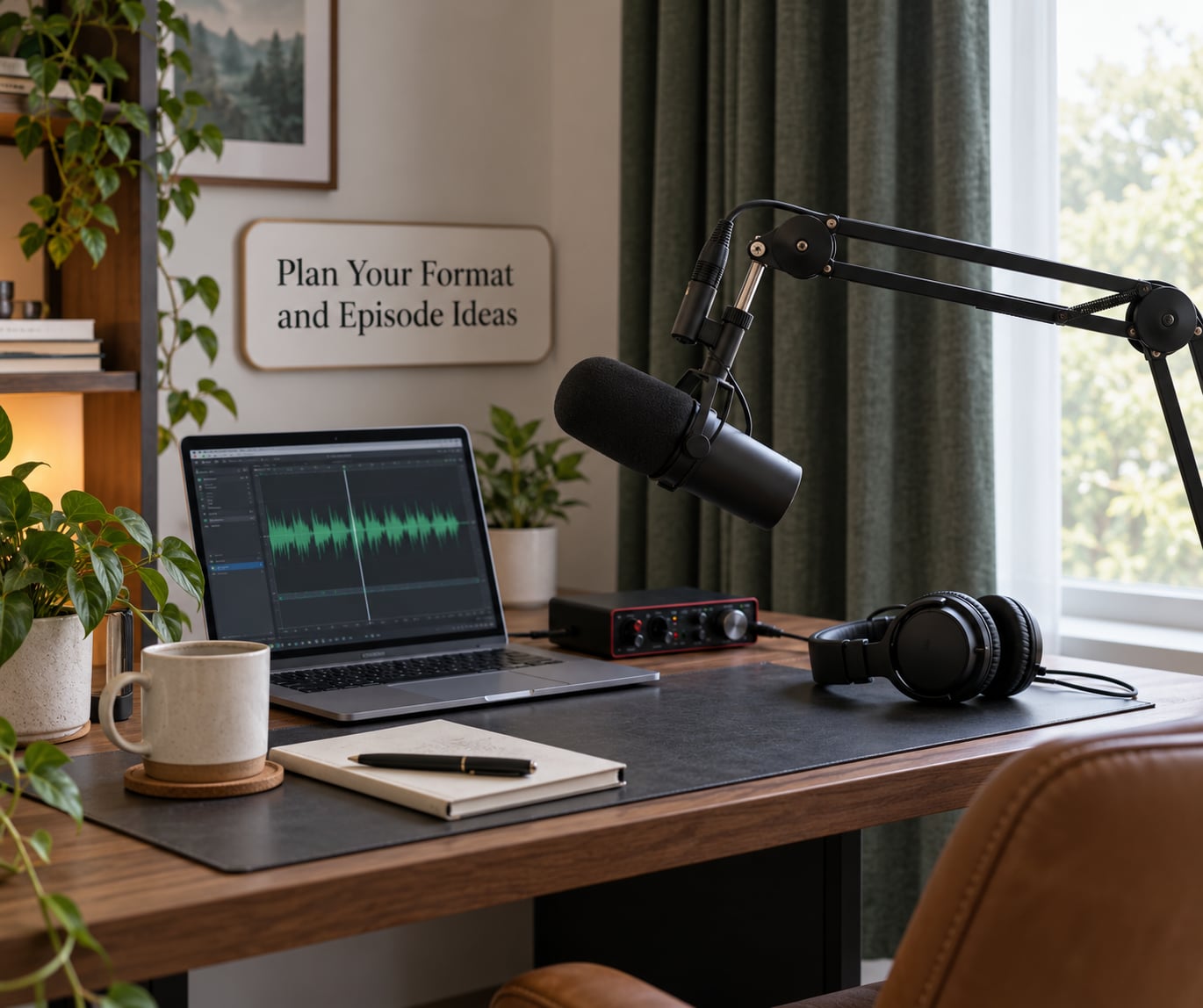
Match the setup to the room, not the other way around. A condenser microphone in an untreated bedroom picks up the fridge, the street, and your neighbour’s television. A dynamic microphone records the same room and mostly ignores all of it.
Phone: use it if you must, and use an app that records uncompressed audio, hold the phone a hand’s width from your mouth, and record somewhere soft. Wired earbuds beat phone speakers every time.
USB microphone: the sensible middle. Plug it into the computer, set gain so your loudest moment sits well below clipping, and record a two minute test before saying anything else about the episode. Walk the room while you record and listen back with headphones. Whatever you hear that is not you, move.
XLR microphone plus interface: two more cables and a real gain chain. Dynamic models such as an SM7B handle untreated rooms and high-gain guitar amps without complaining, which is exactly the metal use case. Remember phantom power if you use a condenser capsule.
The quiet room checklist: turn off fans and refrigerators if you can, close windows, put heavy fabric on the wall behind your microphone position, avoid a bare desk and a hard floor, record at night when traffic drops, and keep your phone in another room unless it is the recorder.
4. Prepare and Record Your First Episode
Record a thirty second test first. Play it back on headphones. If the room hums, if you hear a ticking clock, if your voice sounds thin, fix it now rather than after an hour of talking.
Keep the microphone about a hand’s width from your mouth and slightly off axis. A pop filter between you and the capsule kills the plosives that appear on every hard consonant. Harsh vocals produce more of them than normal speech, so metal hosts need one more than a news reader would.
Gain staging is simple: turn up until your loudest shout peaks around minus six decibels on your meters, then stop. Clipping is unrecoverable. Headroom is free.
On music, be careful. You cannot play a commercial metal track as background music on an episode unless you have permission, and underground labels frequently do not answer permission emails. Play a few seconds, talk over it with the volume dropped, and describe the record rather than using it as a bed. Theme music comes from royalty-free libraries such as Artlist, Musicbed, or a Creative Commons source you have checked.
Have an outline. For a solo episode, three to five beats on paper is enough. For an interview, send your questions to the guest in advance so they can bring stories instead of one-line answers.
5. Edit the Episode for Clear Listening
Cutting good audio takes three passes, and doing them in the right order saves time.
First pass is cleanup. Apply noise reduction lightly, cutting a hum, a fan, or keyboard clatter. Overdo it and the voice turns watery and artificial, which listeners notice immediately.
Second pass is structure. Trim long pauses, remove false starts, and cut the filler. Leave a beat of air between thoughts so the host does not sound nervous. Metal shows often run long because the host apologizes for talking too much; delete those moments without mercy.
Third pass is level and polish. Compress gently to even out the difference between a quiet answer and a shouted one, then normalize the finished episode to a consistent perceived loudness across your whole catalog. Inconsistent loudness is one of the fastest ways to lose a listener, because every episode starts too quiet or too loud. Add your intro, add music bed at a low level, and add your outro.
Export as MP3 at 128 kbps or higher. Listen once on headphones and once on a phone speaker before you upload. If the guitar bleeds into your vocal and you can hear it on the speaker, the mic is too close to the amp.
6. Create Show Art, Metadata, and Episode Notes
Artwork is the store window. Use square art, keep it legible at thumbnail size, and avoid a wall of small text. Logos with thin lines disappear in directory listings, so test yours at the size you actually see on a phone.
Metadata means your title, episode number, description, and tags, filled in at the host before export. Number your episodes from one and never reset. Fill in the author field with something consistent. Set ID3 tags so the title and episode number show correctly in players that read them.
Write real show notes. Give the episode a number, a title, the running order with timestamps, credits for everyone in the room, and sources. For metal, sources matter more than most genres: link the Encyclopaedia Metallum page for every band and release you discuss, link Discogs for pressing details and matrix numbers, and link Bandcamp for the album itself. You are pointing listeners at the money and the discovery platform they will actually use.
7. Publish and Distribute the Podcast
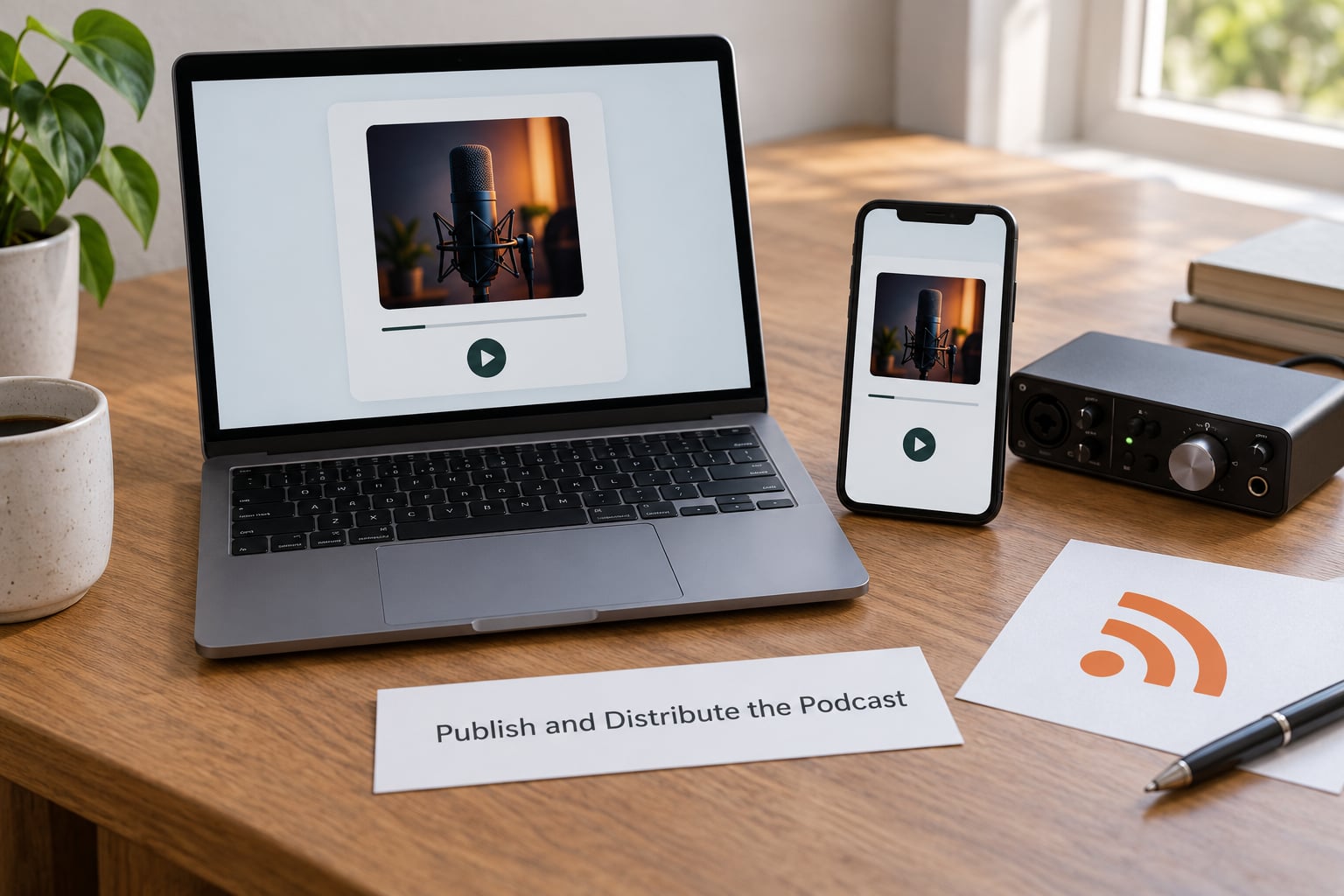
Publishing is upload, then submit. Upload the audio file to your host, fill in the metadata, and the host updates your RSS feed automatically. Everything downstream reads from that feed, so one upload puts the episode in front of every directory you have ever submitted to.
Then create the listings once. Apple Podcasts goes through Apple Podcasts Connect, where you paste your feed URL, upload artwork, and wait for review. Spotify for Podcasters and Amazon Music both work from the same feed URL without separate review. Submit early, before you have an episode, because approval takes days and you want the show listed on launch day rather than a week later.
Test before you announce. Download your own episode from a private window and play it. Check that the title and description came through, that the artwork is right, and that the audio file actually plays. A broken feed discovered by listeners is worse than a delay.
From then on, your workflow is: upload, update the feed, publish, share. Some hosts also create a schedule so episodes go out at a fixed time even if you forget.
8. Promote the Show and Build a Consistent Schedule
Promotion for a new metal podcast is mostly participation, not advertising. Join the places where metal already argues about music: subgenre subreddits, bandcamp tag pages, Discords, zine communities, and label-run groups. Contribute there for weeks before you ever post a link. Accounts that only promote themselves get ignored, and some moderators remove them.
Turn each episode into two or three short clips for the platforms your audience actually uses. A thirty second riff discussion with a clean caption travels better than a trailer.
Guest outreach works best when you go after the ecosystem rather than the band directly: label staff, promoters, zine editors, photographers, and festival organizers all know bands who would talk. One guest with a real story beats five local openers, and it is worth asking an established podcaster how they book bands before you send the first email.
Ask your listeners for questions before each episode and record one in the first minute. It converts a passive audience into participants and gives you material you did not have to research.
Finally, protect the schedule. Burnout is the most common reason a niche show dies. Batch where you can, take a season break instead of disappearing quietly, and tell people when you are back.
Common Metal Podcast Mistakes
Recording in a noisy room
The mistake: buying a good microphone and recording it eight inches from a thin wall next to a washing machine. The fix: treat the room before the gear. Heavy curtains, a blanket behind the chair, and a door that closes properly beat a better microphone every time. Test where you plan to speak, not where the desk is.
Using copyrighted music without permission
The mistake: playing a favourite album track as background music because the label is small. The fix: assume every commercial recording is protected. Talk over short excerpts rather than using them as a bed, and source your theme from a royalty-free library whose licence covers podcast use in writing.
Speaking without an outline
The mistake: pressing record and hoping the episode finds its shape. The fix: three to five beats on paper, one question per interview segment, and a closing line you wrote down in advance. An outline keeps a solo episode from turning into twenty minutes of rambling.
Over-editing until the show sounds processed
The mistake: maxing out noise reduction and compression on every episode. The fix: dial both back. Listeners forgive a little room noise faster than they forgive a voice that sounds underwater. Fix the obvious noise and move on.
Inconsistent loudness between episodes
The mistake: exporting each episode at whatever level the track happens to sit at. The fix: normalize to a single target across the catalog and keep it there. Your first ten episodes set the expectation for everything after them.
Promoting only at release
The mistake: posting the link once and waiting for listeners to arrive. The fix: two or three short clips per episode, plus regular presence in the communities where your subgenre argues. Consistency in the scene is what turns a download count into a mailing list.
Tips for Building a Metal Podcast Audience
Metal fans are unusually loyal and unusually picky, which cuts both ways. Get the taste right and they will follow you for years. Get the details wrong and they will correct you in the comments instead of subscribing.
Narrow your subgenre further than feels comfortable. The people listening to a show about one regional scene or one era of one style will feel like it was made for them, and word travels fast inside small communities.
Build recurring segments listeners wait for. A demo tape segment, a first-listen verdict, or a reissue comparison gives people a reason to come back at a specific point in the episode.
Show your sources. Link Encyclopaedia Metallum pages and Discogs entries for the releases you discuss. Underground listeners trust a host who admits when they cannot verify a pressing detail, and correcting it openly builds more credibility than being right every time.
Use correct terminology. Harsh vocals and cleans are not the same thing, subgenres have real technical distinctions, and a host who knows the difference gets treated as an equal rather than a fan with a microphone.
Book guests who know things. Promoters, label owners, engineers, and photographers carry stories that musicians rarely do, and they are far easier to reach than a touring band.
Collect questions before you record and review your numbers after each release. Which episodes got shared, where the drop-off sits, and which question produced the longest answer will tell you more than any general advice.
Frequently Asked Questions
What equipment do I need to start a metal podcast?
You need a microphone, headphones, editing software, and a hosting account. A phone with wired earbuds records a perfectly usable pilot. For regular episodes, a USB condenser microphone plus free software such as Audacity covers most metal hosts. Add an XLR microphone and a small audio interface when you want better handling of loud, untreated rooms, and a remote recording tool once band interviews start. Treat the room before you treat the gear.
How do I license metal music for my podcast?
Assume every commercial recording is protected, including releases from small underground labels. Short commentary excerpts are treated differently from using a track as background music, but the safe path is to describe the record instead of using it as a bed. Use royalty-free libraries such as Artlist or Musicbed for theme music, and check that the licence names podcast use in writing. Keep a copy of every licence you rely on.
How long should a metal podcast episode be?
Most successful metal shows land between 40 and 90 minutes. A solo album review can work in 25 to 40 minutes if the format is tight. Interviews run longer because the conversation sets the length, and narrative or history episodes often need 60 to 120 minutes. Set a target range before you record and stay inside it, because an audience that knows what length to expect is easier to keep than one that gets surprised every week.
How do I get metal bands on my podcast?
Approach the ecosystem rather than the band. Promoters, label staff, zine editors, photographers, and festival organizers all know bands with stories to tell, and they are far easier to reach than touring musicians. Send a short, specific pitch about what the guest could talk about. Being willing to record remotely, publish clips, and credit their work gets you further than any offer of exposure.
How do I make money with a metal podcast?
Start with the patron model rather than advertising. Metal listeners are suspicious of aggressive ad reads and generous with small monthly support when they like you. Tier a Patreon with early episodes, full archive access, and bonus interviews. Later, small merch, affiliate links to records you actually discuss, and sponsorship from labels or gear brands in the scene become viable once you have a stable download count.
Is it too late to start a metal podcast?
No. There is no saturation threshold for niche audio, and directories rank by topic relevance rather than launch date, so an episode about one regional metal scene can surface years after it is published. The real risk is consistency, not timing. Metal fans forgive a rough first episode; they do not forgive a feed that promises weekly and publishes twice. Start small, publish reliably, and the archive will compound.
Conclusion
Narrow your concept to one subgenre, one era, or one region. Write ten episode titles to prove the idea has runway. Record a pilot on whatever microphone you already own, edit it in free software, and normalize the loudness. Then set up a host, submit your feed to the directories, and publish on the schedule you wrote down before you were tired. Improve from the questions that arrive in your inbox after the first three episodes.
If you have been putting off how to start a metal podcast, the hard part was always the concept, not the microphone. Pick the narrowest show you would still want to make in a year, record one rough episode, and put it out there.