Metal fans argue about genre labels because a label is never only a description. It is a claim about taste, belonging and authenticity, and the argument underneath it is usually about identity rather than riffs. Bands self-describe, critics coin terms, streaming platforms file bands into commercial buckets, and fans accept or reject the result. Since 2026 that process has sped up, and the disagreements got louder.
I’ve read enough of these threads to think the endless bickering is mostly wasted effort, and also mostly fun. The argument is not really about sound at this point. It’s about who gets to define the thing you love.
Table of Contents
- What Is a Metal Genre Label?
- Why Metal Fans Argue About Genre Labels
- One: identity and belonging
- Two: gatekeeping and status
- Three: scene history and authenticity
- Four: sound versus ideology
- Five: labels as navigation
- The psychology underneath the fight
- How Metal Subgenres Developed
- What Makes One Style Sound Different?
- Why Labels Like Metalcore and Djent Create Confusion
- Is Calling a Band a Different Subgenre Bad?
- How to Talk About Metal Without Starting a Fight
- The Role of Record Labels, Media, and Fans
- Frequently Asked Questions
- Is there one officially correct subgenre for every metal band?
- Why do metal fans get so defensive about band classifications?
- What is the difference between a metal subgenre and a scene?
- How can I describe a band accurately without relying on genre labels?
- Does genre disagreement affect a band’s music or legacy?
- Are genre labels more useful for musicians or metal collectors?
What Is a Metal Genre Label?
A metal genre label is a shared shorthand for a bundle of traits: how the guitars are tuned and played, what the vocals sound like, what the lyrics are about, how the band dresses and behaves on stage, and what scene it came out of. Fans use it to sort music quickly and to find more of what they already like.
Four different definitions compete for the same word, and most arguments happen because two people are using different ones.
| Definition of genre | Who holds it | What it explains well | What it misses |
|---|---|---|---|
| Artist intent | Bands and their press releases | Why a band made a deliberate stylistic pivot | Bands routinely describe themselves as something they stopped sounding like years ago |
| Musical characteristics | Listeners, critics, teachers | Tempo, tuning, vocal style, riff structure, instrumentation | Two bands can share every trait and feel nothing alike |
| Scene, place and time | Fan communities, local press | Lineage, influence, who played with whom | Scene and sound drift apart; geography is not sound |
| Non-musical signals | Everyone, unconsciously | Lyrics, image, attitude, fan reception, ideology | Frequently contradicted by the actual music |
Useful vocabulary first. A genre is a broad family like heavy metal. A subgenre sits inside it, like thrash. A scene is a group of people in a place and time, which may or may not share a sound. A tag is the smallest thing a streaming service or shop aisle will use.
The distinction that settles the most arguments is definition versus description. As posters on MaidenFans put it, genres describe what a band does, not what it should do. A description can be wrong. A definition that a band has to obey is a gate.
Why Metal Fans Argue About Genre Labels
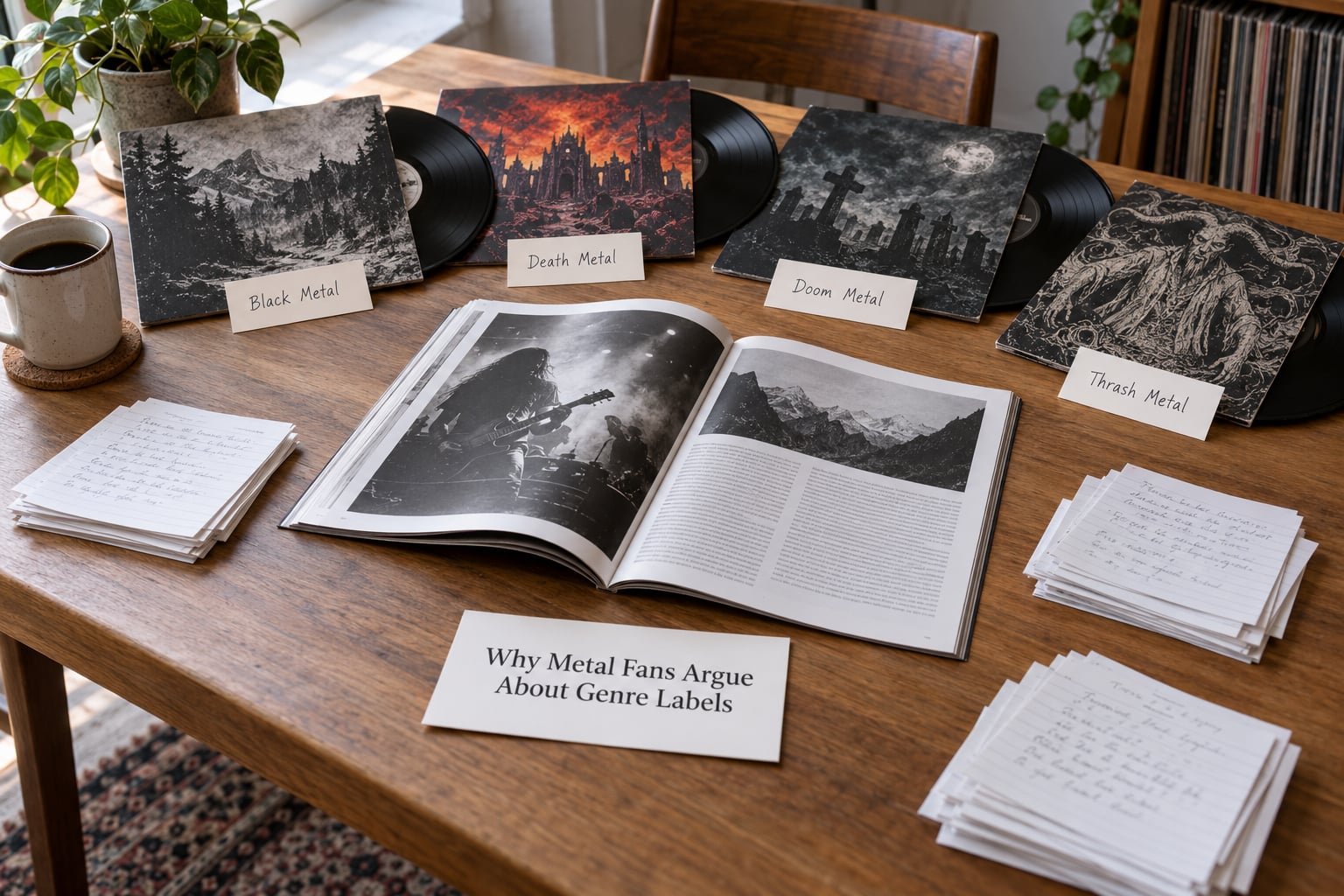
Five structural reasons sit underneath almost every genre fight in metal, and naming them usually deflates the argument faster than winning it.
One: identity and belonging
A label tells you who you are standing with. Metal has carried strong subcultural signals since the Black Sabbath and Motörhead era, and people use music to say something about themselves. Once a label is doing that job, calling it wrong stops being a correction and starts being a challenge to someone’s self-image.
This is why “is metalcore metal” feels personal to both sides. The defender is not defending a waveform; they are defending the version of themselves where their taste is legitimate.
Two: gatekeeping and status
Knowing the correct label buys credibility in a scene where credibility is currency. Refusing to accept a label is a fast way to look serious to newcomers, and status rewards people who enforce boundaries rather than people who keep the conversation open.
Two different things hide behind the word. Gatekeeping is protecting a genre from dilution, which sometimes protects a scene from commercial flattening. Snobbery is using the same language purely to look superior. Critics punish the first harder than the second, often wrongly.
Three: scene history and authenticity
Every scene invents its own reference points, and the argument usually runs backwards from those. Seattle bands in the early 1990s had to argue they were something other than metal. Norwegian black metal bands of the early 1990s had to argue they were more extreme than the death metal that preceded them. Each wave defends its lineage.
That instinct is why crossover bands get heat. A thrash band that adds a horn section is treated as a traitor by some fans and as a straightforward evolution by others.
Four: sound versus ideology
The loudest fights are not about music. They are about what a style is supposed to stand for. Black metal carries satanic imagery and anti-religious posturing; folk metal carries medieval themes; nu metal was blamed for a whole decade’s cultural decline of heavy music.
Separate those two axes and a lot of it calms down. Deafheaven’s tremolo-picked chords and dense blast beats are recognisably black metal in sound, while the band resists most of the ideology. That gap is where a lot of the arguing lives.
Five: labels as navigation
The underrated reason. Subgenres are genuinely useful. A newcomer who likes one aggressive, riff-driven record can find a dozen more through a label without listening to hours of unrelated material. Record shops, festival bills, radio shows and recommendation playlists all lean on the same vocabulary.
Even listeners who say they hate labels use them. On the metal forums, the most common posts are “I don’t care what it’s called, play me something like this band.”
The psychology underneath the fight
Music taste is one of the easier things to sort people into groups, so it gets used as a shortcut for sorting people into groups generally. Social identity research describes exactly this pattern: people define themselves partly by what they reject, and defending the boundary feels like defending the self.
That is why a disagreement about a 1993 demo can feel worse than a disagreement about politics. It is also why the threads that work best steelman the other side. In the recurring “most elitist opinion” threads on r/InMetalWeTrust and r/MetalForTheMasses, members provoke each other on purpose, and nobody expects a conclusion. The argument is recreational.
How Metal Subgenres Developed
Metal’s taxonomy is the result of fifty-plus years of bands splitting off from each other, and every split followed the same shape. A scene forms, a shared vocabulary grows, then someone changes one element and the younger generation claims a new name.
Early heavy metal through the late 1970s set the basic materials: down-tuned riffs, sustained notes, distortion, and a heaviness that sat between rock and something else. The New Wave of British Heavy Metal in the late 1970s and early 1980s sped that vocabulary up with twin-guitar lines, higher tempos and a DIY record-label circuit.
By the middle of the 1980s the field had split several ways at once. Metallica and the rest of the US Bay Area scene pushed thrash toward faster, tighter riffing and technically precise playing. Death metal developed in Florida and Scandinavia with low tunings, growls and blast beats. Black metal in Norway went the other direction, using the same raw materials for atmosphere, speed and shock rather than precision.
Doom, power, progressive, glam and symphonic metal each answered the same question differently: what if the priority was weight, melody, complexity, image or orchestration instead of aggression? Industrial metal took a parallel path with electronics and programmed rhythm.
The 1990s and 2000s added nu metal and metalcore, both of which pulled metal toward mainstream audiences and drew fire for doing it. Djent arrived in the 2010s as a production and rhythm idea rather than an aesthetic one, which is exactly why it is hard to pin down.
The 2026-era pattern is blending. Bands borrow the clean hooks and production polish of pop, the breakdowns and breakdowns-adjacent pacing of metalcore, and the heaviness of everything above, then land in a spot no existing genre covers. Pop metal and the wave critics call baddiecore are products of that. Each new split produces another argument about whether the result is a genre or a dilution.
What Makes One Style Sound Different?
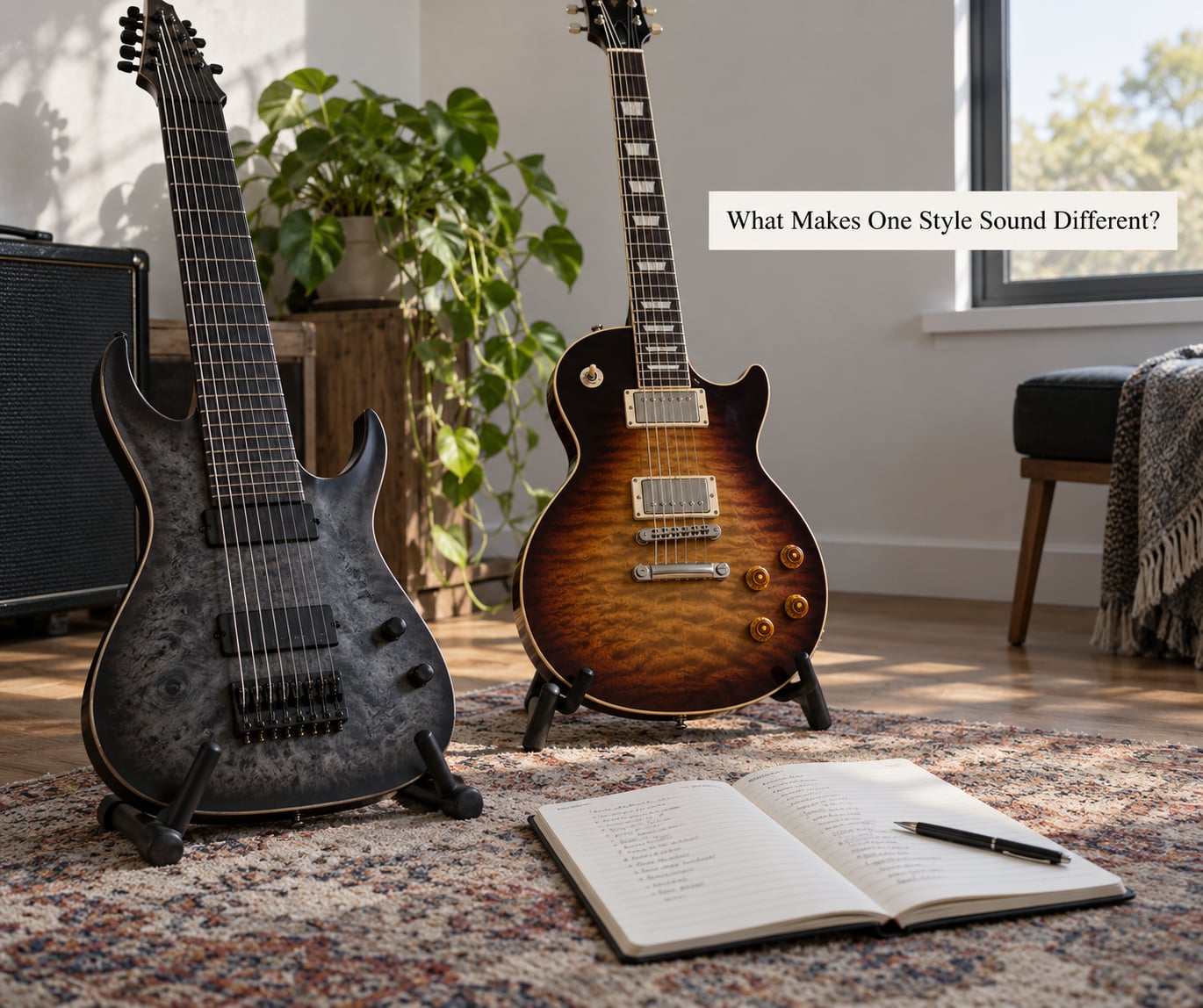
When fans argue about a label, they are usually reacting to a handful of concrete variables. These are the ones that matter.
Vocals. Clean androgynous singing, harsh shouted vocals, gutturals, shrieks, death growls and clean screaming are quick signals that split a listener’s expectations before the guitar does.
Riffing and rhythm. Palm-muted eighths in a fast tempo, syncopated djent patterns, long sustained notes, mid-tempo grooves and single-note speed picking sit at completely different points on the same axis.
Tuning. Drop tunings and low tunings change the physical feel of a riff and, crucially, the register of the guitars, which shifts how a band slots into a mix and a scene.
Song structure. Long builds and instrumental passages, two-minute singles, breakdowns in the middle of a verse, and verse-chorus structures with a big pre-chorus are all structural fingerprints.
Guitar tone. Distortion character, pick attack, reverb and the presence of clean sections move a band as far from another band as its tempo does.
Production and presentation. Raw bedroom recording versus polished studio work, live ritual and stage spectacle versus an invisible band, are non-musical but heavily weighted signals.
| Style | Tempo and weight | Riff character | Vocals | What the style is trying to do |
|---|---|---|---|---|
| Doom | Very slow, very heavy | Few long sustained notes | Slow clean or low slow vocals | Weight and atmosphere over movement |
| Thrash | Fast to very fast, tight | Palm-muted eighths, syncopated accents | Shouted vocals, occasional shriek | Relentless riffing and technical display |
| Black metal | Fast, mid weight, tremolo picking | Tremolo-picked chords, blast beats | Shrieks and gutturals | Atmosphere, extremity, ideological shock |
| Power metal | Fast, lighter guitar weight | Heroic leads, gallop patterns | Clean high vocals | Melody, range, singalong choruses |
| Metalcore | Mid to fast, heavy breakdowns | Tight palm-muted riffs with breakdowns | Shouted verses with clean choruses | Movement, physical energy, live singalong |
Five variables, and every band sits somewhere on all of them at once. That is the structural reason the argument never settles.
Why Labels Like Metalcore and Djent Create Confusion
Some labels describe a sound. Others describe a family of bands that share a production approach, an era, a fan demographic, a posture, or a marketing plan. Those second-kind labels are where the confusion concentrates.
Djent is the clearest case. There is no agreed vocal style, no agreed lyrical theme, and no agreed tuning. What holds the label together is a rhythmic vocabulary of syncopated, percussive riffs, a preference for low-register guitar, and a specific studio sound.
Metalcore started as a meaningful fusion of metalcore’s own ancestors, hardcore punk aggression and metal instrumentation, and it had a real sound for its first decade. Then pop-punk influence arrived and the label became a marketing category covering everything from breakdowns to choruses.
The same drift hit nu metal, and it is why people who loved Linkin Park as teenagers and people who loved them as adults can both be right about a band that did not change much.
Other terms describe behaviour rather than music. Sleaze is partly a guitar tone and partly a stance. “Crossover” can mean thrash with punk influence, or rap metal aimed at a crossover audience. “Extreme metal” is a marketing convenience that covers several unrelated scenes.
Is Calling a Band a Different Subgenre Bad?
No. Calling a band by the wrong subgenre is a small error with occasional bad consequences, and treating it as a serious offense is the actual problem.
Three questions separate reasonable criticism from gatekeeping. Is the objection about the music, in which case it is a normal argument worth having? Is it about fit with an existing canon, in which case it is a taste judgment dressed as an aesthetic one? Is it about who is allowed in the room, which is status play dressed up as both of the other things?
Labels are useful when you want a starting point and honest about the sound. “Thrash-leaning” tells someone what to expect on track three. Labels mislead when they are used as a verdict on worth, or when they are applied to a band as a claim about seriousness.
When criticism is fair, make it about the record. Ask for a specific track and point at what it does. Forum posters reward this constantly, and they punish sneering just as fast.
Cultural appropriation is a separate axis and deserves separate treatment. A band in Brazil writing Nordic-themed blackened folk metal is not making an argument about sound. It is making an argument about whose culture can be claimed, and treating that as a genre-label dispute buries the real issue.
How to Talk About Metal Without Starting a Fight
A few habits do most of the work. Use songs instead of labels: “the track with the false start” travels further than a subgenre name. Name the overlap rather than picking a winner, as in “thrash with death metal vocals.” Ask what someone means by a term before agreeing or arguing, because “metalcore” in 2007 and 2026 does not describe the same thing.
Keep taste separate from identity. Liking a style is a preference. Deciding who gets to like it is a social move, and that is where the heat usually comes from. If a thread is looping one-liners, say the thing you like about the band and stop; that is usually the only productive move left.
Gatekeeping, elitism and snobbery are three different words. Gatekeeping is a boundary someone sets to protect a scene. Elitism is a claim that some listeners matter more than others. Snobbery is contempt for taste you do not share. Only one of those three is ever necessary, and the other two do most of the damage in public arguments.
The Role of Record Labels, Media, and Fans
Bands coin terms first, usually in a press release or an interview, and often for positioning rather than accuracy. Then critics and the music press apply them, and repetition hardens them. Review shorthand does a lot of quiet work here: a phrase like “dark metal” or “modern metal” can pin an entire catalogue for a decade.
Streaming platforms and record labels take those words and turn them into commercial buckets. A band’s genre tags decide which playlists it lands in, which editorial pages it appears on, and which festivals book it. That is the part of the argument with actual money attached, and it is the part most people arguing online are not thinking about.
Fans are the last stage and the loudest. Compilation scenes, festival lineups and record shop shelves all reinforce whichever names have become memorable, and the memorable names win by repetition rather than accuracy. Which is also how a term like “metalcore” or “djent” outlives the sound it was coined for.
| Band | Label usually applied | The objection | The strongest counter-argument |
|---|---|---|---|
| Ghost | Heavy metal, occult rock | Songs are short, hooks are pop-shaped, the show is a concept | Riffs, dynamics and the Satanic framing are all recognisably metal; production polish is not a genre marker |
| Sleep Token | Sludge, alternative, progressive | Anonymous, theatrical, hardly any riffs, unclear if metal at all | Heavy low tunings, harsh vocals and rhythmic weight sit inside metal traditions regardless of presentation |
| Deafheaven | Black metal | Black metal is ideological, and this band is neither grim nor Satanic | The defining musical traits are present; ideology is a separate column from sound |
| Brazilian folk metal band | Folk metal | Not metal, and not their culture either | The sound objection is weaker than the appropriation objection |
| Linkin Park | Nu metal, rap metal, alternative | Rap vocals break the metal frame | Heavy riffs and programmed metal structures carried the whole record |
Frequently Asked Questions
Is there one officially correct subgenre for every metal band?
No authority assigns one. Bands describe themselves, critics apply terms in reviews, streaming platforms file bands into commercial genre buckets, and fans keep renegotiating. Each of those can disagree with the others. A label is best treated as a working description at a point in time, useful for finding similar music and unreliable as a verdict on quality or seriousness.
Why do metal fans get so defensive about band classifications?
Because genre labels double as identity claims. Music taste is one of the easiest ways people sort themselves into in-groups and out-groups, so defending a boundary feels like defending the self. Status plays into it too: knowing the correct term buys credibility in a scene where credibility is currency. Add nostalgia and lineage loyalty, and a small descriptive disagreement turns personal fast.
What is the difference between a metal subgenre and a scene?
A subgenre is a set of musical traits, such as tuning, tempo, vocal style and riff structure. A scene is a group of people in a particular place and period who share bands, promoters, venues and influences. The two overlap but regularly diverge. A scene can survive while its sound changes, and a subgenre can exist with no local scene behind it at all.
How can I describe a band accurately without relying on genre labels?
Describe tracks instead of bands. Name the tempo, tuning, vocal style and structure you actually hear on one or two songs, and mention where the band borrows from other styles. Listeners will place the band themselves, often more accurately than a label would. This works better in conversation than in a review, where readers expect some label as a reference point.
Does genre disagreement affect a band’s music or legacy?
It affects reach and framing more often than the music itself. Genre tags and press framing influence playlist placement, editorial coverage, festival billing and who hears the band at all. Legacy is largely built from the records, so critics who disliked the label usually have to work harder to dismiss the music. A contested band often gains more from the argument than it loses.
Are genre labels more useful for musicians or metal collectors?
Collectors use them to navigate a large catalogue, and that use is straightforward: sort by style, find what sounds similar. Musicians use them more loosely, mostly as reference points for influences and as shorthand for how a record will be received. Neither group needs the label to be exact. Both benefit when it is close, and both are worse off when a wrong label blocks a record from reaching anyone.
The argument will not end, and the most useful thing you can do with it is know which kind you are in. Identity, status, history, ideology and navigation are five different conversations wearing the same word, and most of them go better once you name which one is happening.
Start by describing the song instead of the genre. It takes ten seconds and it usually ends the thread.