Staying safe at a crowded concert comes down to two things: sorting the practical details before you leave the house, and knowing how to stand and move once the floor gets dense. Learn the exits, agree a meeting point, wear earplugs and closed-toe shoes you have already broken in, keep water on you, and practise how to brace your body when a wave of people moves through. Ten minutes of planning covers most of the risk.
The rest is judgement. Most people who get hurt at a show are not hurt by anything dramatic. They are hurt because they stood in the wrong spot, carried too much on their shoulders, missed the early signs of a crowd tightening up, or waited too long to say they felt unwell. Learn to stay safe at a crowded concert and you are really learning to read a room while you are inside it.
- Find the exits and the first aid station before you find your friends.
- Agree one meeting point outside the venue, not a pin dropped on a map.
- Wear earplugs. You cannot unring your ears later.
- Carry a filled water bottle and take small sips through the set.
- Keep bags closed in front of you and keep pockets light.
- Tell one person outside the venue that you are there and when you expect to leave.
Table of Contents
- What You Need
- Step-by-Step: How to Stay Safe at a Crowded Concert
- 1. Plan Your Night Before the Show
- 2. Choose a Safer Arrival Strategy
- 3. Protect Yourself in Dense Crowds
- 4. Stay Hydrated and Watch for Warning Signs
- 5. Help Someone Who Becomes Overwhelmed
- 6. Know What to Do in an Emergency
- 7. Leave the Venue Safely
- Common Mistakes
- Frequently Asked Questions
- What should I do if I feel trapped in a concert crowd?
- What if I lose my friends in a crowded venue?
- How early should I arrive at a concert to avoid the biggest crowd?
- What items should I keep in my pockets at a concert?
- How can I tell whether a concert crowd is becoming dangerous?
- When should I leave a concert because I feel unwell?
- Conclusion
What You Need
Nothing on this list is exotic, which is exactly why people forget half of it in the car. Have these sorted and the rest of the night is about attention rather than logistics.
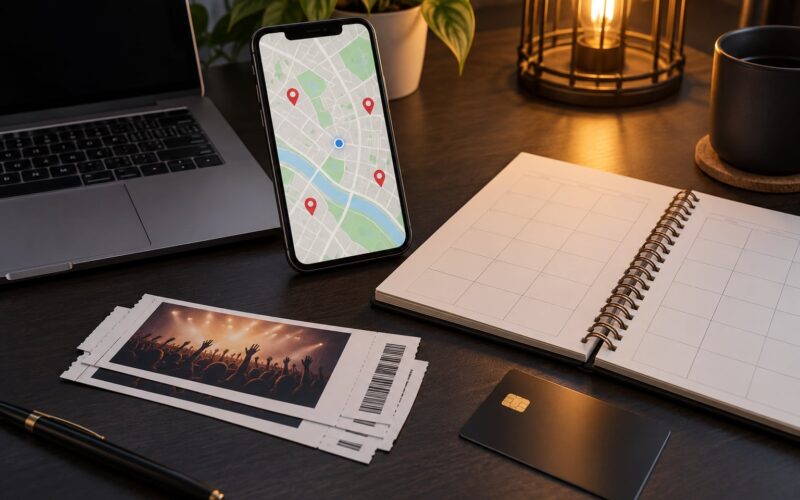
- Identification. A photo ID matching the name on the ticket. Most venues scan at the door and some check IDs again on the floor.
- Payment. Your card and phone, and a small amount of cash in a front pocket. Bar tabs on a wristband or an RFID band are common at large shows, and a dying phone means you cannot buy water.
- A charged phone plus a power bank. Live location sharing turned on with one trusted person, and the app already installed so you are not setting it up in a queue.
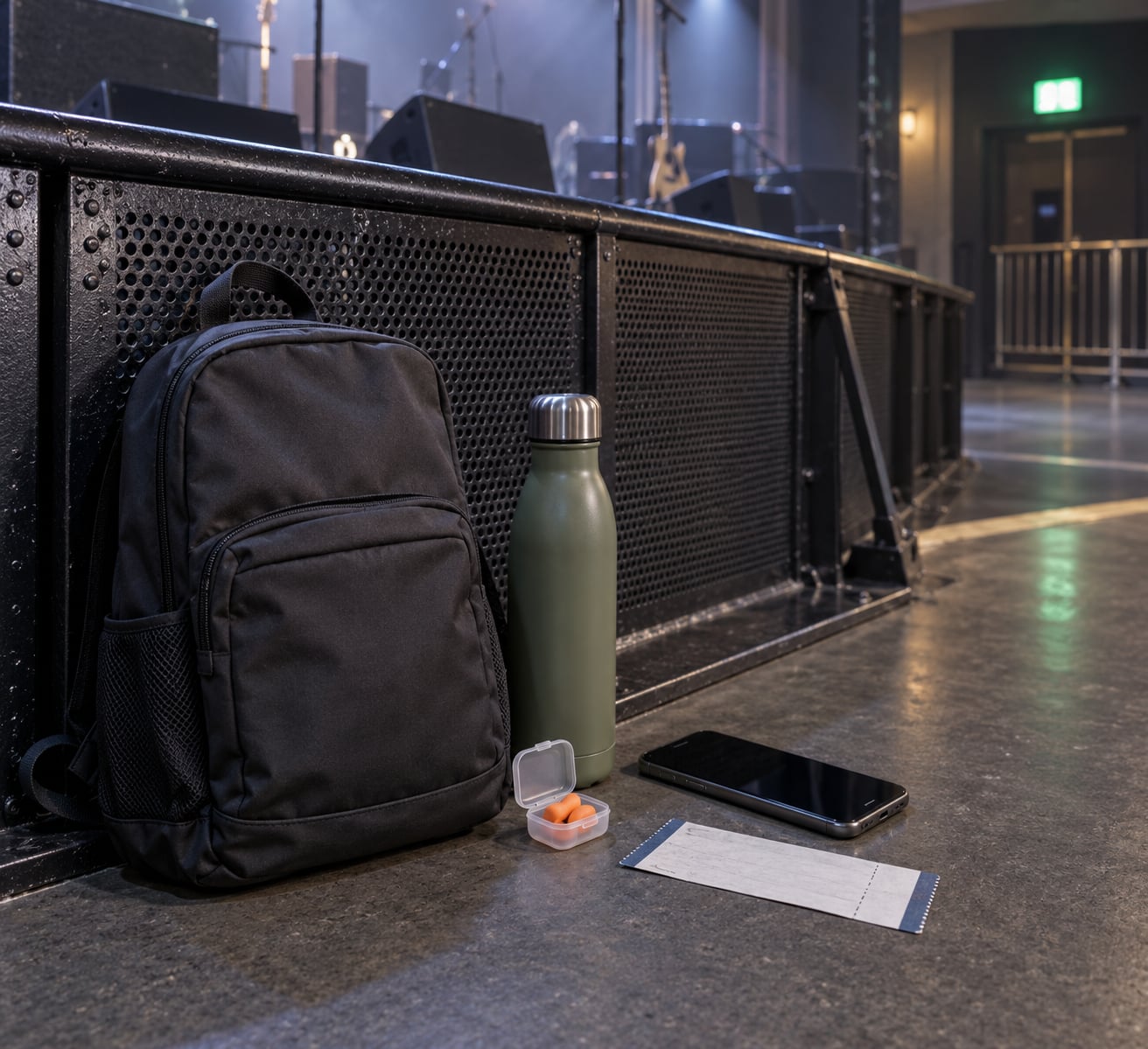
- A reusable water bottle. Many venues let you bring an empty clear bottle and fill it at a station inside. Others do not allow outside drink at all, so check the venue policy with your ticket.
- Earplugs. Foam plugs cut the most sound and cost very little. Filtered plugs let more music through, which some people prefer. Pack a spare pair in a case; they get lost constantly.
- Any medication you take regularly. Keep it in a pocket rather than a bag that ends up in a merch queue.
- A weather layer. Outdoor queues and festivals get cold after dark faster than you expect, and wet decks underfoot are a slipping risk.
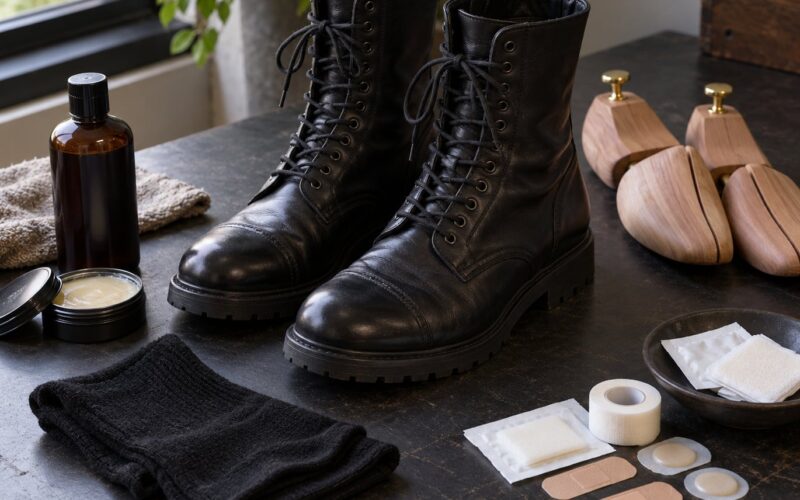
- Shoes with grip, already worn in. New boots on a wet floor is a bad combination. Broken-in trainers or high-tops are the safest choice.
- A small bag that closes. A cross-body or waist bag that sits in front of you beats a loose tote, and most venues limit bag size.
- A person and a place. Who you are meeting, exactly where, and what you will do if you get separated.
Check the venue rules before you go. Arenas and festivals commonly run bag searches, size limits, searches at the door and a ban on outside drink, glass and professional cameras. Knowing this in advance stops you queueing in the wrong lane with the wrong bag.
Step-by-Step: How to Stay Safe at a Crowded Concert
Seven stages, in order, from the night before to the walk home. You can do the planning stages in ten minutes; the rest are habits you keep for three hours.
1. Plan Your Night Before the Show
Open the venue page the day before and look at the floor plan, not just the running order. Note where the general admission floor sits, which stage you are watching, and how many exits serve that area. On a multi-stage festival, the distance between stages is the thing that will decide whether you spend the night walking.
Then fix three details. Your transport home, decided in advance, so nobody is trying to book a taxi at 1am from an empty platform. Your meeting point, described in words rather than a screenshot, so both of you recognise it. And the people at home who should know you are there, with a rough finish time and a check-in request for later in the night.
Weather matters more than people expect. Check the forecast for the queue, not just the show, and decide in advance what you do if it rains hard enough to cancel. A cancelled festival is a queue and a car park, and those are exactly the places people get separated and robbed.
2. Choose a Safer Arrival Strategy
Arriving early is the single biggest advantage you can hand yourself. Doors usually open well before the headliner, which means a shorter queue, a calmer entrance and a chance to stand somewhere sensible before the floor fills. Twenty minutes earlier is often the difference between choosing your spot and being pushed into one.
Travel in a small group where you can, and agree where you are meeting before you set off rather than improvising at the door. If you know someone ahead of you is already inside, start from the same transport point instead of arriving from opposite directions.
Look at the crowd, not the queue. If the area outside the entrance is already heaving, or if staff are holding people back because the floor inside is at capacity, do not push in. Ask a staff member whether you can wait outside and come in later, and use the time to find the exits. Arriving ten minutes after your friends is much cheaper than arriving in the middle of a surge.
3. Protect Yourself in Dense Crowds
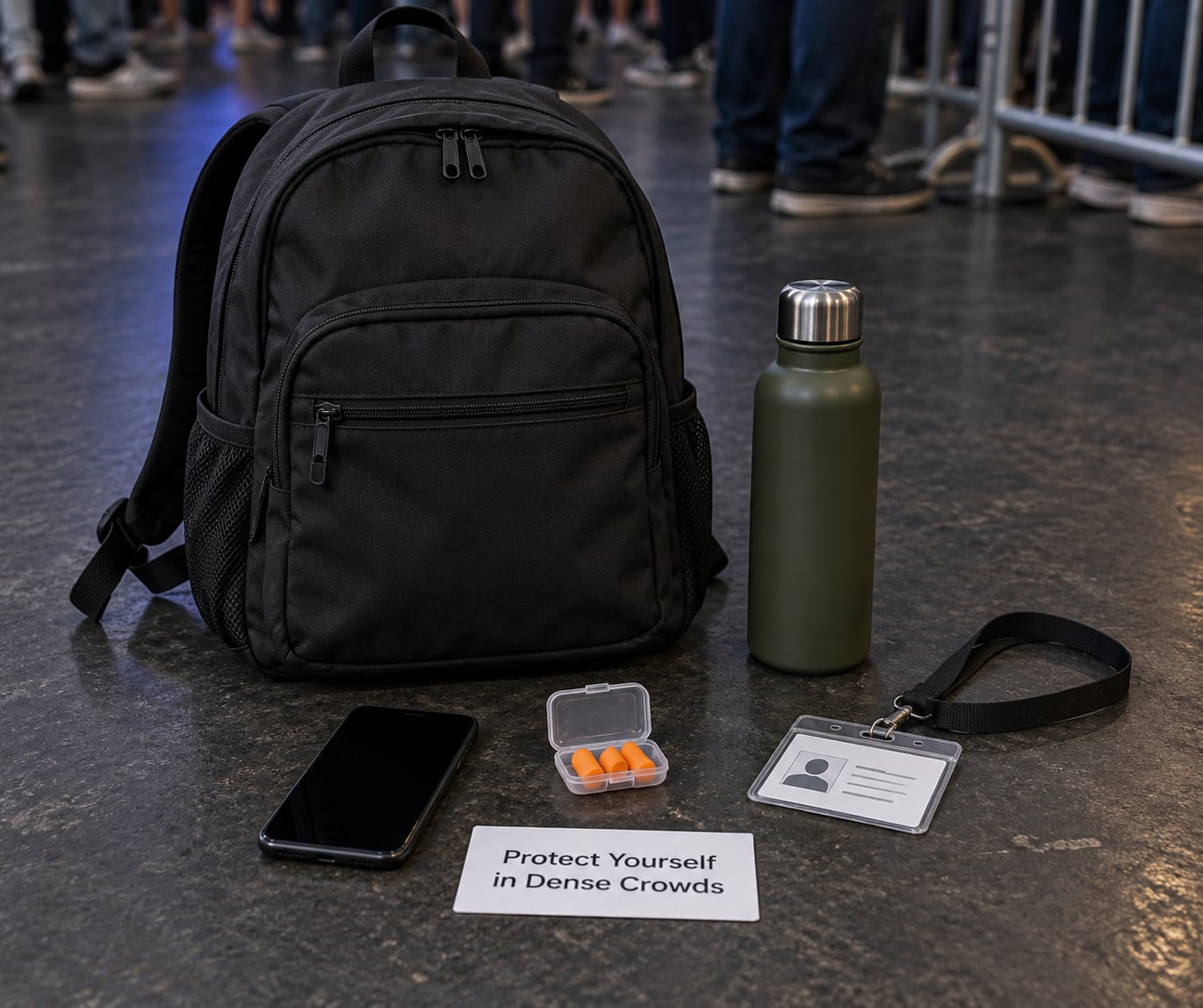
Keep your attention moving. In a packed floor the danger is not one thing happening to you, it is a slow loss of awareness while the crowd thickens. Look behind you occasionally, know which way the barrier at the front of the stage runs, and never face into a dense pack of people with your back to nowhere.
Carry less. A bag worn on the back is a handle for someone to pull, and pockets loaded with keys, a full water bottle and a power bank will drag on you when you need to move fast. Keep the bag zipped and in front of you, and keep your phone somewhere you can get to without stopping.
Stand with your feet about shoulder-width apart and slightly apart from the person in front, so you can step back without stepping on a heel. If the floor starts to move as one body, put your back toward the direction the pressure is coming from rather than trying to push forward through it, cross your ankles if you feel yourself tipping, and keep your arms folded low across your chest to protect your ribs and keep a pocket of air in front of your face.
Notice the first hints of trouble: you cannot lift your arms above your shoulders, you are breathing in someone else’s exhaust, the floor is rocking in waves, or the person in front of you has gone rigid. Those are signals to move toward the edge, not to push in harder.
4. Stay Hydrated and Watch for Warning Signs
Water beats everything else you can do for your own safety. Small sips every ten minutes or so work better than a large gulp when you are overheated, because your body absorbs it steadily. A packaged drink with electrolytes helps in hot weather, and eating something during the set stops the drop in blood sugar that makes people lightheaded.
Alcohol works against you in a packed room. It dulls your sense of how much pressure you are under, it dehydrates you, and it makes you slower to react when someone steps on your foot from behind. A night of heavy drinking in a dense crowd is when most of the avoidable injuries happen.
Know the symptoms that mean you should get out of the crowd rather than push through it. Dizziness when you stand up, a headache that builds, confusion, weakness in your legs, skin that feels hot and dry, nausea, blurred vision, and any difficulty breathing are all reasons to move to thinner air, sit down somewhere and tell a staff member. If symptoms do not settle, or someone passes out, get medical help straight away rather than hoping it passes.
5. Help Someone Who Becomes Overwhelmed
When someone in your group starts to panic, the instinct is to pull them out towards the front of the crowd, which is usually the worst direction. Guide them sideways or backwards towards the edge, along the line of the crowd rather than through it, and keep talking in a normal voice so they can follow your voice over the noise.
Do not become part of a pushing crowd yourself. If a gap opens, take one person at a time and keep the other hand free to protect your own ribs. Never turn your back on the flow of the crowd to pull someone, because that is how helpers get swept.
Ask what they need. Water, a few minutes in fresh air, to sit down, to go outside. If the symptoms are serious, unresponsiveness, chest pain, breathing trouble, or a fall with a suspected head or neck injury, wave down security or a steward and describe the problem clearly. Venue staff carry first aid kits and radios, and they can move a person out of the crowd far faster than you can by pulling at them.
6. Know What to Do in an Emergency
An ordinary crowded floor is not an emergency, and treating it like one creates panic. An emergency is a different thing: crushing where people cannot breathe or fall, fire or smoke, violence, a severe weather event, or a medical collapse. Learn the difference so you react to the second one only.
If something goes wrong, tell the nearest steward or security worker. They have radios and authority over the room, and their instructions outrank anything you work out yourself. Raise your voice, use the words fire, injury or medical, and point at the location. Do not run into the crowd, because a single person running takes others with them.
Know at least two exits from wherever you are standing, and find the first aid station when you arrive rather than when you need it. Keep your phone unlocked and charged so you can call emergency services, and give them the venue name, the stage or section, and the nearest exit marker. In a crush, protect your breathing space and hold your position against the barrier rather than running into the flow. Stay with the people you arrived with.
7. Leave the Venue Safely
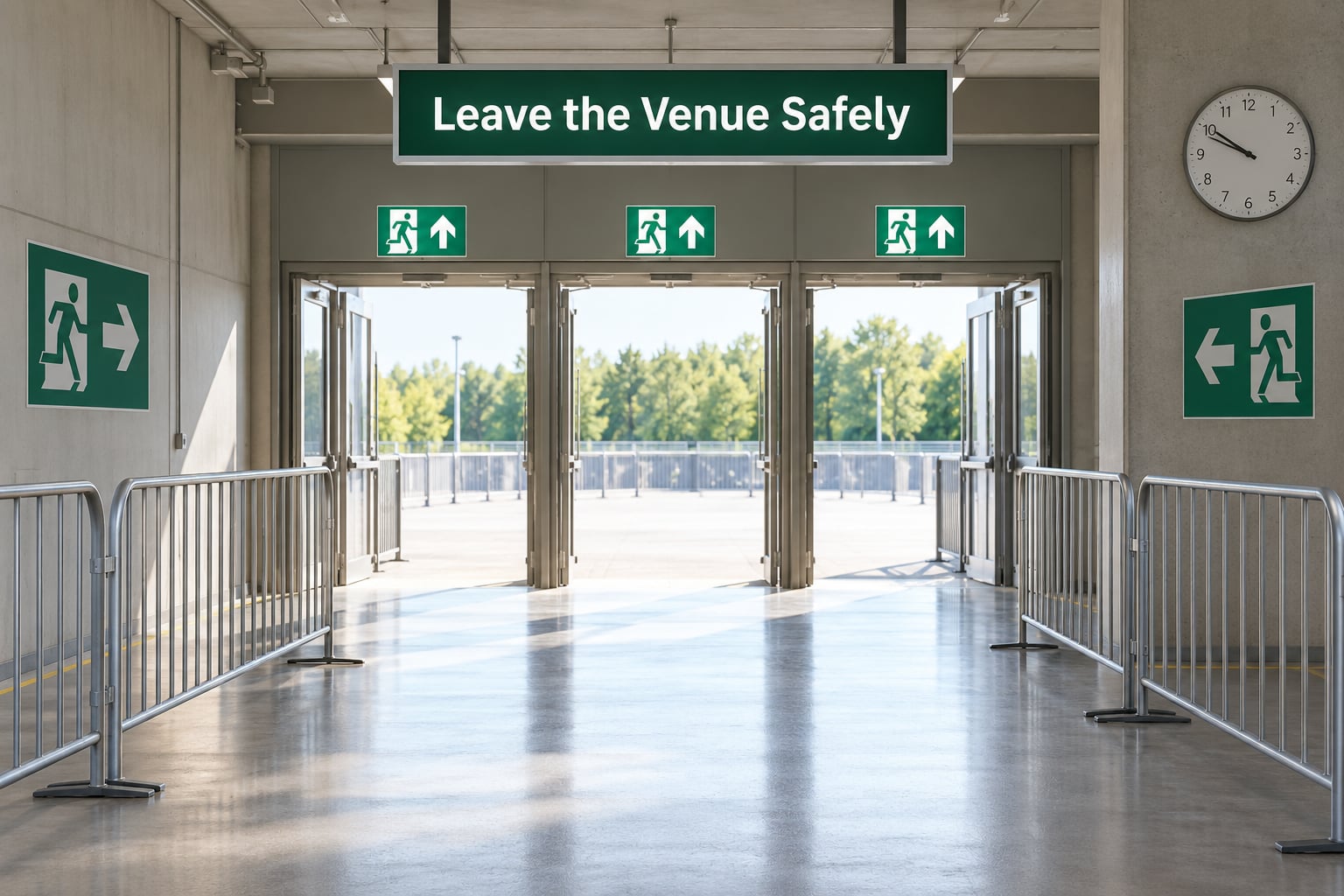
Most crowded-exit injuries happen in the ten minutes after the show ends, when everyone decides to leave at once. The safest move is simply to wait. Sit down, check your pockets, charge your phone on the wall, and let the first wave go. Then stand up, check that everyone with you is present, and leave together at a normal pace.
Take one slower exit rather than the most obvious one by the main doors. Secondary exits and the routes away from the front of the venue clear faster, and the queue you join on the way out is calmer than the one at the main doors. Follow the flow rather than cutting across it, and keep your bag in front of you in the concourse where pickpocketing is most common.
Outside, stay alert until you are at your transport. Areas around venues stay busy and easy targets for long after the last band leaves. Agree where you are heading before the doors open so nobody is standing in a car park trying to work out what happens next.
Common Mistakes
- Pushing back into a dense crowd to regain your view. Once the floor is at capacity, pushing forward gets you nowhere and puts pressure on the people behind you. Move to the side or the back, or accept that you have missed part of the set.
- Disappearing without telling anyone. A quick trip to the bar, the toilet or the merch queue turns into twenty minutes of panic for your friends. Send a message before you go and set a time you will be back.
- Using one person’s phone as the meeting point. A dead battery in a packed room is the most common reason a group never reconnects. Agree a physical spot instead: a specific door, a ticket booth, a food stall you can name.
- Ignoring the early symptoms. Everyone hopes the dizziness passes. If it has not settled after a few minutes in fresh air, tell someone and get help. Passing out inside a crowd is far more dangerous than being the person who walked out early.
- Defaulting to the biggest, brightest exit in an emergency. Everyone heads for the same doors, which is how corridors jam. Take the second route if you have one, and never push a door that has stopped opening.
- Assuming security is there for the music, not the room. Stewards and medics work for the venue and will help you immediately. Use them early rather than trying to handle a bad situation yourself.
Frequently Asked Questions
What should I do if I feel trapped in a concert crowd?
Move sideways or backwards towards the edge rather than pushing forward, and use the people around you to let a gap open gradually. Cross your feet if you feel yourself tipping, keep your arms folded low across your chest, and head for a wall or barrier side rather than the densest part of the floor. Tell the person nearest you that you need space so they know not to lean into you.
What if I lose my friends in a crowded venue?
Stop moving and stay in one spot, because trying to search while walking in a packed floor separates you further. Send a text with your exact location to the person you are looking for, and agree on a physical meeting point such as one named door or a food stall. If the venue has staff, tell a steward that you are separated and ask them to pass the message along.
How early should I arrive at a concert to avoid the biggest crowd?
Arrive twenty to thirty minutes before doors close, earlier for a general admission floor where position matters. Doors usually open well before the headliner, so you get a shorter queue, a calmer entrance and time to find the exits and the first aid station. You also avoid queueing outside in the dark, which is where people get separated and robbed.
What items should I keep in my pockets at a concert?
Phone with live location sharing on, a card, a small amount of cash, your ticket or ID, keys kept flat, a reusable water bottle and one earplug as a spare. Skip heavy objects, loose lanyards and anything that dangles from a strap, because those catch on other people in a moving crowd. A power bank in a front pocket means your phone stays alive for the whole night.
How can I tell whether a concert crowd is becoming dangerous?
Watch your own body first. If you cannot lift your arms above your shoulders, you are breathing other people’s exhaust, the floor is rocking in waves, or you feel a rigid pressure in front and behind you, the crowd is too dense where you are standing. Waves moving in one direction, people falling, and people near you being held up rather than walking are the clearest signs to move to the edge immediately.
When should I leave a concert because I feel unwell?
Leave the crowd and sit somewhere quieter as soon as you notice dizziness, a building headache, nausea, blurred vision, weakness in your legs or skin that feels hot and dry. Get help from a steward or the first aid station straight away if symptoms do not settle within a few minutes, or if you have chest pain, breathing difficulty or someone has passed out. Leaving early is a normal decision, not a failure.
Conclusion
If you do four things, you have covered most of it. Learn two exits and the location of the first aid station when you walk in. Agree a meeting point in words, not a pin on a map, and share your live location with one person. Keep your bag in front of you and your phone charged. And watch your friends and yourself, moving towards the edge at the first sign of dizziness, overheating or a crowd that starts rocking in waves.
If something goes further than that, tell a steward. Venue staff have radios, first aid kits and the authority to move a situation that no individual in the crowd can. Leaving early, or leaving the floor entirely, is a sensible call rather than a ruined night, and the show keeps going without you.