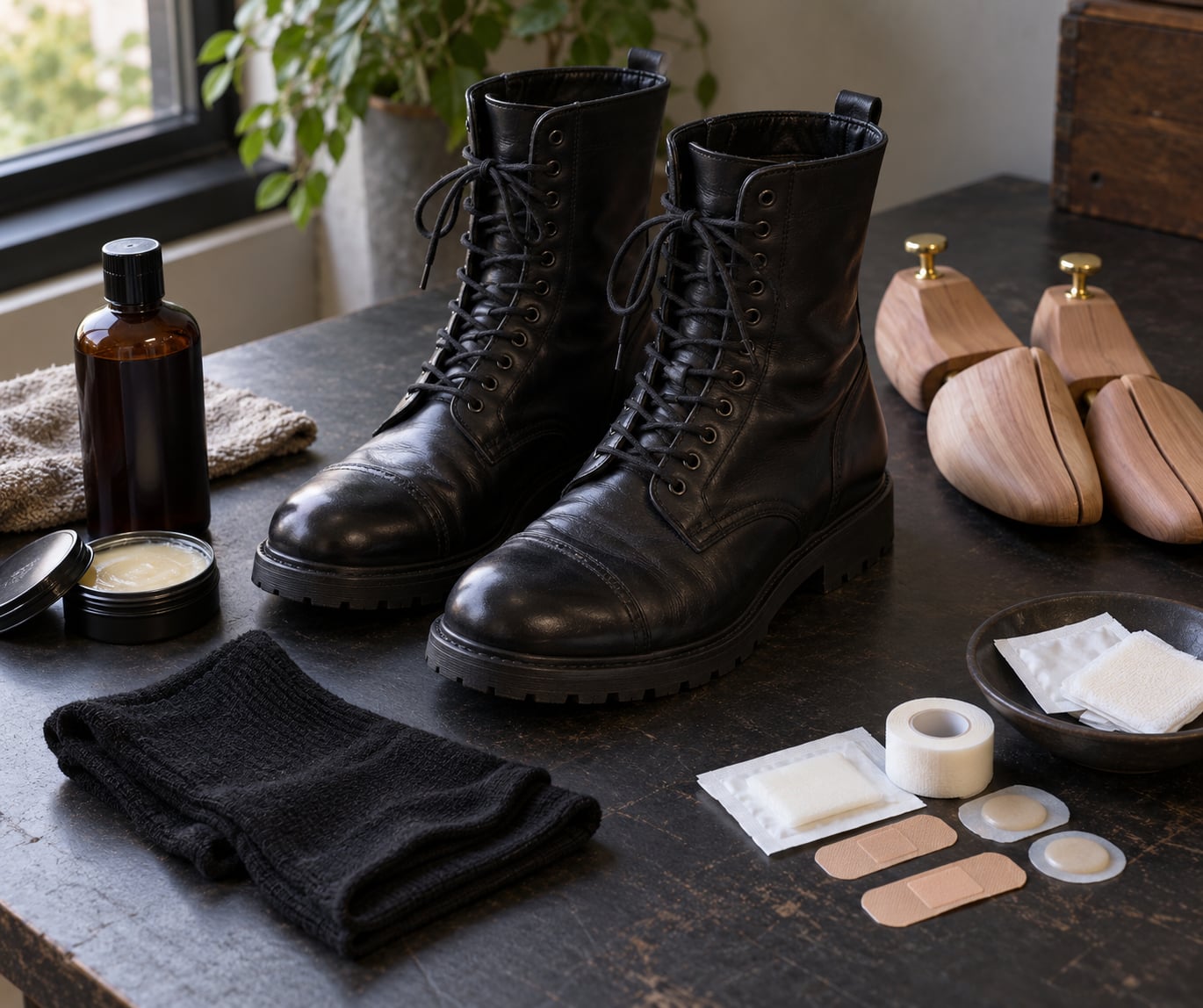
If you have a show date coming up, knowing how to break in leather boots for concerts is what stands between you and an evening of shifting, rubbing and a blister that opens halfway through the set. It is a two-to-six-week job of short, frequent wear sessions plus blister prevention, not an overnight fix. New leather is stiff at the vamp and heel counter, so the goal is to soften those fibers gradually while you protect the two spots that blister first: the heel and the toe box. Start today and keep a backup pair in your bag.
Table of Contents
- What You Need
- Step-by-Step: How to Break in Leather Boots for Concerts
- Start a how to break in leather boots for concerts routine
- Check the fit before adding distance
- Condition the leather correctly
- Wear the boots on a gradual schedule
- Protect high-friction areas
- Run a full dress rehearsal
- Make the final pre-concert checks
- Common Mistakes
- Frequently Asked Questions
- How long does it take to break in new leather concert boots?
- Does leather conditioner help break in new boots?
- Should concert boots slide slightly at the heel while breaking in?
- How long should I wear new boots before a concert?
- Is pain a normal part of breaking in leather boots?
- What socks and blister products work best for concerts?
- Concluding Your Concert-Boot Break-In
What You Need
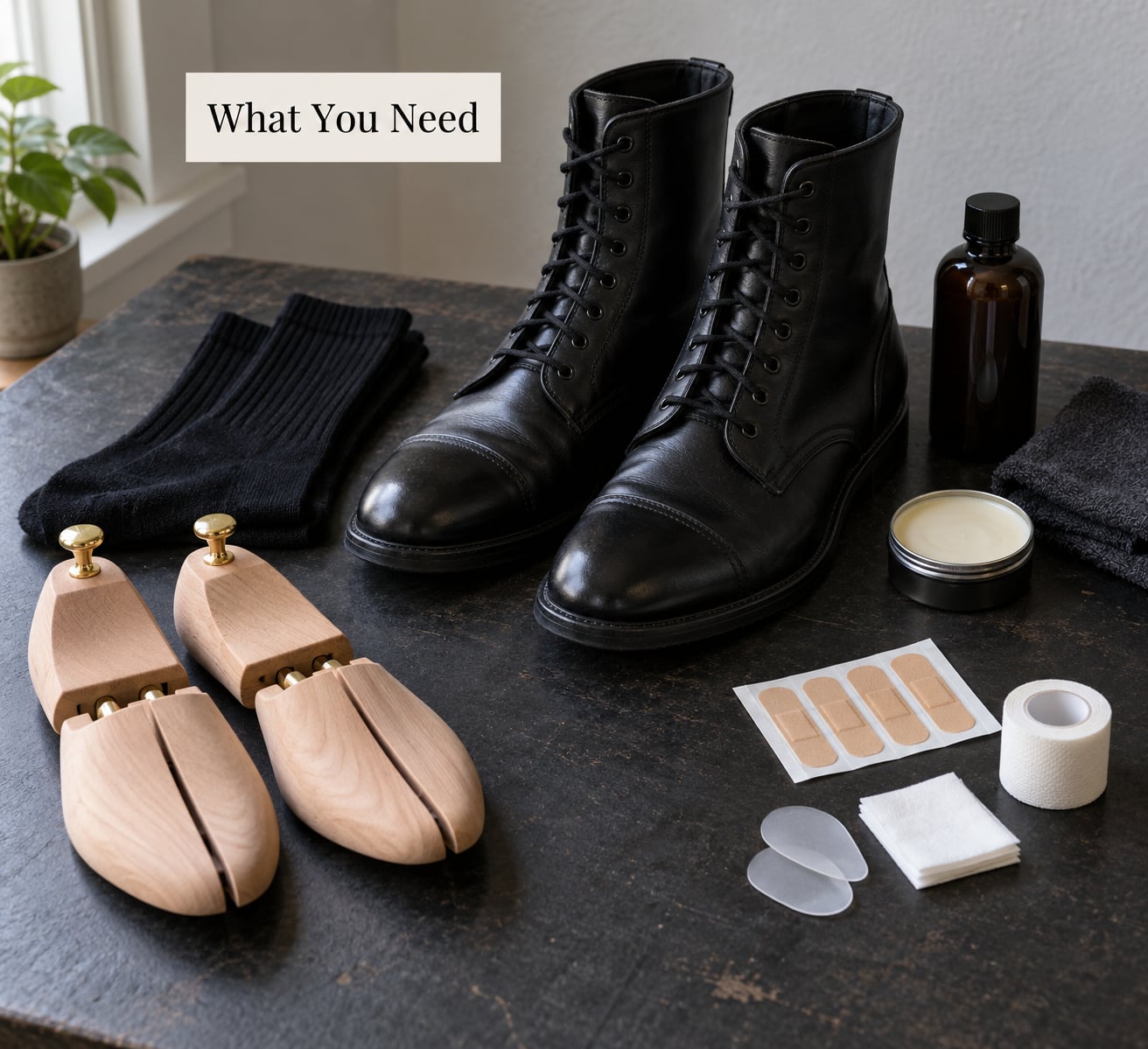
Gather everything before the first session, because interrupting a break-in halfway is what makes boots stiff in new places instead of soft in old ones.
- The boots, plus the pair you can reach mid-show if something goes wrong
- Thin concert socks, worn identically in every session and at the show
- A leather conditioner matched to the finish: cream or balm for smooth full-grain, a suede-safe product for suede or nubuck
- Shoe trees or absorbent paper to hold the shape and draw moisture out after a session
- A cushioning insole if the boot has a thin factory footbed
- A blister kit: adhesive plasters, moleskin or blister foam, heel tape, and a small tube of lubricant
- A tape measure for the fit check
Step-by-Step: How to Break in Leather Boots for Concerts
Start a how to break in leather boots for concerts routine
Set the timeline before you set the schedule. Soft calfskin and Chelsea styles usually give you useful give within two weeks of regular wear; thick full-grain combat and work boots often need four to six.
Write sessions into your calendar the way you would rehearsals. Short daily blocks beat one long weekend session, because leather relaxes with repeated gentle flexing rather than sustained pressure.
That advice matches what wearers report most often in forums: thirty to sixty minutes a day, several days a week. The other common suggestion, just wear them and bleed for two days until they are comfy, is how people end up with ruined boots and ruined shows.
Check the fit before adding distance
Put the socks on and stand in front of a mirror. Your longest toe should sit about a thumb’s width from the front of the toe box, and that width should stay with you after an hour of standing.
Then check the other three things. Lift your heel: if the boot lifts more than a few millimeters, you have heel slip, which is the number one cause of concert blisters. Press the sides: if the vamp pinches across the ball of your foot or your toes go numb, no amount of break-in fixes that, and sizing up makes it worse because your heel loses even more purchase.
Finally, bend your ankle and squat while laced. If the collar cuts the skin at the top of your foot or the sides squeeze, that is a fit problem. Wearers overwhelmingly discourage sizing up to make break-in easier; take the pair back or get them stretched instead.
Condition the leather correctly
Dust off dirt first with a dry cloth, then work a small amount of conditioner into the vamp, the collar and the flex points. Most smooth leathers want a thin cream or balm; suede and nubuck need a product labelled for them, because the wrong one flattens the nap and leaves a permanent dark halo.
Let the leather sit until it is dry all the way through, not just on the surface. Wipe off anything you did not intend to apply.
Two mistakes to skip: saturating the boot, which softens it so much that it loses shape and support by showtime, and using too much product, which attracts dust and can stiffen the surface as it dries. Conditioner helps leather move and flex more easily; it does not shorten the calendar on its own.
Wear the boots on a gradual schedule
Move up in stages and only when the last stage felt boring rather than painful. Start with thirty minutes seated indoors, which flexes the vamp without loading your feet.
Then move to standing indoors, then to walking, then to stairs, and finally to a long rehearsal with your full kit. Add time in roughly half-hour steps. About ten wear sessions over three weeks leaves most leather concert boots workable; fewer than five and you are gambling.
Your signal to stop is a hot spot that sharpens rather than fades, numbness in your toes, or a burning sensation at the heel. If the boot springs back and nothing aches the next morning, add another session.
Protect high-friction areas
Start with socks. Wear the thin pair from home, not cotton everyday socks, which hold sweat against your skin and soften the heel leather so it grips less. Merino or other moisture-wicking concert socks keep the area drier and cooler through a four-hour standing set.
Relace the boot with a heel-lock pattern before you leave the house: loop the top lace back through the lower eyelets, then tie, which pulls the heel down and removes most of the movement that causes heel blisters. Wearers call it an instant fix, and it costs nothing.
Add cushioning where you feel pressure. A gel heel pad or a piece of moleskin over the hot spot handles a lot of work. Gel pads for the ball of the foot help during long standing sets, and an insole replaces a flat factory footbed for most of the crowd-fatigue problem.
Put blister plaster on before the blister appears, over clean dry skin, and keep the lubricant for anything that rubs mid-show. Do not tape so thickly that you lose the boot’s grip, since sliding is what puts your heel through a blister in the first place.
Run a full dress rehearsal
Plan the one session that actually matters: wear your intended outfit and your concert socks for a rehearsal, a long day out, or a show of a smaller band.
Stand and move for the length of a real set, stairs included, and skip sitting for most of it. That is the only way to find the spot you have never hit before, because heel and toe problems usually show up once you have been standing for a couple of hours.
Take the boots off afterwards and look. Check for red patches, a tender area on the ball of the foot, an already-broken heel blister, and numbness that has not faded an hour later. Delayed soreness the next morning is your clearest signal that the schedule is ahead of the leather.
Make the final pre-concert checks
The night before, run a short list. Boots fully dry, no damp patches inside from the last session. Laces untangled and unbroken, eyelets intact. Heel counter still firm and standing on its own, toe box not creased to collapse, no lifted or separating sole edge.
Pack thin socks, a spare pair of laces, blister plasters, heel tape and moleskin in the kit bag, plus the backup footwear and a change of socks. Know the exit route, and set your own limit: if your foot goes numb or a heel blister opens early, you leave the pit and get it dressed. Two hours on a comfortable side beat one night on crutches.
Feet also swell over a long standing show, often enough by the third hour to make a snug fit feel wrong. Lacing that leaves a little room at the top without letting the heel lift is the practical compromise.
Common Mistakes
Soaking the boots in water. Water softens leather fast, but wearers who tried it report warped leather that never fit properly again. Worn on a muddy festival field, the same boots are worse, because soaked leather and mud damage a break-in that is not finished.
Wearing them for a whole show on day one. Unbroken leather plus a four-hour standing set plus a crowd is how people end up bleeding from their feet for days. Wear them properly first.
Treating heel slip as normal. Some movement is fine while the leather settles, but if your heel lifts clearly, no break-in fixes it. Fix it now with heel-lock lacing or get the boots stretched.
Over-conditioning. Extra product does not equal extra softening. It softens the surface, dulls the finish and can leave the leather loose and unsupported by the time you need structure.
Wearing thick everyday socks. Thick cotton socks add volume and hold moisture, and the extra room makes the heel slip more. Break in in the socks you plan to wear.
Ignoring pain. Discomfort that eases during a session is part of the process. Sharp pain, numbness or pain that is worse the next morning is not, and pushing through it is how blisters become infections.
Relying on blister pads after a blister has formed. Once skin is broken, a pad keeps the area moist and rubs. Treat it early with a clean dressing, or better, tape the spot before it opens.
Frequently Asked Questions
How long does it take to break in new leather concert boots?
Soft calfskin and Chelsea styles usually become wearable after two weeks of regular sessions; thick full-grain combat and work boots often need four to six. Count wears rather than days: roughly ten sessions spread over three weeks leaves most leather boots comfortable enough for a standing show. Fewer than five wears and you are taking a chance.
Does leather conditioner help break in new boots?
Yes, mainly because it makes the leather surface flex more easily and less prone to cracking at the vamp and collar. It does not reshape the boot or replace wear time. Use a thin layer of a cream or balm suited to the finish, let it dry fully, and avoid saturating the leather.
Should concert boots slide slightly at the heel while breaking in?
A small amount of movement is normal while the leather settles, but if your heel visibly lifts when you lift your foot, you have heel slip, and it is the most common cause of concert blisters. Use heel-lock lacing to pull the heel down, or have a cobbler stretch the heel area. If the boot is loose enough to need a full insole to stay on, the size is wrong.
How long should I wear new boots before a concert?
Wear them for a full dress rehearsal of the same length as the show, in your concert socks and outfit, at least a week before the date. If that session leaves no hot spot and no soreness the next morning, you are in reasonable shape. If you only have a few days, wear the boots to a smaller event first rather than the main show.
Is pain a normal part of breaking in leather boots?
A dull, even tightness that eases while you walk is normal and expected. Sharp pain, burning at the heel, numbness in your toes, or soreness that is worse the next day are warning signs, not progress. Stop the session, protect the spot, and give the boots more sessions rather than more hours.
What socks and blister products work best for concerts?
Thin moisture-wicking concert socks, worn from the first session onward, keep sweat away from the skin and stop the heel leather from softening into slip. Pack blister plasters, moleskin or blister foam, and heel tape, and apply them before a hot spot opens rather than after. A small tube of lubricant helps with any spot that rubs mid-show.
Concluding Your Concert-Boot Break-In
Start with thirty minutes indoors in your concert socks, several days a week, and extend a session only when the last one felt easy. Condition once at the beginning, tape and relace the heel before it becomes a problem, and finish with a full dress rehearsal before you rely on the boots for a real show. If you only just found the boots and the show is this weekend, wear the backup pair and give the leather the time it needs.