An artist presale is a limited sales window where a slice of a show’s tickets is released to a specific group first, such as fan club members, credit card holders or the venue’s mailing list, before the rest goes on sale to everyone. Understanding how concert presales actually work comes down to one thing: presales control when you can buy, not what you pay or which seats you land.
That single distinction explains most of the confusion fans run into. A countdown clock on a ticketing site looks like a discount window. It is not. It is a queue with a smaller pool of tickets and a shorter clock.
Table of Contents
- What Is a Concert Presale?
- How Concert Presales Actually Work From Announcement to Show
- How the waiting room decides who gets in during a presale
- Why Are Some Tickets Held Back for Presales?
- Do Presale Codes Give Fans Better Seats?
- What Happens During Checkout?
- Presale vs General Sale: What Is the Difference?
- UK and US presale structures side by side
- How to Improve Your Chances During a Concert Presale
- Common Concert Presale Problems and What They Mean
- The code is rejected
- The page says sold out
- Your account was paused mid-queue
- No confirmation email
- The event was cancelled or rescheduled
- The price is higher than expected
- Frequently Asked Questions
- Are presale tickets cheaper than regular tickets?
- Why did a concert presale sell out before the general sale?
- Can you use a presale code at the general on-sale?
- Do presale codes guarantee better seats?
- What should I do if a presale code does not work?
- Are ticket fees included in the presale price?
- Conclusion
What Is a Concert Presale?
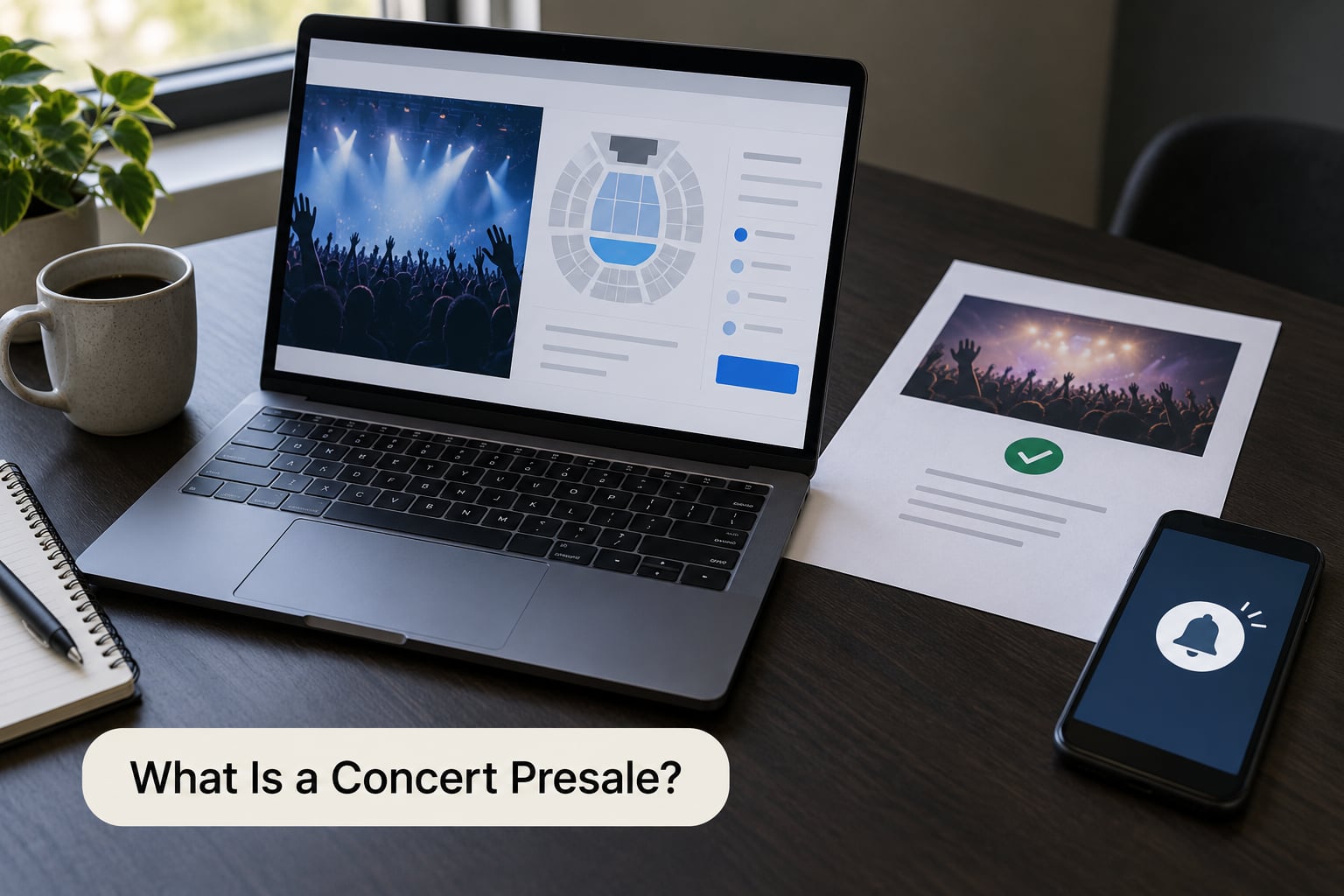
A concert presale is an early sales window in which tickets held back from general sale are offered to a defined group before the public on-sale date. A fan who qualifies can enter the ticketing site during that window and buy from the reserved pool. Everyone else waits until the general sale opens and buys from whatever is left.
Presales exist because promoters want a smoother on-sale. Thousands of people hitting one ticketing page at the same second is how sites crash and how long queues turn into sell-outs. Splitting demand across several earlier windows spreads the load and gives the promoter time to see how a show is selling before the public buys.
There is also a reward element. Fan club members and mailing list subscribers helped build the artist’s audience, so they get first look. Card and carrier partners pay for the privilege, so their customers go near the front. Nothing about a presale requires the ticket to cost less.
How Concert Presales Actually Work From Announcement to Show
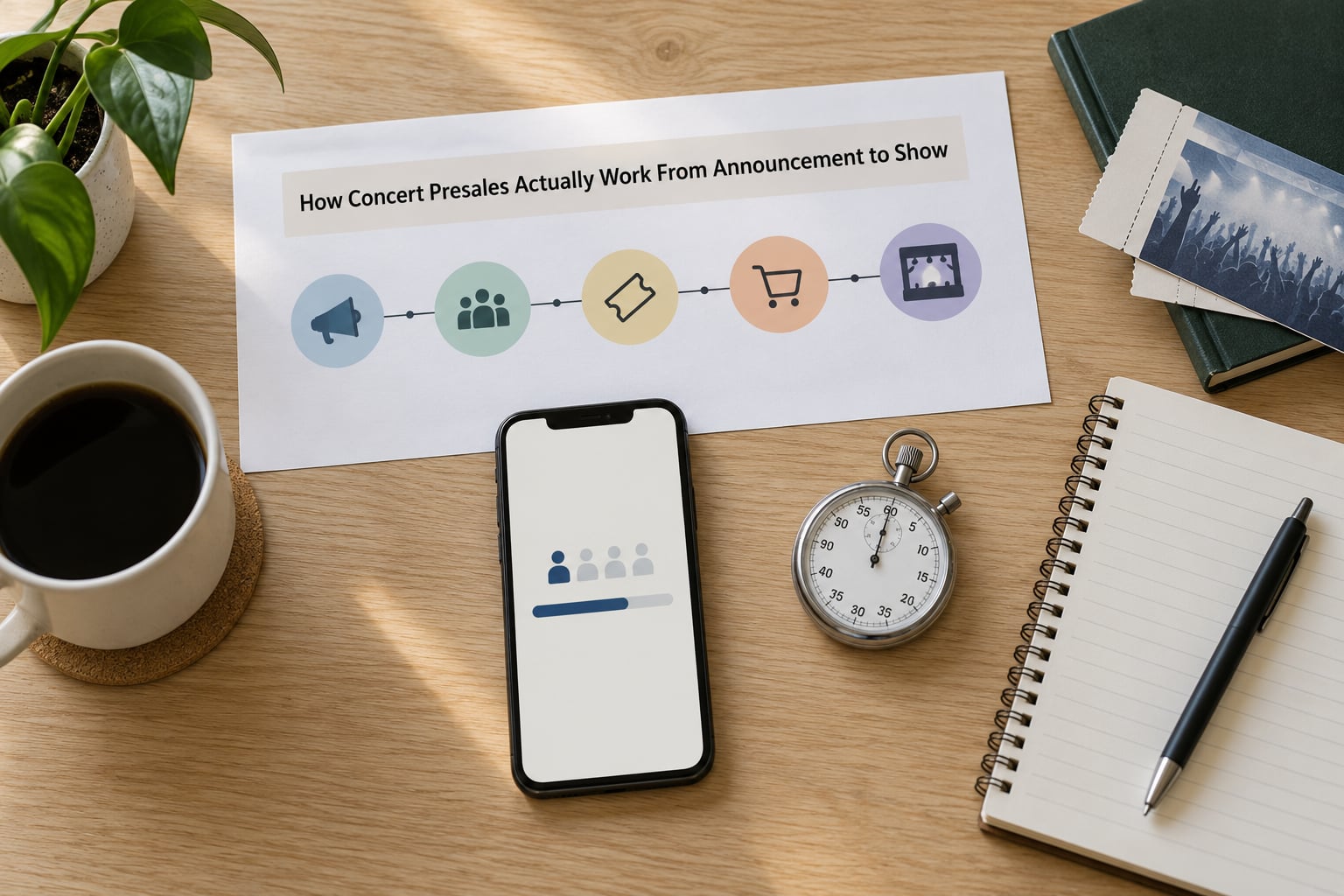
Presales run in a predictable order, and each stage happens before the next one. Here is the sequence from the moment a tour is announced to the night of the show.
- The artist’s team and promoter agree the routing and announce the tour with an on-sale date.
- The venue’s inventory is divided into blocks held for presales and blocks released publicly.
- Registration opens for fan clubs, mailing lists and card programmes so codes can be issued.
- Each window opens on its own date, often at a local time rather than a universal one.
- Fans enter through a waiting room, then a timed purchase window.
- Checkout runs for a limited time, with tickets held in the cart until payment clears.
- Unsold tickets from each window roll into the next window or the general sale.
- On show night, no-shows and reissues can add tickets back through official channels.
| Stage | What happens | Why it matters to you |
|---|---|---|
| Announcement | Routing and general on-sale date go public | This is when alerts and mailing lists start mattering |
| Allocation | Inventory is split into presale and public blocks | Decides how much is available on each date |
| Registration | Fan clubs and card programmes open sign-ups | Joining now can still get you into a later window |
| Window opens | Eligible fans get a code or early link | Codes are unique and usually time-limited |
| Waiting room | Everyone lands in a queue and gets a purchase time | Order in the queue decides order of access |
| Checkout | Tickets are held in cart while you pay | Cart timers are short and unforgiving |
| Public sale | Remaining inventory opens to everyone | Often includes presale leftovers |
| Show week | No-shows and resale returns appear | Official returns beat resale prices |
How the waiting room decides who gets in during a presale
The waiting room is not a random punishment. It is a queue that assigns you a purchase time, usually a small slice of time, and holds your place while you wait. Fans on r/Illenium describe logging in half an hour early and sitting in the room until the window opens, while an r/GaylorSwift thread has people reporting a login time and a separate assigned purchase time afterwards.
That distinction matters. It is not first-come-first-served for the seats. It is first-come-first-served for your turn, and then inventory is still live for whoever holds a slot. r/beyonce regulars are blunt about the outcome: expect the site to strain and the good seats to go quickly.
Some events skip the queue entirely and use a ticket lottery instead, where you enter your details during a window and results are emailed. If your order confirmation says lottery, no amount of refreshing will help.
Why Are Some Tickets Held Back for Presales?
Not every seat in the house is available to every window. Venue capacity is the hard ceiling, and a typical arena night is built up from several named owners of inventory, including the artist, the venue, the promoter, sponsors and package buyers.
Beyond those formal blocks, the promoter and the ticketing platform usually reserve a slice of the best seats so that early windows have something worth competing for. Without that, the artist and fan club windows would look exactly like the general sale and nobody would bother entering early.
Held-back inventory is not the same thing as tickets released later. Held back means withheld from the public on sale date. Released later means additional inventory arriving later in the tour, usually from no-shows at earlier shows, sponsor returns or production holdbacks being put back on sale.
On a small club show the arithmetic looks different from a stadium tour. A 1,500-cap room with a handful of held-back seats can genuinely sell out inside a presale window. On a 19,000-seat arena show, a busy presale usually leaves plenty for the public, though the good seats are already spoken for.
Do Presale Codes Give Fans Better Seats?
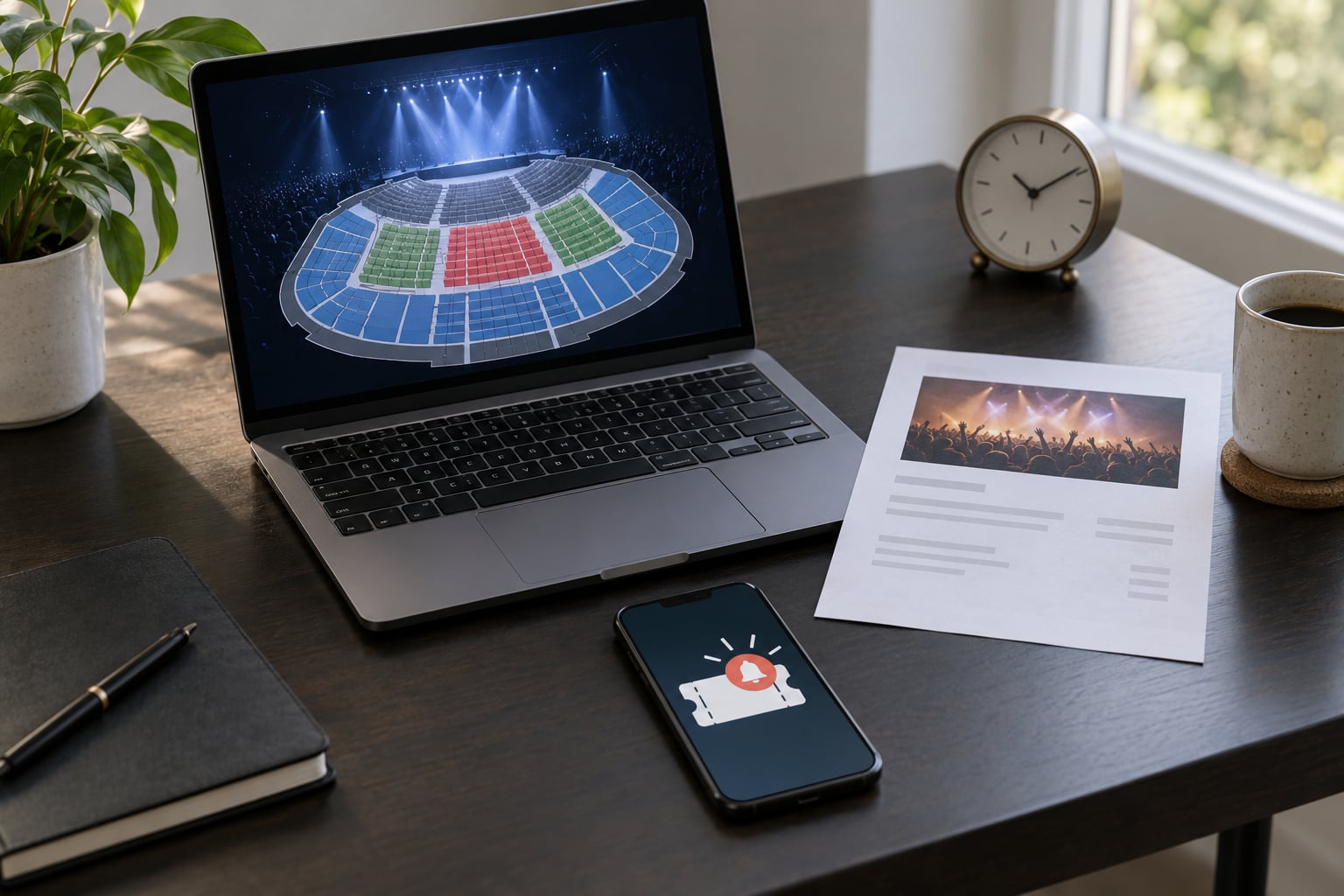
A presale code changes when you can buy. It does not upgrade what you can buy. The seat map during an artist presale often looks full, with blocks already marked as unavailable, and fans on r/futureislands asking whether early access means better placement usually get told the honest version: early helps you get a seat, not automatically the best one.
General admission floors are the clearest case. Whoever is inside the barrier at the front has the good spot, and entering 36 hours early versus six hours early does not change that. Assigned seating venues work differently, because a seat is a seat once you hold it, and the earlier window simply widens the pool of seats you can choose from.
A few categories also sit outside normal access. Accessible seating usually has its own arrangement and its own allocation, and VIP packages, meet-and-greets and side-stage bundles are sold as separate products that may or may not share a presale window with standard tickets.
Resale inventory is the other variable. Tickets that fan out on official resale during a presale can appear at a price the original buyer never set, which is why a fan who waited and watched listings during a presale sometimes saw more expensive seats than the ones on sale that morning.
What Happens During Checkout?
Checkout is where most fans lose tickets they had already won. Once you have a purchase slot, you select your tickets, your payment method is authorised and your seats are held while you complete the order.
Cart timers are short. A held cart can expire in as little as a few minutes, and the seat map refreshes underneath you. Do not spend that time comparing with a second browser tab, because the inventory you left behind is gone the moment the timer lapses.
Fees appear at checkout, not at the presale announcement, which surprises people who assumed a presale meant a lower number. Most events also cap how many tickets one person can buy in a single transaction, commonly somewhere between four and eight, and that cap usually applies per order rather than per person over the whole window.
Payment pre-authorisation causes its own confusion. A pending charge on your card is not a completed purchase, and one failed attempt can lock an account for review. The cleanest path is one card, one order, no retries.
Presale vs General Sale: What Is the Difference?
The general sale is open to anyone with a link and no code, and it sells everything the earlier windows did not take. The differences that matter are timing, eligibility, seat range and price.
| Factor | Presale | General sale |
|---|---|---|
| Who can buy | Fan club, card, venue list, carrier or promoter customers only | Anyone |
| Timing | Opens 24 to 72 hours or more before the public date | Opens on the announced on-sale date |
| Seat range | Usually the best available blocks, minus any already held | Whatever the earlier windows left |
| Pricing | Face value plus fees in most cases | Face value plus fees, sometimes under dynamic pricing |
| Queue | Smaller pool, often timed or lottery based | Much heavier, usually a long virtual queue |
| Sell-out odds | Can sell out on small shows and good seats on large ones | Frequently sells out quickly after a busy presale |
| Ticket limit | Usually 4 to 8 per order | Same cap, enforced per transaction |
UK and US presale structures side by side
British shows often include an O2 Priority window and a local onsale at the venue before the artist’s own presale, while US tours more often run card and carrier windows first and treat the venue list as a smaller local tier. Same principle, different ordering, and the ordering is usually printed in the tour announcement.
How to Improve Your Chances During a Concert Presale
Get your accounts in order long before the tour is announced. Fan clubs, artist mailing lists, venue lists and cardholder programmes all take time to activate, and joining during the window itself usually means missing it. r/BillyStrings threads are full of fans realising the week of the sale that the code went to an address they abandoned years ago.
Add the senders to your safe list and check spam the morning of. The confirmation email often arrives with a code that only works through the original link, so if you searched the site manually instead of clicking the email you may be looking for an entry point that is not open to you.
Check the on-sale time and convert it to yours. Promoters routinely publish 10am local venue time, and on a transatlantic tour leg that is a very different hour for you. Two independent sources agreeing on the timestamp beats one.
Know your limit before you start. Fans on r/Concerts who bought in a group had a third person drop out mid-checkout, which returned the tickets to the pool and lost the spot. Decide who is buying what before the slot starts.
Use the official link only. Fake code emails and direct messages offering presale access at a cut are a recurring problem in fan communities, and no legitimate platform asks for payment to release a code.
Common Concert Presale Problems and What They Mean
Most presale problems have an ordinary explanation, and knowing which one you hit saves you from buying twice or assuming you were blocked on purpose.
The code is rejected
Usually the wrong window, an expired code, or a code typed into the general sale link. Codes are tied to a specific window and often to the exact email address that received them.
The page says sold out
The specific block you were looking at is gone, which sometimes means the event has additional holds not yet released. Check back before the general sale rather than assuming the whole show is gone.
Your account was paused mid-queue
Automated fraud checks trigger on rapid account creation, unusual payment details or too many attempts. r/BillyStrings users report being locked out this way. Having your account verified and your address consistent before the sale reduces the odds.
No confirmation email
Check spam, promotions and any secondary address on the account, then confirm the card charged. In most ticketing systems a completed order appears in your account even if the email never lands.
The event was cancelled or rescheduled
Refunds normally go back to the original payment method automatically. Rescheduled dates usually come with a limited refund window that is easy to miss, so read the notification properly instead of the headline.
The price is higher than expected
Dynamic pricing means the face value can rise as a window progresses, and fees are added at checkout. A ticket bought in the last hour of a busy presale can cost more than the same seat bought during the general sale the previous week.
Frequently Asked Questions
Are presale tickets cheaper than regular tickets?
Usually not. A presale is an access window, not a discount, so the face value is normally identical to the general sale price. What changes is timing and competition. Some events use dynamic pricing, which can make a late presale ticket cost more than an early one, and fees are still added at checkout either way.
Why did a concert presale sell out before the general sale?
The window only had a limited block of inventory, often the best seats, and that block went fast. Small club shows can genuinely sell out in a presale. Larger arena shows usually sell out the good seats but leave plenty behind, and those tickets return to the pool for the general sale along with any no-shows released later.
Can you use a presale code at the general on-sale?
No. A presale code only works inside its own window, and once that window closes the code expires. The general sale does not need a code, but it also does not accept one, so the two are separate entries to the same ticketing system.
Do presale codes guarantee better seats?
They give you first pick of whatever is released, which helps on assigned seating, but they do not guarantee anything. On general admission floors whoever reaches the barrier first wins the view regardless of purchase time. Accessible seating and VIP packages follow their own rules and allocations.
What should I do if a presale code does not work?
Check you are using the original link from the email, on the right date and in the right window. Codes are tied to the address that received them and expire when the window closes. If it still fails, check the account email matches and contact the ticketing platform rather than a reseller.
Are ticket fees included in the presale price?
No. The advertised presale price is face value, and facility, service and delivery fees are added at checkout. That is one reason the total in your basket looks higher than the number on the tour announcement, and it applies to the general sale in exactly the same way.
Conclusion
Start with the official announcement and write down every window it lists, in order, with the times converted to yours. From there, understanding how concert presales actually work is a checklist: an active fan club or mailing list subscription, a verified ticketing account, a card ready to pay with, and a reminder set for the window that applies to you.
Everything else is patience and timing. Presales reward being organised early, not being fast at the moment the clock hits zero.