The cheapest concert ticket is rarely the one with the smallest number on it. The price you actually pay is built from a face value, a pile of per-ticket and percentage fees, and sometimes a resale markup on top, and the gap between the sticker price and the checkout total is often wider than any discount you can find. If you know how to avoid overpaying for concert tickets, you control three things instead of hunting for a magic deal: when you buy, which platform you buy through, and how high the all-in number is allowed to go before you walk away.
One question comes up more than any other: do tickets get cheaper closer to the concert? Sometimes, and the honest answer is that waiting is a tool for underplayed shows and a trap for sold-out arena and stadium dates. Everything below runs in the order that actually protects your budget.
Table of Contents
- What You Need
- How to Avoid Overpaying for Concert Tickets Step by Step
- 1. Confirm the Event, Venue, and Ticket Package
- 2. Set an All-In Budget: How to Avoid Overpaying for Concert Tickets
- 3. Check the Official Primary Seller First
- 4. Compare the Final Cost, Not the Headline Price
- 5. Understand What Each Ticket Tier Includes
- 6. Use Verified Resale Instead of Unknown Sellers
- 7. Watch the Price, but Do Not Chase a Fake Deadline
- 8. Know When the Best Deal Has Passed
- 9. Complete Checkout on the Official Site
- Common Mistakes
- Frequently Asked Questions
- Why are concert tickets more expensive than their face value?
- Is official resale more expensive than buying from a scalper?
- Should I buy concert tickets as soon as they go on sale?
- Do tickets get cheaper closer to the concert?
- Are cheap floor tickets guaranteed to have a better view?
- What should I do when a show sells out?
- Conclusion
What You Need
Before any on-sale clock starts, you need five things in place, and four of them take ten minutes.
- A confirmed event. Artist, date, venue and city, checked twice. Tour routing gets rescheduled, and support acts get swapped.
- Access to the official ticket page. A saved account, verified email, and your presale code already attached if the tour has one.
- A realistic all-in budget. The checkout total, not the face value, because that is the number your bank will charge.
- A stable payment method. A credit card with the details already saved, so you are not typing card numbers while a queue counts down.
- Comparison time. Ten quiet minutes during the sale, not five frantic ones.
Set those up before the presale announcement. Fans routinely describe creating accounts and saving payment details on every platform in advance as the single most useful habit they have, because a rejected payment step is how good seats disappear.
How to Avoid Overpaying for Concert Tickets Step by Step
1. Confirm the Event, Venue, and Ticket Package
Start by reading the actual listing rather than the headline. Look for the section, row and seat, whether the ticket is reserved or general admission, and what the listing claims to include.
Premium and VIP packages are where wording does the most damage. A package can bundle a ticket with a merch credit, a commemorative laminate, a poster or a pre-show event, and the bundle is priced well above the seat inside it. The merchandise is not free value if you would not have bought it anyway.
Check the same for restricted-view listings. Obstructed-view seats sell at a discount on purpose, and the discount is the information: the view is genuinely worse.
2. Set an All-In Budget: How to Avoid Overpaying for Concert Tickets
Decide the maximum you will pay per ticket, including everything, before you open a single resale listing. This is the check that saves the most money, because it replaces panic with a decision made in advance.
Build the ceiling in layers: face value, per-ticket service fee, percentage fee, facility fee, tax, delivery or transfer charge, membership or club fee if you are not already a member, and any upgrade you might be tempted by at the last step.
Write the number down. Fans who cap the night at a fixed figure report spending far less overall, not because they found cheaper tickets, but because they walked away from a listing that broke the cap by a small margin and a bigger number showed up two minutes later.
3. Check the Official Primary Seller First
The primary seller, whether that is the venue, the artist, the promoter or the named ticketing partner, is the only place where face-value tickets actually exist. Everything else is a resale of somebody’s face-value ticket, sometimes with several fees stacked on the way through.
Check inventory and waitlists before anything else. A waiting room or queue means demand is high, which usually means the primary allocation is where the best value sits.
Be careful with lookalike pages. Plenty of search results and social posts lead to a fan-run or affiliate page that looks official and redirects you to a resale listing. The genuine article ends in the venue or artist’s own domain, and a presale code only works where the tour issued it.
4. Compare the Final Cost, Not the Headline Price
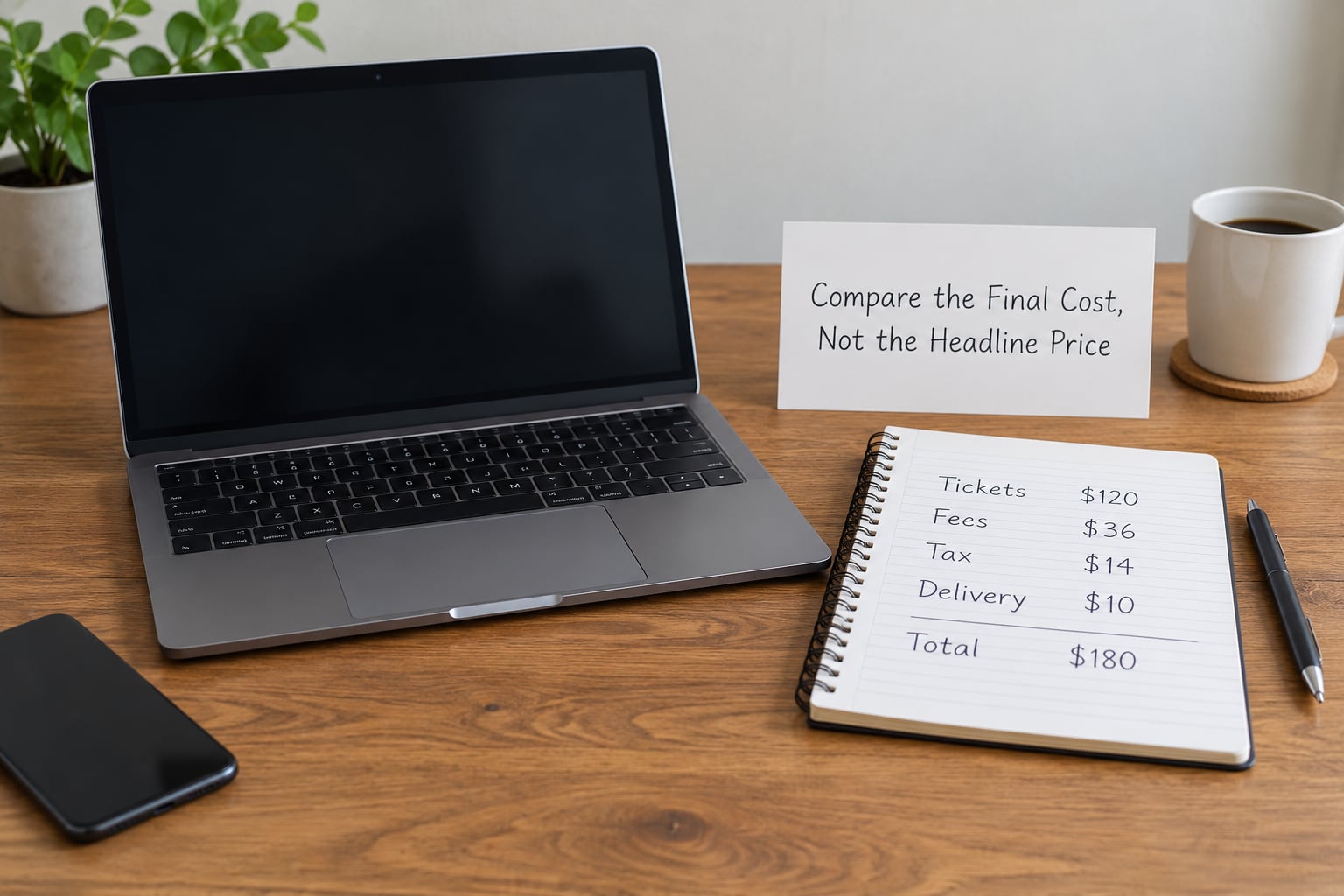
Two fees do most of the damage. A flat per-ticket fee punishes cheap seats, so a lower-priced ticket can carry a higher percentage load than a premium one. A percentage fee scales with the ticket and can add a sizeable amount to a floor seat without looking like anything unusual.
Facilities fees and taxes are added on top again. This is the fee pattern fans describe most often, and it explains why the same platform is described as cheap in one thread and expensive in another: the load depends on the event and the seat price, not on the brand name.
To reduce them, buy the cheapest eligible ticket on the primary seller, skip the membership upsell unless you would join anyway, choose digital transfer over physical shipping, and never buy one ticket per order if the platform allows a quantity in a single transaction. If a fee cannot be avoided, accept it deliberately rather than discovering it at the last click.
5. Understand What Each Ticket Tier Includes
Tier labels are not standardised, which is exactly why people overpay. A floor ticket is not automatically a better view than a lower-bowl seat, and the cheapest listing in a resale feed is often a nosebleed in a section the seller forgot to name.
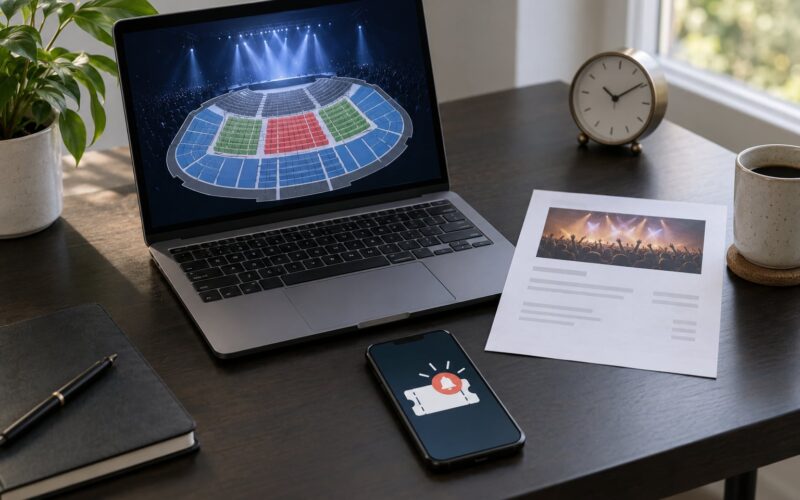
Learn the vocabulary for the venue you are visiting. General admission means standing room with no assigned seat. Reserved seating gives you a numbered seat. Floor, pit and rail positions vary by stage size. Lower bowl sits closest to the stage, upper level and balcony sit high with a longer sightline distance, and the cheapest tier is usually at the back or the sides.
Read the row letter carefully. Row A is front, and later letters move away. Obstructed view, limited view and side view all mean part of the stage is behind a structure or another section. If the listing gives no section or row at all, assume the worst and check the seat map on the primary seller’s page before paying.
6. Use Verified Resale Instead of Unknown Sellers
Once the primary allocation is gone, move to the exchange the ticket came from, or to an established resale platform with visible buyer protection. An official exchange or guaranteed-resale programme means the ticket is either guaranteed or your money comes back, which is a meaningful difference when the alternative is a stranger’s screenshot.
Resale tickets usually arrive as a mobile transfer into your account rather than as a new purchase, and the original purchase price and delivery details are often not visible to you. Fans on concert forums report that asking for a transfer into the primary ticketing account, where it is possible, is the step that avoids surprise fee penalties and clarifies what you are holding at the gate.
Pay by credit card so you keep dispute rights, and check that the platform shows a refund or guarantee policy for a cancelled or rescheduled show before you hand over money.
7. Watch the Price, but Do Not Chase a Fake Deadline
Checking resale listings a few times a week for a couple of weeks is a reasonable habit. Artificial urgency is not, and it has three tells.
- A countdown that resets when you open the page again.
- Listings that claim to be almost gone, then reappear identically at the same price an hour later.
- Message threads that move you off-platform to another app to “hold” the ticket.
A widely-cited attempt to grab extra tickets by refreshing the ticket page during a queue does not work. The system counts your place by a token issued when you enter, and reloading simply consumes a new place. The same goes for running multiple devices and browsers: the practical outcome is duplicate pending orders and a card that gets declined twice.
8. Know When the Best Deal Has Passed
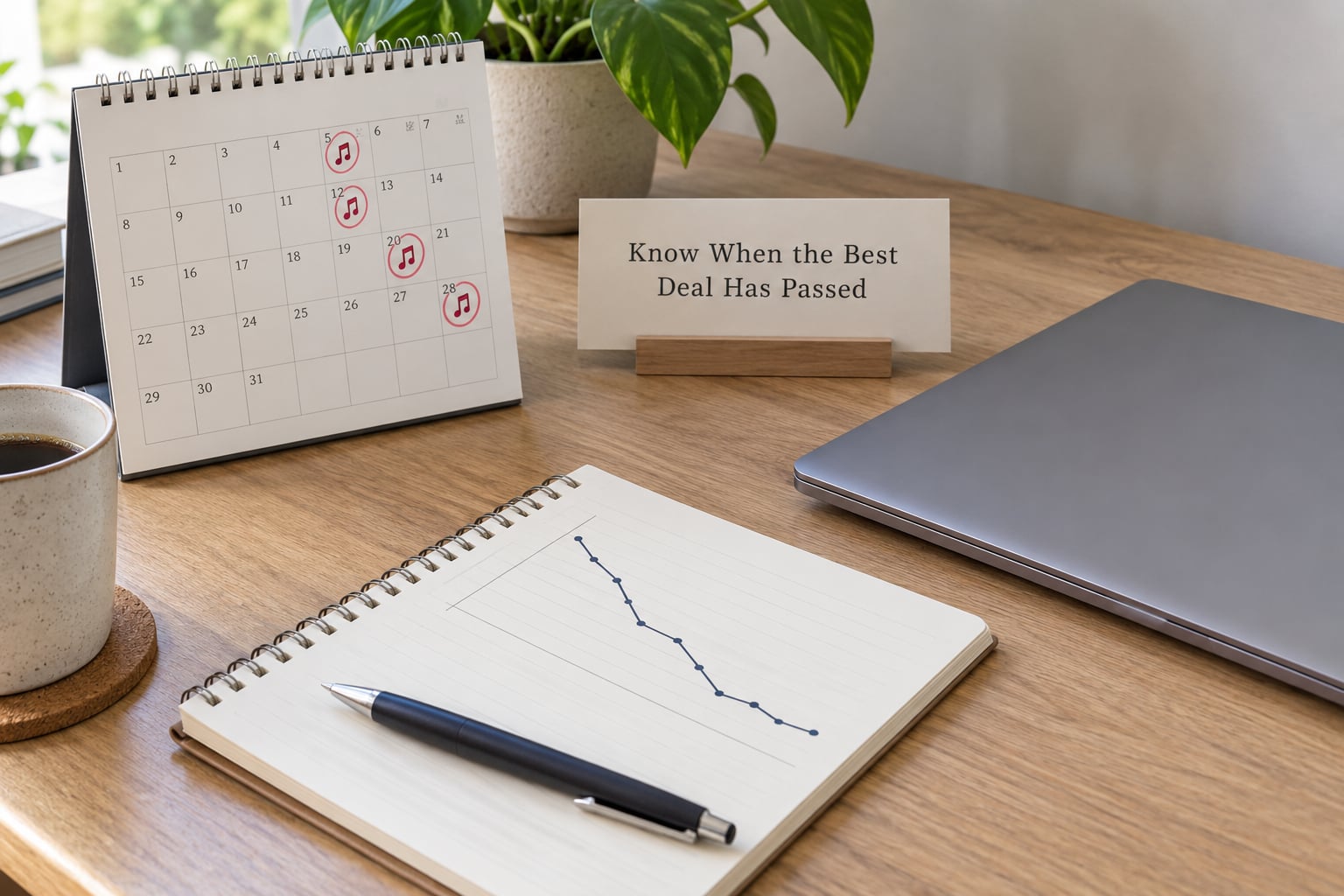
Waiting pays off when the show is soft. Underplays, mid-size rooms, a second date added to a tour, or a date where a neighbouring show sold out tend to see legitimate price reductions, sometimes through an official last-minute release.
Waiting backfires when the date is genuinely gone. After a bot-driven sellout, fans report that the cheapest resale listings cluster in the worst sections, and the floor, soundboard and lower-bowl seats reappear at several times face value. There is no discount phase in that scenario, only a floor under the markup.
Set stopping rules while you are calm. The best one is simple: when the lowest legitimate option reaches your all-in ceiling, you are done. The second is a deadline, tied to a life event rather than to a website timer. If the show is sold out and resale is above your limit, missing the show beats spending a month’s money on a night you will spend thinking about the money.
9. Complete Checkout on the Official Site
The last thirty seconds are where budgets break, because checkout pages add fees, recommend upgrades and create urgency. Read the confirmation screen line by line before you pay.
Check the seller name, the ticket quantity, the section, row and seat, the final total, the delivery method, the refund terms, and whether the ticket is transferable. Make sure the quantity is what you intended, since a default of two is a common source of accidental doubles. Then save the confirmation email and the order number, because it is the only thing that helps if something goes wrong on the night.
Common Mistakes
Rushing during a supposed last sale. Countdown timers and disappearing listings are the oldest tricks in the trade. Leave the tab, eat something, come back in twenty minutes and see whether the “sold out” is still true.
Comparing pre-fee prices. Two listings that look similar on the face of it can differ by a third once fees land. Compare only the checkout totals, on the same event, in the same tier.
Assuming every VIP ticket is better. A package is often a normal seat plus items you would have refused. Value the seat, then add the extras you actually wanted and see whether the bundle is still a deal.
Buying without checking the seat. A cheap ticket with no section, no row and a limited-view note is not a bargain. Search the same event on the primary seller’s seat map and see where the comparable seats sit.
Ignoring the cost of getting there. A venue with expensive parking can add a meaningful sum to the night, and an extra night in a hotel doubles it. Add transport and parking to the ticket before you decide what the ticket can cost.
Buying from a seller outside the ticket platform. A deal that moves to a private message, a bank transfer or a crypto wallet has no buyer protection at all. A verified buyer on an established platform is the safest transaction you can make.
Frequently Asked Questions
Why are concert tickets more expensive than their face value?
The advertised price covers only the ticket itself. On top of it, the primary seller or resale platform adds a flat per-ticket service fee, a percentage fee, a facility fee charged by the building, local tax, and possibly delivery or transfer charges. A flat fee hurts cheap seats most in percentage terms, which is why two tickets at different prices can carry very different fee loads. Compare the checkout total, not the number in the listing.
Is official resale more expensive than buying from a scalper?
Official resale and guaranteed-resale programmes are often the higher total, because they add their own service fee on top of the seller’s price. What you get for it is a real ticket with a clear chain of ownership, delivery by mobile transfer, and a refund if the show is cancelled or you are denied entry. An unknown scalper may quote a lower total and cannot offer any of that. Compare totals, then weigh the protection.
Should I buy concert tickets as soon as they go on sale?
For a hot show, often yes, because the primary allocation is the only place face-value tickets exist and it can sell out inside minutes. But buying first is not automatically cheaper. Check the tiers on the primary seller first, buy the cheapest eligible seat, and register for every presale you are eligible for before the general on-sale. If the general sale is out of your range, resale is the next step, not a race to refresh.
Do tickets get cheaper closer to the concert?
Sometimes, and it depends on the show rather than the calendar. Underplayed dates, mid-size rooms and second dates added to a tour often see legitimate reductions or an official last-minute release. A date that sold out on the primary allocation usually does the opposite, with the cheapest resale listings sitting in the worst sections. Waiting works when the show is soft and fails when the demand was genuine.
Are cheap floor tickets guaranteed to have a better view?
No. Floor tickets at a sold-out show can be much further back than a lower-bowl seat, and sightline restrictions, speaker towers and overhanging balconies cut into the view from parts of the floor. The label tells you where in the room you are, not what you will see. Look for the section, row and seat, check the seat map on the primary seller’s page, and treat any listing with no row information as unverified.
What should I do when a show sells out?
Check the official exchange and any waitlist first, since those are the only routes that hold face-value or near-face-value inventory. Then look at established resale platforms with buyer protection, and set a hard all-in ceiling before you browse so the markup sets the pace. If nothing legitimate fits your budget, watch for a second date being added or a production change. Missing the show is a better outcome than paying several times face value.
Conclusion
Start with the four moves that do the most work: confirm the event and the exact listing, write down your all-in ceiling before you browse anything, exhaust the primary seller’s inventory and waitlists, and only then compare authorized resale against that ceiling. Add the cost of getting there before you commit, and stop at the number you set while you were still calm.