To get a barricade spot at a show, buy a general admission or floor ticket, learn the venue’s entry and floor rules before the day, arrive early enough to be near the front when the floor opens, and then take your place calmly without pushing. There is no trick and no shortcut — floor spots are first come, first served, so your arrival time is the whole game.
It is worth being blunt about the cost. Depending on the room and the artist, you are committing three to six hours of standing, cold or heat, and sleep you probably needed. Some shows are worth it. Most mid-size dates are not, and a good spot fifteen feet back sounds boring right up until you are the one at the rail.
Last updated: October 2026. Venue policies change with every tour cycle, so confirm the details on the venue’s own page before you commit to a plan.
Table of Contents
- What You Need
- Step-by-Step: How to Get a Barricade Spot at a Show
- Start With the Venue’s Floor and Barricade Rules
- Buy the Right Ticket for Front-Row Access
- Choose an Arrival Time You Can Sustain
- Prepare Your Route, Supplies and Backup Plan
- Enter in an Orderly Way and Listen to Staff
- Choose a Realistic Position Near the Barricade
- Stay Comfortable Without Leaving the Space
- Use the Final Wait Responsibly
- Common Mistakes
- Frequently Asked Questions
- How early should I arrive to get near the barricade?
- Does buying a pit ticket guarantee a front-row barricade spot?
- Can I leave the barricade and return to my saved space?
- Is it normal to wait outside for hours before a show?
- What should I do if the floor or barricade is smaller than expected?
What You Need
An eligible floor ticket. Without one, none of this applies — a reserved seat near the stage is a genuinely different experience, and no amount of queueing moves you into standing floor.
Confirmed venue rules. You need to know whether the floor is general admission, whether there is an early-entry program, whether the venue issues numbered wristbands, and whether bags are screened, banned or stored.
A realistic arrival plan, which means one you can physically sit through. Bring water, food that does not need cooking, comfortable shoes you can stand in for four hours, a charged phone, the photo ID the venue listed in its policy, and a layer for whatever the weather does at six in the evening.
One companion if you can. A friend in the queue is worth more than any tactic, because you can take turns at the front and cover each other when someone needs a bathroom or a break.
Step-by-Step: How to Get a Barricade Spot at a Show
Start With the Venue’s Floor and Barricade Rules
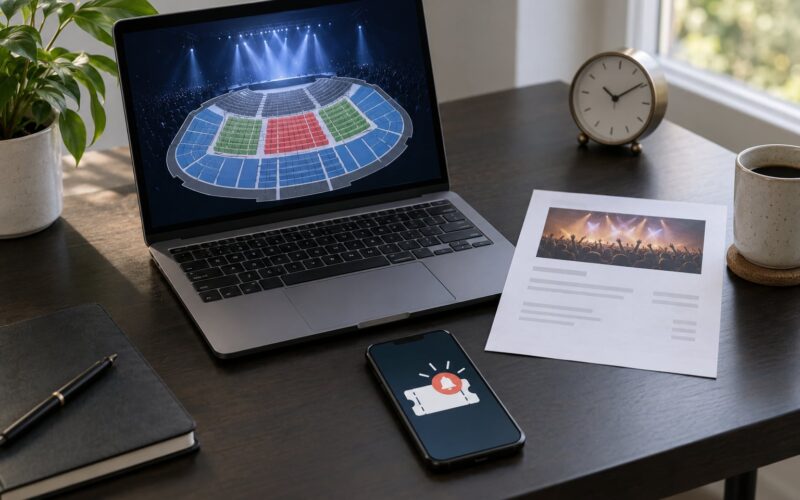
Check the promoter’s or venue’s page first, not a fan forum. You are looking for four things: general admission or assigned floor, early-entry windows and which ticket types qualify, wristband or numbered-spot programs, and bag policy.
General admission means no assigned place on the floor. Assigned floor means rows or sections, and the barricade may not be reachable at all. Reading this before you buy is the cheapest step in the entire process.
Buy the Right Ticket for Front-Row Access
There are four common setups, and they are not interchangeable.
- General admission floor. Standing, first come first served, and the only standard ticket type that reliably puts you in contact with the rail. Early arrival is the entire selection process.
- Pit ticket. A premium general admission ticket sold for the closest standing area. Being closer in price does not mean closer in position — it is the same queue with a shorter runway.
- Early entry VIP. A timed window that lets a subset in before general admission. It is genuinely useful and still not a guarantee: the people in the early window are competing with each other.
- Reserved seat or VIP package. A guaranteed seat, sometimes near the stage, sometimes in a raised or side section that views the stage at an angle. Comfortable, predictable, and not the barricade.
Peers answer this question bluntly and consistently: VIP does not automatically mean the rail.
Choose an Arrival Time You Can Sustain
Work backward from advertised door time, not the show start, because support acts and soundcheck eat the gap. Then adjust for room size and how badly people want to see this particular band.
| Venue type | Steady artist | High-demand artist |
|---|---|---|
| Club or small theater (under 1,500) | 45-60 minutes before door | 2-3 hours |
| Theater (1,500-5,000) | 1.5-2 hours | 3-4 hours |
| Arena (5,000-20,000) | 2-3 hours | 4-6 hours |
| Stadium (20,000 and up) | 3-4 hours | 6 hours or more |
| Festival day | Set times vary; for a headliner, hours | Previous night for camping |
Those ranges match what regulars describe, roughly three to six in the morning for major arena dates and one to three hours for mid-size rooms. Treat them as a starting point, not a promise.
The other half of this step is deciding what you will not do. Overnight camps belong to the biggest tours and the most obsessive crowds. Sitting on a sidewalk for ten hours in bad weather to end up tenth row back is a bad trade, and the fans who get burned are usually the ones who skipped every prep step below.
Prepare Your Route, Supplies and Backup Plan
Check transit and parking the night before, because the parking structure two blocks away is not where you need to be at 4 p.m. Know which door the line forms at, not just the one you walk through.
Decide your reconnection plan. If you leave the queue, where do you meet? A specific corner outside the venue beats a text that goes unread in a dead zone.
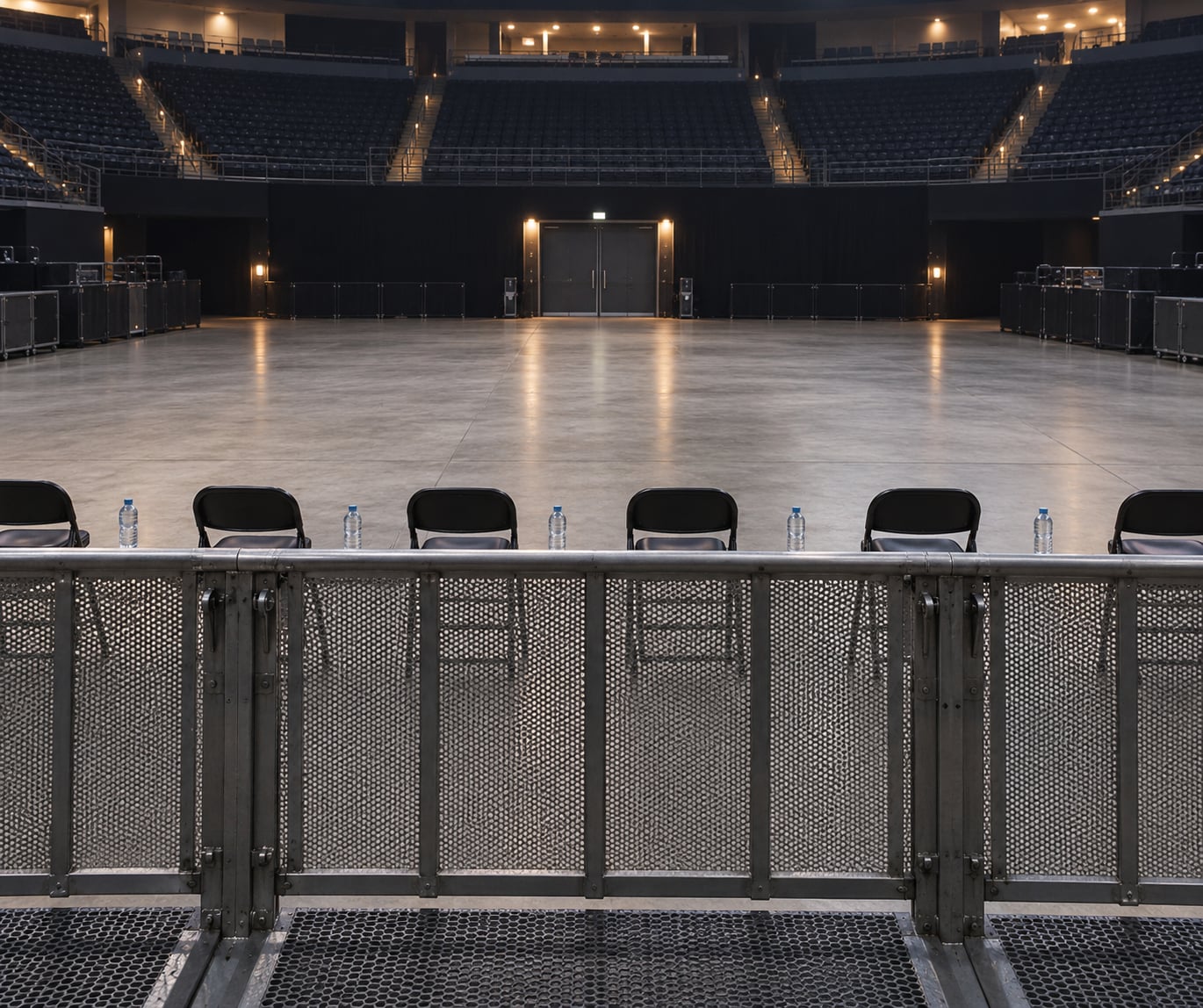
Have a fallback position in mind. If the floor is smaller than you expected, or the rail is already three deep when you get inside, the back half of a sold-out floor with a clear view beats a spot where you are looking at the back of someone’s head.
Enter in an Orderly Way and Listen to Staff
Security decides the pace, and the pace is set for safety, not for you. Follow instructions, wait for the correct entrance, and do not hold a rail gap open for a friend who is not there yet.
Walk in with the flow. Pushing, wedging, and claiming more floor than you need are the three fastest ways to get a security guard pointed at you, and a confrontation in a moving crowd ends with you outside.
Keep aisles and emergency routes clear. Venue staff will tell you, and they are not exaggerating.
Choose a Realistic Position Near the Barricade
Once the floor opens, look at the rail and pick a spot you can actually hold. Fans report the outer sections filling more slowly than the dead center, which is often the difference between a rail spot and a good twelve feet back.
Stand with your shoulders squared, elbows in, and about a foot of space in front of you. If you cannot fit that space, the spot is too dense and the pressure will exhaust you before the second song.
If you are shorter than the person in front of you, a spot with a slight angle beats a straight-on position in the middle of the rail. You will see more of the stage from six feet off-center than from directly behind a tall head.
Stay Comfortable Without Leaving the Space
Water goes in before it goes out, in small sips. You are standing still in a warm crowd, and the sweat builds faster than thirst reminds you.
Shift your weight, roll your ankles, and lower your center of gravity when the crowd surges. Shoes matter more than anything else you carry.
Stepping out mid-show means pushing back through a moving crowd, and by the time you return the spot is gone. Leave early, before the set, if you need a bathroom or need air. Leaving late is the expensive version.
Use the Final Wait Responsibly
The last ninety minutes before doors decides a lot. Keep sipping, skip the alcohol if you want to hold your spot, and keep your phone charged for the group chat afterward.
Check on the people around you, particularly anyone who looks light-headed or unsteady. If someone needs help, flag security rather than trying to move them yourself through a compressed crowd.
Bring earplugs. You will still hear the show clearly and your hearing will not suffer for it. Agree on where you are reuniting if you get separated, then put the phone away and enjoy it.
Common Mistakes
Assuming a pit ticket equals the front row. It is general admission with a premium label. Fix: treat timing as the only real lever, because that is what it is.
Arriving absurdly early with nothing prepared. Nobody respects you for a four-hour wait you did not plan. Fix: pick a time you can hold, then bring water, food, layers and a charged phone.
Cutting into a queue. It works exactly once, and the crowd remembers. Fix: join the end of the line and plan the next time you can get there earlier.
Choosing a side blindly. Dead center fills first and hardest. Fix: pick an outer third of the rail and accept a slightly angled view.
Blocking an aisle. Security will move you, and everyone will resent it first. Fix: stay along the rail and clear of marked walkways.
Overpacking. A heavy bag means bag check, or no bag at all. Fix: check the venue’s size rules, then bring only what fits on your person.
Ignoring an accessibility need. Most venues run a separate accessible viewing and early-entry line. Fix: find it on the venue’s page and use it, rather than planning a four-hour stand.
Filming instead of watching. Two hours of footage and no memory of the show. Fix: put the phone down for at least a few songs.
Two last things. Scout the line the day before in the fan community and on the venue’s social accounts — fans post line-length photos, and it takes thirty seconds. And if your wristband number gets ignored at the door, do not argue your way in. Ask politely, accept the answer, and let a staff member escalate if the system is failing.
Frequently Asked Questions
How early should I arrive to get near the barricade?
For a club or small theater, 45-60 minutes before door time is usually enough. For an arena, plan on 2-3 hours for a steady artist and 4-6 hours for a high-demand tour. Stadium and festival headliners can require half a day. Always measure backward from door time rather than the scheduled show start, since support acts eat the gap.
Does buying a pit ticket guarantee a front-row barricade spot?
No. A pit ticket is a premium form of general admission, which means the floor is still first come, first served. It changes what you paid, not where you stand. The only things that move you closer are arriving earlier, using any early-entry window your ticket includes, and choosing your position calmly once the floor opens.
Can I leave the barricade and return to my saved space?
Only at venues running an official numbered wristband or reserved-spot system, where leaving the queue and returning shortly before doors is expected. Without that system, your spot is gone the moment you step away. If you must leave, go before the set starts rather than during it, when the crowd is already moving and squeezing back in is hardest.
Is it normal to wait outside for hours before a show?
For big tours, yes, and those queues can form before lunch. For most mid-size and club dates it is not necessary at all, and a two-hour wait for a mid-floor spot is a bad use of your afternoon. Check recent fan reports and venue posts for your specific show, and only commit to a long wait if the rail is genuinely the goal.
What should I do if the floor or barricade is smaller than expected?
Stop fighting for a rail position and pick a clean view instead. The back half of a sold-out general admission floor, slightly off-center, is often more comfortable and nearly as immersive as a packed rail spot. Also locate the accessible viewing area, which is usually raised, uncrowded and often a better view than the floor itself.
Start with the venue’s own policy page, then pick an arrival time you can genuinely sit through. Bring water, earplugs and a friend, and treat the rail as a bonus rather than a contract. A few good hours and a clear view beats a fight with a stranger, every time.