Television has carried metal through four distinct phases: dismissed and exaggerated as a satanic shock-rock fad in the 1970s, elevated to prime-time dominance when MTV made glam and hair metal a visual lifestyle in the 1980s, humanized through 1990s sitcom metalheads and 2000s reality shows, and reframed in the streaming era as dramatic subject matter rather than a shorthand for villainy.
Understanding how metal was portrayed on television means separating two things TV keeps blurring. There is metal as performance, shown through music videos, award-show sets and variety-show bookings, and there is metal as story material, where long hair and downtuned riffs tell you a character is a troublemaker, a freak, or a threat. Both are worth tracing, decade by decade.
Table of Contents
- How Metal Was Portrayed on Television
- Early TV Portrayals of Heavy Metal
- How Metal Was Portrayed on Television in Sitcoms and Soap Operas
- Metal in Soap Operas, Teen Dramas, and Coming-of-Age Stories
- Music-Vision Channels and the Visual Language of Metal
- Metal Bands in Variety Shows and Television Specials
- How Metal Stereotypes Changed Over the Decades
- Reality TV, Documentaries, and the Business of Metal
- Animated Television and Metal as a Flexible Subculture
- What Television Gets Right and Wrong About Metal
- Frequently Asked Questions
- Why do people love metal?
- How did metal come about?
- Was the metalhead stereotype on TV accurate?
- Why is metal associated with villains in movies and TV?
- Which TV shows portray metal most realistically?
- Did MTV make heavy metal popular?
- Conclusion
How Metal Was Portrayed on Television
Television portrayed metal in four recurring modes: affectionate parody, hostile mockery, villain coding, and straight documentary portraiture. Which mode dominated shifted with each era’s relationship to the genre, and the same band or the same show can sit in more than one mode at once.
A few working definitions help. A metalhead is simply a fan of heavy metal, which covers everything from Black Sabbath’s downtuned riffs to death metal, black metal, doom and progressive styles. Glam metal, or hair metal, was the glossy 1980s subgenre of Def Leppard, Mötley Crüe and Poison, built around huge hooks, stage pyrotechnics and leather. A moral panic is the recurring social cycle in which new music is framed as dangerous to children, which is the single most important thing to understand about how metal was portrayed on television before 1990.
| Decade | Dominant TV treatment | Representative screen examples | Audience reaction |
|---|---|---|---|
| 1970s | Shock rock treated as a menace | The Midnight Special, Andy Williams Show, Halloween special footage | Alarm, then censorship |
| Early 1980s | Cable breakout, glam spectacle | MTV launch, Def Leppard, Mötley Crüe | Mainstream enthusiasm |
| Mid-to-late 1980s | Peak visibility, narrowed image | Music videos, VMAs, Guns N’ Roses, Poison | Ambivalent, some fatigue |
| 1990s | Comic character and parody | Daria, King of the Hill, Beavis and Butt-Head, South Park | Mostly affectionate |
| 2000s | Reality TV and documentary correction | The Osbournes, Heavy Metal Parking Lot airings | Reassuring |
| 2010s-present | Metal as drama and scene detail | Metalocalypse, Barry, Sons of Anarchy, streaming era series | Normalising |
Early TV Portrayals of Heavy Metal
Before MTV, heavy metal reached American viewers through late-night variety shows, talk programs and local cable, and television consistently treated it as a public nuisance. The framing was almost never about music.
The most famous early confrontation happened in 1970, when Ozzy Osbourne performed Black Sabbath on ABC’s The Midnight Special. The widely repeated story is that the broadcast was cut away mid-performance because of audience complaints about the singing. A few years later, The Andy Williams Show refused to book him at all. Whatever the accuracy of any single anecdote, the pattern held: the singer’s voice was the problem, not the songs.
Local television was more mixed. Bands played late-night slots and appeared on cable shows where the audience was smaller and more sympathetic. What established metal’s early TV image was not coverage so much as the surrounding conversation: the Parents Music Resource Center and similar campaigns in the mid-1980s turned heavy metal into a national parenting issue, and every network that showed a concert was implicitly answering that campaign.
The pattern set here lasted for decades. Metal gets treated as behaviour rather than as music.
How Metal Was Portrayed on Television in Sitcoms and Soap Operas
In scripted comedy, metal shows up as a shortcut for a personality: the loud neighbour, the friend’s obnoxious brother, the boyfriend nobody approves of. It is rarely a portrait of a music fan and usually a portrait of a problem to be managed by the sensible lead character.
Daria is the clearest case of a sympathetic version. Robert Mullen is written as a genuinely decent kid whose taste in music separates him from his family without making him a villain. The jokes come from the gap between how seriously he takes his records and how everyone around him reacts, which is affectionate rather than cruel.
King of the Hill uses metal as a recurring source of Hank and Bobby’s generational friction, and the show keeps the jokes aimed at the father rather than the son. Daytime soaps use the same shorthand more cheaply: a character with a black shirt and a guitar case is a bad influence, full stop, usually within one scene of appearing.
The difference between these two uses is worth naming. When the show mocks the metalhead, it is mockery. When the show mocks the parent who cannot understand the metalhead, it is closer to a satire of the audience rather than the fan.
Metal in Soap Operas, Teen Dramas, and Coming-of-Age Stories
Teen-oriented dramas treated metal as a marker of outsider identity, and they used it consistently: long hair, denim, a discovered riff, a disagreement at home. The subculture detail signals that a teenager is pulling away from their family and testing an identity that adults cannot read.
What the format rarely supported was musical complexity. Teen dramas needed the look of metal in a single shot, so they gave us the visual shorthand and left the actual music out. That is the origin of the narrowing critique metal listeners still make: 1980s and 1990s drama made hair metal the default image of the entire genre.
Female metalheads were the harder case. When a show wanted a metalhead, it almost always wanted a boy, and when a girl carried metal on screen she was usually coded as dangerous, sexually threatening, or as a girlfriend to be corrected. Shows written for girls had little reason to treat a heavy metal fan as a normal identity, so the audience rarely got to see one being a fan first and a subcultural curiosity second.
Music-Vision Channels and the Visual Language of Metal
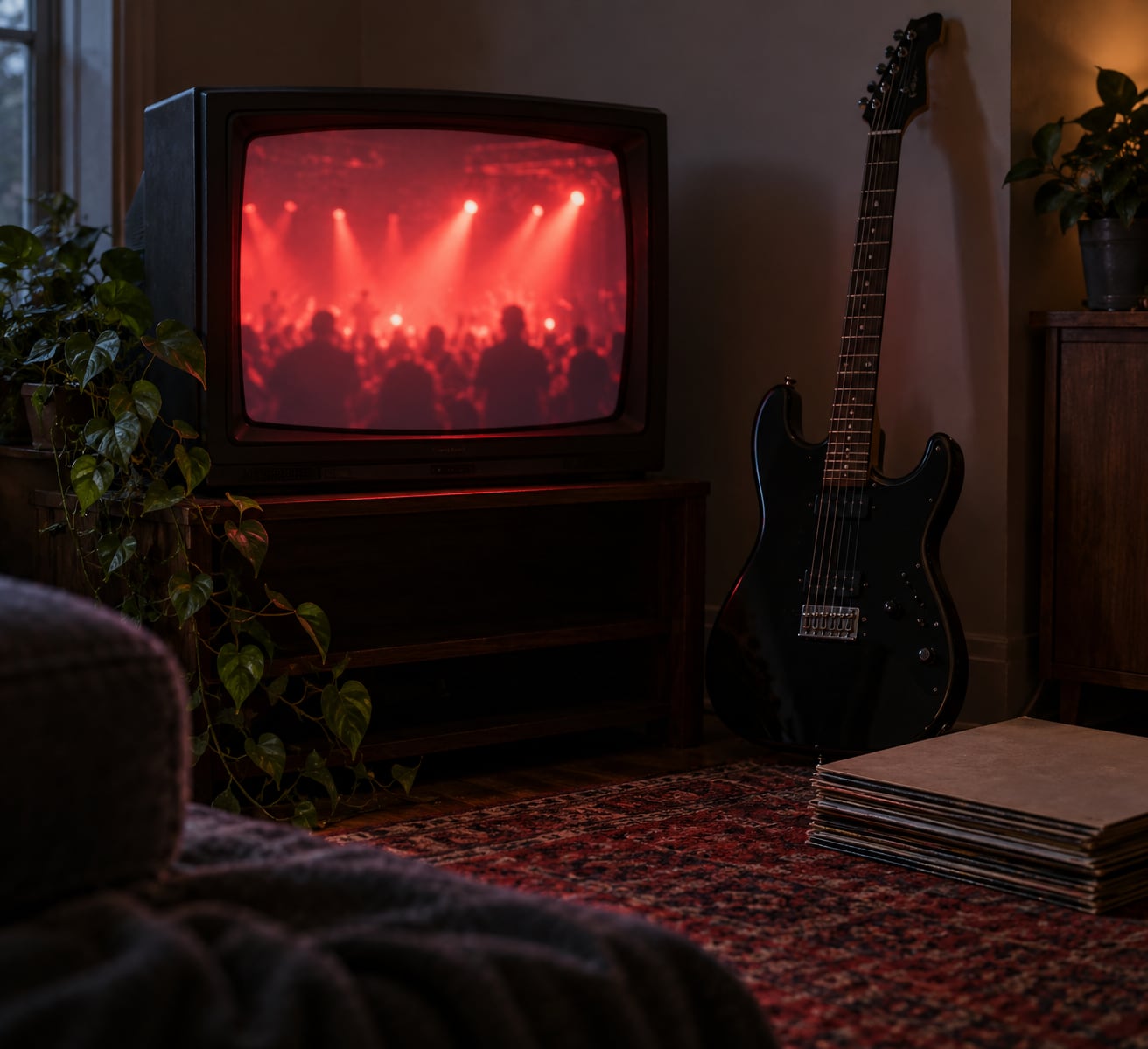
Music television is where metal’s screen image was genuinely built, because the genre is built around the look of the riff. MTV launched in 1981 and turned performance into a production: the guitar solo cut to pyro, the slow pan across a crowd, the costume change built into the choreography.
Def Leppard’s Pour Some Sugar on Me became one of MTV’s most-played videos of the late 1980s, which tells you how central the subgenre was to the channel’s identity. Mötley Crüe, Poison, Twisted Sister and Guns N’ Roses each got a distinct screen treatment, and the contrast between polished studio footage and live show footage became a genre convention in its own right.
Cable’s effect on the genre was enormous and not entirely flattering. MTV made hair metal the most visible metal on television and narrowed what the public understood metal to be, since viewers saw one polished version of the genre rather than a range of scenes. MuchMusic and VH1 widened it later, and the split between what radio played and what music television played set the terms for the underground-versus-mainstream argument that runs through everything after.
Metal Bands in Variety Shows and Television Specials
Variety programming gave metal three fairly distinct roles, and which one a band got depended on how the show wanted the audience to feel.
The first role was spectacle. A band performing live on a variety show or at an awards ceremony was framed as an event, with the performance itself as the story rather than the band. The second was novelty, where the show booked metal because it was different from the evening’s other guests, and the segment stayed short enough to be a palate cleanser. The third was debate, where the music was treated as a topic for the host or a panel rather than as something to hear.
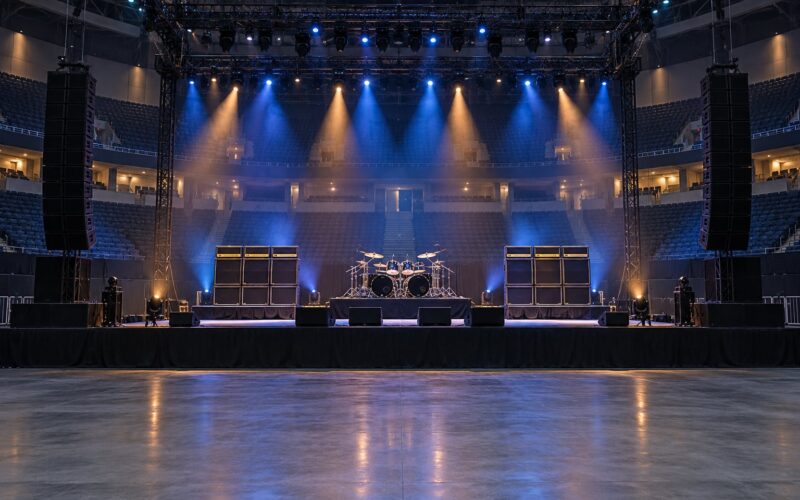
The variety-show slot also fixed the visual template that everything else copied: backline gear, a raised stage, coloured lighting, smoke, and a frontman working the front of the stage. Set against a folk singer seated with a guitar, a metal set looks like volume. That contrast did real damage to how the genre was described afterward, in a way that lasted well past the era of the shows themselves.
How Metal Stereotypes Changed Over the Decades
Some stereotypes held for forty years and others quietly disappeared, and the ones that held were all about appearance rather than music.
Satanism was the earliest and the most persistent. Occult imagery, inverted crosses, fire, corpse paint and ritual staging became a visual kit that scripts reached for when they needed a character to be frightening, long before anyone had to explain what a metal riff sounded like. Alongside it sat the assumption of violence, and the stage pyrokinesis that concert photography made famous turned into a shorthand for danger.
Two stereotypes narrowed as the decades passed. The greasy, careless metalhead gave way to the well-groomed hair-metal frontman in the late 1980s, then to the bearded, methodical extreme-metal fan of the 2000s. And the misogyny charge softened as more women entered the scene, even though it never disappeared.
The nerd-culture stereotype survived in modified form. Where a 1980s show treated the metalhead as dangerous, most later shows treat the metal fan as a harmless oddball, which is progress of a kind. One stereotype did not really fade: on screen, metal has almost always meant hair. Thrash, death, black, doom and progressive metal were largely absent from television for the whole period.
Reality TV, Documentaries, and the Business of Metal
The turn in the 2000s came from reality television and documentary, which changed the question from what metal looks like to what being in a metal band actually involves. MTV’s The Osbournes launched in 2002 and put Ozzy Osbourne’s family on television as a family rather than as a cautionary tale, which is the single biggest shift in the genre’s screen image.
Reality format suited metal because it was already built on itinerant work. Touring vans, low pay, family tolerance, band conflict, and the gap between what the music costs to make and what it earns are all things reality television is built to dramatise, and shows that followed, including later Jack Osbourne series, kept the framing.
Documentary did the corrective work. Heavy Metal Parking Lot was made in 1986 and then aired repeatedly for decades, and its unflattering, unedited footage of a festival became an accidental generational record of the scene. Later dramatised features such as Gone to the Wolves, a 2023 coming-of-age film about Florida teenagers in the late 1980s scene, work as semi-fiction rather than documentary but answer the same demand.
Metal fans tend to defend this material as more truthful than scripted drama, partly because there is less room for a stereotype when nothing is being performed for fiction.
Animated Television and Metal as a Flexible Subculture
Animation gave metal the room television could not. Without realism constraints, metal becomes a costume a character changes into, a mood, a joke, or a workplace, and the audience is never positioned as an outsider the way live-action framing positioned them.
Beavis and Butt-Head, which began as animated shorts on Liquid Television in 1993 before becoming an MTV series, is the most cited example of the affectionate mode. Bands played for the show, the characters knew enough about metal to be funny about it, and the music was treated as a serious taste held by kids who are otherwise underestimated.
South Park featured Metallica as themselves in a 1993 episode, and the band was not happy with how they came across. It remains the clearest example of parody that lands as mockery, and it works as a study in the difference between the two.
Metalocalypse, which ran on Adult Swim from 2008 to 2014, is the show most metal listeners point to as understanding the scene. It is built on genre mechanics: touring realities, festival politics, technical expertise, the gap between a band’s competence and its reputation. Its affection is a deliberate choice, and the show has said so.
What Television Gets Right and Wrong About Metal
The recurring lesson is that television is accurate about effort and inaccurate about belief. It gets the work right and the reasons wrong.
| Mode | How it uses metal | Named examples | How listeners tend to read it |
|---|---|---|---|
| Affectionate parody | Comedy from inside the scene | Beavis and Butt-Head, Daria, Metalocalypse | Recognising and welcome |
| Hostile mockery | Metalhead as buffoon or freak | Daytime soaps, talk-show jokes, South Park’s Metallica episode | Infuriating, and usually accurate about the outsider view |
| Villain coding | Metal as menace and occult shorthand | 1970s variety bookings, 1980s crime drama soundtracks | The most damaging mode |
| Documentary portrait | Talent, money and touring as the story | The Osbournes, Heavy Metal Parking Lot, Breaking Osbourne | Closer to real life, and correcting |
What television gets right is performance intensity. The idea that metal is physically demanding, that the show demands technical ability, and that a band earns its place by touring constantly rather than by record sales alone, comes almost entirely from screen portrayals and from the genre’s own videos. Community identity is the second thing TV caught early. Metal is presented as a group with its own codes, language and gathering places, and that framing has aged well.
What it gets wrong is belief and behaviour. Occult imagery was a promotional device and a shock strategy, not a statement of faith for most musicians, and television almost never distinguished between the two. It also flattened subgenre variety into a single image for forty years, and it mostly failed to write metalheads as ordinary music fans with an unusual genre rather than as a symptom of something wrong with the character.
Style gets a mixed verdict too. The leather, studs, spiked hair and stage pyro of the 1980s were genuinely part of the scene, so portraying them was accurate even while using them as a punchline. The problem was never that TV showed the look. It was that TV showed the look and stopped there.
Frequently Asked Questions
Why do people love metal?
Listeners usually point to three things: the physical force of downtuned riffs and double-kick drumming, the sense of range and technical ambition in the guitar work, and the community that forms around a shared taste. The genre is unusually good at rewarding long-term attention, because a lot of metal rewards you for following a record all the way through. Fans also describe it as music that was made to be played loud and played for other people, which is a live-show culture more than a home-listening one.
How did metal come about?
Heavy metal grew out of late 1960s blues rock and acid rock, where Black Sabbath turned distortion and a low tuning into something heavier, and Led Zeppelin pushed volume and improvisation further. The late 1970s brought punk, which added speed and attitude, and bands like Judas Priest and Iron Maiden turned those influences into a distinct genre. By 1980 the sound was recognisable, and music television in the 1980s made it visible.
Was the metalhead stereotype on TV accurate?
Partly. Television was fairly accurate about fashion, attitude, devotion to a genre and loyalty to a band, and about the outsider position that metal listeners actually occupied. It was much less accurate about belief: occult imagery was almost always promotional rather than sincere, and violence was usually borrowed from a thriller grammar. It was also inaccurate about range, since television largely showed one style of metal for most of its history.
Why is metal associated with villains in movies and TV?
It is a short-term coding decision that stuck. Distorted guitars and dark imagery read instantly as threatening on a small screen, and writers needed a fast way to say danger without budget for effects. That use peaked in the 1970s and 1980s and has weakened since, though the convention survives in game soundtracks and in any scene that wants menace without dialogue.
Which TV shows portray metal most realistically?
Most listeners point to Metalocalypse for scene mechanics, Beavis and Butt-Head for the experience of being a young fan who knows more than the adults around them, and Daria for the sympathetic outsider. For real life rather than fiction, The Osbournes and Heavy Metal Parking Lot are the references people come back to, because neither was written to flatter anyone.
Did MTV make heavy metal popular?
It made metal visible, which is a different claim from making it popular. MTV launched in 1981 and its rotation carried glam and hair metal into living rooms that had never heard the genre, and Def Leppard’s Pour Some Sugar on Me became one of the channel’s most-played videos. The cost was that the public picture of metal narrowed to one polished style, which is the complaint listeners still raise about the channel’s legacy.
Conclusion
Television’s arc with metal runs from a 1970s nuisance that hosts cancelled and audiences complained about, through a 1980s prime-time force that put one narrow image of the genre into millions of homes, to the 2000s and 2010s, where reality shows and animated comedies started treating metalheads as people with jobs, families and real technical skill.
If you want to start anywhere, pick the era closest to what you want to understand. Watch a 1970s variety performance to see the moral panic, a mid-1980s video for the glamour peak, a 1990s sitcom for the parody modes, and Metalocalypse or The Osbournes for the versions that got closest to the truth. Then compare what you saw against actual interviews and tour footage, because the gap between the screen version and the scene is usually where the interesting part lives.