To promote a show on a small budget, run a six-to-eight-week timeline built around one specific audience, venue co-promotion, direct outreach to local press and playlist curators, and a single trackable ad push in the final week. The money follows the channel you can measure, not the one that looks busiest.
That plan works for a 60-person basement night and a 250-cap club show, and the first four weeks of it cost nothing but attention. Here is what to gather before you spend a cent, then the sequence to follow, week by week.
Table of Contents
- What You Need
- How to Promote a Show on a Small Budget: Step-by-Step
- Set a Specific Ticket Goal and Budget
- Identify the People Who Are Likely to Attend
- Create a Simple Visual and Message Kit
- Run a Two- to Three-Week Ticket Push
- Use Focused Outreach Instead of Random Posting
- Track Results and Adjust the Final Week
- Common Mistakes
- Frequently Asked Questions
- How far in advance should I announce a show?
- Do Instagram or Facebook ads actually sell tickets for small shows?
- How do I get the venue to actually promote the show?
- What is the best platform to promote a show?
- How can I track which channel actually sold my tickets?
- How much should I spend promoting a show?
- Conclusion: Start With the Cheapest Channel That Reaches Fans
What You Need
Eight items, and most failed shows are missing one of them on the night the poster goes up.
- A ticket goal written as a number. Multiply your room capacity by the percentage of the crowd that actually shows up for a mid-tier local bill, not the number that shows up for a festival headliner. Sixty percent of capacity is a realistic working number for a new act.
- A fixed ceiling on what you can lose. Write the number down and treat it as a hard stop. Deciding mid-campaign that you will “throw a bit more at it” is how DIY shows end up in the red.
- Your costs, itemized. Venue guarantee or door split, backline, sound, your own travel and food. Divide the fixed total by the ticket price to get the break-even ticket count, then add a margin you are happy with. That number is your real goal.
- A list of who actually shows up to your shows. Start with the 100 people who came to your last three gigs, plus everyone who has bought from the band, followed or engaged with you. That list is worth more than any ad account.
- One event page with the ticket link on it. A Facebook Event, a Bandsintown or Songkick listing, or a simple page on your own site. Everything you post links to the same place.
- A small visual kit. One poster, one square graphic, one vertical story graphic, and one short clip, all in the same layout. Consistency costs nothing and makes you look established.
- A written promo split with the venue. Who posts what, who runs ads, who emails the list, and when. Do this before the announcement goes live.
- A tracking method. Unique links per channel or a QR code per flyer. Decide now, because retrofitting tracking after launch is nearly impossible.
How to Promote a Show on a Small Budget: Step-by-Step
Set a Specific Ticket Goal and Budget
Start with the number of tickets you need to sell, then work backward to a daily pace. A 120-cap room where you want 75 people through the door needs roughly 3 to 4 tickets a day across the eight weeks, with a heavier pace in the final ten days.
Divide your ceiling into three pots: paid promotion, printed materials, and a reserve you do not touch until the show is within two weeks. Most promoters spend the reserve in week three out of panic. That is the exact week to hold it.
Forum threads on r/musicmarketing and r/WeAreTheMusicMakers repeat the same finding: modest spend on targeted social ads alongside consistent organic posting fills rooms in the 100 to 150 range. The ads are the accelerant, not the engine.
Identify the People Who Are Likely to Attend
Write down who would actually buy a ticket, not everyone who might. For a metal show in a college town that usually means a few specific things: fans of the two or three bands on the bill, people who came to shows at that venue in the past six months, and students within walking distance of it.
Geography matters more than taste. Somebody twenty minutes away is a maybe; somebody who already bought a record from you is a yes. Build two lists from that split so you know which pitch gets the urgency message and which one gets the logistics.
Promoters asking the same question online keep landing on the same answer: cross-promote with two or three compatible local acts and you borrow an audience you could never rent. Ask each band to mention the show to their own list, once, in a specific post, rather than hoping they pass it along.
Create a Simple Visual and Message Kit
You need four assets and they can be built in an afternoon with free design tools. A poster with the date, venue, address, door time, ticket link and one photograph. A square version for feeds. A vertical version for stories and reels. And fifteen seconds of video you shot yourself at rehearsal.
The message should fit in one breath: who is playing, where, when, and where to get tickets. Bands that bury the date under a wall of genre description get scrolled past. Lead with the band names and the door time, and put the ticket link in the caption, not just in a bio.
Reuse that kit for eight weeks instead of redesigning every time. What actually varies week to week is the post type: a rehearsal clip, a countdown, a shared flyer from a guest band, a short interview answer. Four assets, many combinations.
Run a Two- to Three-Week Ticket Push
The announcement is the start of a sales cycle, not the whole campaign. Post the show with a soft announcement and an on-sale date ten days later, which lets early buyers feel like they got in first.
From there, run three stages. The tease is six to eight weeks out: build the story, get the lineup announced, get the photography ready. The push is two to three weeks out: email the list, message people directly, start the ads, contact press. The final push is the last ten days: urgency posts, a door code on flyers, group deals, and the reminder that mentions the door time and the walk or transit details.
The middle stretch is where most shows die. Sales flatten after the initial wave and everyone assumes the show failed. That is normal, and the plan for it is the next step.
Use Focused Outreach Instead of Random Posting
Twenty-five personal messages beat one boosted post, because a boosted post goes to strangers while a message goes to someone who already knows you.
Build a list of thirty names: local music writers and zine editors, college radio music directors, the handful of playlist curators who already carry similar acts, two local photographers, the promoter of the room, and two local bands who could open for you or share the bill. Send each one something specific about their work and a two-sentence pitch, a photo, and a link.
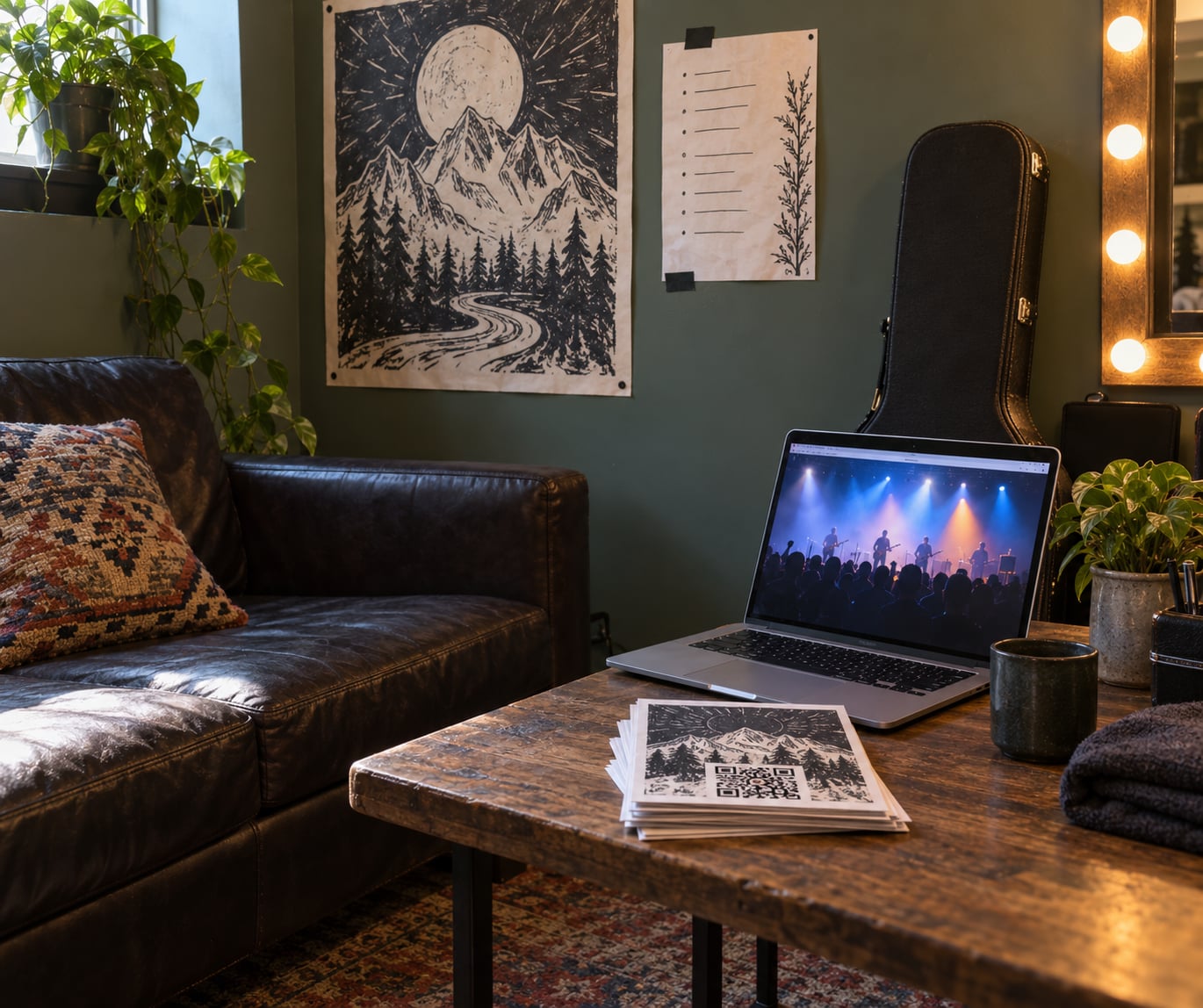
Flyers still work in a limited way, and only in the right places. A stack behind the bar at a venue is visible to nobody. A stack at a record shop, a rehearsal space, a college union, or a campus laundromat where the right people actually go gets picked up. Put a unique QR code on each stack so you know which one moved tickets.
Track Results and Adjust the Final Week
You cannot double down on a channel you never measured. Give each channel its own link, which takes about five minutes with a free link builder, and check which ones produce ticket-page visits rather than likes.
Three numbers tell you what to do in the final week: tickets sold against your goal, visits per day by source, and email or list signups. Well behind goal means go louder and spend the reserve. On pace means hold the spend and push the group deal. Ahead of goal means stop discounting and start asking people to bring a friend.
Offline tracking is just as useful. Ask the opener’s band and the door staff which night sold best, ask the venue how the advance list was built, and put one question in your post-show email about where people heard about it. Nobody gives perfect attribution, and that is fine. Direction beats nothing.
Common Mistakes
These are the failures that show up again and again in DIY show promotion, with the fix attached.
- Posting the same flyer five times. Repetition of an image does not create interest, it creates scroll fatigue. Rotate four post types instead of repeating one asset: rehearsal clip, countdown, lineup announcement, guest share.
- Announcing two weeks out. People plan their month around shows they hear about early, and local press needs a run-up to place you. Eight weeks for a club show, six if the date is awkward like a holiday week.
- Assuming the venue is promoting your show. Ask for a written split before it goes public. Promoters on r/bandmembers describe the same pattern over and over: the band does all the posting, the venue posts nothing, and the door split is still fifty-fifty.
- Spending on ads before announcing. An ad for a show nobody has heard of yet wastes money. Run organic first, spend the ad budget in the two to three weeks before the door.
- Buying boost when you have no tracking. If you cannot tell where a ticket came from, an ad budget is a donation. Set up links and codes first, always.
- Posting without a call to action. Every post ends with the ticket link in the caption. Not the bio, not “link in profile”, the caption.
- Ignoring direct messages. Individual replies convert better than any public post. Reply to comments, reply to story mentions, reply to the people who asked about the show.
- Treating the merch table as an afterthought. Offer a small bundle at the door, signed or limited, so buying at the venue feels better than preordering. It sells itself and it turns a first-timer into someone you can email later.
Frequently Asked Questions
How far in advance should I announce a show?
Announce a club show six to eight weeks ahead of time. That gives local press enough runway to place you, lets bands on the bill promote you to their own lists, and gives you two weeks of presale momentum before the push begins. Announcing under two weeks leaves you selling out of a standing start, which almost never works.
Do Instagram or Facebook ads actually sell tickets for small shows?
They do, but only when you run them in the final two to three weeks, target a tight radius around the venue, and give people somewhere specific to land. Promoters posting in r/musicmarketing report the best results from a modest ad budget paired with steady organic content. Ads amplify a campaign that already exists; they rarely create one.
How do I get the venue to actually promote the show?
Agree the split in writing before the announcement goes live. Specify who posts the announcement, who runs ads, who emails the ticket list, how many times each side posts, and who pays for anything printed. When both sides know their job in advance, there is no awkwardness later, and it is far easier to have that conversation before anyone has spent anything.
What is the best platform to promote a show?
There is no single best platform, but there is a clear priority order. Your own list and inbox come first, then venue and guest band channels, then local press and radio, then discovery platforms like Bandsintown and Songkick, and paid social last. Discovery platforms bring people who do not know you yet, so they work best once the announcement is out.
How can I track which channel actually sold my tickets?
Give every channel its own tracked link and a unique QR code on any printed material, then check which sources produce ticket-page visits rather than likes. For offline sales, ask the door staff and the opener which night performed best. Add one question to your post-show email about where people heard about it, and you will have a usable answer.
How much should I spend promoting a show?
Set a ceiling you can afford to lose, usually a modest share of what you expect the show to earn, and split it into promotion, printing, and a reserve. Hold the reserve until the show is two weeks out. If you have no money at all, the first four weeks of this plan are entirely free, which is where most small shows should start.
Conclusion: Start With the Cheapest Channel That Reaches Fans
Pick one audience and write down the number of tickets you need from them. Then post the announcement with a single, consistent kit, email the people who already show up for you, and contact thirty local names by hand.
Spend nothing for the first four weeks and judge each channel on the tickets it produced, not the likes it collected. The final week is the only time your money matters, and by then you will know exactly where it goes. That is how to promote a show on a small budget: relationships and tracking first, paid reach at the end.