To practice as a band efficiently, split the work: every member drills their own part at home, and the full group uses its shared hours only on what a group can fix alone — timing, balance, transitions and dynamics. A written, time-blocked plan with one measurable goal per session is what turns a wasted two hours into visible progress.
This guide is built for working adults with day jobs, weekend cover bands and metal or hard rock groups in loud rooms. Members get roughly an hour or two of group time a week, so how that time gets spent decides whether the band improves or quietly gives up.
Table of Contents
- What You Need
- How to Practice as a Band Efficiently: Step-by-Step
- Set One Measurable Goal for the Session
- Prepare the Parts Before the Full Band Meets
- Run a Short Sound and Alignment Check
- Rehearse Difficult Passages in Small Loops
- Use Focused Feedback and One Change at a Time
- Finish With Performance Runs and Notes
- Common Mistakes
- Frequently Asked Questions
- How often should a band practice to improve efficiently?
- Should band members practice their parts at home before rehearsal?
- How long should an effective full-band rehearsal be?
- How can a band practice when members have different skill levels?
- Is it better to rehearse songs repeatedly or work on difficult sections?
- How should a band track progress between rehearsals?
- Conclusion: Start With the Next Rehearsal
What You Need
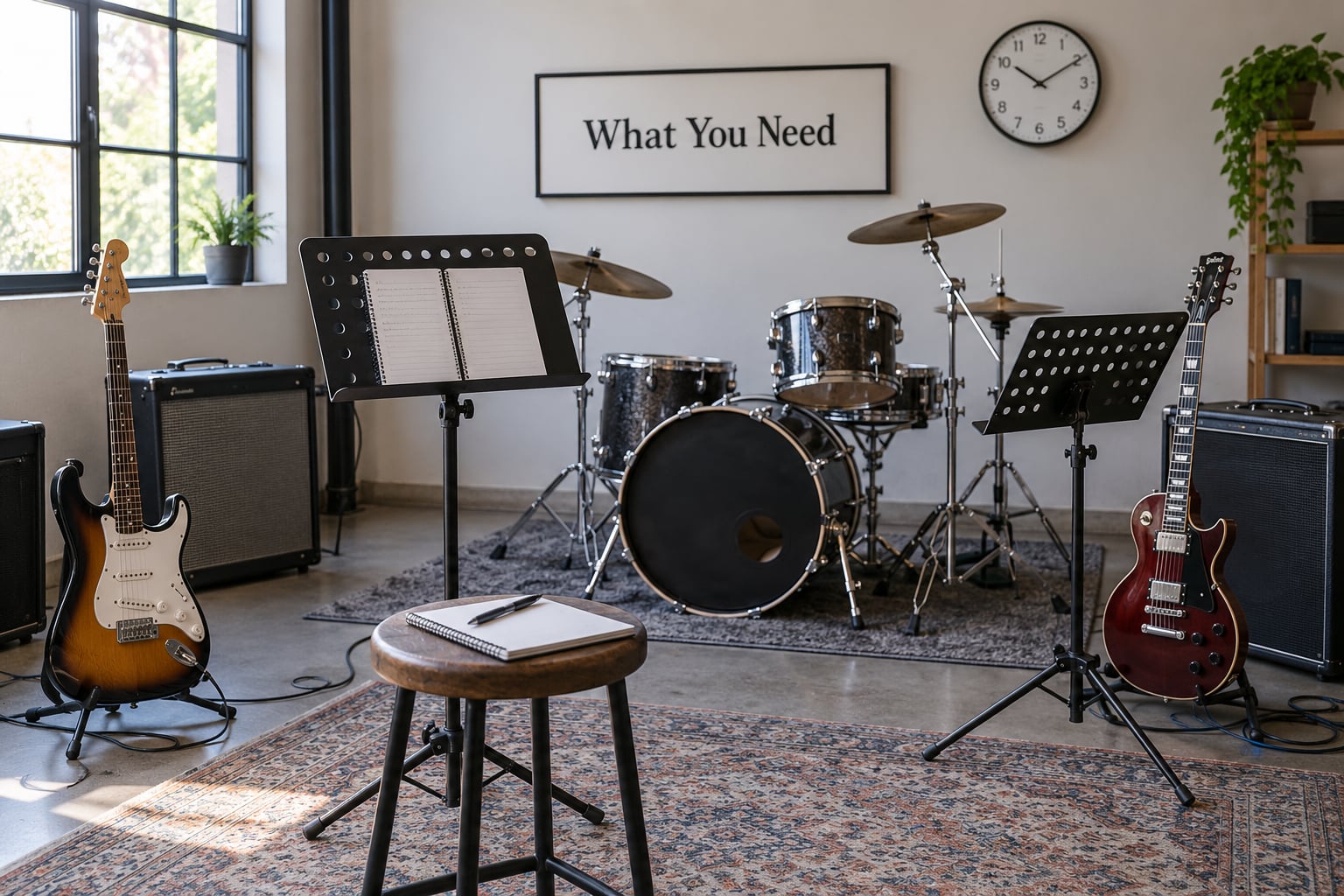
You need a few things settled before any of the method works. None of them are exotic, but a band that skips them wastes the session on logistics instead of music.
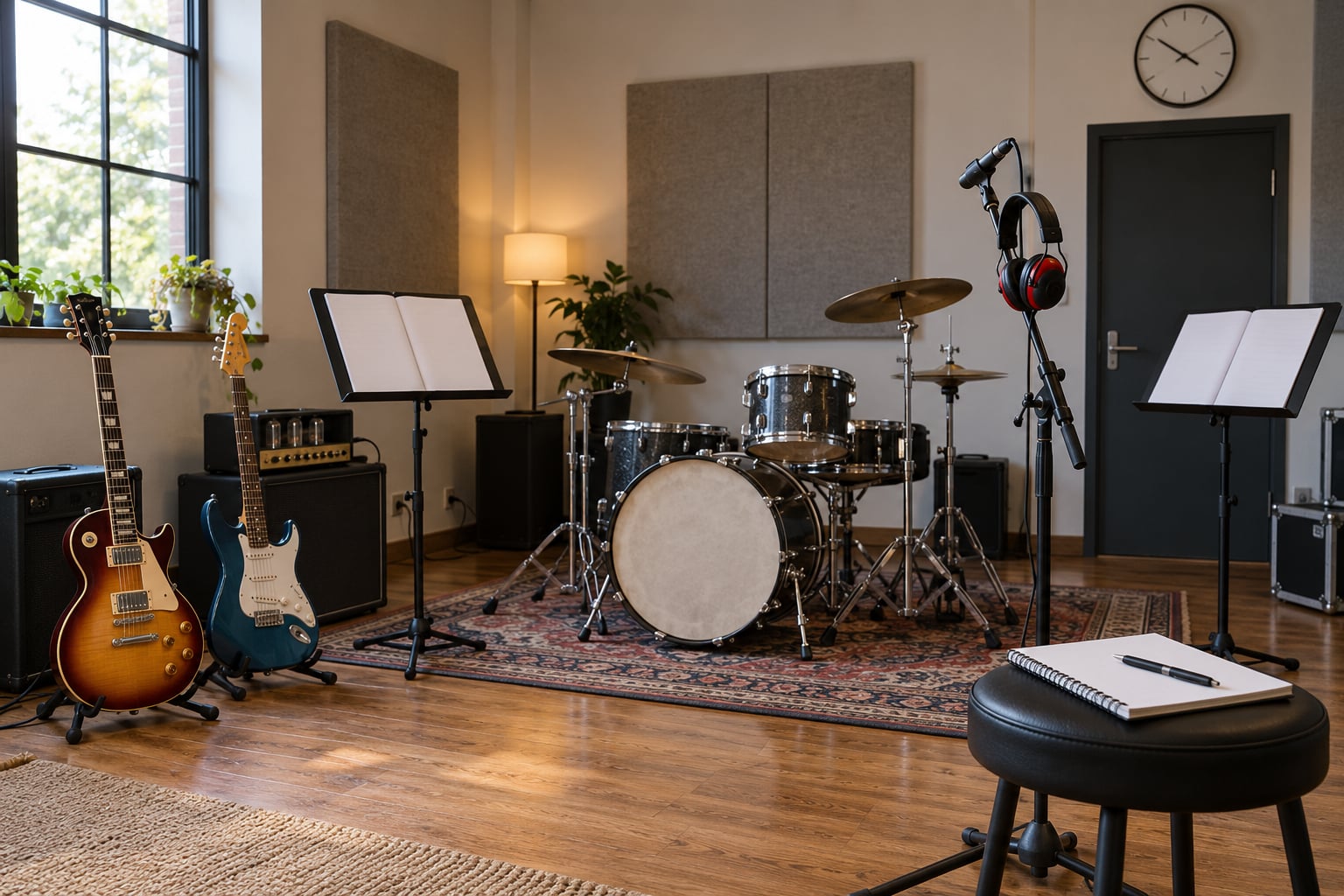
- A rehearsal space. A rented room, a garage or a basement works. Size matters less than predictability — same room, same setup, so nobody wastes twenty minutes rebuilding the drum position.
- Reliable audio gear. Enough amplification for everyone to hear the drummer and the bass without straining. In a loud genre, monitor wedges and a proper PA are the difference between hearing your own playing and guessing.
- Hearing protection and an agreed volume limit. Rehearsal volume arguments are a classic band-killer on music forums, and the fix is a number agreed before anyone plugs in. Bring plugs or ear defenders if the room demands it.
- A shared setlist document. Song titles, keys, tunings, tempo targets and structure notes in one place everyone can reach — a shared doc, a group chat file, or a pinned message.
- Assigned musical roles. Someone owns the calendar, someone owns the recordings, someone writes the notes. Small bands rotate these so no one becomes the bottleneck.
- A note system. A rehearsal log, however plain, so the next session starts where the last one stopped instead of re-covering ground.
How to Practice as a Band Efficiently: Step-by-Step
The cycle below works whether you have two hours in a commercial room or forty minutes in a garage between shifts. Keep the order, shorten the blocks, and the effect carries over.
Set One Measurable Goal for the Session
“Let’s run the songs” is not a goal, because nothing tells you when you are done. Pick one target you could pass or fail in front of an audience.
Examples that work: the verse-to-chorus transition on one song lands clean five times in a row at full tempo; the new drummer can hold the ending fill without rushing; the whole set runs in order without a stop. Choose the one weak passage or the one arrangement decision that matters most right now.
Write it down where everyone can see it at the start of the session. That single line becomes the filter for every other activity — anything that does not serve it waits for another day.
Prepare the Parts Before the Full Band Meets
Home practice is cheap and unlimited; group time is expensive and scarce, so the ratio matters. As a starting point, aim for roughly three home practice sessions of 30 to 45 minutes for every one two-hour band rehearsal.
In those sessions, learn your part well enough to play it while reading your own eyes off the page, mark the bar numbers where transitions happen, and flag anything you cannot play cleanly yet. The point is not perfection, it is arriving with the notes under your fingers and the awkward spots already identified.
Players on r/Bass describe this as the difference that matters most: short, deliberate sessions beat a long unstructured sprawl where you mostly play along to records. Use a metronome and a click track so you arrive with your internal timing already set.
Run a Short Sound and Alignment Check
Spend the first ten minutes getting everyone hearing the same thing. Tune up, agree a tempo reference for any song that drifted, confirm the key and any down-tuning, and walk through the cues — count-ins, breath marks, hand signals, who starts the count and who drops out.
Then set levels together. Everyone walks the room, listens from the drummer’s spot and the singer and guitar positions, and agrees the numbers out loud. Takes five minutes and stops the whole band guessing at balance for the rest of the night.
Rehearse Difficult Passages in Small Loops
Most rehearsal time gets lost to full-song repetition when one eight-bar section is still wrong. Isolate the loop, slow it until it is clean, then raise the tempo in small steps — a tempo ladder — and only widen the loop once it holds.
A useful rule: never speed up a passage while it is still difficult, and never slow one down because it is already easy. Play the section eight times correctly, add the bar before it, then add the bar after it.
Once a passage is clean at two or three tempos, put the click back on and move on. Deliberate work on the hard bit beats three more complete run-throughs of a song that still stumbles at the bridge.
Use Focused Feedback and One Change at a Time
Feedback is where rehearsals turn into arguments, so give it a shape. Name what is working first, then choose one priority correction for that loop, apply it, and test again before moving to the next note.
Critique the music, not the player, and keep it to something the band can act on in the next thirty seconds. If you are about to say “you were rushing,” you are describing a feeling; say “the second half of that fill drifted ahead of the downbeat,” which is a fix.
Where players have conflicting ideas about an arrangement, write both options down and test them against a reference take rather than settling it by volume. On bass forums, the same point keeps surfacing: rehearsal is when songs come together, not when people argue over parts that should already be learned.
Finish With Performance Runs and Notes
Reserve the last twenty minutes for playing the material the way you will play it live — in set order, at target tempo, with dynamics instead of maximum volume, and without stopping to fix things. Interruptions during a run defeat the purpose of the run.
Record at least one take. Even a phone on a stand captures timing drift and balance problems that you cannot hear while playing, and playback is the cheapest feedback loop a band has. Set the rule that nobody argues with the recording; it settles disagreements faster than opinion.
Then write the notes while everyone is still in the room: what improved, what is still failing, and one specific home practice task per person for the week. Book the next date before anyone leaves, and end on time. Bands that keep rehearsing past the plan keep rehearsing past the point of usefulness.
Common Mistakes
- Starting with full-song repetition. Warm up briefly, then attack the weak passage first while everyone is fresh. Fix: put the problem song at the top of the agenda, not the bottom.
- Arriving with unprepared parts. Someone learning their part in the room turns a rehearsal into a lesson. Fix: assign the passage to one person and give them a deadline before the next session.
- Too many corrections at once. Five changes in one loop means nothing gets tested. Fix: one change, one retest, then the next.
- Skipping the break. Attention drops long before muscles do, and tired playing cements bad habits. Fix: five to ten minutes away from the room roughly every forty-five minutes.
- Letting noodling eat the session. Unstructured free playing feels good and teaches nothing on its own. Fix: cap it at the last five minutes of the session.
- Postponing every decision. “We will figure out the ending next time” is how a band arrives at a gig without one. Fix: decide small arrangements in the session and write them down immediately.
One last tip: keep the plan visible to everyone before the session starts. Bands that know in advance what success looks like argue less and play more.
Frequently Asked Questions
How often should a band practice to improve efficiently?
For a weekend band with day jobs, two full sessions a week of two to three hours each, plus three or four short home practice sessions in between, is usually enough to see steady progress. Consistency beats length: several short blocks spread across the week build muscle memory better than one long session before a gig. Bands preparing for a tour or a recording usually increase to three sessions. Consistency of the group time matters more than its length, so protect the schedule first and lengthen sessions only when you have more to work on.
Should band members practice their parts at home before rehearsal?
Yes, and treat it as the rule rather than the exception. Home practice is where you learn notes, tempos and transitions without an audience, which means group time can go to ensemble work that only happens when everyone is in the room. A rough starting ratio is three home sessions of 30 to 45 minutes for every two-hour band rehearsal. If someone genuinely cannot practice between sessions, assign them one specific short task so they still arrive with something prepared rather than nothing.
How long should an effective full-band rehearsal be?
Two to three hours is the sweet spot for most part-time bands, with a clear plan covering about half of it. Focused attention falls off after roughly 90 minutes, so a two-hour session with a break beats a four-hour session that ends in jams. Reserve the last 20 minutes for full run-throughs in set order, and stop when the plan is done even if energy remains. Bands rehearsing for a specific show often extend to three hours, but the extra time should go to run-throughs, not new material.
How can a band practice when members have different skill levels?
Split the work rather than slowing the whole band down. Beginners drill their parts, timing and transitions at home, often with a click track, while the group rehearses arrangement and dynamics at full tempo. Record reference takes and share them so newer members can practice against the real thing. Give partial-attendance sessions a purpose: a three-person run for a new guitar part is far more useful than a five-person session where someone plays for forty minutes without learning anything.
Is it better to rehearse songs repeatedly or work on difficult sections?
Work on the difficult sections first, then run the song in full. Repetition of an entire song only helps if the weak part is already clean; otherwise the band rehearses the same stumble ten times. Isolate the hard eight bars, slow them down until they are reliable, raise the tempo in small steps, then widen the loop bar by bar. Once the passage holds, run the full song at performance tempo to test how it sits in context.
How should a band track progress between rehearsals?
Keep a short rehearsal log with three entries per session: what improved, what is still failing, and one home task per person. Record one clean take each session and compare it with the take from a month earlier, since timing and balance drift are hard to remember. Shared notes in a group chat or a free shared document work well, but the rule is that everyone writes their own tasks before leaving the room. Progress becomes visible when the same song stops appearing in the problem list.
Conclusion: Start With the Next Rehearsal
You do not need a new system to fix an inefficient band. Pick one measurable goal for the next session, assign each member a specific part to prepare at home, book the room, and protect the last twenty minutes for run-throughs and notes.
That is the whole method: prepare alone, work on the weak bit together, record it, and leave with written tasks. Do it for 2026 and the same four people will sound noticeably better than they did last month.