Metal fans wear leather and studs because the look started as working riding gear, got carried into rock and punk, and was turned into a stage costume by Judas Priest in the late 1970s. That is the short answer to why metal fans wear leather and studs, and since then the outfit has done several jobs at once: it reads as tough, it survives a mosh pit, it marks out who belongs, and it lets people say something about themselves without talking. Half the reason survives is history, and the other half is simply how the materials behave in a room full of strangers.
I have watched this get misread for about as long as I have been going to shows. People see a studded jacket at a bar and assume the wearer is halfway to starting something. Most of the time that person bought the jacket at a charity shop, wore it to four bands last month, and has never once thought about a motorcycle club.
Table of Contents
- Why Do Metal Fans Wear Leather and Studs?
- Where Did the Leather-and-Studs Look Come From?
- The metal wardrobe decoded
- Why Leather? Protection, Durability, and Stage Presence
- Why Studs? Texture, Defiance, and Visual Identity
- Is Leather-and-Studs Clothing Really About Rebellion?
- How Did Leather-and-Studs Fashion Change Within Metal?
- How Do Biker, Punk, and Metal Cultures Influence Each Other?
- What Does Wearing Leather and Studs Communicate Today?
- Do You Need a Real Leather Jacket or Studs to Be a Metal Fan?
- Frequently Asked Questions
- What is the historical origin of leather and studs in metal fashion?
- Are leather jackets and studs only worn by rebellious metal fans?
- What is the difference between a biker jacket and a metal fan jacket?
- Are leather jackets and studs comfortable for concerts?
- How should I care for a leather jacket with metal studs?
- A Metal Look Is About Identity, Not Uniformity
Why Do Metal Fans Wear Leather and Studs?
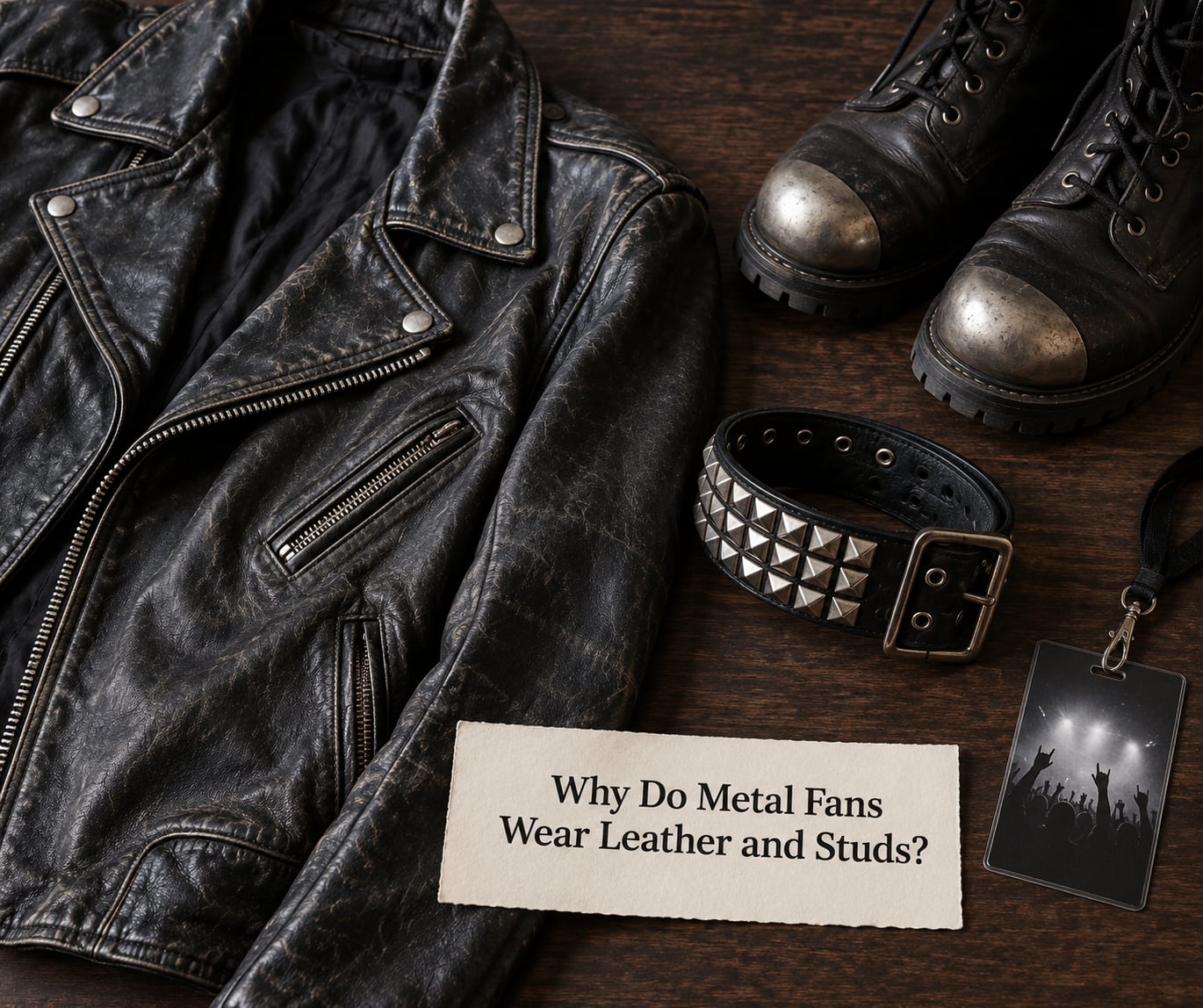
Five things are going on at once, and they are worth separating because they get collapsed into one vague idea about rebelliousness.
- Inherited style. The silhouette was built for motorcyclists decades before heavy metal existed. Fans adopted it because bands wore it, and bands wore it because fans recognised it.
- Real protection. Leather is genuinely abrasion-resistant. In a pit that pushes and grabs, that is not a costume detail, it is a reason.
- Visual toughness. Studs and spikes alter a shoulder line. A body reads wider, harder and slower to approach.
- Belonging. Two people in a queue can identify each other in about two seconds without exchanging a word.
- Personal style. Once the meaning stops being complicated, the jacket becomes a normal thing people like wearing, the way anyone likes a coat they think looks good.
The honest bit is that all five are true at once. The jacket is armour and it is also a nice jacket, and pretending otherwise makes for a thinner article than the one people actually live.
Where Did the Leather-and-Studs Look Come From?
The leather-and-studs look came from riding. Motorcycle clothing of the 1940s and 1950s was heavy leather, sometimes with a studded or laced panel over the shoulders, because a rider who comes off a machine at speed scrapes along tarmac. Fasteners and spikes on jackets had a real job: they broke up the slide. The look was born functional and only became symbolic later.
After the war, American teenagers who could not afford a car settled for a motorcycle, and the outfit became a uniform for that life. Films made it famous: Marlon Brando on a Harley in The Wild One in 1953 turned a working garment into a character type, and within a decade the whole style was shorthand for a young man with a hard life and a motorbike.
Then the custom bike shops got involved. Chrome, ape hangers, studded leather and club patches were the visual language of the post-war biker club world in the US, and by the 1960s that language had travelled into Britain with the Hell’s Angels chapter opening in 1964. Bikes, leather and club colours became a set of symbols with rules about who could wear them, and those rules travelled with them.
Rock picked the symbols up without most of the rules. The 1960s and 1970s saw leather on stage as a general sign of danger and rawness, from rockabilly greasers through to glam. In Britain, the working-class leather jacket was also already a punk item, adopted in the mid-1970s from the tail end of rocker culture. Punk took it apart, customised it with DIY studs, safety pins, hand-stencilled type and spray paint, and handed it back to the wider scene stripped of club hierarchy.
Then came the moment the look became metal-specific. Rob Halford, in his own words, saw leather on stage and understood immediately what it did. Judas Priest’s Stained Class came out in 1978, British Steel in 1980, and by the latter tour Halford was playing in leather and chains on every stage in Europe. That is the tipping point. What had been borrowed became owned.
Richie Faulkner, the band’s guitarist, has described what that does to a performer. “When I put on my leather clothing, I feel like a superhero… once the curtain goes up, you forget about everything else,” he told Balkanrock. The gear is not decoration to him either. It does a job before the first note.
The metal wardrobe decoded
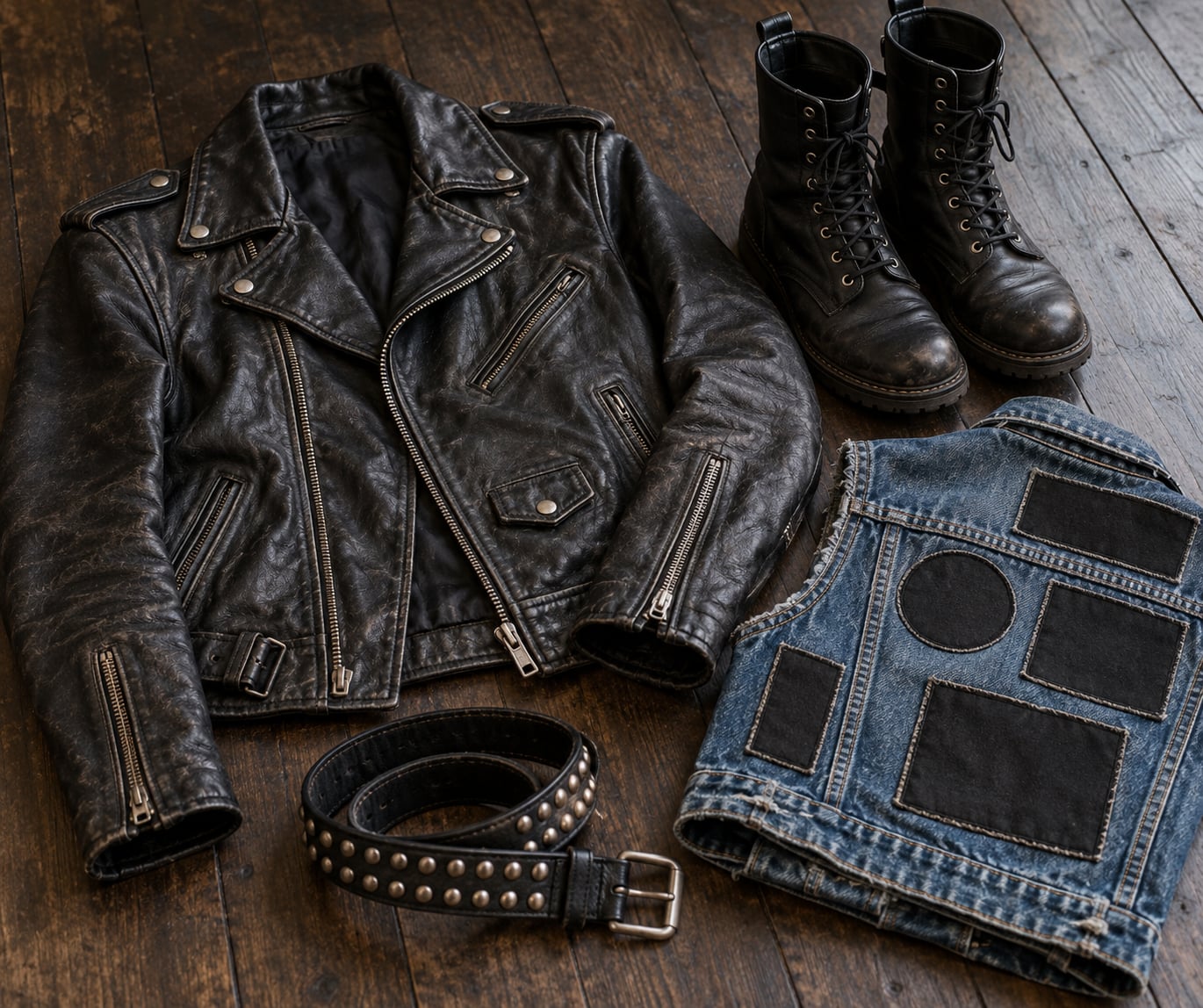
- Moto jacket (Perfecto or racer cut). 1940s-50s riding gear. Durability, rebellion, the default metal jacket.
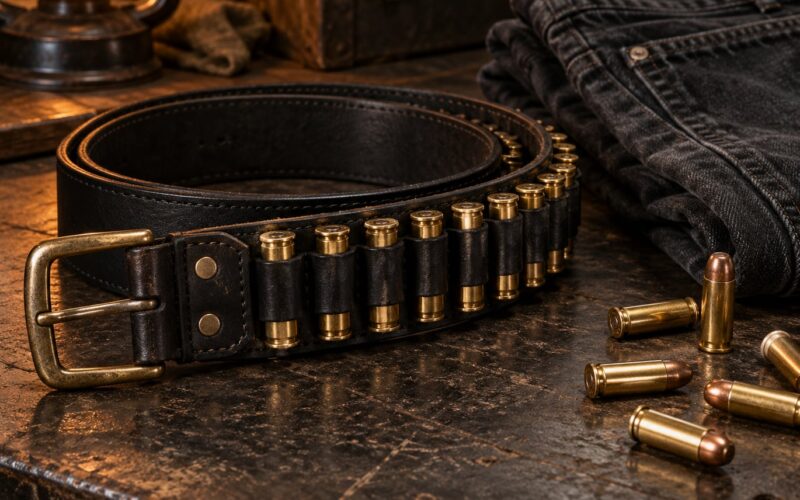
- Sam Browne belt. Military dress, then biker and club wear. Rank, membership, that you have done your research.
- Studded belt or wristband. Club colours and motorcycle customisation, then punk DIY. Aggression and style in a small, cheap package.
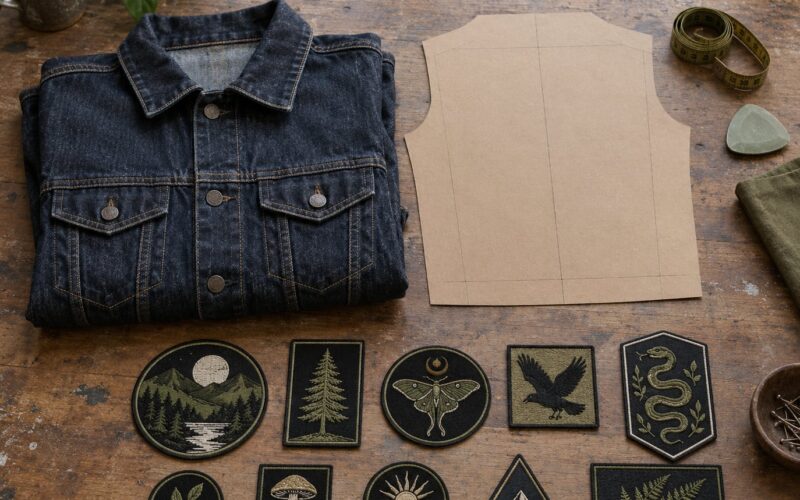
- Battle vest (denim or leather). Punk DIY patches, adopted by metal fans. A public record of the bands and shows you back.
- Band tee. Concert merch since the 1970s. The cheapest and most common form of the whole thing.
- Heavy boots. Workwear and riding boots. Practicality: a floor you can stand on for three hours.
- Nylex-style jacket. British skinhead and mod dress, adopted by the UK scene. Knowing the British lineage, usually worn under a vest.
Why Leather? Protection, Durability, and Stage Presence
Leather works for the reason people who have never biked understand immediately once they explain it: it does not tear. A heavy hide jacket will take a shoulder into a packed barrier, a dropped elbow onto a stage lip, or an hour of being shoved, and it comes out creased rather than shredded. Cotton does not. Denim survives some of it. Leather survives nearly all of it, which is why bikers wore it first and metal fans wore leather second.
It also blocks wind, which matters more than people expect when you are standing outside a venue in February for an hour waiting on a queue that moves slowly.
What that buys you on stage is different. Halford did not wear leather for abrasion. He wore it because a stage needs a silhouette that reads from the back row, and black leather holds a hard edge under lights that make cloth look flat. Steel and leather catch light. Cotton disappears.
Then the meaning layers on. Leather says the wearer can afford to keep something for a decade, which is why a fifty-year-old jacket with a faded patch reads as more metal than a new one from a high street. It also carries risk. Leather is heavy, it does not breathe well, and it heats up fast in a packed room. Fans keep it anyway, which tells you something about what they think the trade is worth.
Why Studs? Texture, Defiance, and Visual Identity
Studs do three physical jobs at once. They break the flat surface of a jacket so light registers differently across it. They add weight at the shoulders, so the silhouette sits broader. And they make a small, specific sound when you move, which is a private signal to anyone who recognises it and nothing to anyone who does not.
Structurally they are simple. Cone spikes project outward and catch light along a whole edge. Pyramid studs read as armour plating. Flat studs sit close and stay tidy. The older biker versions were riveted through the hide because they were meant to take a hit; punk versions were cheaper and often glued or punched, which is why they fail.
The punk contribution matters more than the metal one. Making a jacket your own with a hammer, a leather punch and a bag of studs was cheap, fast and slightly dangerous. That DIY logic is exactly what a metal fan does with a battle vest, and it is where a lot of the style’s reputation for defiance actually comes from, rather than from the motorcycle side.
Is Leather-and-Studs Clothing Really About Rebellion?
Partly. Rebellion is the part outsiders see first because it is the loudest layer, but it is not the foundation. The foundation is usually much more ordinary than that: this is the music I like, and this is the clothing that goes with it.
There are at least six other reasons a fan ends up in leather.
- Belonging. Recognising another fan is the single most reliable function of the outfit. Shared symbols do the work that small talk would otherwise do.
- Musical taste. Wearing a band tee is a recommendation, and the jacket is the frame around it.
- Confidence. Dressing for the version of yourself you want to walk in with is a normal human thing to do.
- Nostalgia. For anyone over 40, the leather is also a link to the shows they went to when they were 19.
- Sex and gender. The look has been worn by everyone for fifty years and it is no longer read as automatically male. That is worth naming, because policing who is allowed to wear it is still a live annoyance.
- Class and work. Leather and studs are working-class and working garments in origin. Wearing them says you are close to the culture rather than adjacent to it.
Rebellion is also mostly relative. A studded jacket in a metal pit is the same as what everybody else is wearing. It only reads as rebellious to somebody in a car park in a quiet town, which is not a very useful measure of anything.
How Did Leather-and-Studs Fashion Change Within Metal?
Across roughly fifty years the pieces stayed the same and the balance shifted, scene by scene. Knowing which one you are looking at is most of the style literacy in metal.
- NWOBHM and the New Wave of British Heavy Metal. The most direct inheritance of Priest. Leather, studs, denim, a lot of dry sarcasm and Union Jack-adjacent imagery.
- Thrash. Bay Area metal, mid-1980s. Big patched denim or leather vests loaded with tour patches, mesh shirts underneath, more clutter than Priest’s cleaner look.
- Death metal. Late 1980s Florida and the Nordic scene. Gore, spikes, warlords, unreadable logo patches. The stud count goes up and the jokes go away.
- Black metal. Studs here sit alongside corbies, crosses, blackened faces and medieval imagery rather than motorcycles. Same materials, completely different symbolic world.
- Glam metal. The deliberate opposite move. Studs trimmed to gold or silver, leather piped and fitted, hair enormous. The hardware stays; everything else gets theatrical.
- Punk-influenced metal. Studs added with a DIY hand rather than inherited from bikers. Patches are homemade, boots are scuffed, nothing matches on purpose.
- Metalcore and the 2010s. The look shrinks. Hoodies, denim and a single jacket replace the fully loaded vest.
- Festival and streetwear metal. Studs appear on denim, bags and boots more than on leather, and the metal signal comes from the tee underneath. Cheaper, wearable in daylight, still recognisable.
The through-line is that heavy keeps shrinking. Leather used to be armour and became an outfit and became a normal thing to wear to a shop, and none of those steps were an insult to anything.
How Do Biker, Punk, and Metal Cultures Influence Each Other?
These three overlap heavily and are not the same thing, which trips people up regularly. Bikers inherited riding gear and built rules around it. Punk took the material, threw the rules away and made the customisation the point. Metal inherited the result and gave it a stage.
The flow was never one-way. Biker clubs adopted patches from the 1960s onward and turned the vest into a group record. Punk bands put chains and leather on stage in the UK mid-1970s. Metal fed straight back into punk-adjacent fashion, and later into festival clothing that nobody would call metal at all.
Symbols travelled through a specific set of channels: fan-run zines in the 1970s, record sleeves and photos, stage lighting, and merch tables where you physically could not buy the jacket without buying the tee. Merch is the underrated one. It turned the whole look into something you could put on for twenty dollars instead of committing to a hide.
The one thing all three share is a DIY streak. If you can modify it yourself, it is more yours.
What Does Wearing Leather and Studs Communicate Today?
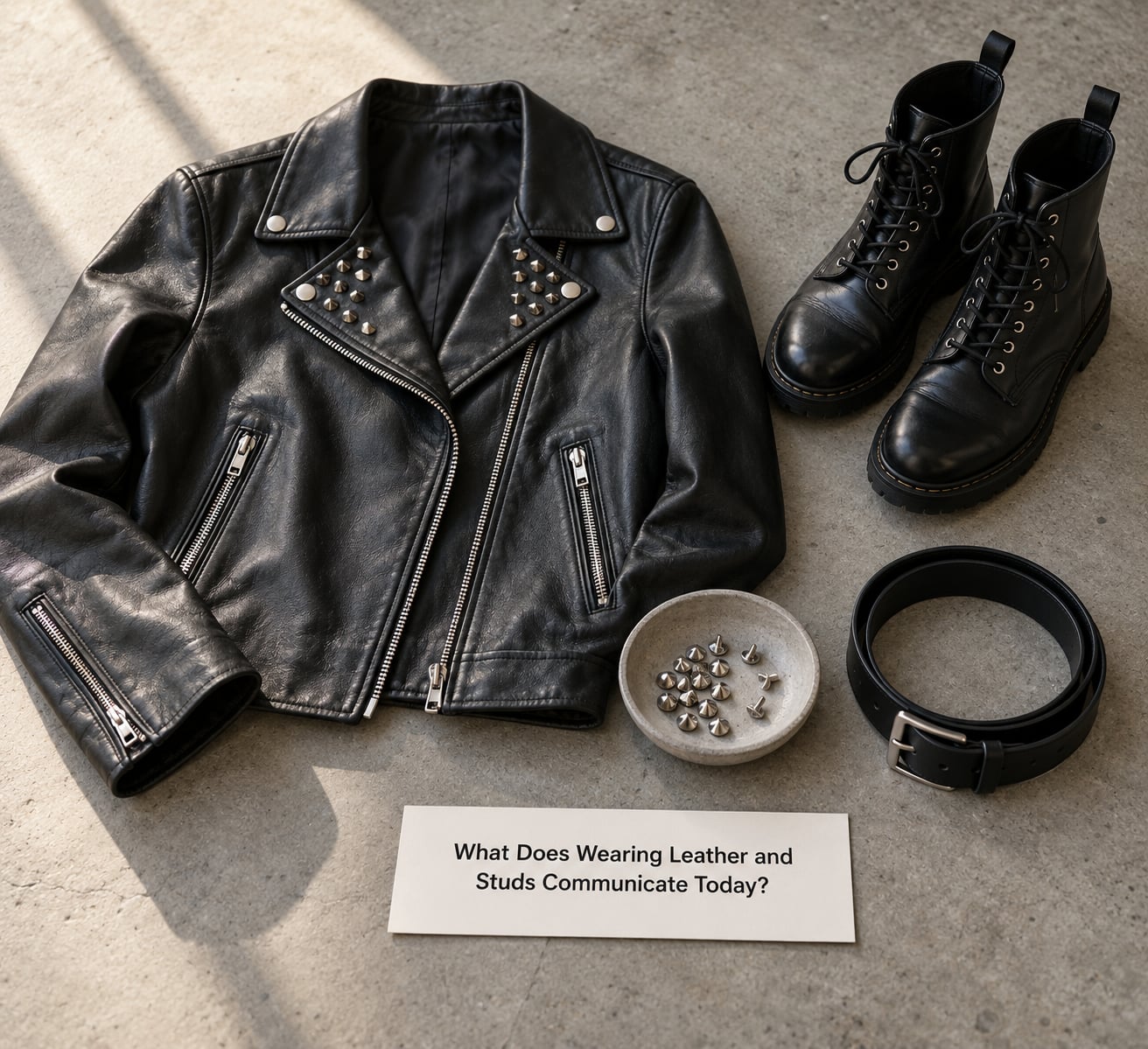
Today the jacket mostly signals commitment and taste. It says you know enough about the music to recognise what you are wearing, and it saves you a sentence at the bar. Second, it signals that you dress for effect, which is worth being deliberate about.
Gender expression has loosened considerably. The outfit is worn by women, non-binary fans and men alike, and it now reads as “metal scene” before it reads as anything else. That shift took decades and it is still not finished.
There is also a clear difference between buying a jacket for one concert and living in a metal identity. The first is costume you enjoy for a night. The second is a set of clothes you wear most days, patched, repaired and passed along. Fans tend to have a very clear opinion about which one a stranger is doing, and they are usually wrong.
The honest negative is heat. A packed, poorly ventilated room plus a hide jacket is genuinely miserable, and it is the most common complaint on metal fan forums. The second most common is being mistaken for a biker or for a thug on a night when you were just going to a show.
Do You Need a Real Leather Jacket or Studs to Be a Metal Fan?
No. Genuine leather and a heavy studded vest are the traditional version, not the entry fee. A band tee, a patch, black denim, boots and hair that you are happy in communicate the same thing to anyone who matters, at a fraction of the weight.
If you are starting from nothing, a black denim or canvas jacket you can put patches on is a good first step. It is cheaper, cooler, and it breaks in rather than cracking.
A few practical notes if you are doing it properly.
- Heat management. Leather does not breathe. Plan for it, wear a cotton layer underneath, and take the jacket off between bands instead of the whole night.
- Stud safety. Sharp studs at shoulder height will scratch the person behind you in a pit, and you will get told. Keep the cones short, keep studs riveted rather than glued, and carry a few spares with a small punch and setting tool.
- Venue rules. Some venues restrict spiked footwear or studded vests at the door. Check ahead and go with a removable stud set if you can.
- Leather care. Wipe sweat off promptly rather than letting it sit. Condition the panels that do not carry studs every year or so, keep studs away from heavy conditioner, and expect fading, which is not a defect.
- Patches. Sew the ones that matter on rather than gluing them, and leave breathing room on the back panel. A vest with forty patches is a legible record, not a ranking.
And if someone tells you that you are not a real fan unless you own a certain jacket, treat it as the boring claim it is. Nobody gets to police the wardrobe of a culture that was built on people making their own.
Frequently Asked Questions
What is the historical origin of leather and studs in metal fashion?
Leather and studs entered metal fashion from motorcycle clothing of the 1940s and 1950s, where the material and hardware were genuinely protective. Post-war biker culture made the look symbolic, glam and punk wore it on stage in the 1960s and 1970s, and Rob Halford’s stage outfits for Judas Priest from 1978 onwards turned borrowed biker dress into metal’s own uniform.
Are leather jackets and studs only worn by rebellious metal fans?
No. Rebellion is the most visible layer but rarely the real reason. The jacket also signals musical taste, confidence, nostalgia, gender expression and membership of a community. Plenty of fans buy one jacket for a show and never think about it again. It is also only rebellious relative to whoever is standing next to you.
What is the difference between a biker jacket and a metal fan jacket?
The classic biker jacket has an asymmetrical zip, a wide collar and hardware with a protective origin. A metal fan jacket is usually a racer or bomber cut worn over a band tee, often with a studded belt or a loaded battle vest over the top. In practice many of the same jackets circulate between both scenes, which is exactly why the styles blur.
Are leather jackets and studs comfortable for concerts?
Not always, and fans complain about it more than almost anything else. Leather does not breathe, so a packed room makes a hide jacket hot within an hour. Heavy studded vests also tire your shoulders over a multi-band day. Wearing a cotton layer underneath, choosing a jacket with ventilation, and taking the outer layer off between sets fixes most of it.
How should I care for a leather jacket with metal studs?
Wipe sweat off as soon as you get home instead of letting it dry into the hide. Condition the unstudded panels once a year and keep conditioner away from the studs and their holes. Check rivets for lift every few months, and replace a loose stud with a setting tool rather than glue. Expect fading and scuffing; they are the jacket’s record of use.
A Metal Look Is About Identity, Not Uniformity
Leather and studs are powerful symbols because they compress fifty years of biker culture, punk customisation and stage spectacle into something you can put on in a minute. That is also why they get over-read. On most of the people wearing them, the jacket is simply a good jacket that costs the wearer something in heat and weight and gets them recognised.
If you want to start, start with one piece you are comfortable in for four hours of standing and four hours of everything after. A tee, a pair of jeans and a jacket you like will do the job. The style survives as long as nobody is wearing it on instruction.