A first-timer can run a four-day European metal festival for roughly €450 to €900 per person, all in, once you add up the ticket, the journey, a tent pitch, food and the small stuff nobody budgets for. The trick is that the ticket is usually only about a third of that figure. The rest is transport, sleeping and eating, and those three lines are where a budget trip is won or lost.
Learning how to plan a metal festival trip on a budget is less about finding a bargain ticket and more about controlling the four costs that sit around it. Book in the right order, cap each line before you pay for anything, and you can see the whole trip in one spreadsheet before the first payment leaves your account.
Table of Contents
- What You Need
- Step-by-Step: How to Plan a Metal Festival Trip on a Budget
- How to Plan a Metal Festival Trip on a Budget: Set Your Total Cap
- Lock Down the Festival Ticket First
- Compare Travel Costs Before Booking
- Find Lodging Close to the Festival
- Build a Daily Food and Cash Plan
- Reserve Merchandise Money Without Overspending
- Protect the Trip With a Final Checklist
- Common Mistakes
- Frequently Asked Questions
- How far in advance should I plan a metal festival trip?
- Is camping a cheaper option than staying in a hotel?
- Should I buy a resale festival ticket to save money?
- How much cash should I bring to a metal festival?
- Can I save money by driving to a metal festival?
- What should I do if my festival travel costs rise after booking?
What You Need
You need four things before you book a single night: a real number, a document checklist, a gear decision, and a small set of planning tools. Get these first, because each one changes what you buy next.
- A total cap. One figure for the whole trip, including everything. Most people set a cap for the ticket and then discover the trip costs twice that.
- Your documents. Passport or ID valid past your return date, travel insurance covering festival camping, any visa or Schengen requirements for the country, a vaccination or medication note if relevant, and emergency contact details offline on your phone.
- A gear decision. Are you buying a tent and sleeping bag for this trip, or borrowing, renting or buying second-hand? First-timers routinely spend more on gear than on travel.
- A planning sheet. A simple table with columns for category, estimate, booked price and confirmation number. The confirmation number column matters more than people think.
- A note of the festival rules. Prohibited items list, re-entry policy, cashless or wristband payment setup, and whether outside food or a camp stove is allowed.
Forum regulars on r/wacken put the first-timer gear bill at roughly €70 to €100 for a tent, mat and sleeping bag bought new for a single trip. That is the number that quietly breaks a tight budget, so decide it before the festival, not in a shop three weeks out.
Step-by-Step: How to Plan a Metal Festival Trip on a Budget
Work through these in order. Each step assumes the previous one is settled, and each one gets cheaper or more comfortable when the step before it is done properly.
How to Plan a Metal Festival Trip on a Budget: Set Your Total Cap
Start with an all-in ceiling, then split it. The table below shows how a typical four-day European trip divides across three spending levels. Figures are indicative for the 2026 season and move every year, so treat them as a shape, not a quote.
| Category | Cheapest | Realistic | Comfortable |
|---|---|---|---|
| Festival ticket (early bird or presale) | €120-160 | €180-230 | €260+ |
| Travel to the gates and back | €90-150 | €180-300 | €350-500 |
| Camping or lodging, 3-4 nights | €45-70 | €90-150 | €300-500 |
| Food and drink on site | €60-90 | €110-160 | €200-260 |
| Lockers, showers, charging, merch | €10-20 | €35-60 | €80-140 |
| Total per person | €325-490 | €595-900 | €1,190-1,900 |
Two observations from that table. First, travel is the line most first-timers forget, and on a remote site it can rival the ticket. Second, the gap between the cheapest and comfortable column is mostly choices, not necessities, which is exactly where a budget trip should be made.
Mark three lines as non-negotiable and everything else as optional. Non-negotiable usually means ticket, travel home, one bed or pitch, and food for the days. Optional usually means lockers, upgraded wristbands, glamping, and merch. Giving yourself permission to skip a category is cheaper than trying to claw money back from another one later.
Lock Down the Festival Ticket First
Buy the festival ticket before you book anything else, because a sold-out festival makes every other plan irrelevant. Two decisions matter: which tier, and when.
On timing, early bird and presale tiers are the only reliable discount most festivals offer. Regulars on r/wacken and r/festivals consistently recommend one specific move: buy the camping or pitch pass during presale, then the general admission pass when its own sale opens, rather than trying to do both at once. The two sales are often on different dates, and the pitch inventory runs out first.
On tier, general admission gets you the festival. VIP adds faster lanes, a viewing platform, a separate bar and sometimes a shower allocation. On a budget that upgrade rarely pays for itself unless your priority is queue length, because a full weekend of general admission already spends most of the time in the pits anyway. Buy general admission, plan the queues, and spend the difference on travel.
On the weekend pass question, a three-day weekend ticket beats a four-day full pass when the difference is under roughly €30 and you would have paid for a fourth night of camping and food anyway. Work out the break-even before you assume the longer pass is better value.
On resale, treat anything above the face value as a cost, not a bargain. Forum threads describe resale markups running well into the double digits as a percentage, and the risk of an invalid or duplicated pass is real. If a pass is cheaper than face value, it is usually because it is a duplicate, a cancelled order or a scam. If you must use resale, use the platform the festival itself links to, pay by card so you can dispute, and screenshot everything.
One warning worth repeating, because it is the most common first-timer failure in these threads: a camping pass, pitch pass or glamping pass is not a festival ticket. They are separate purchases. Print both confirmations or store both in one offline folder.
Compare Travel Costs Before Booking
Work out the full journey cost, door to pitch, before you commit to a festival. Most people compare the fare and stop there, then discover the shuttle, the taxi rank or the fuel on the far side of the site.
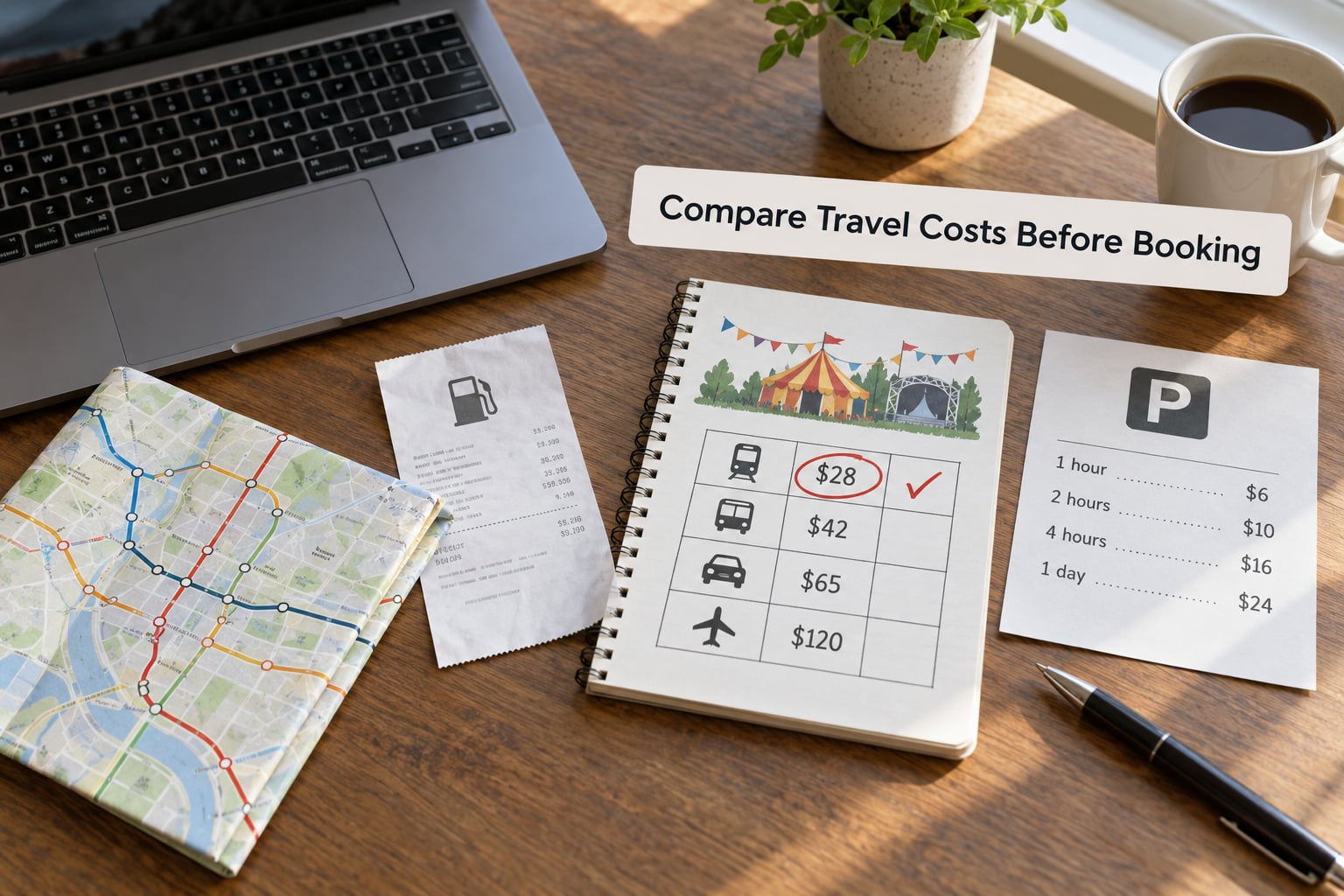
Rank your options by total cost rather than ticket price:
- Coach or long-distance bus. Often the cheapest cross-country option, and it drops you in daylight with no airport transfer. The downside is a long day in a seat, and some routes only run once a week.
- Budget airline, hand luggage only. Works well if the festival site has an airport or a shuttle connection nearby. Baggage fees and a taxi from the airport can quietly double the saving, so price the whole door-to-pitch path.
- Rail. Often the best balance for a mid-sized European trip. City to city, no parking, no fuel, and you arrive tired rather than stranded. Intercity sleepers or couchettes can also replace a night of camping if you time them well.
- Car share. The cheapest option per person once you are three or four in the car, split with your crew. Fuel, tolls, parking and the official shuttle all go into the pot, split four ways.
- Festival shuttle or official travel package. Often the sanest choice at remote sites where the public transport genuinely does not cope. It can cost more than a bus, and it removes the expensive last-mile problem.
Time the arrival against the schedule. Arriving a day early usually costs a night but removes the risk of a delayed journey leaving you outside the gate with no tent pitch allocated. Departure day is where you can save: a Monday or Tuesday return is usually cheaper than Sunday night, and festival shuttles often run on the off-peak days too.
Find Lodging Close to the Festival
Camping is the cheapest option by a wide margin, but it is not always possible or wise. Compare the four realistic options on total cost for the full stay, not on the nightly headline rate.
| Option | Typical cost for 3 nights | Trade-off |
|---|---|---|
| On-site tent pitch | €30-45 pitch plus tent and kit | Cheapest. Long walks, mud, showers in queues, no privacy. |
| Off-site field or local campsite | €60-120 for a pitch, sometimes with shuttle | Calmer nights. You depend on the shuttle schedule. |
| Town hostel or guesthouse | €120-260 for the stay | Real beds and showers. You may need a car or shuttle to reach the gate. |
| Hotel or rental | €300-600 for the stay | Comfortable and warm. Rarely available near big campsites, and it eats the budget. |
At a site like Wacken, the town-base option is harder than it looks. There are very few hotels near the grounds and the transport out is limited, so a nearby base only works if you have a car or a firm shuttle plan. Base yourself in a town you can actually leave from, and treat the last mile as part of the transport line, not as a footnote.
Two money moves here. Borrow or rent the tent rather than buying one, and stay one night cheaper at each end by arriving later and leaving earlier, as long as the festival runs long enough to make it worthwhile.
Build a Daily Food and Cash Plan
On-site food is the easiest place to overspend by accident. r/wacken regulars and other festival forum threads put a beer at around €6 and a bought meal at €10 to €12, which adds up to well over €30 a day before you count breakfast or a second drink.
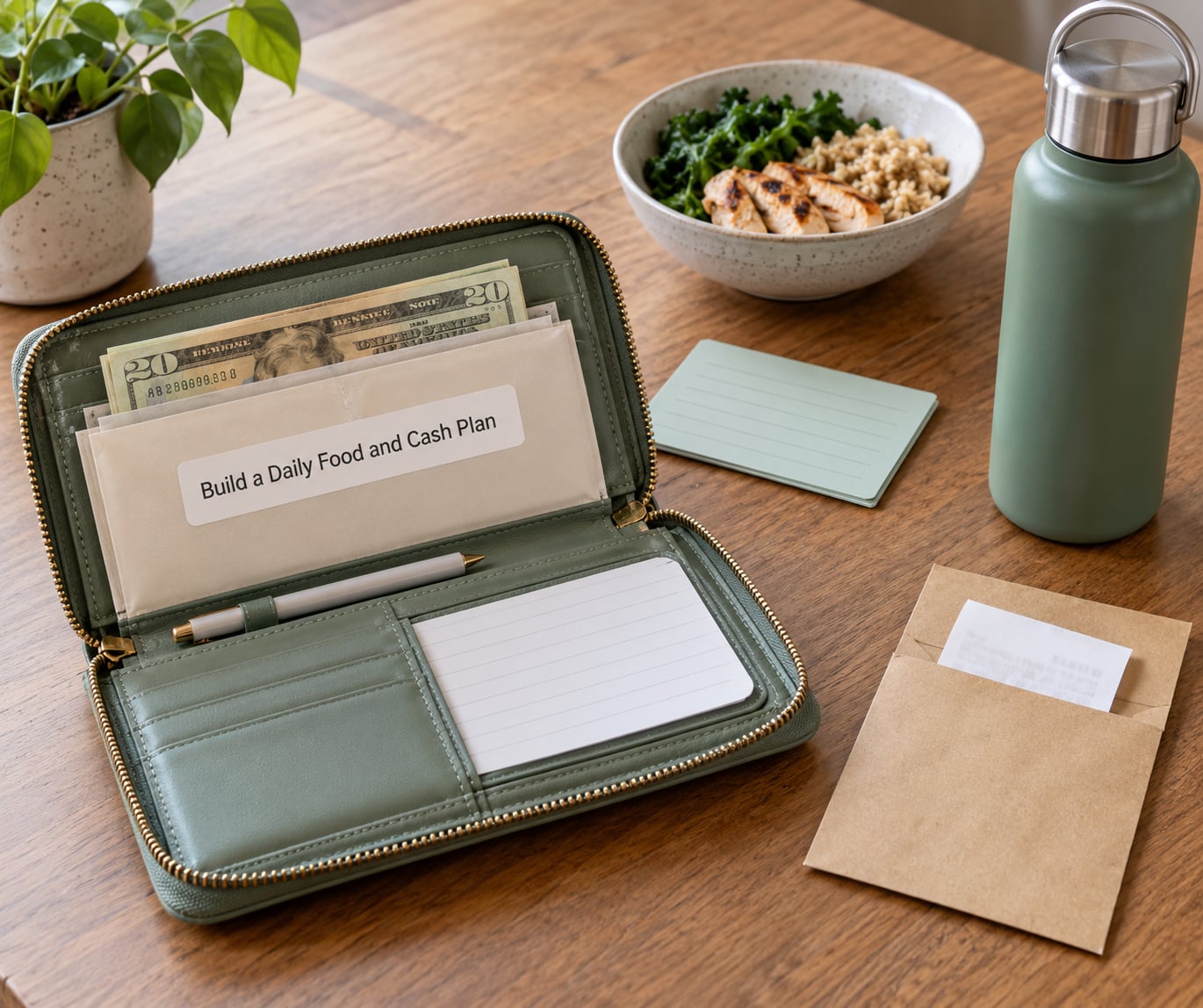
Cut that line in four ways:
- Eat once a day on site, not three times. Breakfast before the gates open and a proper meal in the evening, with something cheap in between, is the standard budget pattern.
- Use the free water refill points. Most large sites have free drinking water. Carrying a reusable bottle kills the bottled water markup, which is one of the steepest prices on site.
- Bring your own food where the rules allow. Cold supplies, dried food and noodles survive a weekend and cost a fraction of the vendors. Check the prohibited items list first, because some sites restrict open flames or unsealed food.
- Withdraw cash before the site. ATMs on big campsites run dry or fail as the weekend progresses, and vendors fall back to cash only when terminals fail. Plan on a run into the nearest town, or a smaller number of larger withdrawals rather than a stream of small ones at a fee.
Set a daily envelope figure and treat it as a hard limit rather than a target. The bands many festivals now use for payment handle a budget fine, but they also make it easy to keep tapping without counting.
Reserve Merchandise Money Without Overspending
Set a merch limit in the same spreadsheet as everything else, before you go. A fixed number you have already accounted for stops the queue-side impulse spend that quietly eats the difference between the realistic and comfortable columns.
Spend it on the one or two things you will still use years later, such as a shirt from a band you already love, and skip limited-edition pieces that exist to exploit scarcity. Flagging spending is not a moral position, it is a budgeting technique.
The same logic applies to every on-site upsell. Lockers, charging points, shuttle upgrades and glamping are conveniences. If your cap is tight, all of them are optional, and the campsites answer the locker problem by being disciplined about what you carry.
Protect the Trip With a Final Checklist
Spend the evening before departure matching your folder to the list. Most festival trips are not ruined by bad planning on the road, they are ruined by one missing item at the gate.
- Festival ticket confirmation and QR code, offline
- Camping or pitch pass confirmation, offline and printed, as a separate item
- Travel bookings with times in local time, plus the return journey written down
- Passport or ID, insurance documents, and any visa paperwork
- Payment cards kept separate from your phone, and a small cash backup kept somewhere safe
- Phone charged, power bank packed, offline map of the site and the exit route downloaded
- Ear defenders, wellies or spare shoes, a warm layer for night, and any medication you take regularly
- A meeting point with your crew written down, in case phones and cell coverage both fail
Re-check the festival rules one more time that week. Weather, prohibited items, cashless payment setup and shuttle timetables all change closer to the event, and a two-minute check protects the whole budget.
Common Mistakes
These are the errors that show up again and again in festival planning threads, and each one has a simple fix.
- Forgetting fees. Booking fees, payment surcharges, campsite charges, wristband deposits and travel add-ons push a headline price up. Compare the final total, not the advertised one.
- Booking lodging too late. Rooms near a festival disappear months ahead, and late booking means a distant base plus a taxi. Camp pitches run out first of all.
- Assuming rideshares are cheap. Surge pricing at a festival gate is punishing, and drivers often refuse short rural trips. Assume you need a planned shuttle or a car share, and budget for it up front.
- Packing too much. Every extra kilo becomes luggage fees, a taxi charge, or a long walk. Camp kit, clothes and a small amount of food cover a weekend comfortably.
- Spending the whole budget on merch and upgrades. Decide the merch figure in advance and let it be a number, not a mood.
- Treating a camping pass as a ticket. The single most-reported first-timer failure. Two separate documents, two separate confirmations.
- Going alone when a crew is available. Group size cuts the per-head cost sharply: car share, one tent between two or three, shared kitchen kit and shared fuel. Four people in a car usually cost less per head than one person on a coach.
- Counting only the ticket. Transport, lodging and food routinely exceed the ticket. Model all five lines or the trip will not fit inside what you set aside.
Two last savings worth flagging. Crew, volunteer, press and work-for-pass routes exist at most large festivals and can remove the ticket cost entirely, though they trade time for money and slots are limited. And a multi-city trip spreads one flight or rail journey across two holidays, which a traveller forum thread about Wacken recommended years ago and which still works: add a city stop either side of the festival and the transport cost per day drops sharply.
Frequently Asked Questions
How far in advance should I plan a metal festival trip?
Start three to six months ahead for a big European festival. Campsite and pitch inventory usually sells out before general admission does, which is why regulars recommend buying the camping pass at presale and the festival ticket at its own on-sale. Flights and rail get expensive inside the final two months, and off-site rooms near remote sites can be gone before that. If you are late, expect to solve accommodation with a tent, a field or a distant town base.
Is camping a cheaper option than staying in a hotel?
Almost always, and often by more than people expect. An on-site pitch for three to four nights plus a tent, mat and bag costs a fraction of a hotel room for the same nights. The trade-offs are long walks to the stages, mud, shared showers and poor sleep in bad weather. On remote sites like Wacken the gap is wider still, because few hotels exist nearby and a town base needs a car or shuttle on top.
Should I buy a resale festival ticket to save money?
Only if the pass is at or below face value, and only through the platform the festival itself links to. Forum threads describe resale markups running into the double digits as a percentage, and any pass cheaper than face value is usually a duplicate, a cancelled order or a scam. Pay by card so you can dispute a bad transaction, screenshot the listing and confirmation, and remember that a camping pass is a separate purchase from admission.
How much cash should I bring to a metal festival?
Withdraw before you reach the site, in the nearest town or a town on your route. ATMs at large campsites run dry or fail as the weekend progresses, and vendors lean on cash when terminals give up. Forum reports put a beer at around six euros and a meal at ten to twelve, so most people need somewhere between forty and sixty per day for food and drink. Take a couple of larger withdrawals rather than many small fee-charged ones.
Can I save money by driving to a metal festival?
Yes, mostly when you split the cost. With three or four people sharing fuel, tolls, parking and the festival shuttle, driving usually beats solo coach or airfare per head. Solo, the maths flips quickly once fuel, parking and wear are counted. Driving also opens up cheap options that need a car, like a base in a nearby town. Book fuel and parking costs into the plan rather than treating the road as free.
What should I do if my festival travel costs rise after booking?
Re-cut the flexible lines first: eat one bought meal a day, drop lockers and charging points, skip glamping upgrades, and set a hard merch number. Then attack lodging and travel, which are the two biggest non-ticket costs, by moving to an off-site field, shifting your arrival a day later, or joining a car share. Avoid touching the return journey until the rest is settled, since that is the one booking you cannot cancel cheaply.
Prices quoted here are indicative ranges for the 2026 season and change every year, so recheck the official festival site before you pay for anything. The first thing to do is pick your festival, find its camping and ticket sale dates, and put both into your calendar. Everything after that is arithmetic, and you have already done the hard part by setting a ceiling you will not move.