Protecting your gear on the road comes down to four habits: travel with less, lock and hide whatever stays in the vehicle, park where a thief cannot work fast, and photograph plus record every serial number before you leave the house. The case matters, but how you pack and place it does more for it than any padlock.
That last point is where most advice gets thin. The guides that rank for this question all talk about theft and then stop, as if the only danger is a man with a crowbar. Meanwhile the things that actually end tours are cracked top plates, popped tube sockets, bent rack ears and buckled speaker baskets, all of which happen while nobody is stealing anything.
So treat this as the whole route rather than a security topic: home, vehicle, rest stop, airport or venue door, stage, then the drive home. Each hand-off is a place gear gets hurt, and each one has a fix that takes a couple of minutes.
Table of Contents
- What You Need
- Step-by-Step: How to Protect Your Gear on the Road
- How to protect your gear on the road before you leave
- Choose the right cases and padding
- Pack cables, electronics, and small gear
- Load the vehicle without shifting weight
- Protect gear during driving and stops
- Move gear safely through airports and venues
- Set up and inspect after arrival
- Common Mistakes
- Extra tips for touring with expensive equipment
- Frequently Asked Questions
- What is the safest way to transport a guitar in a car?
- How should I pack amplifiers and speaker cabinets for touring?
- Can I put musical instruments in a checked baggage hold?
- How do I prevent theft when my gear is unattended at a venue?
- Should hard cases be left in a hot or cold vehicle?
- What spare gear should a touring musician carry?
- Conclusion
What You Need
You do not need a van full of specialist kit. You need the right container for each item, something to stop that container moving, a way to prove what you own, and a plan for the ten worst minutes of the day.
- A case matched to the item. A hardshell case for anything you would cry over, a padded gig bag for the beater guitar, and a flight case or rack case for amp heads, cabinets and racks.
- Immobilizing padding. Foam or plush that fills the cavity completely. Loose padding settles in transit and stops protecting anything.
- Ratchet straps and tie-down points. Cases that slide forward under hard braking are the most common cause of case and cabinet damage.
- Organisation. A cable bag with pockets, label tape, small mesh sacks for screws and springs, and silica gel packets for anything electronic.
- Documentation. A phone, a serial number sheet, and your receipts or warranty paperwork, all stored in the same offline place.
- Security basics. A steering wheel or console lock, a good padlock or door bar for the vehicle, a tracker for the case you would actually miss, and an insurance schedule that names your gear.
Step-by-Step: How to Protect Your Gear on the Road
How to protect your gear on the road before you leave
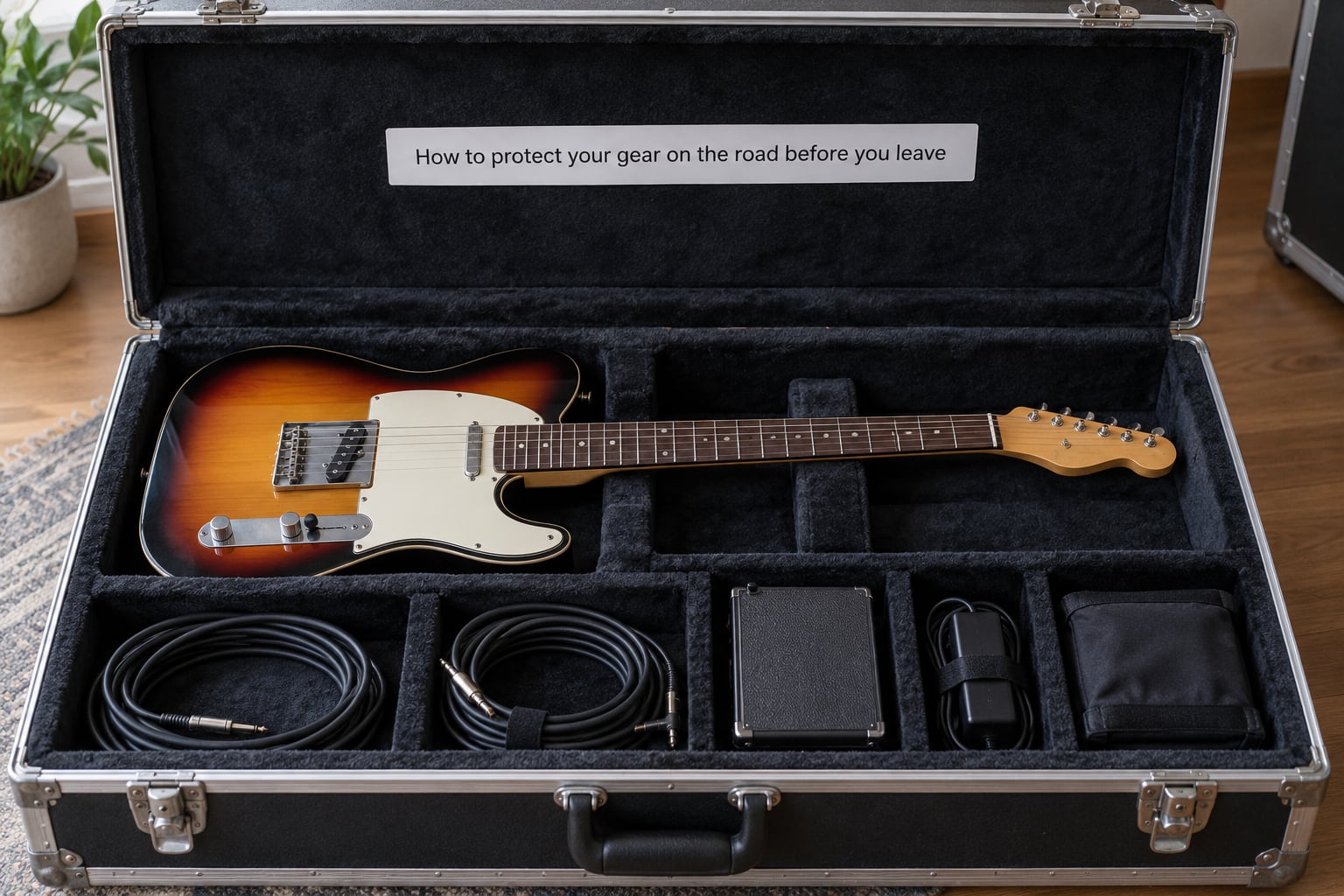
Photograph everything before it goes in the case. Front, back, sides, the headstock, the serial plate on the amp, the serial on each pedal, all with a ruler or a coin in frame for scale. Twenty minutes of photos is the difference between a claim that pays out and a claim that gets refused for lack of proof.
Write the serial numbers into a single document. The headstock, the body cavity, the neck plate, the transformer plate inside an amp cabinet, the model number on the back of a head. Send that list to one person who is not in the van with you, so it exists somewhere after the worst happens.
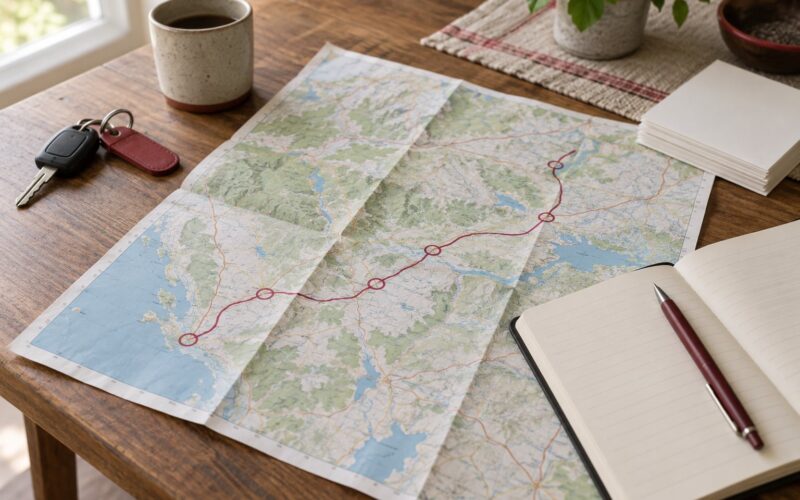
Then check the route and the weather. Summer road surface and a closed van can turn an interior into something close to an oven, and a winter morning means a cold-soaked instrument that will crack when it warms too fast. If the forecast is ugly, add insulation or plan to carry the fragile pieces inside the cab.
Choose the right cases and padding
Match the case to the instrument, not to the budget. Hardshell for hollow bodies, archtops, acoustics and anything vintage. Padded gig bags work for a solid-body beater on a club run, and plenty of working players use them on purpose because a case you can lift in fifteen seconds gets carried inside more often. That trade is real, and it is yours to make.
Fit the padding so the instrument cannot move inside. Lay it flat on its back rather than standing on the edge, since a case on its side takes side impact with nothing to spread it. Keep knobs, tuners and the bridge from pressing on the body, and never put loose picks, spare strings or a screwdriver loose in the cavity, where they become projectiles during a pothole.
For anything flying, put the instrument in its case first, then pad around the case itself. Bubble wrap around the outside protects the case corners, which is where flight handlers put the force.
Pack cables, electronics, and small gear
Coil cables with the over-under method so they lie flat instead of kinking, and velcro them rather than taping them. Label both ends of every lead. A cable bag with dividers beats a cardboard box every time, because you can rebuild a pedalboard in the dark in ninety seconds when the box is chaos.
Keep power supplies and their leads away from anything that could sweat or leak. Silence fragile signal cables from the hum that a badly seated power transformer can introduce, and keep loose hardware in a sealed pouch so a screw never ends up inside an amp chassis.
Add a silica gel pack to anything with electronics in it, and put a spare tuner, spare picks and a basic tool kit in a separate bag that stays with a person rather than in a case. Gear you need to fix the show should not be locked in the same box as the thing that broke.
Load the vehicle without shifting weight
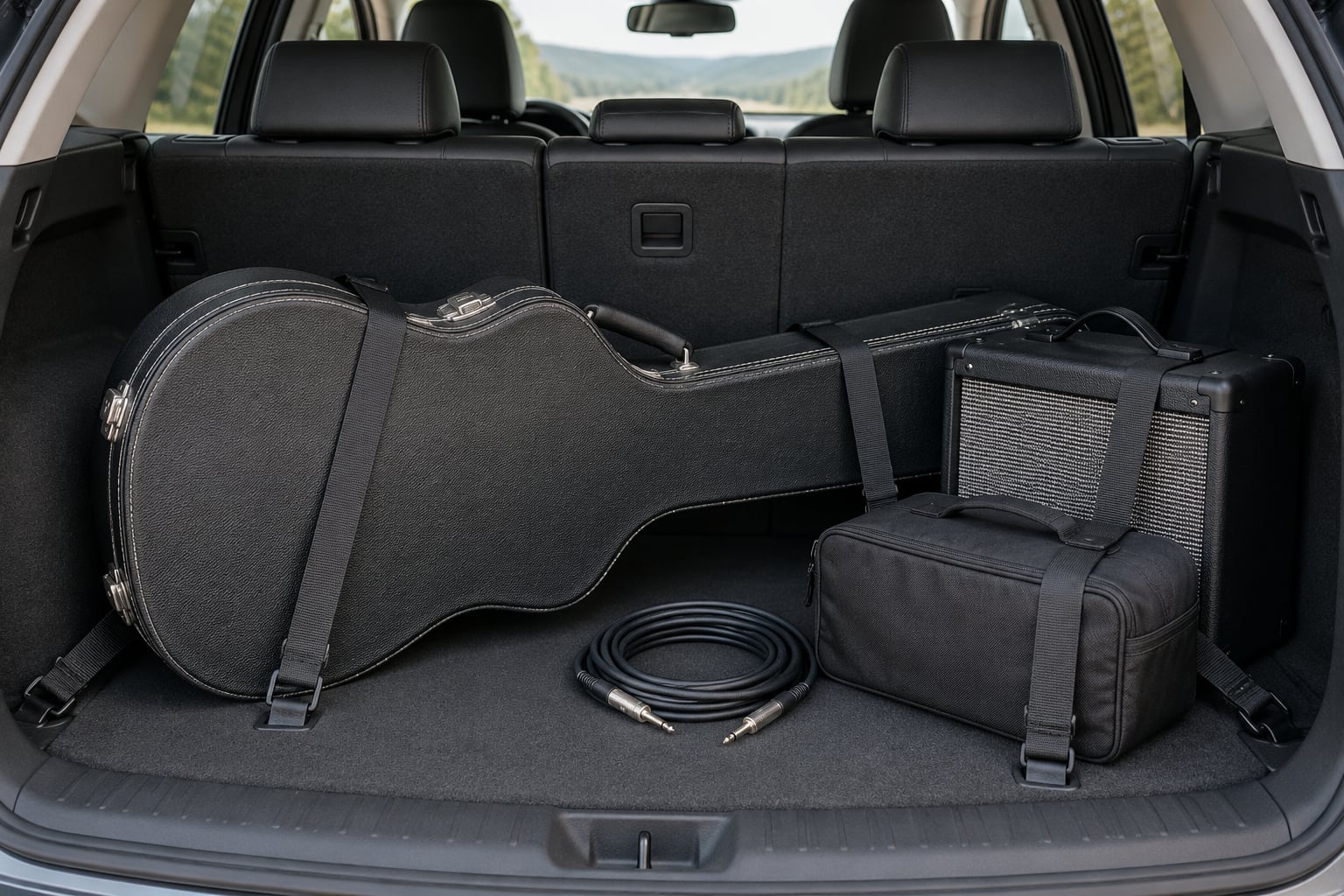
Heavy gear goes low and toward the front of the cargo area, close to the axle and the seats. Light, fragile things sit on top. A cabinet lying on the wrong side under a rack case is a cabinet that arrives dented.
Strap each case to an actual tie-down point, and strap across the case body rather than over a handle or a lid edge. Leave a small slack in the strap so the ratchet takes up load instead of the strap cutting into foam, then pull it firm. Push something heavy but soft against the doors so a case cannot slide sideways into them.
Check that the load does not block your mirrors, your rear view through the back window, or any airbag. Plenty of vans leave with gear stacked to the roof glass, which is both illegal in some places and useless in a jam.
Protect gear during driving and stops
Park with intent. Back the vehicle up so the doors face a wall, a fence or another vehicle rather than an open car park. Choose a lit area with foot traffic, a hotel lot with traditional parking over a street space, and an indoor garage or secure yard whenever one exists. Never leave a visible case in the back of a car with the boot up.
At every fuel stop or rest break, walk past the vehicle once. Twenty seconds of looking tells you about a loose strap, an open tailgate or a window somebody has tested. Keep keys in the same pocket every single time so you never search a bag while standing in a lit car park.
Leave nothing personal in sight, and that includes phones, laptops and GPS units. A tracker hidden inside a case helps after a theft; a phone on the seat is an invitation. Post the parking spot to whoever is in your group before you go inside the venue, and check in on a schedule rather than when you feel like it.
Move gear safely through airports and venues
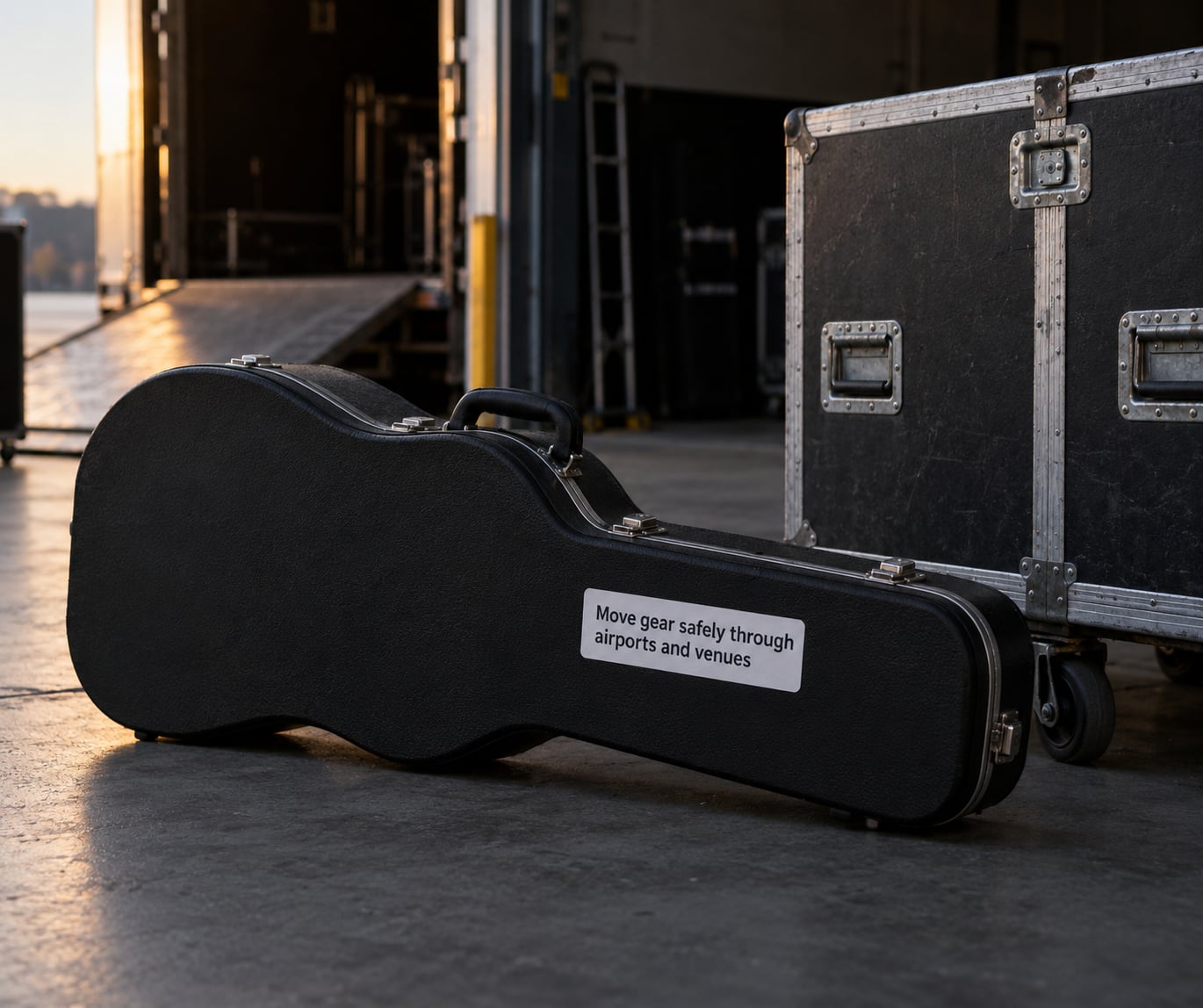
Flying has its own rules. In the United States, a guitar or instrument in a case can go through security if it fits the overhead limits, and locks that security staff can open without cutting are the ones to use on any case you check. Read the airline’s instrument policy before you book, because fees vary widely and some carriers only cover liability above a certain cabin value.
Check big cases, and check them early. Oversize items often travel at a different point in the process and sit longer on a belt. Take anything you cannot replace in a carry-on or buy an extra seat for it, and never put a laptop, a camera or a drive full of sessions in a checked bag.
At the venue, agree who walks in with the gear before the van door opens. Cases stay in someone’s sight or in a locked room. Do not spread a pedalboard across a stage to photograph it while the crowd is still filing in, and do not let the load-out start until the venue has released the room.
Set up and inspect after arrival
Open cases slowly and in the right order. If a case has been in a cold van or a hot car, leave it closed until the instrument reaches room temperature, because opening a cold case around a warm instrument is exactly how a binding crack starts.
Before anything is moved out of the vehicle, take a few photos of how the gear sits inside. If the layout changed, something shifted, and you want to know that now rather than at soundcheck.
Power the signal chain up in stages: pedalboard first, then preamp, then amp, then speakers last. Listen for hum, crackle or a rattle that was not there last week. Anything you notice within the first ten minutes is far easier to document and claim than anything discovered mid-set.
Common Mistakes
- A soft bag for a fragile instrument. A gig bag protects against rain and handling, not against a dropped case. Keep the hard case for the guitar you would replace, use the bag for the one you would not.
- Cases left unlocked. A locked case is a speed bump. Even a cheap padlock turns a casual look into a job.
- Overloading the vehicle. A roof piled above the safe load rating protects nothing when you brake hard.
- Heavy items placed loose. Weight that is not strapped is weight that moves, and it moves toward whatever is most fragile.
- No photographs and no serials. Without them a theft is often just a verbal claim, and insurers know it.
- Branding on the vehicle. A logo telling thieves exactly what is inside costs you nothing to remove.
- Rushing load-out. Most gear disappears during teardown, when five people are all focused on cables. Assign one person to watch the cases.
Extra tips for touring with expensive equipment
Insurance is the backstop that everything else sits on top of. Get a schedule listing each instrument, amp and pedal with its serial number, keep condition photos alongside it, and confirm whether the policy covers theft, water damage and damage in transit separately. Many policies treat a hard case as a condition of cover, which is a good reason to actually use one.
Reduce what you carry. Backline hire at the venue, a house kit, or shipping your cabinet ahead of the tour removes the most valuable and least secure item from the van. Players on talkbass and r/metalmusicians keep coming back to this point: the cheapest protection is gear that is not in the vehicle.
Build redundancy into the carry-on side. Spare strings, tubes, picks, a spare patch lead, a tuner, a backup signal chain you can rebuild from a single bag, and cloud backups of any session material you cannot re-record. Assign one person to keys and one to the case count, and agree a plan for what happens in the first 24 hours after a theft, including who calls the police, who calls the insurer and who handles the replacement.
Finally, refresh the inventory at the start of every 2026 and after any gear change. Serial numbers on cheap gear change quietly, and an out-of-date list is worse than none.
Frequently Asked Questions
What is the safest way to transport a guitar in a car?
Lay the guitar in its case on its back, on a flat surface in the cargo area, not standing on its edge or on the seat. Strap the case to a tie-down point so it cannot slide under braking, put heavier items low and forward, and never lay anything metal or heavy across the lid. Keep it out of direct sunlight in summer and let a cold case warm to room temperature before opening it.
How should I pack amplifiers and speaker cabinets for touring?
Remove the tubes, tape the sockets, and pack the tubes in their own padded box where they cannot strike the chassis. Keep the cabinet upright rather than on its face or back, put blankets or foam between the speaker and any wall of the case, and load the lowest, heaviest cabinets closest to the rear seats. Strap them individually, because a cabinet that slides an inch under hard braking will take the grille cloth with it.
Can I put musical instruments in a checked baggage hold?
Yes, most airlines accept instruments in the hold, but the conditions are yours to check before you book. Read the carrier’s instrument policy for size limits and extra fees, expect oversize items to be handed over at a separate counter and to arrive late. Use locks that staff can open without cutting, pad around the outside of the case as well as inside, and keep anything irreplaceable with you in the cabin.
How do I prevent theft when my gear is unattended at a venue?
Keep cases in view of a named person or in a locked room, never spread across a stage while you are elsewhere. Assign one person to watch the cases during load-in and load-out, and take the count before you leave the room. Leave the venue’s loading area together rather than one person carrying cases to the car alone, and park where the walk back to the van is short and lit.
Should hard cases be left in a hot or cold vehicle?
A parked van in summer heats up fast, and heat plus humidity can warp tops, lift glue joints and corrode hardware. Winter is the opposite risk: a cold-soaked instrument that warms too quickly can crack a top as the wood moves. Park in shade or indoors where you can, keep fragile pieces in the cab in extreme weather, and always leave a case closed until it has reached room temperature before opening it.
What spare gear should a touring musician carry?
Carry a small bag that stays with a person rather than locked in a case: spare strings, spare tubes, picks, a tuner, a spare patch lead, a multi-tool and a backup signal chain you can rebuild from that one bag. Keep the session material you cannot re-record backed up off-site. Add a spare set of essentials for the instrument itself, such as a spare string set and a known-good cable, and check the whole bag before every leg.
Conclusion
Protecting your gear on the road comes down to four first actions. Put each instrument in a case that fits it and immobilize the padding, so nothing shifts inside. Strap every case down and load heavy items low and forward, so nothing shifts in the vehicle. Photograph your gear and record the serial numbers before it leaves the house, because you cannot prove ownership after the fact. And when you arrive, open cases slowly, let cold gear reach room temperature, and photograph anything that moved before you start the soundcheck.